
Breena Clarke
Author of River, Cross My Heart
About the Author
Image credit: http://www.breenaclarke.com/
Works by Breena Clarke
Associated Works
Tagged
Common Knowledge
- Birthdate
- 1951
- Gender
- female
- Education
- Webster College
Howard University - Awards and honors
- New Atlantic Independent Booksellers Association award for fiction (1999)
- Relationships
- Clarke, Cheryl L. (sister)
- Nationality
- USA
- Birthplace
- Washington, D.C., USA
- Places of residence
- New York, New York, USA
Washington, D.C., USA
Jersey City, New Jersey, USA - Associated Place (for map)
- USA
Members
Reviews
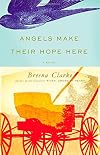
In the racially tense times immediately preceding the Civil War, it is perhaps hard to imagine that there were in fact isolated communities that served as havens of tolerance, that not only accepted but embraced and protected the mix of people within its boundaries. One such place was Russell's Knob, a hidey hole of a place tucked onto a mounatin and home to a big mix of races. While this particular community in Breena Clarke's newest novel, Angels Make Their Hope Here, is fictional, it grew show more out of the possibility of such a place existing according to the historical record. But even such a place could not protect all of its inhabitants from the cruelty and racism of the outside world as Clarke's characters know.
Dossie Bird is just a young girl when her parents send her north through the Underground Railroad. But Dossie doesn't make it to freedom, landing instead on the farm of a brutal and cruel couple who use her badly. Saved by conductor Duncan Smoot and taken to his own home in Russell's Knob, Dossie passes many years keeping house and tending chickens for Duncan, becoming family of a sort, and finding comfort in the fiercely protective community. Through these years, she grows into adulthood, a beautiful young woman watching, waiting, and hoping to be worthy enough for Duncan to make her his wife. She settles into Russell's Knob and the Smoot family, closer in age to Duncan's nephews Pet Wilhelm and Jan Smoot than to Duncan himself. And one of them, Jan, has eyes for Dossie despite her marriage to his uncle. In his zeal to show off for Dossie, he exposes her to the extreme danger of the local town close to Russell's Knob, a town not entirely accepting of the mixed race, "jumbled" mountain folk who come there to trade at market. After a terrible act of violence, Dossie must flee Russell's Knob in order to protect the kind people who once took her in, landing in New York City just before the 1863 draft riots where she will finally come into her own as a woman, find unexpected love, and survive horrific brutality.
Early on, Dossie as a character is loyal and stubborn but she has trouble maintaining her position, being easily influenced by others. She's definitely young, not knowing what is right for her to do and what crosses a line. Handicapped by being both a woman and black, she is often uncertain, unlike the other female characters here who are strong and sure, even if they too must suffer the indignity of being female and powerlessness. The relationships between the characters are authentic and deep and their interactions build the bonds of family and community tightly within the narrative. For the first half of the novel, the plot is fairly domestic and although there's definitely some tension as Jan covets his uncle's wife, it is a leisurely meandering tale. In the second half of the novel, when Dossie leaves Russell's Knob with Jan, she must learn to trust and rely on herself in ways that she was never challenged to do in the safety of Duncan's home. And when her world is overtaken by terror and grief, she comes into the fully realized strength that she started building back then, understanding that she herself is her own and only refuge in the world. Russell's Knob is beautifully described in fascinating detail and the heart pounding terror of the draft riots is immediate. Although the beginning of the novel is slow to engage the reader, if she stays the course, the end has a fierceness and a dignity to it that it entirely fitting and true. Clarke has captured the strife of the times, the localized feelings that supported or disapproved of slavery and the coming war, and the ultimate power of a woman who finds her voice. show less
Dossie Bird is just a young girl when her parents send her north through the Underground Railroad. But Dossie doesn't make it to freedom, landing instead on the farm of a brutal and cruel couple who use her badly. Saved by conductor Duncan Smoot and taken to his own home in Russell's Knob, Dossie passes many years keeping house and tending chickens for Duncan, becoming family of a sort, and finding comfort in the fiercely protective community. Through these years, she grows into adulthood, a beautiful young woman watching, waiting, and hoping to be worthy enough for Duncan to make her his wife. She settles into Russell's Knob and the Smoot family, closer in age to Duncan's nephews Pet Wilhelm and Jan Smoot than to Duncan himself. And one of them, Jan, has eyes for Dossie despite her marriage to his uncle. In his zeal to show off for Dossie, he exposes her to the extreme danger of the local town close to Russell's Knob, a town not entirely accepting of the mixed race, "jumbled" mountain folk who come there to trade at market. After a terrible act of violence, Dossie must flee Russell's Knob in order to protect the kind people who once took her in, landing in New York City just before the 1863 draft riots where she will finally come into her own as a woman, find unexpected love, and survive horrific brutality.
Early on, Dossie as a character is loyal and stubborn but she has trouble maintaining her position, being easily influenced by others. She's definitely young, not knowing what is right for her to do and what crosses a line. Handicapped by being both a woman and black, she is often uncertain, unlike the other female characters here who are strong and sure, even if they too must suffer the indignity of being female and powerlessness. The relationships between the characters are authentic and deep and their interactions build the bonds of family and community tightly within the narrative. For the first half of the novel, the plot is fairly domestic and although there's definitely some tension as Jan covets his uncle's wife, it is a leisurely meandering tale. In the second half of the novel, when Dossie leaves Russell's Knob with Jan, she must learn to trust and rely on herself in ways that she was never challenged to do in the safety of Duncan's home. And when her world is overtaken by terror and grief, she comes into the fully realized strength that she started building back then, understanding that she herself is her own and only refuge in the world. Russell's Knob is beautifully described in fascinating detail and the heart pounding terror of the draft riots is immediate. Although the beginning of the novel is slow to engage the reader, if she stays the course, the end has a fierceness and a dignity to it that it entirely fitting and true. Clarke has captured the strife of the times, the localized feelings that supported or disapproved of slavery and the coming war, and the ultimate power of a woman who finds her voice. show less
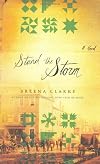
"Even though former slaves Annie Coats and her son Gabriel have managed to buy their freedom, their lives are still marked by constant struggle and sacrifice..."
The story you walk into when you open Stand the Storm is simply wonderful. Breena Clarke's writing is like bits of poetry that produce amazing images when read out loud. From the first few sentences of the book " There are endless stitches to count. Handwork promotes calculation. Gabriel watched his mother pause in her knitting to show more rest her fingers for the briefest moment - a pause most observers wouldn't notice..." I wanted to see what Gabriel's mother was working on. I learned along the way that Sewing Annie, Gabriel's mother, was working on much more than her knitting - she was working on a life of freedom & dignity for herself and family.
Stand the Storm follows Sewing Annie from her humble beginnings on the plantation after her "mam was sold south" when she was assigned to learn to knit & sew on the Ridley Plantation under the watchful eye of "Knitting Annie" to her eventual life as a free woman. We are there when she falls in love, gives birth and fights for the rights every human being should be entitled to. We become part of her family and watch her son & daughter grow up and become strong individuals in their own right. We see how the desire for freedom is rarely spoken in words and how dangerous even the thought can be. We see how their experiences as slaves and even as 'freed slaves' shape their thoughts and actions. We go to war for them as well as with them when the Civil War begins and the Union & Confederacy fight.
This novel is unusual in that it portrays the Coatses not as slaves working out in the fields, but skilled craftsmen. And because of this the Coatses become integrated in the community and the story allows us to take a long look at slavery from the perspective of their own experiences as they try and live in harmony with those around them.
I loved the book! The characters were alive and worth the time you spend with them! Stand the Storm would be a great book club read - some great discussion topics, such as slavery, the Civil War, the underground railroad... read it- you won't be disappointed! show less
The story you walk into when you open Stand the Storm is simply wonderful. Breena Clarke's writing is like bits of poetry that produce amazing images when read out loud. From the first few sentences of the book " There are endless stitches to count. Handwork promotes calculation. Gabriel watched his mother pause in her knitting to show more rest her fingers for the briefest moment - a pause most observers wouldn't notice..." I wanted to see what Gabriel's mother was working on. I learned along the way that Sewing Annie, Gabriel's mother, was working on much more than her knitting - she was working on a life of freedom & dignity for herself and family.
Stand the Storm follows Sewing Annie from her humble beginnings on the plantation after her "mam was sold south" when she was assigned to learn to knit & sew on the Ridley Plantation under the watchful eye of "Knitting Annie" to her eventual life as a free woman. We are there when she falls in love, gives birth and fights for the rights every human being should be entitled to. We become part of her family and watch her son & daughter grow up and become strong individuals in their own right. We see how the desire for freedom is rarely spoken in words and how dangerous even the thought can be. We see how their experiences as slaves and even as 'freed slaves' shape their thoughts and actions. We go to war for them as well as with them when the Civil War begins and the Union & Confederacy fight.
This novel is unusual in that it portrays the Coatses not as slaves working out in the fields, but skilled craftsmen. And because of this the Coatses become integrated in the community and the story allows us to take a long look at slavery from the perspective of their own experiences as they try and live in harmony with those around them.
I loved the book! The characters were alive and worth the time you spend with them! Stand the Storm would be a great book club read - some great discussion topics, such as slavery, the Civil War, the underground railroad... read it- you won't be disappointed! show less
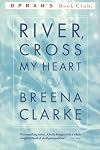
This is the story of Johnnie Mae Bynum and her family, who live in Washington, D.C. in the mid-twenties. Ms. Clarke has drawn a rich portrait of life for coloured residents at that time and the story of how Johnnie Mae and others deal with the accidental death of her young sister is interesting, but like others have said, not excellent.
I read this book, which is an Oprah's Book Club selection, shortly after reading an analysis of "The Oprah Phenomenon". As was pointed out in that analysis, show more Oprah's message is one of individual responsibility, largely regardless of broader societal or systemic barriers to equality or success. While Ms. Clarke's shows a community with a whites-only swimming pool, segregated schools, and Blacks in service jobs, none of her characters complain or work to change the situation. Rather, they do the best they can in the situation in which they find themselves.....but with an eye on a better life for their children. show less
I read this book, which is an Oprah's Book Club selection, shortly after reading an analysis of "The Oprah Phenomenon". As was pointed out in that analysis, show more Oprah's message is one of individual responsibility, largely regardless of broader societal or systemic barriers to equality or success. While Ms. Clarke's shows a community with a whites-only swimming pool, segregated schools, and Blacks in service jobs, none of her characters complain or work to change the situation. Rather, they do the best they can in the situation in which they find themselves.....but with an eye on a better life for their children. show less
Engagingly written winding narrative filled with colorful characters. It provides a vivid picture of Black Georgetown in the 1920s. And the child protagonist is just as charming and infuriating as child characters (and real life children) often are.
Lists
Awards


You May Also Like


Associated Authors
Statistics
- Works
- 4
- Also by
- 6
- Members
- 1,567
- Popularity
- #16,469
- Rating
- 3.3
- Reviews
- 23
- ISBNs
- 35
- Languages
- 4