
Marco Denevi (1922–1998)
Author of The Rose at Ten
About the Author
Image credit: Marco Denevi in 1980 [author: unknown; source: revista pajaro de fuego nro 29 sept 1980; grabbed from Wikipedia]
Series
Works by Marco Denevi
The Redemption of the Cannibal Woman and Other Stories: And Other Stories (Passport Books) (1993) 18 copies
Cuentos Selectos La Narrativa Historica De Escritores Latinoamericanos (Coleccion Dramaturgos Argentinos Contemporaneos) (1998) 6 copies
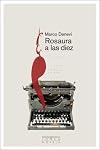
Rosaura a las diez 3 copies
Un perro en el grabado de Durero titulado "El caballero, la muerte y el diablo" (2006) 3 copies, 1 review
REUNION DE DESAPARECIDOS 2 copies
Los asesinos de los días de fiesta 2 copies
El emperador de China 2 copies
Obras completas 2 copies
Cartas Peligrosas 1 copy
Salón de lectura 1 copy
Associated Works
In Another Part of the Forest: An Anthology of Gay Short Fiction (1994) — Contributor — 192 copies, 2 reviews
Sudden Fiction Latino: Short-Short Stories from the United States and Latin America (2010) — Contributor — 76 copies, 15 reviews
Tagged
Common Knowledge
- Canonical name
- Denevi, Marco
- Birthdate
- 1922-05-12
- Date of death
- 1998-12-12
- Gender
- male
- Occupations
- novelist
short story writer
lawyer
journalist
playwright - Awards and honors
- Argentine Academy of Letters (1987)
- Nationality
- Argentina
- Birthplace
- Sáenz Peña, Argentina
- Places of residence
- Buenos Aires, Argentina
- Map Location
- Argentina
Members
Reviews

A Dog in Dürer’s Etching “The Knight, Death and the Devil”
“all wars are fragments of a single war”
1st December 2024. The Russian invasion of mainland Ukraine approaches its third year. Israel, Gaza, Lebanon, and Syria endure bombing, ceasefires, and renewed fighting. It’s an apt time to read this brilliant excoriation of the horrors, hypocrisy, and permanence of war, commissioned in 1966 as a response to this image:
Image: Albrecht Dürer’s engraving from 1513, “Knight, show more Death, and the Devil” (If you can’t see it, click HERE)
In a single sentence of suitably archaic language, over a handful of pages, Denevi respectfully punctures the so-called glamour and excitement of war and nationalism, without advocating pacifism.
“the knight, like all knights who have been through a war without falling into Death’s trap, is unshaven, grimy, smelling of sweat, blood and filth, his armpits infested with fleas, a rash burning the insides of his thighs, coughing greenish phlegm marbled with scarlet threads, speaking in a voice made harsh by frost, fire, hard drinking, oaths, cries of terror and courage”
The narrative turns to the dog, blissfully ignorant of the affairs of mankind, and unable to distinguish between the thunder of war and the thunder of a storm. Conversely:
“the knight confuses the barking of Death with the barking of a dog.”
Denevi’s musings echoed my own, and amplified them in ways that wouldn’t have occurred to me. If you can get past the breathlessness of such a long sentence, there is some brilliant imagery. I also liked that kings were always “little kings” (although Popes and Emperors are accorded an initial capital and no diminutive prefix).
I was reminded of various photo series of soldiers before and after going to war. For example, HERE, where the pairs that have an empty frame where the second photo should be are the most striking. Nevertheless, individual photos are necessarily selective, and I found this story more powerful.
Image: Soviet soldier before and after WWII, authenticated by Snopes (Source)
Quotes
• “the Emperor whom he once saw walking between spears erect as phalluses at the sight of that damsel of war”
• “perhaps the knight’s armor is riding empty… and they, the soldiers, never learnt the truth, and they, the soldiers, have tramped behind this empty armor from battle to battle, defying Death in the firm belief that the knight would protect them from Death”
• “the trees in the forest, which up to that moment seemed frozen under the moon and under the winter snow, have suddenly burst into flower and are covered with fruit”
• “his spear with the fox-skin at one end to stop the blood from dripping down and soaking his hand”
• “the unquenchable enemy who waits patiently, stubbornly, hidden in the shadow, blurred by the fog and the smoke”
• “the knights who were all so refined and beautiful and who had attended mass only a short while before, a mass conducted by an archbishop studded with precious stones”
• “perhaps for the little kings it [war] had been something else and something else again for the Popes and the Emperors, perhaps a game of chess played at a distance, each of them locked up in a city, in a fortress, in a palace until the game is over and they come out and meet and shake hands like good sportsmen and split their share of harvested land”
• “his [the knight’s] name will not appear in History, even though only the names of the Popes and Emperors will appear in the Annals of History”
Background
• For more about Dürer’s engraving, see Met Museum, HERE and also Wikipedia, HERE. The latter mentions that the Nazis idealised Dürer as “the most German of German artists”. Denevi used the picture to write something with a very different message.
• This story was commissioned by Manguel as one of a series inspired by this picture (other were intended to follow, but didn't). Another author he asked was his friend, JL Borges, who penned these verses, HERE.
• I don't think this tale is “fantastical”, but I'm glad Manguel included it in his anthology of fantastical literature, otherwise I'd never have read it.
Short story club
I read this in Black Water: The Anthology of Fantastic Literature, by Alberto Manguel, from which I’m reading one story a week with The Short Story Club, starting 4 September 2023.
You can read an English translation of this story, and see the picture, HERE.
You can join the group here. show less
“all wars are fragments of a single war”
1st December 2024. The Russian invasion of mainland Ukraine approaches its third year. Israel, Gaza, Lebanon, and Syria endure bombing, ceasefires, and renewed fighting. It’s an apt time to read this brilliant excoriation of the horrors, hypocrisy, and permanence of war, commissioned in 1966 as a response to this image:
Image: Albrecht Dürer’s engraving from 1513, “Knight, show more Death, and the Devil” (If you can’t see it, click HERE)
In a single sentence of suitably archaic language, over a handful of pages, Denevi respectfully punctures the so-called glamour and excitement of war and nationalism, without advocating pacifism.
“the knight, like all knights who have been through a war without falling into Death’s trap, is unshaven, grimy, smelling of sweat, blood and filth, his armpits infested with fleas, a rash burning the insides of his thighs, coughing greenish phlegm marbled with scarlet threads, speaking in a voice made harsh by frost, fire, hard drinking, oaths, cries of terror and courage”
The narrative turns to the dog, blissfully ignorant of the affairs of mankind, and unable to distinguish between the thunder of war and the thunder of a storm. Conversely:
“the knight confuses the barking of Death with the barking of a dog.”
Denevi’s musings echoed my own, and amplified them in ways that wouldn’t have occurred to me. If you can get past the breathlessness of such a long sentence, there is some brilliant imagery. I also liked that kings were always “little kings” (although Popes and Emperors are accorded an initial capital and no diminutive prefix).
I was reminded of various photo series of soldiers before and after going to war. For example, HERE, where the pairs that have an empty frame where the second photo should be are the most striking. Nevertheless, individual photos are necessarily selective, and I found this story more powerful.
Image: Soviet soldier before and after WWII, authenticated by Snopes (Source)
Quotes
• “the Emperor whom he once saw walking between spears erect as phalluses at the sight of that damsel of war”
• “perhaps the knight’s armor is riding empty… and they, the soldiers, never learnt the truth, and they, the soldiers, have tramped behind this empty armor from battle to battle, defying Death in the firm belief that the knight would protect them from Death”
• “the trees in the forest, which up to that moment seemed frozen under the moon and under the winter snow, have suddenly burst into flower and are covered with fruit”
• “his spear with the fox-skin at one end to stop the blood from dripping down and soaking his hand”
• “the unquenchable enemy who waits patiently, stubbornly, hidden in the shadow, blurred by the fog and the smoke”
• “the knights who were all so refined and beautiful and who had attended mass only a short while before, a mass conducted by an archbishop studded with precious stones”
• “perhaps for the little kings it [war] had been something else and something else again for the Popes and the Emperors, perhaps a game of chess played at a distance, each of them locked up in a city, in a fortress, in a palace until the game is over and they come out and meet and shake hands like good sportsmen and split their share of harvested land”
• “his [the knight’s] name will not appear in History, even though only the names of the Popes and Emperors will appear in the Annals of History”
Background
• For more about Dürer’s engraving, see Met Museum, HERE and also Wikipedia, HERE. The latter mentions that the Nazis idealised Dürer as “the most German of German artists”. Denevi used the picture to write something with a very different message.
• This story was commissioned by Manguel as one of a series inspired by this picture (other were intended to follow, but didn't). Another author he asked was his friend, JL Borges, who penned these verses, HERE.
• I don't think this tale is “fantastical”, but I'm glad Manguel included it in his anthology of fantastical literature, otherwise I'd never have read it.
Short story club
I read this in Black Water: The Anthology of Fantastic Literature, by Alberto Manguel, from which I’m reading one story a week with The Short Story Club, starting 4 September 2023.
You can read an English translation of this story, and see the picture, HERE.
You can join the group here. show less
Agradezco mucho pero mucho no haberme arruinado este libro leyéndolo en la secundaria.

Como no asistí a la secundaria en Buenos Aires, nunca había leído esta breve novela, y, al comprar la versión Kindle, no sabía qué exactamente esperar. Al parecer, este cuento es una cosita gótica muy entretenida. En su elenco figuran todos los protagonistas esperados: la muñeca malvada, la madre dominante, la enfermedad mortal e incurable, los compañeros de cama que provocan asco, y, claro, un castillo misterioso, situado, nos dice el autor, en calle Suipacha al 58. Ni habremos que show more mencionar la presencia inevitable una represión psicológica ya devenida en locura, la cual se manifiesta en sus cuartos oscuros y abarrotados. No sé que clase de edificio estará a esa altura de la calle Suipacha hoy en día, pero Google Maps muestra un edificio elegante de solo un piso con unos atractivos frisos hechos al estilo clásico al número 49. Como vivo en Buenos Aires, pasaré por ahí para ver si han colocado alguna lápida conmemorativa ahí, o si se pueden escuchar risas demoníacas o llantos angustiados de provinenca desconocida en esa cuadra. Uno nunca sabe. show less
Lists
Awards


You May Also Like


Associated Authors
Statistics
- Works
- 35
- Also by
- 6
- Members
- 392
- Popularity
- #61,821
- Rating
- 3.9
- Reviews
- 9
- ISBNs
- 49
- Languages
- 4
- Favorited
- 2