
Philippa Langley
Author of The King's Grave: The Search for Richard III
Works by Philippa Langley
The Princes in the Tower: Solving History's Greatest Cold Case (2023) — Narrator, some editions — 136 copies, 3 reviews
Associated Works
Tagged
Common Knowledge
- Birthdate
- 1962-06-29
- Gender
- female
- Occupations
- screenwriter
historian - Organizations
- Richard III Society
- Awards and honors
- MBE (2015)
- Short biography
- Philippa Langley is a Scottish-born screenwriter and historian best known for her contributions to the discovery and exhumation of the lost grave of King Richard III in 2012. She is the secretary of the Scottish branch of the Richard III Society. She raised money for and organized the Looking for Richard project and the excavation of the site of the former Greyfriars monastery in Leicester at which the king was found nearly 530 years after his death. She contributed to a documentary about the project, The King in the Car Park, and is the co-author, with Michael K. Jones, of The King's Grave: The Discovery of Richard III’s Lost Burial Place and the Clues It Holds. In 2015, she was made a member of the Order of the British Empire (MBE).
- Nationality
- UK
- Associated Place (for map)
- UK
Members
Discussions
OT: The Princes in the Tower limited edition in Folio Society Devotees (March 2024)
Reviews
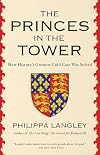
Motivated reasoning, thy name is Philippa Langley.
In any discussion of a book about Richard III, one always needs to reveal one's starting opinion. So here's mine: I'm pro-Richard. He was a good duke, the strongest support of his brother Edward IV as king. And if we set apart his first few months of usurping the throne, Richard was a good king, too, promoting justice and education -- among other things, he produced legislation promoting the production and importation of books. He was, show more potentially, great. But the way he took the throne was a problem. My personal guess is that the death of Edward IV caused him a temporary loss of mental stability, resulting in the usurpation and the murder of the princes.
I'd really like to have an excuse to find a better explanation. I would.
But I also have to take the data seriously. Langley's incessant habit of taking one minor fact, making a major inference, treating that inference as fact, and then making more inferences on that basis and treating those as fact renders this volume pretty close to fiction.
Worse, the way she presents her case is stunningly dull. It's as if she's burying you in irrelevancies so you don't notice the dirty trick she pulled on you.
Case in point: The Precontract. This was the whole basis of Richard's claim to the throne. Shortly after Edward IV died, a bishop named Robert Stillington came forward to claim that Edward IV had promised marriage to Eleanor Talbot Butler, and that this rendered Edward IV's later marriage to Elizabeth Woodville invalid, and hence all of Edward's children by Elizabeth illegitimate. If true, the precontract would justify Richard's taking the throne. The question is, was it true.
What evidence does Langley offer? On pp. 119-131, she lists a number of sources that say that Richard asserted that there was a precontract. But this was not in doubt. Richard's official claim to the throne is the Titulus Regius. This survives. No other evidence is needed. Langley claims to be following police procedures. If you have a tape recording of someone saying, "I did this," you don't need other testimony saying, "I heard so-and-so say this." The direct evidence is sufficient.
So Langley's many secondary sources saying that Richard said there was a precontract are completely irrelevant. What matters is whether Stillington's claim was true or not. Langley doesn't even look at this issue; certainly she does not bring us new information. All she's done is muddy the waters.
She does this endlessly.
So what actual evidence does she have? Archival work in Europe has turned up a couple of letters referring to King Edward V, and to his brother Richard Duke of York. Langley calls these "Proof of Life" for each of the princes, on which basis she claims that Richard III did not kill his nephews.
Of course, her "Edward V" is actually the pretender everyone else calls Lambert Simnel, and her Richard is actually the pretender Perkin Warbeck. Naturally various people referred to them by royal titles, because they were trying to use them to overthrow Henry Tudor. In other words, her "proofs of life" are in fact exactly what we would expect to see. "Extraordinary claims require extraordinary evidence." Langley's evidence is on the low end of ordinary. Would it have justified a couple of scholarly papers to add to the debate and see if other evidence could be found? Absolutely. Does it justify a claim that the Princes were not murdered? Not for a split second. The weight of evidence is still strongly against her. Yet she never even admits a shade of doubt.
It's important to remember that, in 1485, if the Princes had been alive, it would have been to Richard III's great advantage to display them alive. He made no attempt to do so. The logical explanation, much as I hate saying it, is surely that they were dead.
The number of ridiculous statements that Langley comes up with to support her opinions are just stunning. For example, on page 290. she claims that foreign princes wouldn't support pretenders. Um... wasn't Henry VII a pretender? Under no legal argument was he the successor of Edward IV, or of Edward V, or Edward the Anyone; at best, he was Duke of Somerset. But the King of France sicced him on Richard III.
Langley is so lacking in self-awareness that she actually says on page 311 that "We do not have the luxury to make preconceived judgments" -- this from a person whose self-evidet goal is to make Richard III innocent whether he's innocent or not. In a further bit of muddy-headedness on the same page, she says that "where coincidences occur, you must investigate." No, where actual coincidences occur, you must not make anything of them. Where inconsistencies occur, then you must investigate.
One may hope Langley's project can turn up more useful evidence about the Yorkist period. But one must also hope that it is assessed by serious scholars, not by Langley. I am incredibly glad to be done with this piece of absurdity. It made me want to pound my head against the wall.
Like Langley, I would like to think of Richard III as a good but maligned king. But I would rather do it based on facts, not on what I want to be true. show less
In any discussion of a book about Richard III, one always needs to reveal one's starting opinion. So here's mine: I'm pro-Richard. He was a good duke, the strongest support of his brother Edward IV as king. And if we set apart his first few months of usurping the throne, Richard was a good king, too, promoting justice and education -- among other things, he produced legislation promoting the production and importation of books. He was, show more potentially, great. But the way he took the throne was a problem. My personal guess is that the death of Edward IV caused him a temporary loss of mental stability, resulting in the usurpation and the murder of the princes.
I'd really like to have an excuse to find a better explanation. I would.
But I also have to take the data seriously. Langley's incessant habit of taking one minor fact, making a major inference, treating that inference as fact, and then making more inferences on that basis and treating those as fact renders this volume pretty close to fiction.
Worse, the way she presents her case is stunningly dull. It's as if she's burying you in irrelevancies so you don't notice the dirty trick she pulled on you.
Case in point: The Precontract. This was the whole basis of Richard's claim to the throne. Shortly after Edward IV died, a bishop named Robert Stillington came forward to claim that Edward IV had promised marriage to Eleanor Talbot Butler, and that this rendered Edward IV's later marriage to Elizabeth Woodville invalid, and hence all of Edward's children by Elizabeth illegitimate. If true, the precontract would justify Richard's taking the throne. The question is, was it true.
What evidence does Langley offer? On pp. 119-131, she lists a number of sources that say that Richard asserted that there was a precontract. But this was not in doubt. Richard's official claim to the throne is the Titulus Regius. This survives. No other evidence is needed. Langley claims to be following police procedures. If you have a tape recording of someone saying, "I did this," you don't need other testimony saying, "I heard so-and-so say this." The direct evidence is sufficient.
So Langley's many secondary sources saying that Richard said there was a precontract are completely irrelevant. What matters is whether Stillington's claim was true or not. Langley doesn't even look at this issue; certainly she does not bring us new information. All she's done is muddy the waters.
She does this endlessly.
So what actual evidence does she have? Archival work in Europe has turned up a couple of letters referring to King Edward V, and to his brother Richard Duke of York. Langley calls these "Proof of Life" for each of the princes, on which basis she claims that Richard III did not kill his nephews.
Of course, her "Edward V" is actually the pretender everyone else calls Lambert Simnel, and her Richard is actually the pretender Perkin Warbeck. Naturally various people referred to them by royal titles, because they were trying to use them to overthrow Henry Tudor. In other words, her "proofs of life" are in fact exactly what we would expect to see. "Extraordinary claims require extraordinary evidence." Langley's evidence is on the low end of ordinary. Would it have justified a couple of scholarly papers to add to the debate and see if other evidence could be found? Absolutely. Does it justify a claim that the Princes were not murdered? Not for a split second. The weight of evidence is still strongly against her. Yet she never even admits a shade of doubt.
It's important to remember that, in 1485, if the Princes had been alive, it would have been to Richard III's great advantage to display them alive. He made no attempt to do so. The logical explanation, much as I hate saying it, is surely that they were dead.
The number of ridiculous statements that Langley comes up with to support her opinions are just stunning. For example, on page 290. she claims that foreign princes wouldn't support pretenders. Um... wasn't Henry VII a pretender? Under no legal argument was he the successor of Edward IV, or of Edward V, or Edward the Anyone; at best, he was Duke of Somerset. But the King of France sicced him on Richard III.
Langley is so lacking in self-awareness that she actually says on page 311 that "We do not have the luxury to make preconceived judgments" -- this from a person whose self-evidet goal is to make Richard III innocent whether he's innocent or not. In a further bit of muddy-headedness on the same page, she says that "where coincidences occur, you must investigate." No, where actual coincidences occur, you must not make anything of them. Where inconsistencies occur, then you must investigate.
One may hope Langley's project can turn up more useful evidence about the Yorkist period. But one must also hope that it is assessed by serious scholars, not by Langley. I am incredibly glad to be done with this piece of absurdity. It made me want to pound my head against the wall.
Like Langley, I would like to think of Richard III as a good but maligned king. But I would rather do it based on facts, not on what I want to be true. show less
The King's Grave: The Discovery of Richard III's Lost Burial Place and the Clues It Holds by Philippa Langley
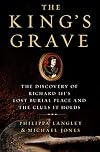
I received this as an Advance Reader Copy from NetGalley.
I was the odd 12-year-old with an obsession for Richard III. I read Josephine Tey's famous book The Daughter of Time and was utterly convinced that Richard had been thoroughly maligned by Tudor propagandists and did not murder the princes in the Tower. I have read more about Richard and the War of the Roses over the years. Therefore, the recent news of the discovery of bones and their identification as Richard III was of keen interest show more to me.
Philippa Langley was the woman behind the search for Richard III. She was working on a screenplay and wanted a full idea of the "real" Richard. She spear-headed the effort, gathered the funding, and the result was extraordinary. Not only did they find Richard III, but he was found the very first day they began the dig.
Langley comes from a staunchly Ricardian background, She's a member of the Richard III Society and believes the king did not have the princes murdered, nor was he the warped villain as portrayed by Shakespeare. The co-author, Michael Jones, wants a more complete picture of Richard but he does believe that Richard murdered the princes, though this act must be viewed in context of the times. Together, I felt they provided an interesting balance to the book. They bring up oft-quoted passages by Sir Thomas More, but also explored a few other contemporary sources I had never read before. They go into great detail about Richard's character--even having a psychological profile done--talking about his piety, how he likely witnessed his mother's rape when he was a child and had firm views on sexual morality as an adult, how he was chivalrous and tried to act in a just way, even with the bodies of his enemies. This is a noteworthy aspect, considering how he was treated at the end: scalped and stabbed in the head, stripped and flung over a horse, stabbed in the buttocks, then crammed into a grave he didn't fit in. Then, after the dissolution of the church centuries ago, he is found today beneath a parking lot.
The chapters flow back and forth from a detail history of Richard, to place him in the context of his times, and about Langley's modern quest to find him. If a reader is unfamiliar with the War of the Roses, this likely is not a good book to start on the subject. It crams in a lot of material and there are many names to keep track of, many of them the same name (especially Edward). I found it all fascinating, but then, I have read on the era before. It was intriguing to learn about the modern science involved in his identification. I thought the psychological profile was a bit silly, but otherwise the authors placed good emphasis on viewing Richard in the context of his times.
Since I read an ARC ebook, I'm not sure if I missed out on illustrations or maps that are in the full version. I really would have liked more photographs and data along those lines. I'm in America and I'm not sure if or when I'll be able to see the full TV special by Langley, "Looking for Richard," though I certainly hope to at some point. show less
I was the odd 12-year-old with an obsession for Richard III. I read Josephine Tey's famous book The Daughter of Time and was utterly convinced that Richard had been thoroughly maligned by Tudor propagandists and did not murder the princes in the Tower. I have read more about Richard and the War of the Roses over the years. Therefore, the recent news of the discovery of bones and their identification as Richard III was of keen interest show more to me.
Philippa Langley was the woman behind the search for Richard III. She was working on a screenplay and wanted a full idea of the "real" Richard. She spear-headed the effort, gathered the funding, and the result was extraordinary. Not only did they find Richard III, but he was found the very first day they began the dig.
Langley comes from a staunchly Ricardian background, She's a member of the Richard III Society and believes the king did not have the princes murdered, nor was he the warped villain as portrayed by Shakespeare. The co-author, Michael Jones, wants a more complete picture of Richard but he does believe that Richard murdered the princes, though this act must be viewed in context of the times. Together, I felt they provided an interesting balance to the book. They bring up oft-quoted passages by Sir Thomas More, but also explored a few other contemporary sources I had never read before. They go into great detail about Richard's character--even having a psychological profile done--talking about his piety, how he likely witnessed his mother's rape when he was a child and had firm views on sexual morality as an adult, how he was chivalrous and tried to act in a just way, even with the bodies of his enemies. This is a noteworthy aspect, considering how he was treated at the end: scalped and stabbed in the head, stripped and flung over a horse, stabbed in the buttocks, then crammed into a grave he didn't fit in. Then, after the dissolution of the church centuries ago, he is found today beneath a parking lot.
The chapters flow back and forth from a detail history of Richard, to place him in the context of his times, and about Langley's modern quest to find him. If a reader is unfamiliar with the War of the Roses, this likely is not a good book to start on the subject. It crams in a lot of material and there are many names to keep track of, many of them the same name (especially Edward). I found it all fascinating, but then, I have read on the era before. It was intriguing to learn about the modern science involved in his identification. I thought the psychological profile was a bit silly, but otherwise the authors placed good emphasis on viewing Richard in the context of his times.
Since I read an ARC ebook, I'm not sure if I missed out on illustrations or maps that are in the full version. I really would have liked more photographs and data along those lines. I'm in America and I'm not sure if or when I'll be able to see the full TV special by Langley, "Looking for Richard," though I certainly hope to at some point. show less
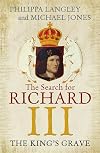
Most of us know Richard III from Shakespeare’s famous play, notably written for a Tudor audience, as a monster, crippled both in body and soul, who viciously killed the innocent princes in the tower so that he could steal the throne.
However, there are many who don’t share this Tudor depiction of Richard including the authors of The King’s Grave: The Search for Richard III. The book is divided between two stories. In one, Philippa Langley who spearheaded the ‘Looking for Richard” show more project, gives us an account of the search and eventual recovery of Richard’s skeleton. Historian Michael Jones discusses Richard’s short reign including his death at Bosworth.
The two authors give two decidedly different reactions to Richard III. Langley’s views of Richard are much more emotional. She seems to see Richard not as an historical figure but rather as someone she feels a strong personal attachment to; someone she must protect from any and all detractors. Her actions are guided by her ‘intuition’. When she sees an R mark in a public car park (R for Reserved), she gets ‘goosebumps’, convinced that Richard’s body will be found there. When, as it turns out, she was right, she is moved to tears when the skeleton has a markedly curved spine not because she is thrilled at an important historical discovery but because she is convinced that this will reinforce the Shakespearian portrait of Richard as a hunchbacked monster.
Jones, on the other hand, gives a much more objective and nuanced view of Richard although still a fairly positive one. According to him, Richard, rather than being a monster, was intelligent and pious with a fine sense of justice. It is probably not surprising, though, that the two disagree on the fate of the young princes.
The discovery of Richard’s skeleton gives us little new in terms of Richard’s rule. However, it is an important discovery in terms of the forensic science involved and of the historical portrait of the man. Thanks to Langley’s efforts, we now know more about Richard III’s physical appearance. He was not a hunchback but he did have scoliosis so that one shoulder was higher than the other. He also did not have a withered arm. We also have a better understanding of what happened at Bosworth based on the wounds discovered on his skeleton. Although it adds little to our knowledge of the motivations and actions of the historical Richard, still, his story is an interesting one and, as the last English monarch to die in battle, it is hard not to feel some of Langley’s emotions towards both the discovery of his skeleton and the details of his death. show less
However, there are many who don’t share this Tudor depiction of Richard including the authors of The King’s Grave: The Search for Richard III. The book is divided between two stories. In one, Philippa Langley who spearheaded the ‘Looking for Richard” show more project, gives us an account of the search and eventual recovery of Richard’s skeleton. Historian Michael Jones discusses Richard’s short reign including his death at Bosworth.
The two authors give two decidedly different reactions to Richard III. Langley’s views of Richard are much more emotional. She seems to see Richard not as an historical figure but rather as someone she feels a strong personal attachment to; someone she must protect from any and all detractors. Her actions are guided by her ‘intuition’. When she sees an R mark in a public car park (R for Reserved), she gets ‘goosebumps’, convinced that Richard’s body will be found there. When, as it turns out, she was right, she is moved to tears when the skeleton has a markedly curved spine not because she is thrilled at an important historical discovery but because she is convinced that this will reinforce the Shakespearian portrait of Richard as a hunchbacked monster.
Jones, on the other hand, gives a much more objective and nuanced view of Richard although still a fairly positive one. According to him, Richard, rather than being a monster, was intelligent and pious with a fine sense of justice. It is probably not surprising, though, that the two disagree on the fate of the young princes.
The discovery of Richard’s skeleton gives us little new in terms of Richard’s rule. However, it is an important discovery in terms of the forensic science involved and of the historical portrait of the man. Thanks to Langley’s efforts, we now know more about Richard III’s physical appearance. He was not a hunchback but he did have scoliosis so that one shoulder was higher than the other. He also did not have a withered arm. We also have a better understanding of what happened at Bosworth based on the wounds discovered on his skeleton. Although it adds little to our knowledge of the motivations and actions of the historical Richard, still, his story is an interesting one and, as the last English monarch to die in battle, it is hard not to feel some of Langley’s emotions towards both the discovery of his skeleton and the details of his death. show less
The King's Grave: The Discovery of Richard III’s Lost Burial Place and the Clues It Holds by Philippa Langley
This is definitely not a dry history book, and for those who know next to nothing about Richard III they will receive an almost personal history lesson about this Monarch as they progress through the book. This is an extraordinarily user friendly book.
The chapters in the book alternate between the story of searching for, and eventually finding the grave of Richard III and his factual history, and the one everyone is familiar with that was painted by Shakespeare and the victor of Bosworth show more Field. However, in reading this book it soon becomes apparent that this is more than a simple recounting of an archaeological dig; it is very personal to the Author and that comes through in their writing. The book is loaded with an impressive amount of information, both about the search itself and, as I’ve already noted, the history of this King, but it s the delivery of this information that really impressed me. There is not a point in this book where the delivery becomes stale and dusty, the Authors managed to make every part of it enjoyable to the reader.
The sections of the book that cover the identification of the remains, and the scientific techniques used are equally as interesting as the descriptive scenes of the battle that took the Kings life. They covered disputes and grievances between the House of York and the House of Tudor with great tact and never once came out in favour of one House or the other. This book will also serve to dispel some of the images people have that Richard III was just an all-round evil man; it informs the reader of all the good he did for the country and shows him in the context of the world he lived in. Through the Authors writing skills the reader is introduced to a man of deep convictions and courage whilst at the same time showing he was definitely not a saint.
The great strength of this book is that it captivates like a well-written historical novel while at the same time informing and educating the reader. This strength kept me up late into the night to finish this book and once again stoke the flames of my love of history. Richard III, the last King of England to come from the House of York and the last Plantagenet King found his champions in these hard working people, and will finally have the burial a Monarch deserves, particularly one of such fame.
I highly recommend this book to lovers of all forms of history, plus those who want to learn a little more about this period of time in England.
Originally reviewed on: http://catesbooknuthut.com/2014/01/28/review-the-kings-grave-the-discovery-of-ri...
This work is licensed under a Creative Commons Attribution-NonCommercial-NoDerivs 3.0 Unported License. show less
The chapters in the book alternate between the story of searching for, and eventually finding the grave of Richard III and his factual history, and the one everyone is familiar with that was painted by Shakespeare and the victor of Bosworth show more Field. However, in reading this book it soon becomes apparent that this is more than a simple recounting of an archaeological dig; it is very personal to the Author and that comes through in their writing. The book is loaded with an impressive amount of information, both about the search itself and, as I’ve already noted, the history of this King, but it s the delivery of this information that really impressed me. There is not a point in this book where the delivery becomes stale and dusty, the Authors managed to make every part of it enjoyable to the reader.
The sections of the book that cover the identification of the remains, and the scientific techniques used are equally as interesting as the descriptive scenes of the battle that took the Kings life. They covered disputes and grievances between the House of York and the House of Tudor with great tact and never once came out in favour of one House or the other. This book will also serve to dispel some of the images people have that Richard III was just an all-round evil man; it informs the reader of all the good he did for the country and shows him in the context of the world he lived in. Through the Authors writing skills the reader is introduced to a man of deep convictions and courage whilst at the same time showing he was definitely not a saint.
The great strength of this book is that it captivates like a well-written historical novel while at the same time informing and educating the reader. This strength kept me up late into the night to finish this book and once again stoke the flames of my love of history. Richard III, the last King of England to come from the House of York and the last Plantagenet King found his champions in these hard working people, and will finally have the burial a Monarch deserves, particularly one of such fame.
I highly recommend this book to lovers of all forms of history, plus those who want to learn a little more about this period of time in England.
Originally reviewed on: http://catesbooknuthut.com/2014/01/28/review-the-kings-grave-the-discovery-of-ri...
This work is licensed under a Creative Commons Attribution-NonCommercial-NoDerivs 3.0 Unported License. show less
You May Also Like


Associated Authors
Statistics
- Works
- 6
- Also by
- 1
- Members
- 514
- Popularity
- #48,283
- Rating
- 3.8
- Reviews
- 25
- ISBNs
- 22
- Favorited
- 1
