
Ronit Matalon (1959–2017)
Author of The One Facing Us: A Novel
About the Author
Image credit: via New Vessel Press
Works by Ronit Matalon
קרוא וכתוב 1 copy
זרים בבית 1 copy
אושר מאחורי העצים 1 copy
Associated Works
Tagged
Common Knowledge
- Birthdate
- 1959
- Date of death
- 2017-12-28
- Gender
- female
- Nationality
- Israel
- Birthplace
- Ganei Tikva, Israel
- Associated Place (for map)
- Ganei Tikva, Israel
Members
Reviews

There is more than one way to read this novella. You can read it as a comedy. You can read it as a parody. Or you can read it as a commentary of the modern Israeli society. Either way is valid and either way is incomplete.
At the day of her wedding, a bride locks herself in her room and refuses to come out. 5 hours later, with only a few hours left until the wedding (which unlike most Western weddings is in the evening), we find 4 people in front of her door: her mother, her grandmother, her show more cousin and the groom-to-be. We never hear from the bride directly (except for a poem and a sign saying sorry) and we never meet the woman who chose not to marry in such an unconventional way. What we know about her we know from the people who try to convince her to open the door. The initial 4 we meet are soon joined by the parents of the groom and for the next few hours, we see the interaction of these 6 people who come up with idea after an idea on how to get the young woman out of the room - they call a psychologist from "Regretful Brides", they call a man with a ladder (who happens to be from the Authority and ends up getting arrested because someone calls the police and claims he is a terrorist), they finally call to cancel the wedding.
And somewhere in the middle of that family drama (or comedy if you prefer, albeit from the black variety), emerges a side of Israel which is not often seen - parts of it are ugly, part of it are almost incomprehensible (and probably are a lot clearer to someone locally - the change of the name of the groom's mother a few years earlier fro Penina to Peninit for example does not tell me anything but it probably carries its own message. After I finished the novella, I looked up the name and the Urban dictionary supplied "a strange and large girl usually large in the bust or butt area. Will usually eat anything in sight" while Penina is a traditional name. That description kinda fits in a way but there is probably more to the subtext that I don't understand). It makes one stop and wonder why it is the money and the others' opinions that make the characters we meet change. Noone really seem to care why the bride locked that door -- noone but the groom and even that comes later. In the telling of the story emerge other stories - the other lost daughter, the cousin who was not accepted to serve in the Army (in Israel where everyone does). And in all the craziness, the lucid moments of family togetherness seem even more surreal - the grandmother who everyone believes not to be fully there wanting to pay for the doctor, the groom going through all stages of grief.
We never learn why Margie decided to lock that door. But by the end of the novella, I think I would have done the same if I had to deal with that family. So there is that.
I am still not entirely sure I liked the novella or how I am supposed to take it. But I am glad I read it.
The author won one of the big Israeli awards for it a day before dying from cancer. I've never even heard her name before and I found the style highly readable. How much of it was from the author and how much from the translator Jessica Cohen is unclear but I plan to explore more of Matalon's writing. show less
At the day of her wedding, a bride locks herself in her room and refuses to come out. 5 hours later, with only a few hours left until the wedding (which unlike most Western weddings is in the evening), we find 4 people in front of her door: her mother, her grandmother, her show more cousin and the groom-to-be. We never hear from the bride directly (except for a poem and a sign saying sorry) and we never meet the woman who chose not to marry in such an unconventional way. What we know about her we know from the people who try to convince her to open the door. The initial 4 we meet are soon joined by the parents of the groom and for the next few hours, we see the interaction of these 6 people who come up with idea after an idea on how to get the young woman out of the room - they call a psychologist from "Regretful Brides", they call a man with a ladder (who happens to be from the Authority and ends up getting arrested because someone calls the police and claims he is a terrorist), they finally call to cancel the wedding.
And somewhere in the middle of that family drama (or comedy if you prefer, albeit from the black variety), emerges a side of Israel which is not often seen - parts of it are ugly, part of it are almost incomprehensible (and probably are a lot clearer to someone locally - the change of the name of the groom's mother a few years earlier fro Penina to Peninit for example does not tell me anything but it probably carries its own message. After I finished the novella, I looked up the name and the Urban dictionary supplied "a strange and large girl usually large in the bust or butt area. Will usually eat anything in sight" while Penina is a traditional name. That description kinda fits in a way but there is probably more to the subtext that I don't understand). It makes one stop and wonder why it is the money and the others' opinions that make the characters we meet change. Noone really seem to care why the bride locked that door -- noone but the groom and even that comes later. In the telling of the story emerge other stories - the other lost daughter, the cousin who was not accepted to serve in the Army (in Israel where everyone does). And in all the craziness, the lucid moments of family togetherness seem even more surreal - the grandmother who everyone believes not to be fully there wanting to pay for the doctor, the groom going through all stages of grief.
We never learn why Margie decided to lock that door. But by the end of the novella, I think I would have done the same if I had to deal with that family. So there is that.
I am still not entirely sure I liked the novella or how I am supposed to take it. But I am glad I read it.
The author won one of the big Israeli awards for it a day before dying from cancer. I've never even heard her name before and I found the style highly readable. How much of it was from the author and how much from the translator Jessica Cohen is unclear but I plan to explore more of Matalon's writing. show less

This is a skinny book in translation from the Hebrew. It got rave reviews and is a worthwhile quick read, but has some depth to discover too. The action takes place within one day: Margie and Matti's wedding day. Margie has locked herself in the bedroom of her mother's apartment and has stated she does not want to get married. Everything revolves around this. From her we learn the backstory of her relationship with Matti. He is understanding and tender and enraged and powerless in turns. The show more future inlaws are footing the bill, so there is tension there as the day ticks away and guests have expectations. Margie's mother Nadia seems like an enabler but she is carrying unresolved grief. The two comic relief characters, happily unaware Gramsy and flagrant cousin Ilan provide some commentary and drama as many efforts are expended to extricate Margie, from a pyschologist specializing in wedding cold feet to a ladder truck to reach her window. Everyone thinks they have a solution, but Margie has her own agenda. In such a small space, the book manages to touch on family relationships, political situations in Tel Aviv, the dynamics between men and women, and personal autonomy. It's a gem. show less
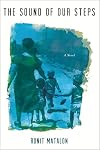
Towards the end of Ronit Matalon’s novel, The Sound of Our Steps, Lucette, the mother, says, “Everything’s standing still…slowly eating up your soul, little by little, with a teaspoon.” She spent her time “lying down, getting up , sitting down, standing up, going out to look at the garden in the desolation of everything standing still…between going in and coming out, emptying action and movement of meaning, purpose, and reason…” This accurately and exquisitely sums up how I show more felt while reading this book. I have no argument with the words; they’re poetry. I struggled immensely with the little one-, two- and three-page vignettes told by one family member or another that on the surface appeared to be unconnected and go nowhere. I guess what I’m trying to say is that I think in the end they were connected and they did go somewhere, but I, as the reader, had to work so hard to parse this out that at finish I was too exhausted to care. The Sound of Our Steps is a look at the lives of a mother and her immigrant family in Israel who struggle with each other and a father who appears at will. show less
 This review was written for LibraryThing Early Reviewers.
"The Sound of Our Steps" doesn't tell a story; it paints a picture. And there lie both its strength and weakness. The picture is drawn in fragmentary, impressionistic vignettes by "the child" who lives with her Egyptian-Jewish immigrant family in a government-provided concrete box ("the shack") on the outskirts of Tel Aviv. The constant fear of attack that plagues modern-day Israel barely registers on the child's consciousness. Her world is circumscribed by her family -- older brother and show more sister, grandmother, mostly-absent father, and mother. It is "the mother" who dominates her life and the novel and the sound of whose steps is awaited with trepidation by children who are terrified of her violent outbursts.
The mother is Lucette, who speaks only French and Arabic and was uprooted from a privileged, protected life as a delicate beauty in Cairo. She is exhausted and now has hands made rough with callouses from cleaning a rabbi's house and other menial jobs and her determination to coax a garden out of sandy soil. Her primary connection to the refined life she knew is to read, reread and cry over "La Dame aux Camélias" as she struggles to support her children and wrestle the shack into some semblance of a home.
Maurice, husband and father, is a former revolutionary made bitter by the dominance in Israel of European Jews and the marginalization of the Mizrahi, or Jews from the Middle East. He makes only occasional appearances in the family's life and provides no support but looms large in the child's imagination.
Ronit Matalon is a distinguished Israeli novelist, critic, academic and journalist. This, her seventh novel, is the most explicitly autobiographical. It won several prizes in Israel and in French translation. It does create a harrowing, detailed picture of immigrant life but the lack of plot makes for tough reading, with only the pull of language to keep the reader engaged through tenuously linked short (some very short) chapters. I have little doubt that Dalyu Bilu, who translated the Hebrew into English, did so masterfully but whether the fault is in the original Hebrew or in the translation, I found the language sometimes stilted and self-consciously literary, albeit with lovely moments. It might have been more compelling in 250 pages rather than almost 400. show less
The mother is Lucette, who speaks only French and Arabic and was uprooted from a privileged, protected life as a delicate beauty in Cairo. She is exhausted and now has hands made rough with callouses from cleaning a rabbi's house and other menial jobs and her determination to coax a garden out of sandy soil. Her primary connection to the refined life she knew is to read, reread and cry over "La Dame aux Camélias" as she struggles to support her children and wrestle the shack into some semblance of a home.
Maurice, husband and father, is a former revolutionary made bitter by the dominance in Israel of European Jews and the marginalization of the Mizrahi, or Jews from the Middle East. He makes only occasional appearances in the family's life and provides no support but looms large in the child's imagination.
Ronit Matalon is a distinguished Israeli novelist, critic, academic and journalist. This, her seventh novel, is the most explicitly autobiographical. It won several prizes in Israel and in French translation. It does create a harrowing, detailed picture of immigrant life but the lack of plot makes for tough reading, with only the pull of language to keep the reader engaged through tenuously linked short (some very short) chapters. I have little doubt that Dalyu Bilu, who translated the Hebrew into English, did so masterfully but whether the fault is in the original Hebrew or in the translation, I found the language sometimes stilted and self-consciously literary, albeit with lovely moments. It might have been more compelling in 250 pages rather than almost 400. show less
This review was written for LibraryThing Early Reviewers.Awards


You May Also Like


Associated Authors
Statistics
- Works
- 17
- Also by
- 1
- Members
- 182
- Popularity
- #118,784
- Rating
- 3.4
- Reviews
- 22
- ISBNs
- 29
- Languages
- 6
- Favorited
- 1
