

Farzana Doctor
Author of Seven
About the Author
Image credit: Publicity photo on publisher's website.
Works by Farzana Doctor
Tagged
Common Knowledge
- Birthdate
- 1970-12-16
- Gender
- female
- Education
- Carleton University (MSW)
- Occupations
- social worker
psychotherapist
instructor (Social Work)
novelist
consultant - Organizations
- University of Toronto
Ryerson University - Awards and honors
- Dayne Ogilvie Prize (2011)
- Agent
- Slopen, Bev
- Nationality
- Canada
- Birthplace
- Zambia
- Places of residence
- Toronto, Ontario, Canada
- Associated Place (for map)
- Ontario, Canada
Members
Reviews

This novel explores an important subject, female genital mutilation as it is practiced in certain Indian communities, and I appreciated gaining a greater understanding of the issues. However, I felt lukewarm about the story itself, though I did like the historical details of a parallel storyline set several generations earlier.
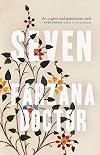
Even though Seven is overly long and contains some Hindi and Arabic vocabulary, it’s a very readable novel. It focuses on the practice of khatna (female circumcision/genital mutilation) in the Dawoodi Bohra community, a sect of Shia Islam, about which I admit to having known nothing before reading Farzana Doctor’s book. Khatna is typically performed on female children when they are seven years old. It is said to maintain girls’ “purity” and reduce the likelihood of their acting out show more sexually. Some who undergo the procedure experience no diminishment in feeling, but for others there is nerve damage, causing loss of normal sensation or even significant pain. Trauma is not uncommon. Girls are usually not told what is being done to them. Afterwards, they are instructed not to discuss what they’ve been through.
Set in 2015, the novel focuses on Sharifa, a 40-year-old New Yorker, who in childhood immigrated to the U.S. with her parents. Now, years later, she’s burnt out from fifteen years as a high-school history teacher. She resigns from her job in order to travel with her Canadian-born Bohra husband, Murtuza, and their seven-year-old daughter, Zee, to Mumbai. Murtuza will be teaching a course while on sabbatical there. Sharifa’s affluent Indian cousins have arranged luxurious accommodations for her family’s eight-month stay.
Before Sharifa leaves the U.S., her recently widowed mother encourages her to put her training as a historian to use in India by doing some research on the family patriarch, Abdoolally Seth, her great-great-grandfather. When Abdoolally was a child, he and his mother, Amtabai, left Dholka, their small Gujarati village, to make their way in Mumbai. Amtabai’s instincts were good ones: Abdoolally’s would be the quintessential rags-to-riches story. He started as an illiterate boy in servitude to others and became an extremely wealthy and influential businessman—and one with a conscience to boot. He bequeathed two-thirds of his riches to charity for the establishment of Bohra schools and a maternity hospital in his home village. The first two of the patriarch’s young wives had died in childbirth; his losing them left a permanent mark. He married his fourth wife, the homely widow of a loyal employee, as a good deed. However, it’s the third wife, Zehra, who captures Sharifa’s imagination. For some mysterious reason, Abdoolally divorced the young woman after only two years of marriage, something almost unheard of in the Bohra community of the early twentieth century. Sharifa aims to get to the bottom of Zehra’s story, and, indeed, by the end of the book, she does.
Once in India, Sharifa spends lots of time with her cousins, Zainab and Fatema. The three, who are the same age, had been inseparable as children. Fatema is a wealthy businesswoman who owns a successful publishing house. She’s also a committed feminist and social activist, critical of the corruption and misogyny in the Bohra community, and particularly angry about khatna. This is a practice decreed by the male leaders of the sect, but enforced and carried out by its women. Fatema collects and posts the stories of khatna survivors on her Facebook page, but she, too, has been personally touched and harmed by the rite. She challenges Sharifa to think about what she’d rather avoid and makes some shocking disclosures.Fatema reveals that when they were seven, the girls’ Aunt Tasnim took all three of them—including Sharifa, who was visiting for the summer—to be “cut”. The act was carried out in complete violation of Sharifa’s mother’s stated instructions. Zainab suffered only minimally, but both Fatema and Sharifa experienced nerve injury and lost normal sensation. While Fatema has clear recall of that day 33 years before, the event was so traumatic for Sharifa that she buried all memory of it. She initially reacts to Fatema’s words by denying the harm that was done to her and the degree to which it has affected her life. Ultimately, however, she realizes there’s a physical reason for her inability to derive pleasure from her intimate relations. She is terrified to leave her seven-year-old daughter alone with the once-favourite aunt who robbed her of something so significant.
Seven is an interesting novel, rich in anthropological detail about a community I suspect many Westerners are unaware of. The content highlights the importance of halting a barbaric, inhumane practice. I believe this book, like so many other contemporary works of fiction, would have benefited from a rigorous slimming down by at least a third. Sometimes less really is more. The reader doesn’t need to know the menu for every meal, nor the subject matter for every home-schooled lesson Sharifa delivers to Zee while they’re in India. Furthermore, the author seems a lot more interested in detailing aspects of Sharifa and Murtuza’s sex life—including the Fifty-Shades-of-Grey elements—than I was in reading about them. The details are remarkable only for their utter tediousness. They fail to compensate for an often bland and at times disappointingly passive protagonist. However, just when I was losing all faith in Sharifa, she surprised me by quite courageously confronting the member of her family who’d betrayed her. The novel’s epilogue is also very powerful.
Thank you to Farzana Doctor, who herself endured khatna, and to Library Thing Early Reviewers program for kindly providing me with a hard copy of the book. show less
Set in 2015, the novel focuses on Sharifa, a 40-year-old New Yorker, who in childhood immigrated to the U.S. with her parents. Now, years later, she’s burnt out from fifteen years as a high-school history teacher. She resigns from her job in order to travel with her Canadian-born Bohra husband, Murtuza, and their seven-year-old daughter, Zee, to Mumbai. Murtuza will be teaching a course while on sabbatical there. Sharifa’s affluent Indian cousins have arranged luxurious accommodations for her family’s eight-month stay.
Before Sharifa leaves the U.S., her recently widowed mother encourages her to put her training as a historian to use in India by doing some research on the family patriarch, Abdoolally Seth, her great-great-grandfather. When Abdoolally was a child, he and his mother, Amtabai, left Dholka, their small Gujarati village, to make their way in Mumbai. Amtabai’s instincts were good ones: Abdoolally’s would be the quintessential rags-to-riches story. He started as an illiterate boy in servitude to others and became an extremely wealthy and influential businessman—and one with a conscience to boot. He bequeathed two-thirds of his riches to charity for the establishment of Bohra schools and a maternity hospital in his home village. The first two of the patriarch’s young wives had died in childbirth; his losing them left a permanent mark. He married his fourth wife, the homely widow of a loyal employee, as a good deed. However, it’s the third wife, Zehra, who captures Sharifa’s imagination. For some mysterious reason, Abdoolally divorced the young woman after only two years of marriage, something almost unheard of in the Bohra community of the early twentieth century. Sharifa aims to get to the bottom of Zehra’s story, and, indeed, by the end of the book, she does.
Once in India, Sharifa spends lots of time with her cousins, Zainab and Fatema. The three, who are the same age, had been inseparable as children. Fatema is a wealthy businesswoman who owns a successful publishing house. She’s also a committed feminist and social activist, critical of the corruption and misogyny in the Bohra community, and particularly angry about khatna. This is a practice decreed by the male leaders of the sect, but enforced and carried out by its women. Fatema collects and posts the stories of khatna survivors on her Facebook page, but she, too, has been personally touched and harmed by the rite. She challenges Sharifa to think about what she’d rather avoid and makes some shocking disclosures.
Seven is an interesting novel, rich in anthropological detail about a community I suspect many Westerners are unaware of. The content highlights the importance of halting a barbaric, inhumane practice. I believe this book, like so many other contemporary works of fiction, would have benefited from a rigorous slimming down by at least a third. Sometimes less really is more. The reader doesn’t need to know the menu for every meal, nor the subject matter for every home-schooled lesson Sharifa delivers to Zee while they’re in India. Furthermore, the author seems a lot more interested in detailing aspects of Sharifa and Murtuza’s sex life—including the Fifty-Shades-of-Grey elements—than I was in reading about them. The details are remarkable only for their utter tediousness. They fail to compensate for an often bland and at times disappointingly passive protagonist. However, just when I was losing all faith in Sharifa, she surprised me by quite courageously confronting the member of her family who’d betrayed her. The novel’s epilogue is also very powerful.
Thank you to Farzana Doctor, who herself endured khatna, and to Library Thing Early Reviewers program for kindly providing me with a hard copy of the book. show less
 This review was written for LibraryThing Early Reviewers.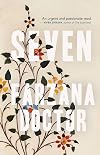
*Thank you to Netgalley and the publishers for a free e-copy in exchange for an honest review!*
I knew this was going to be a harrowing book just based off of the topic of khatna, the tradition of female genital cutting in India. But I didn’t expect the story to go into such depth about the mental and family consequences as well, and those turned out to be my favorite parts.
The book follows Sharifa, who heads to India for two reasons: to research her philanthropist and business leader show more great-great-grandfather, and to save her marriage. In India, however, the topic of khatna has come to the forefront, and it pits traditional religious groups against protestors in the name of human rights. Sharifa’s own family is split on the issue, and as the issue inches closer to home, it is no longer possible for Sharifa to ignore the debate, and she discovers an uncomfortable truth as she looks further and further into her own and her family past.
The plot was interesting, for sure, but I was more interested in one side than the other. Sharifa’s research into her great-great-grandfather Abdoolally was more engaging when it began tying more into Sharifa’s research into khatna, but prior to that, I felt very disconnected from the passages about him. It was the characters as well — I’ve always had an issue with large casts and I often forgot who was who.
I cared less for the characters as individuals and more for the relationships between them. The most beautiful one was Sharifa and Zee; the type of mother-daughter dynamic they had made me nostalgic, and yet Sharifa’s terror and fear of letting Zee outside of her sight for fear she’d be taken to do a khatna procedure was palpable. The relationship between Sharifa and Murtaza was intriguing as well; the book started off describing what felt like a dead-end marriage, but the way their sexual lives ended up tying into khatna was written beautiful. Even so, I have to admit that something about Murtaza never sat right with me. And lastly, the relationship between Sharifa and Maasi — most of the development took place inside our main character’s head, but the way it played out was heart-wrenching; I felt every single ounce of betrayal Sharifa did.
The writing style was good, and in terms of pacing I would have liked a little less time on Abdoolally and a little more on Sharifa’s self-discovery and the family repercussions of their anti-khatna activism. I did like the epilogue though — it definitely sent chills down my spine and for such a heavy book, it was extremely hopeful. Ultimately, I would definitely still recommend this book to readers of historical/cultural genres, and honestly anyone who’s interested in learning about human rights around the world. show less
I knew this was going to be a harrowing book just based off of the topic of khatna, the tradition of female genital cutting in India. But I didn’t expect the story to go into such depth about the mental and family consequences as well, and those turned out to be my favorite parts.
The book follows Sharifa, who heads to India for two reasons: to research her philanthropist and business leader show more great-great-grandfather, and to save her marriage. In India, however, the topic of khatna has come to the forefront, and it pits traditional religious groups against protestors in the name of human rights. Sharifa’s own family is split on the issue, and as the issue inches closer to home, it is no longer possible for Sharifa to ignore the debate, and she discovers an uncomfortable truth as she looks further and further into her own and her family past.
The plot was interesting, for sure, but I was more interested in one side than the other. Sharifa’s research into her great-great-grandfather Abdoolally was more engaging when it began tying more into Sharifa’s research into khatna, but prior to that, I felt very disconnected from the passages about him. It was the characters as well — I’ve always had an issue with large casts and I often forgot who was who.
I cared less for the characters as individuals and more for the relationships between them. The most beautiful one was Sharifa and Zee; the type of mother-daughter dynamic they had made me nostalgic, and yet Sharifa’s terror and fear of letting Zee outside of her sight for fear she’d be taken to do a khatna procedure was palpable. The relationship between Sharifa and Murtaza was intriguing as well; the book started off describing what felt like a dead-end marriage, but the way their sexual lives ended up tying into khatna was written beautiful. Even so, I have to admit that something about Murtaza never sat right with me. And lastly, the relationship between Sharifa and Maasi — most of the development took place inside our main character’s head, but the way it played out was heart-wrenching; I felt every single ounce of betrayal Sharifa did.
The writing style was good, and in terms of pacing I would have liked a little less time on Abdoolally and a little more on Sharifa’s self-discovery and the family repercussions of their anti-khatna activism. I did like the epilogue though — it definitely sent chills down my spine and for such a heavy book, it was extremely hopeful. Ultimately, I would definitely still recommend this book to readers of historical/cultural genres, and honestly anyone who’s interested in learning about human rights around the world. show less
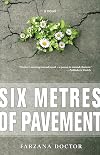
Six Metres of Pavement tells the story of Ismail Boxwala, who continues to struggle with the role he played in his daughter's accidental death two decades ago. He drinks too much, and is largely isolated from his community. Slowly, he regains happiness through two women: Fatima, a young woman shunned by her family because of her sexual orientation, and Celia, a widow who moves in with her daughter across the street. This is a story about friendship and chosen families.
At times, it verges on show more "chick lit", but the solid writing and strong characters carry it past that label. The author is able to bring us inside the characters' hearts and minds in a subtle, but profound, way. show less
At times, it verges on show more "chick lit", but the solid writing and strong characters carry it past that label. The author is able to bring us inside the characters' hearts and minds in a subtle, but profound, way. show less
Lists
Awards


You May Also Like


Statistics
- Works
- 7
- Members
- 215
- Popularity
- #103,624
- Rating
- 3.7
- Reviews
- 28
- ISBNs
- 27
