

Suzette Mayr
Author of The Sleeping Car Porter
About the Author
Image credit: University of Calgary
Works by Suzette Mayr
Associated Works
So Long Been Dreaming: Postcolonial Science Fiction & Fantasy (2004) — Contributor — 323 copies, 9 reviews
Tagged
Common Knowledge
- Birthdate
- 1967
- Gender
- female
- Occupations
- English professor, University of Calgary
- Nationality
- Canada
- Birthplace
- Calgary, Alberta, Canada
- Places of residence
- Alberta, Canada
- Associated Place (for map)
- Alberta, Canada
Members
Reviews

Baxter is a complex man. He's a Black man living in Canada in 1929, he's also a gay man living when homosexuality was illegal. He's a man with a dream of becoming a dentist, and his job as the Sleeping Car Porter for the railroad provides him a way to save up for dentistry school. It's a hard job, though, from dealing with the routine racism without losing himself or the tips he receives in lieu of a paycheck, to the long hours required of him. Sleeping car porters are available to travelers show more for the entire journey, which means long, sleepless nights. The novel concerns itself primarily with one trip from Montreal to Vancouver, a trip made more difficult because Baxter didn't sleep well the night before he started his multiple-day shift.
Suzette Mayr won Canada's prestigious Giller Prize for this book and it is well-deserved. This novel is well-researched and beautifully written. Mayr's portrayal of Baxter's increasing sleep deprivation is especially well done, and she here has created a character who feels entirely like a real person. The other people traveling on that train, from the other porters to the wide variety of passengers are likewise fully realized, even as Baxter, from whose point-of-view we witness this trip, thinks of them more as stereotypes. Who would have thought that the story of a man whose great aspiration is dentistry school and whose main goal is to keep his head down as he does his job in the hopes of not amassing an demerits or in giving anyone a reason not to tip him would be such a wonderful character to spend time with? show less
Suzette Mayr won Canada's prestigious Giller Prize for this book and it is well-deserved. This novel is well-researched and beautifully written. Mayr's portrayal of Baxter's increasing sleep deprivation is especially well done, and she here has created a character who feels entirely like a real person. The other people traveling on that train, from the other porters to the wide variety of passengers are likewise fully realized, even as Baxter, from whose point-of-view we witness this trip, thinks of them more as stereotypes. Who would have thought that the story of a man whose great aspiration is dentistry school and whose main goal is to keep his head down as he does his job in the hopes of not amassing an demerits or in giving anyone a reason not to tip him would be such a wonderful character to spend time with? show less
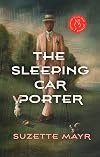
Real Rating: 4.75* of five, rounded up
The Publisher Says: When a mudslide strands a train, Baxter, a queer Black sleeping car porter, must contend with the perils of white passengers, ghosts, and his secret love affair
The Sleeping Car Porter brings to life an important part of Black history in North America, from the perspective of a queer man living in a culture that renders him invisible in two ways. Affecting, imaginative, and visceral enough that you’ll feel the rocking of the train, show more The Sleeping Car Porter is a stunning accomplishment.
Baxter’s name isn’t George. But it’s 1929, and Baxter is lucky enough, as a Black man, to have a job as a sleeping car porter on a train that crisscrosses the country. So when the passengers call him George, he has to just smile and nod and act invisible. What he really wants is to go to dentistry school, but he’ll have to save up a lot of nickel and dime tips to get there, so he puts up with “George.”
On this particular trip out west, the passengers are more unruly than usual, especially when the train is stalled for two extra days; their secrets start to leak out and blur with the sleep-deprivation hallucinations Baxter is having. When he finds a naughty postcard of two queer men, Baxter’s memories and longings are reawakened; keeping it puts his job in peril, but he can’t part with the postcard or his thoughts of Edwin Drew, Porter Instructor.
I RECEIVED A DRC FROM THE PUBLISHER VIA EDELWEISS+. THANK YOU.
My Review: The burden of racism lands without rhyme or reason. In no way does R.T. Baxter, dentist in training, want to believe he needs to be "George" to the oblivious white people his job as a porter on this particular cross-Canada trip from Montreal to Vancouver. They call him George anyway; he knows better than to correct them. And he knows that he's retaining a degree of his selfhood by allowing them to use a name that isn't connected to his self. It's not his self the oblivious don't see. It's not his self the crude jeer at, demean, demand from. It's George, the porter.
The beginning of the book makes you, a twenty-first century reader, ill with the shame of being a witness to a man's humiliation at the whims of people no better and mostly significantly worse than he is. There's a repugnant attempt at sexual assault; there's a nasty trick played regarding a tip; most of all, Baxter...George, really...is w-bombed by one of the continent's most repulsive specimens of whiteness. And you're only on your first leg of the trip, Reader! BaxterGeorge is so very not on his first, fourth, fifteenth even. And the hits keep comin' with the company's Bartlebys announcing he has new demerits. New ways to risk losing this job that could, if he just makes himself stick the landing enough...enough more...times, get him closer to the goal of becoming a dentist.
What transpires in this 1929-set tale of oblivious, privileged people behaving as badly as they are capable of without tipping too far into actual malice...even their obliviousness is used to shield them from the reality of those who serve them!...is seen through the stream of Baxter's desperately fatigued consciousness. His never-ending round of service isn't met with thanks, gratitude, or praise; just with demands for more. His brain serves up the memories of men he's cared for, he's served in the manner he's happy to serve them. He can't always connect the "reality" outside himself with the needs and wants of the young man he really is. He doesn't have a second to himself to dive back into The Scarab from Jupiter, for heaven's sake, even though a landslide trapped them...train-them, keep up!...in a pass and the Egyptologists are just finding out where on Jupiter they've been taken by their captors. Esme, little newly orphaned scrap of flesh that attached itself to him to escape a Gorgonops of a granny, won't let him go long enough to keep Pulp and Paper, those pompous bombastic business travelers, keep them from complaining about his unconscionable lack of information as to why the railroad allowed their train to be delayed by an Act of God, and then there's Mad Mary making all the sorts of noises as only his conductor-queen self can about Baxter also watching over Templeton's sleepers-only car...but in Baxter's car the Doctor's having A Crisis over his David, his colleague David, being arrested and, well, couldn't Baxter...you know...stay?
It's a sadly unchanging situation. People who, themselves, want and need are instead wanted and needed at, and only the right ones get those needs met. What Baxter gives up in his one wild and precious life is meant to be an investment in a better personal as well as social tomorrow as a dentist caring for needful peoples' teeth. What happens to him in the meantime is the out-of-body experience of sleep deprivation, the absolute and utter abnegation of meeting the needs of people who can't so much as bother to learn, still less use, your name, the all-consuming pandering demanded by those whose lives are built on shoals of "I PAID FOR THIS" without ever seeing the vast deeps of suffering the shoals stand in.
Capitalism is cruel, and the comfortably fixed for money like it that way. There's nothing wrong with the system, says the pale faces and pink gums of the privileged. Look, I tipped George, didn't I?
Simultaneously moving, infuriating, beautiful, and deadly, this is a superb choice for the 2022 Giller Prize. Shortlist announced tomorrow! show less
The Publisher Says: When a mudslide strands a train, Baxter, a queer Black sleeping car porter, must contend with the perils of white passengers, ghosts, and his secret love affair
The Sleeping Car Porter brings to life an important part of Black history in North America, from the perspective of a queer man living in a culture that renders him invisible in two ways. Affecting, imaginative, and visceral enough that you’ll feel the rocking of the train, show more The Sleeping Car Porter is a stunning accomplishment.
Baxter’s name isn’t George. But it’s 1929, and Baxter is lucky enough, as a Black man, to have a job as a sleeping car porter on a train that crisscrosses the country. So when the passengers call him George, he has to just smile and nod and act invisible. What he really wants is to go to dentistry school, but he’ll have to save up a lot of nickel and dime tips to get there, so he puts up with “George.”
On this particular trip out west, the passengers are more unruly than usual, especially when the train is stalled for two extra days; their secrets start to leak out and blur with the sleep-deprivation hallucinations Baxter is having. When he finds a naughty postcard of two queer men, Baxter’s memories and longings are reawakened; keeping it puts his job in peril, but he can’t part with the postcard or his thoughts of Edwin Drew, Porter Instructor.
I RECEIVED A DRC FROM THE PUBLISHER VIA EDELWEISS+. THANK YOU.
My Review: The burden of racism lands without rhyme or reason. In no way does R.T. Baxter, dentist in training, want to believe he needs to be "George" to the oblivious white people his job as a porter on this particular cross-Canada trip from Montreal to Vancouver. They call him George anyway; he knows better than to correct them. And he knows that he's retaining a degree of his selfhood by allowing them to use a name that isn't connected to his self. It's not his self the oblivious don't see. It's not his self the crude jeer at, demean, demand from. It's George, the porter.
The beginning of the book makes you, a twenty-first century reader, ill with the shame of being a witness to a man's humiliation at the whims of people no better and mostly significantly worse than he is. There's a repugnant attempt at sexual assault; there's a nasty trick played regarding a tip; most of all, Baxter...George, really...is w-bombed by one of the continent's most repulsive specimens of whiteness. And you're only on your first leg of the trip, Reader! BaxterGeorge is so very not on his first, fourth, fifteenth even. And the hits keep comin' with the company's Bartlebys announcing he has new demerits. New ways to risk losing this job that could, if he just makes himself stick the landing enough...enough more...times, get him closer to the goal of becoming a dentist.
What transpires in this 1929-set tale of oblivious, privileged people behaving as badly as they are capable of without tipping too far into actual malice...even their obliviousness is used to shield them from the reality of those who serve them!...is seen through the stream of Baxter's desperately fatigued consciousness. His never-ending round of service isn't met with thanks, gratitude, or praise; just with demands for more. His brain serves up the memories of men he's cared for, he's served in the manner he's happy to serve them. He can't always connect the "reality" outside himself with the needs and wants of the young man he really is. He doesn't have a second to himself to dive back into The Scarab from Jupiter, for heaven's sake, even though a landslide trapped them...train-them, keep up!...in a pass and the Egyptologists are just finding out where on Jupiter they've been taken by their captors. Esme, little newly orphaned scrap of flesh that attached itself to him to escape a Gorgonops of a granny, won't let him go long enough to keep Pulp and Paper, those pompous bombastic business travelers, keep them from complaining about his unconscionable lack of information as to why the railroad allowed their train to be delayed by an Act of God, and then there's Mad Mary making all the sorts of noises as only his conductor-queen self can about Baxter also watching over Templeton's sleepers-only car...but in Baxter's car the Doctor's having A Crisis over his David, his colleague David, being arrested and, well, couldn't Baxter...you know...stay?
It's a sadly unchanging situation. People who, themselves, want and need are instead wanted and needed at, and only the right ones get those needs met. What Baxter gives up in his one wild and precious life is meant to be an investment in a better personal as well as social tomorrow as a dentist caring for needful peoples' teeth. What happens to him in the meantime is the out-of-body experience of sleep deprivation, the absolute and utter abnegation of meeting the needs of people who can't so much as bother to learn, still less use, your name, the all-consuming pandering demanded by those whose lives are built on shoals of "I PAID FOR THIS" without ever seeing the vast deeps of suffering the shoals stand in.
Capitalism is cruel, and the comfortably fixed for money like it that way. There's nothing wrong with the system, says the pale faces and pink gums of the privileged. Look, I tipped George, didn't I?
Simultaneously moving, infuriating, beautiful, and deadly, this is a superb choice for the 2022 Giller Prize. Shortlist announced tomorrow! show less
Not everything that you see on a sleeping car of the fastest intercontinental train in 1929 should be seen. Baxter has been a Porter on such a train for a while, long enough to have earned enough demerits that his position is constantly at risk. You can earn demerits for seeing things and for not seeing things. But when you’ve gone more than 48 hours without sleep tending to passengers, some of things you see are of your own making. Blink and sometimes they will disappear. But what about show more the illicit postcard Baxter has found in the WC? Is it real or unreal? And what difference will that make if having it in his possession leads to his dismissal and the loss of his dream of going to dental school?
Suzette Mayr paints a marvellously surreal portrait of the sleep-deprived Baxter as his struggles with his obligations and his desires and the very real consequences of extended lack of sleep. His charges on his car are all extreme in one way or another. Mayr makes his anxiety palpable. But also his genuine care for many of his charges, such as the grieving young child, Esme. It’s impossible not to feel that Baxter is hurtling toward his doom, both personally and professionally as he crosses the country. And yet, Mayr catches a resilience in him that may ultimately signal the possibility of hope.
Despite the sleepiness of her protagonist, you won’t find your eyelids drooping as you read the gorgeous, poetic prose that Mayr conjures.
Easily recommended. show less
Suzette Mayr paints a marvellously surreal portrait of the sleep-deprived Baxter as his struggles with his obligations and his desires and the very real consequences of extended lack of sleep. His charges on his car are all extreme in one way or another. Mayr makes his anxiety palpable. But also his genuine care for many of his charges, such as the grieving young child, Esme. It’s impossible not to feel that Baxter is hurtling toward his doom, both personally and professionally as he crosses the country. And yet, Mayr catches a resilience in him that may ultimately signal the possibility of hope.
Despite the sleepiness of her protagonist, you won’t find your eyelids drooping as you read the gorgeous, poetic prose that Mayr conjures.
Easily recommended. show less

Hannelore, Clothilde and Frau Schnadelhuber are three seniors living in Edmonton. They feel increasingly marginalized in a society that values youth and renders older women largely invisible. What would you do in that case? Well, Hannelore convinces the others to steel a space-age barrel and ride it over Niagara Falls. Her 26-year-old granddaughter agrees to help them and the four head off driving from Edmonton to the Falls. The book begins with them getting into the barrel and is told show more through flashbacks -- some decades ago, others more recent -- that enable us to get to know they women and understand why going over the falls became their best option.
This is a great story of female friendship, of women supporting each other, even when they don't necessarily agree with each other. It's a tribute to what older people have to contribute to our society. A great read; poignant and often hilarious. show less
This is a great story of female friendship, of women supporting each other, even when they don't necessarily agree with each other. It's a tribute to what older people have to contribute to our society. A great read; poignant and often hilarious. show less
Lists
Diverse Horror (1)
Awards


You May Also Like


Associated Authors
Statistics
- Works
- 7
- Also by
- 2
- Members
- 575
- Popularity
- #43,588
- Rating
- 3.7
- Reviews
- 29
- ISBNs
- 30
- Languages
- 3