
Philip Hallie (1922–1994)
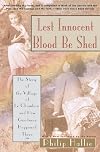
Author of Lest Innocent Blood Be Shed: The Story of the Village of Le Chambon and How Goodness Happened There
About the Author
Works by Philip Hallie
Lest Innocent Blood Be Shed: The Story of the Village of Le Chambon and How Goodness Happened There (1979) 689 copies, 11 reviews
Associated Works
The Moral Life: An Introductory Reader in Ethics and Literature (1999) — Contributor — 202 copies, 2 reviews
Tagged
Common Knowledge
- Canonical name
- Hallie, Philip
- Birthdate
- 1922
- Date of death
- 1994-08-07
- Gender
- male
- Education
- Harvard University
University of Oxford (Jesus College)
Grinnell College - Occupations
- philosopher
professor emeritus - Organizations
- Wesleyan University
United States Army (WWII)
Center for Advanced Studies
Vanderbilt University - Awards and honors
- Fulbright Fellowship
- Nationality
- USA
- Birthplace
- Chicago, Illinois, USA
- Place of death
- Middletown, Connecticut, USA
- Associated Place (for map)
- USA
Members
Reviews
Lest Innocent Blood Be Shed: The Story of the Village of Le Chambon and How Goodness Happened There by Philip Hallie
For more reviews and bookish posts please visit: https://www.ManOfLaBook.com
Lest Innocent Blood Be Shed by Philip Paul Hallie tells of Le Chambon, a small hamlet of Protestants in Vichy France who were helping Jewish refugees escape. Mr. Hallie is a professor of Philosophy, he left a manuscript of this book which was posthumously published.
The book tells of a small, but significant slice of history. The village of Le Chambon-sur-Lignon became part of a wide network to rescue Jews from the show more Nazi killing machine. The movement, led by Huguenot pastor André Trocmé and his wife Magda is credited with saving at least 2,000 persons. This is the second book I’ve read about the Le Chambon, Village of Secrets: Defying the Nazis in Vichy France by Caroline Moorehead was the first.
In a moving narrative, Lest Innocent Blood Be Shed by Philip Paul Hallie shows the goodness that people are capable of, as well as the bravery it takes to act upon that calling. I wasn’t too thrilled to find out the author was a philosopher, as I’m more interested in the actions of real people as opposed to high-brow abstractions. Luckily, so was Mr. Hallie who mentioned abstract virtues in passing, while concentrating on the astounding story of a whole village (almost), cooperating to rescue Jews during World War II at much risk to themselves and everyone they know.
Why did poor villagers who barely had enough to eat risk everything to help others? This was at a time when many refused.
Why, and how does an entire community gather together to work for a common goal in great peril?
Pastor Trocmé and his wife led the rescue effort, sticking to their ethical ideology unwaveringly and with fortitude. The Huguenots, with their history of persecution, were more than willing to help.
Focusing on personality, history, and culture, the book brings context to the conviction of Le Chambon which many find difficult to understand. Ethics, for Mr. Hallie, is not about abstraction, but about how people act when they are called up in the present, and whether the call to action is answered.
The people of Le Chambon answered quietly and their stories deserved to be told. Both André and Magda Trocmé were honored by Yad Vashem as Righteous among the Nations. show less
Lest Innocent Blood Be Shed by Philip Paul Hallie tells of Le Chambon, a small hamlet of Protestants in Vichy France who were helping Jewish refugees escape. Mr. Hallie is a professor of Philosophy, he left a manuscript of this book which was posthumously published.
The book tells of a small, but significant slice of history. The village of Le Chambon-sur-Lignon became part of a wide network to rescue Jews from the show more Nazi killing machine. The movement, led by Huguenot pastor André Trocmé and his wife Magda is credited with saving at least 2,000 persons. This is the second book I’ve read about the Le Chambon, Village of Secrets: Defying the Nazis in Vichy France by Caroline Moorehead was the first.
In a moving narrative, Lest Innocent Blood Be Shed by Philip Paul Hallie shows the goodness that people are capable of, as well as the bravery it takes to act upon that calling. I wasn’t too thrilled to find out the author was a philosopher, as I’m more interested in the actions of real people as opposed to high-brow abstractions. Luckily, so was Mr. Hallie who mentioned abstract virtues in passing, while concentrating on the astounding story of a whole village (almost), cooperating to rescue Jews during World War II at much risk to themselves and everyone they know.
Why did poor villagers who barely had enough to eat risk everything to help others? This was at a time when many refused.
Why, and how does an entire community gather together to work for a common goal in great peril?
Pastor Trocmé and his wife led the rescue effort, sticking to their ethical ideology unwaveringly and with fortitude. The Huguenots, with their history of persecution, were more than willing to help.
Focusing on personality, history, and culture, the book brings context to the conviction of Le Chambon which many find difficult to understand. Ethics, for Mr. Hallie, is not about abstraction, but about how people act when they are called up in the present, and whether the call to action is answered.
The people of Le Chambon answered quietly and their stories deserved to be told. Both André and Magda Trocmé were honored by Yad Vashem as Righteous among the Nations. show less
Lest Innocent Blood Be Shed: The Story of the Village of Le Chambon and How Goodness Happened There by Philip Hallie
This book differs from so many other books about WW2 because instead of focusing on HOW the events unfolded- who was involved, when it happened etc- it focused on WHY the people reacted in the ways that they did.
It's a interesting read but prepare to ponder the ethics of those involved rather than gathering a clear picture of the timeline of events in Le Chambon.
It's a interesting read but prepare to ponder the ethics of those involved rather than gathering a clear picture of the timeline of events in Le Chambon.
The story line will pull at your heartstrings. It is a slow read but one with impact. The devotion to religion of the residents of Le Chambon fostered the humanistic elements of ethics, goodness and compassion within them. The vivid imagery within Hallie’s prose held this reader’s attention, and I wanted to learn more about the village and its residents, wanted to learn more about the historical background.
Lest Innocent Blood be Shed is a book that definitely has historical value. The show more story is inspiring and a tribute to the entire village.
I recommend Lest Innocent Blood be Shed: The Story of the Village of Le Chambon and how Goodness Happened, by Philip P. Hallie, to everyone interested in the history of individuals who helped rescue Jews, and to those who want to learn more about the Holocaust and its rescuers. show less
Lest Innocent Blood be Shed is a book that definitely has historical value. The show more story is inspiring and a tribute to the entire village.
I recommend Lest Innocent Blood be Shed: The Story of the Village of Le Chambon and how Goodness Happened, by Philip P. Hallie, to everyone interested in the history of individuals who helped rescue Jews, and to those who want to learn more about the Holocaust and its rescuers. show less
This book as the message that there can be hope, even in darkest of times. During WWII, the entire community of Le Chambon refused to cooperate with the Nazis and helped more than 5,000 Jews escape Nazi camps. There was no one hero... rather the whole community engaged in a conspiracy of goodness. Whenever I start to think that it's impossible for a community to tackle a difficult issue, I find myself reflect what this amazing community was able to achieve. There is a good documentary about show more this community called Weapons of the Spirit. show less
Awards

You May Also Like


Associated Authors
Statistics
- Works
- 12
- Also by
- 2
- Members
- 774
- Popularity
- #32,870
- Rating
- 4.1
- Reviews
- 12
- ISBNs
- 17
- Languages
- 4