

Julio Ramón Ribeyro (1929–1994)
Author of La Palabra del Mudo: Cuentos 1952-1972
About the Author
Image credit: http://it.wikiquote.org/wiki/Julio_Ram%C3%B3n_Ribeyro
Works by Julio Ramón Ribeyro
The Word of the Speechless: Selected Stories (New York Review Books Classics) (2016) 70 copies, 1 review
Prosas apátridas (ed. conmemorativa): Prólogo de Fernando León de Aranoa (Biblioteca Breve) (Spanish Edition) (2019) 7 copies
La tentación del fracaso (ed. conmemorativa): Prólogo de Enrique Vila-Matas (Biblioteca Breve) (Spanish Edition) (2019) 7 copies
Las botellas y los hombres 5 copies
Os Urubus Sem Penas 3 copies
Cuentos populares 2 copies
ausente por tempo indeterminado 2 copies
Cuentos y ensayos 2 copies
Verslag van een zomer 2 copies
Antología 2 copies
Cuentos de circunstancias 2 copies
Atusparia 2 copies
La palabra del mudo 1 copy
Tres historias sublevantes 1 copy
Los palabra del mudo II: Tres historias sublevantes / Los cautivos / El próximo mes me nivelo 1 copy
Sobre el oficio 1 copy
Al pie del acantilado 1 copy
The Featherless Buzzards 1 copy
Cartas a Juan Antonio 1 copy
Ribeyro, la palabra inmortal 1 copy
Cuentos y ensayos 1 copy
Ribeyro, la palabra inmortal 1 copy
Cuentos. Antología. 1 copy
Van een verslag zomer 1 copy
Ο Λόγος του Μουγκού 1 copy
La novela peruana. No. 1 1 copy
Associated Works
Tagged
Common Knowledge
- Canonical name
- Ribeyro, Julio Ramón
- Legal name
- Ribeyro Zúñiga, Julio Ramón
- Birthdate
- 1929-08-31
- Date of death
- 1994-12-04
- Gender
- male
- Nationality
- Peru
- Map Location
- Peru
Members
Reviews
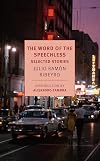
Ribeyro, a Peruvian writer highly regarded for his short stories, counts among the fans of his work a few writers you may have heard of: Gabriel Garcia-Marquez, Alejandro Zambra, Enrique Vila-Matas and Mario Vargas Llosa, among others. You can now add my name (albeit I guess my name should probably go toward the end of that list). Several years ago, I read a collection of Ribeyro’s stories (Marginal Voices) and came away thinking I would revisit his work…but not in a hurry. And so I did, show more reading his only novel, Chronicle of San Gabriel, a couple years ago. Recently, I sat down and read this recent and more extensive collection of his stories (spanning four decades of work from the 1950s to the 1990s). Since the first collection didn’t greatly impress me, I am tempted to go back and re-read the stories and wonder whether it was Ribeyro or the translator that troubled me. In any case, I enjoyed this collection and now begin to understand why he is held in such high esteem. Ribeyro writes straightforward prose and frequently concerns himself with disappointment and, often, despair. That said, these stories take place in a wide range of situations and include laugh-out-loud scenes as well as heart-wrenching ones, mysterious and even wonderfully pathetic (as in the Greek πάθος [pathos], not the common American usage) ones. It is hard to summarize the collection, but in these stories Ribeyro demonstrates a great ability to depict the strange or the eerie that doesn’t quite tip over into the supernatural. Characters are often sympathetic…but usually with some kind of twist. Definitely recommended. show less
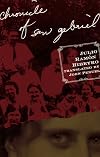
I am not a fan of Mario Vargas Llosa, so I haven’t read a lot of Peruvian writers. I did read a collection of Ribeyro’s short stories (entitled Marginal Voices) a few years ago because I was intrigued by the country and wanted to learn more. (Surprisingly, I can find no review or other indication of my thoughts on that collection.) Ribeyro was best known for his short stories and he received the Premio Juan Rulfo de literatura latinoamericana y del Caribe (now known as the FIL Literary show more Award in Romance Languages) the year he died, 1994. Most of what he wrote focused on urban stories, urban contexts. This novel is an exception: it tells of a boy from Lima who is sent to live on a remote hacienda in the mountains. It is simultaneously a coming of age story and a story about life in a rural farming community. As with my comments about Kocharethi, above, it is perhaps of more interest for its depiction of life and customs in rural Peru than for its plot, though the story is worth reading. show less
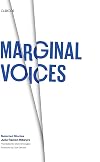
A master of the short story form reminding me of Borges. His Monsieur Baruch is a sad yet realistic depiction of despair and loneliness.
Ribeyro's collection touches on many aspects of the class and cultures in Lima, Peru. Professors, poor kids, mixed races, and tennagers looking to party are all portrayed. The stories are brief yet engagaing in a meaningful and emotional way. I recommend this book to anyone who is a fan of the short story as form or who is interested in the South American experience.
Lists
Awards


You May Also Like


Associated Authors
Statistics
- Works
- 85
- Also by
- 4
- Members
- 691
- Popularity
- #36,610
- Rating
- 4.0
- Reviews
- 12
- ISBNs
- 88
- Languages
- 8