
Samuel Hynes (1924–2019)
Author of Reporting World War II Part One : American Journalism, 1938-1944
About the Author
Samuel Hynes is a Woodrow Wilson Professor of Literature Emeritus at Princeton University.
Image credit: photo: David Dobkin
Works by Samuel Hynes
Reporting World War II Part One : American Journalism, 1938-1944 (1995) — Editor — 484 copies, 3 reviews
Reporting World War II Part Two : American Journalism 1944-1946 (1995) — Editor — 435 copies, 3 reviews
The Oxford Authors: Thomas Hardy — Editor — 3 copies
Associated Works
MHQ: The Quarterly Journal of Military History — Summer 1992 (1992) — Author "Verdun and Back: A Pilot's Log" — 20 copies
MHQ: The Quarterly Journal of Military History — Spring 1998 (1998) — Author "The Lusitania is not Torpedoed" — 17 copies
MHQ: The Quarterly Journal of Military History — Spring 1991 (1991) — Author "The Death of Landscape" — 16 copies
The Complete Poetical Works of Thomas Hardy. Volume II: Satires of Circumstance, Moments of Vision, and Late Lyrics and Earlier (1984) — Editor — 5 copies
The Complete Poetical Works of Thomas Hardy. Volume I: Wessex Poems, Poems of the Past and the Present, Time's Laughingstocks (1983) — Editor — 5 copies
The Complete Poetical Works of Thomas Hardy. Volume III: Human Shows, Winter Words, and Uncollected Poems (1985) — Editor — 5 copies
Tagged
Common Knowledge
- Canonical name
- Hynes, Samuel
- Legal name
- Hynes, Samuel Lynn
- Birthdate
- 1924-08-29
- Date of death
- 2019-10-04
- Gender
- male
- Education
- University of Minnesota (BA|1947)
Columbia University (Ph.D.) - Occupations
- Professor of Literature
- Organizations
- Princeton University
American Council of Learned Societies (fellow)
Bollingen Foundation (fellow)
National Endowment for the Humanities (senior fellow)
Swarthmore College
Northwestern University - Awards and honors
- American Academy of Arts and Letters Academy Award
Distinguished Flying Cross (1945)
Royal Society of Literature (Fellow) - Short biography
- Grew up in Minnesota. US Marine aviator during the Second World War. Career as a literature professor and author. Appeared in Ken Burns' PBS documentary "The War".
- Nationality
- USA
- Birthplace
- Chicago, Illinois, USA
- Places of residence
- Princeton, New Jersey, USA
Minneapolis, Minnesota, USA - Place of death
- Princeton, New Jersey, USA
- Associated Place (for map)
- USA
Members
Reviews
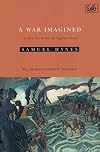
https://fromtheheartofeurope.eu/a-war-imagined-the-first-world-war-and-english-c...
I enjoyed this tremendously, a survey of the impact of the First World War on British culture – although the subtitle uses the word “English”, I’m glad to say that Ireland at least is referenced throughout. In 470 pages, Hynes looks at the brutal reset of the UK’s way of life that started in 1914, climaxed in 1916 and continued to reverberate long after the guns had formally fallen silent.
Almost show more every European family has a story here – my grandfather, born in 1880, was wounded three times in combat; his younger brother was gassed; one of his sisters lost her oldest son at Gallipoli, another lost her husband at Ypres. But Hynes’ focus is culture rather than combat, mainly prose writing, but also poetry, theatre, painting, sculpture, architecture and the nascent cinema industry, and he weaves an intense and diverse tapestry of how art responded to crisis and horror.
A lot of the names were familiar to me – Wells and Woolf dominating, of course, and Owen in poetry. Hynes does a great job of connecting them all together, mapping their mutual influences and in particular drawing out the changing perceptions of the war over time – those directly exposed to it realising the true horror of the situation quicker than those at home.
There is plenty of social commentary in the art, including the changing roles of women, and attitudes to sexuality. I had to grimly laugh at one quote from Asquith’s son, prosecuting a court-martial against a soldier for being gay, who he described in a letter to his wife as
"a nephew of Robert Ross, lately a scholar at Eaton, who aroused everyone’s suspicions by knowing Latin and Greek and constantly reading Henry James’ novels."
Sounds like a wrong ’un, for sure!
The book gave me a lot to think about, and I picked up a couple of intriguing recommendations. Sonia: Between Two Worlds, a novel by Stephen McKenna, seems to pick up the Irish dimension and do a bit more with it. And the Sandham Memorial Chapel sounds like it is well worth a detour next time I have reason to venture to northern Hampshire.
This is a great summary of an awful time, and the art that it generated, some of which was great and lasting. show less
I enjoyed this tremendously, a survey of the impact of the First World War on British culture – although the subtitle uses the word “English”, I’m glad to say that Ireland at least is referenced throughout. In 470 pages, Hynes looks at the brutal reset of the UK’s way of life that started in 1914, climaxed in 1916 and continued to reverberate long after the guns had formally fallen silent.
Almost show more every European family has a story here – my grandfather, born in 1880, was wounded three times in combat; his younger brother was gassed; one of his sisters lost her oldest son at Gallipoli, another lost her husband at Ypres. But Hynes’ focus is culture rather than combat, mainly prose writing, but also poetry, theatre, painting, sculpture, architecture and the nascent cinema industry, and he weaves an intense and diverse tapestry of how art responded to crisis and horror.
A lot of the names were familiar to me – Wells and Woolf dominating, of course, and Owen in poetry. Hynes does a great job of connecting them all together, mapping their mutual influences and in particular drawing out the changing perceptions of the war over time – those directly exposed to it realising the true horror of the situation quicker than those at home.
There is plenty of social commentary in the art, including the changing roles of women, and attitudes to sexuality. I had to grimly laugh at one quote from Asquith’s son, prosecuting a court-martial against a soldier for being gay, who he described in a letter to his wife as
"a nephew of Robert Ross, lately a scholar at Eaton, who aroused everyone’s suspicions by knowing Latin and Greek and constantly reading Henry James’ novels."
Sounds like a wrong ’un, for sure!
The book gave me a lot to think about, and I picked up a couple of intriguing recommendations. Sonia: Between Two Worlds, a novel by Stephen McKenna, seems to pick up the Irish dimension and do a bit more with it. And the Sandham Memorial Chapel sounds like it is well worth a detour next time I have reason to venture to northern Hampshire.
This is a great summary of an awful time, and the art that it generated, some of which was great and lasting. show less
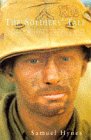
"storytelling is a primal need. I think that need encompasses both the teller and the listener. For the teller of a war story, the telling gives disordered experience order and therefore meaning;.... For the listener, the story makes huge and terrible events in history assume human faces and human voices,"
In this book Samuel Hynes uses the letters, memoirs, and diaries merging autobiography, history and literature, to inform us what war was really like for those who actually fought it and show more how modern warfare has evolved. Hynes focuses on the soldiers of the two world wars and Vietnam, taking the reader to the Somme, the Salerno beachhead, the Egyptian desert, Khe Sanh, a Spitfire over the Channel and a sailor on the Coral Sea: as well as the victims of these wars- the POWs, the survivors of the Nazi death camps and the two atom bombs.
Hynes writes that the prospect of excitement and great danger have always driven young men to volunteer. However, the romance has been considerably diminished as the last century progressed as war became ever more dependent on lethal technology, where men are maimed or killed in shocking numbers without ever seeing an enemy. Often, they returned home disillusioned about the real reasons behind them being there, but many also admitted that they wouldn't have missed it for the world.
In this book Hynes gives a voice to the vast majority of the combatants who are never normally heard from. Hynes has obviously trawled through an awful lot of British and American literature in particular to find his material, but for me has produced a well written piece of prose that felt more novelistic rather than academic. As an ex-serviceman myself, although I hasten to add that I didn't serve during any of these wars, I found this an interesting and thought provoking read that has made me question my own reasons for joining up. show less
In this book Samuel Hynes uses the letters, memoirs, and diaries merging autobiography, history and literature, to inform us what war was really like for those who actually fought it and show more how modern warfare has evolved. Hynes focuses on the soldiers of the two world wars and Vietnam, taking the reader to the Somme, the Salerno beachhead, the Egyptian desert, Khe Sanh, a Spitfire over the Channel and a sailor on the Coral Sea: as well as the victims of these wars- the POWs, the survivors of the Nazi death camps and the two atom bombs.
Hynes writes that the prospect of excitement and great danger have always driven young men to volunteer. However, the romance has been considerably diminished as the last century progressed as war became ever more dependent on lethal technology, where men are maimed or killed in shocking numbers without ever seeing an enemy. Often, they returned home disillusioned about the real reasons behind them being there, but many also admitted that they wouldn't have missed it for the world.
In this book Hynes gives a voice to the vast majority of the combatants who are never normally heard from. Hynes has obviously trawled through an awful lot of British and American literature in particular to find his material, but for me has produced a well written piece of prose that felt more novelistic rather than academic. As an ex-serviceman myself, although I hasten to add that I didn't serve during any of these wars, I found this an interesting and thought provoking read that has made me question my own reasons for joining up. show less
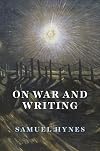
Samuel Hynes is unquestionably in his element with his latest book, ON WAR AND WRITING. As Princeton Professor Emeritus of Literature, and the author of numerous scholarly works on Auden, Hardy and other literary figures, particularly from the Edwardian era, he certainly has the writing angle covered. But Hynes knows war too. Before turning twenty-one, he had flown over a hundred missions in the Pacific as a Marine Corps pilot, and was awarded the Distinguished Flying Cross. In the show more Introduction, he tells us, " All my working life I've had two vocations - flying and professing ... they've always been there. The flying came first."
The book itself is something of a mixed bag, a collection of pieces spanning over thirty-five years. The oldest from 1980, is a critical look at Edward Thomas, an obscure British nature-writer-turned-poet, a protege of Robert Frost. Thomas, barely known in this country, was, Hynes tells us -
"... smothered by War Poets, because he happened also to be a poet who was a soldier, and was killed in action."
The newest piece here, very personal in nature, is the book's Introduction, in which Hynes gives a brief overview of his life, from Minnesota schoolyard games to his World War Two service, through his long academic career (he taught at Swarthmore, Northwestern and Princeton), his lifelong fascination with flying, and the study of war. In "Hardy and the Battle God," an extended treatise on Thomas Hardy's poetry from the Great War, Hynes writes of Hardy's "bitter vision of war, and of humankind's unalterable capacity for violence against itself" - a view which I suspect he shares. But Hynes also understands the allure of war to the young. In his 1988 essay, "In the Whirl and Muddle of War," he notes -
"Young men at war feel life and death with an intensity that is beyond peacetime emotions. They know comradeship, a closeness to other men that ordinary life frequently does not provide. They see their friends die, and they feel grief ... They feel fear, and the exhilaration of fear overcome. And they are changed."
In the same piece, Hynes tells us of teaching "a course on the literature of war," which piqued my interest, because I too taught such a course, but more than a decade earlier. Hynes, however, focused less on fiction and more on memoirs and personal documents in his course, while I concentrated on fiction in mine. He cites Graves, Sassoon, and Blunden (WWI); Dahl and William Manchester (WWII); and, from Vietnam, Caputo's A RUMOR OF WAR and Robert Mason's CHICKENHAWK. I used Hemingway and Mailer, and, from Vietnam, William Pelfrey's slim novel, THE BIG V, the only novel I could find from that war, which was still in progress.
There are a few pieces here that are very scholarly in nature - "Yeats's War," "E.E. Cummings's THE ENORMOUS ROOM," "The Death of Landscape" - obviously aimed at academic audiences. Other shorter pieces are book reviews, or introductions written for certain classic editions - pieces on books by Graeme West, Rebecca West, Vera Brittain and Cecil Lewis.
Perhaps the most accessible piece here, to the average reader, is "At War with Ken Burns," which documents the years-long making of Burns' PBS documentary, THE WAR, which featured Hynes as a principal contributor. I especially enjoyed the " Whirl and Muddle" piece, and also "War Stories," in which Hynes praises the work of the battlefield cartoonist Bill Mauldin, who "made the American G.I. imaginable and real." And in "A Critic Looks at War" Hynes takes a close look at literature to come out of the two Big Wars, as well as the "little wars" of the twentieth century. (I made a pretty lengthy list of works I want to read.) He added a 2016 Epilogue to this piece, noting he was wrong in his predictions about the "little" wars in Iraq and Afghanistan, conceding sadly -
"They were and are peculiar wars - undeclared and unfinished, aimless and endless ..."
Indeed. As Dexter Filkins has called them, "the forever wars. "
Sam Hynes' ON WAR AND WRITING is an important book, one that should be added to the recommended reading list at all of our military academies. I will recommend it highly to historians, military buffs and anyone who enjoys literature and critical thinking. The University of Chicago Press is to be commended for gathering these pieces together in a single volume.
- Tim Bazzett, author of the Cold War memoir, SOLDIER BOY: AT PLAY IN THE ASA show less
The book itself is something of a mixed bag, a collection of pieces spanning over thirty-five years. The oldest from 1980, is a critical look at Edward Thomas, an obscure British nature-writer-turned-poet, a protege of Robert Frost. Thomas, barely known in this country, was, Hynes tells us -
"... smothered by War Poets, because he happened also to be a poet who was a soldier, and was killed in action."
The newest piece here, very personal in nature, is the book's Introduction, in which Hynes gives a brief overview of his life, from Minnesota schoolyard games to his World War Two service, through his long academic career (he taught at Swarthmore, Northwestern and Princeton), his lifelong fascination with flying, and the study of war. In "Hardy and the Battle God," an extended treatise on Thomas Hardy's poetry from the Great War, Hynes writes of Hardy's "bitter vision of war, and of humankind's unalterable capacity for violence against itself" - a view which I suspect he shares. But Hynes also understands the allure of war to the young. In his 1988 essay, "In the Whirl and Muddle of War," he notes -
"Young men at war feel life and death with an intensity that is beyond peacetime emotions. They know comradeship, a closeness to other men that ordinary life frequently does not provide. They see their friends die, and they feel grief ... They feel fear, and the exhilaration of fear overcome. And they are changed."
In the same piece, Hynes tells us of teaching "a course on the literature of war," which piqued my interest, because I too taught such a course, but more than a decade earlier. Hynes, however, focused less on fiction and more on memoirs and personal documents in his course, while I concentrated on fiction in mine. He cites Graves, Sassoon, and Blunden (WWI); Dahl and William Manchester (WWII); and, from Vietnam, Caputo's A RUMOR OF WAR and Robert Mason's CHICKENHAWK. I used Hemingway and Mailer, and, from Vietnam, William Pelfrey's slim novel, THE BIG V, the only novel I could find from that war, which was still in progress.
There are a few pieces here that are very scholarly in nature - "Yeats's War," "E.E. Cummings's THE ENORMOUS ROOM," "The Death of Landscape" - obviously aimed at academic audiences. Other shorter pieces are book reviews, or introductions written for certain classic editions - pieces on books by Graeme West, Rebecca West, Vera Brittain and Cecil Lewis.
Perhaps the most accessible piece here, to the average reader, is "At War with Ken Burns," which documents the years-long making of Burns' PBS documentary, THE WAR, which featured Hynes as a principal contributor. I especially enjoyed the " Whirl and Muddle" piece, and also "War Stories," in which Hynes praises the work of the battlefield cartoonist Bill Mauldin, who "made the American G.I. imaginable and real." And in "A Critic Looks at War" Hynes takes a close look at literature to come out of the two Big Wars, as well as the "little wars" of the twentieth century. (I made a pretty lengthy list of works I want to read.) He added a 2016 Epilogue to this piece, noting he was wrong in his predictions about the "little" wars in Iraq and Afghanistan, conceding sadly -
"They were and are peculiar wars - undeclared and unfinished, aimless and endless ..."
Indeed. As Dexter Filkins has called them, "the forever wars. "
Sam Hynes' ON WAR AND WRITING is an important book, one that should be added to the recommended reading list at all of our military academies. I will recommend it highly to historians, military buffs and anyone who enjoys literature and critical thinking. The University of Chicago Press is to be commended for gathering these pieces together in a single volume.
- Tim Bazzett, author of the Cold War memoir, SOLDIER BOY: AT PLAY IN THE ASA show less
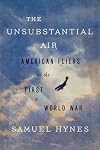
Back in 1997 Samuel Hynes published a book called THE SOLDIERS' TALE, a ground-breaking study of the lot of the men who fought in the two World Wars and Vietnam and how war lastingly affected them. His method was to closely examine the letters and journals as well as the poetry, memoirs and other literature produced by combatants and veterans of those wars. New York Times reviewer Gardner Botsford called it " A first-rate piece of work in every way," an assessment I agreed with show more wholeheartedly.
But I think this one is even better, and I hope I can explain why. With his latest book, THE UNSUBSTANTIAL AIR, Hynes turns once again to a study of war, but this time with a much narrower and more personal focus. This time he examines the aviators of World War I, those "daring young men in their flying machines." Aviation was barely out of its infancy when the hostilities began in Europe in 1914. France had a kind of primitive air force, but the United States (which did not enter the war until 1917) had no such thing. But young men in the States had already begun a love affair with flying, and many of them could not wait to get into the adventure and 'romance' of flying in a war. So they enlisted in the air services with France, England, or Canada. The earliest members of the legendary Lafayette Escadrille are featured prominently here, as well as the wealthy, thrill-seeking Ivy League pilots who were among the first to volunteer their services and later figured prominently in the US Air Service.
Sam Hynes spent several years researching this book, reading unit histories and immersing himself in the letters, diaries, journals and published and unpublished memoirs of the pilots who flew those flimsy, still evolving machines. Most of them were very young, still in their teens and early twenties, confident not only in their skills, but of their own immortality. Sadly, if predictably, many of them did not survive the war. The letters he shares are often filled with the kind of innocence, excitement and wonderment found only in those whose experiences have been very limited. An early example is one from Stuart Walcott who describes the assortment of American volunteers he is training with at a field in France -
“… more than a hundred at this one school, and the oddest combination I’ve ever been thrown with: chauffeurs, second-story men, ex-college athletes, racing drivers, salesmen, young bums of leisure, a colored prizefighter, ex-Foreign Legionnaires, ball players, millionaires and tramps.”
Hynes, a young Marine Corps pilot in the Pacific during WWII, ‘gets’ this, and throws in his own assessment -
“That’s what big wars do: they bring together young men who would not never meet in ordinary civilian life, dump them together in barracks and tents, and in foxholes and airplanes, set them marching to the same drum, fighting in the same war. It was like that in my war too; until I went to flight school, I had never met anyone who went to Yale, or came from Texas, or pitched in the International League, or drove an MG. Or a girl who drank Southern Comfort. I met them all before I was done. War is a broadening experience.”
And THIS is the kind of commentary that makes THE UNSUBSTANTIAL AIR such an intensely personal and eminently readable kind of history. Hynes succeeds in making himself a kind of contemporary of these fliers from a hundred years ago. In reading their letters and diaries and reflecting on them and then remembering his own days as a combat pilot, he has entered their company, become one of them. With passages like the one above I was taken back to my own military experiences during the Cold War and early years of Vietnam. Brought up in a small town in Michigan, I was suddenly thrust into the company of young men - boys, really - from New York, Missouri, Texas, Wyoming, California, Oklahoma, and other states. We trained together, lived together in cramped close quarters, and traveled together to faraway foreign places - Turkey and Germany, in my case. And yes, we met girls who drank liquor and beer, girls quite unlike the ‘nice’ girls we’d grown up with. Such things are covered in Hynes’s chapters: “Abroad I: First Impressions”; “Abroad II: Getting Acquainted”; and “Abroad III: End Games”.
This history-cum-memoir aspect of THE UNSUBSTANTIAL AIR manifests itself repeatedly. At the end of the chapter, “Looking at the War,” which looks at the various kinds of work and planes that the pilots were involved with, Hynes agrees that the fighter pilots were the best, the most ‘romantic,’ and says -
“A generation later, small boys like me, who wore helmets and goggles to school in the winter, would run around the school yard at recess, their arms stuck out like wings, uttering what they hoped was the sound of machine guns and shouting, ‘Look at me! I’m Eddie Rickenbacker!’ or ‘I’m the Red Baron!’ And when our war came along, we’d know that we had to be pilots - not just any pilots, fighter pilots, because they were the heroes, they were the solitary knights of the air who fought their war personally, one plane against the other.”
And again, when Hynes discusses how, when a pilot dies, he is honored in two ways. One is the official military funeral. The other is more personal -
“… someone - a friend, a tent mate - assumed the task of sorting the dead man’s possessions, dismantling his life as a flier, now that it was over. There won’t be many personal items - a few photographs, a watch or a fountain pen, some letters from home, perhaps - for the folks at home to cherish … And the sorting, like the military funeral, will be a reassurance that a man you lived with and flew with has been treated with due respect, which is all you can do.”
These deeply felt personal touches in this unique history of these pioneer military aviators occur repeatedly - in the way Hynes often uses the present tense, and even the future tense, a stylistic method that puts you in the moment, a kind of “you are there” feeling; and also when he uses a first person and second person viewpoint, versus a constant objective and omniscient third person. Here’s a sample -
“… many pilots become casualty statistics: dead or wounded, or missing, or shot down and captured and made prisoners of war. If you read their letters and journals, you’re bound to take some of those losses personally. You’ve followed these young men from college to flight school to a squadron at the front; you’ve felt their eagerness and witnessed their triumphs and mistakes. And now, suddenly, their war stories end, or are interrupted, and you feel their absence. Having come this far in the company of these pilots, I could make my own muster of the lost - the ones I’d like to have flown with.”
And he does, listing the names of just a few of the pilots featured throughout his book: Walter Avery, Ham Coolidge, Joe Eastman and Kenneth MacLeish, summarizing their brief flying careers, and - in some cases - too brief lives.
And finally, in an even more personal summing up of his research and the writing of this book -
“I come to the end of this story of the flying game with a feeling of admiration for the men I have met here, but also with a certain sadness. Like old Nestor in the ODYSSEY, I look back on the war and think, ‘So many good men gone. How young they were, how promising those young lives that would not be lived out … And what good guys they were - funny, risk-taking, good friends and good fliers.’ War is a cruel devourer of the young. And flying is a gamble that even the best pilots don’t always win.”
I could feel Sam Hynes’s sadness as he said good-bye to all these young men he’d come to know through their letters and diary entries; and as he no doubt said good-bye again to friends lost in his own war more than sixty years ago.
THE UNSUBSTANTIAL AIR is history, a deeply personal history of the best kind. Yet another “first rate piece of work” from Samuel Hynes. And then some. Thank you, Sam. My highest recommendation. show less
But I think this one is even better, and I hope I can explain why. With his latest book, THE UNSUBSTANTIAL AIR, Hynes turns once again to a study of war, but this time with a much narrower and more personal focus. This time he examines the aviators of World War I, those "daring young men in their flying machines." Aviation was barely out of its infancy when the hostilities began in Europe in 1914. France had a kind of primitive air force, but the United States (which did not enter the war until 1917) had no such thing. But young men in the States had already begun a love affair with flying, and many of them could not wait to get into the adventure and 'romance' of flying in a war. So they enlisted in the air services with France, England, or Canada. The earliest members of the legendary Lafayette Escadrille are featured prominently here, as well as the wealthy, thrill-seeking Ivy League pilots who were among the first to volunteer their services and later figured prominently in the US Air Service.
Sam Hynes spent several years researching this book, reading unit histories and immersing himself in the letters, diaries, journals and published and unpublished memoirs of the pilots who flew those flimsy, still evolving machines. Most of them were very young, still in their teens and early twenties, confident not only in their skills, but of their own immortality. Sadly, if predictably, many of them did not survive the war. The letters he shares are often filled with the kind of innocence, excitement and wonderment found only in those whose experiences have been very limited. An early example is one from Stuart Walcott who describes the assortment of American volunteers he is training with at a field in France -
“… more than a hundred at this one school, and the oddest combination I’ve ever been thrown with: chauffeurs, second-story men, ex-college athletes, racing drivers, salesmen, young bums of leisure, a colored prizefighter, ex-Foreign Legionnaires, ball players, millionaires and tramps.”
Hynes, a young Marine Corps pilot in the Pacific during WWII, ‘gets’ this, and throws in his own assessment -
“That’s what big wars do: they bring together young men who would not never meet in ordinary civilian life, dump them together in barracks and tents, and in foxholes and airplanes, set them marching to the same drum, fighting in the same war. It was like that in my war too; until I went to flight school, I had never met anyone who went to Yale, or came from Texas, or pitched in the International League, or drove an MG. Or a girl who drank Southern Comfort. I met them all before I was done. War is a broadening experience.”
And THIS is the kind of commentary that makes THE UNSUBSTANTIAL AIR such an intensely personal and eminently readable kind of history. Hynes succeeds in making himself a kind of contemporary of these fliers from a hundred years ago. In reading their letters and diaries and reflecting on them and then remembering his own days as a combat pilot, he has entered their company, become one of them. With passages like the one above I was taken back to my own military experiences during the Cold War and early years of Vietnam. Brought up in a small town in Michigan, I was suddenly thrust into the company of young men - boys, really - from New York, Missouri, Texas, Wyoming, California, Oklahoma, and other states. We trained together, lived together in cramped close quarters, and traveled together to faraway foreign places - Turkey and Germany, in my case. And yes, we met girls who drank liquor and beer, girls quite unlike the ‘nice’ girls we’d grown up with. Such things are covered in Hynes’s chapters: “Abroad I: First Impressions”; “Abroad II: Getting Acquainted”; and “Abroad III: End Games”.
This history-cum-memoir aspect of THE UNSUBSTANTIAL AIR manifests itself repeatedly. At the end of the chapter, “Looking at the War,” which looks at the various kinds of work and planes that the pilots were involved with, Hynes agrees that the fighter pilots were the best, the most ‘romantic,’ and says -
“A generation later, small boys like me, who wore helmets and goggles to school in the winter, would run around the school yard at recess, their arms stuck out like wings, uttering what they hoped was the sound of machine guns and shouting, ‘Look at me! I’m Eddie Rickenbacker!’ or ‘I’m the Red Baron!’ And when our war came along, we’d know that we had to be pilots - not just any pilots, fighter pilots, because they were the heroes, they were the solitary knights of the air who fought their war personally, one plane against the other.”
And again, when Hynes discusses how, when a pilot dies, he is honored in two ways. One is the official military funeral. The other is more personal -
“… someone - a friend, a tent mate - assumed the task of sorting the dead man’s possessions, dismantling his life as a flier, now that it was over. There won’t be many personal items - a few photographs, a watch or a fountain pen, some letters from home, perhaps - for the folks at home to cherish … And the sorting, like the military funeral, will be a reassurance that a man you lived with and flew with has been treated with due respect, which is all you can do.”
These deeply felt personal touches in this unique history of these pioneer military aviators occur repeatedly - in the way Hynes often uses the present tense, and even the future tense, a stylistic method that puts you in the moment, a kind of “you are there” feeling; and also when he uses a first person and second person viewpoint, versus a constant objective and omniscient third person. Here’s a sample -
“… many pilots become casualty statistics: dead or wounded, or missing, or shot down and captured and made prisoners of war. If you read their letters and journals, you’re bound to take some of those losses personally. You’ve followed these young men from college to flight school to a squadron at the front; you’ve felt their eagerness and witnessed their triumphs and mistakes. And now, suddenly, their war stories end, or are interrupted, and you feel their absence. Having come this far in the company of these pilots, I could make my own muster of the lost - the ones I’d like to have flown with.”
And he does, listing the names of just a few of the pilots featured throughout his book: Walter Avery, Ham Coolidge, Joe Eastman and Kenneth MacLeish, summarizing their brief flying careers, and - in some cases - too brief lives.
And finally, in an even more personal summing up of his research and the writing of this book -
“I come to the end of this story of the flying game with a feeling of admiration for the men I have met here, but also with a certain sadness. Like old Nestor in the ODYSSEY, I look back on the war and think, ‘So many good men gone. How young they were, how promising those young lives that would not be lived out … And what good guys they were - funny, risk-taking, good friends and good fliers.’ War is a cruel devourer of the young. And flying is a gamble that even the best pilots don’t always win.”
I could feel Sam Hynes’s sadness as he said good-bye to all these young men he’d come to know through their letters and diary entries; and as he no doubt said good-bye again to friends lost in his own war more than sixty years ago.
THE UNSUBSTANTIAL AIR is history, a deeply personal history of the best kind. Yet another “first rate piece of work” from Samuel Hynes. And then some. Thank you, Sam. My highest recommendation. show less
Lists
Awards


You May Also Like


Associated Authors
Statistics
- Works
- 18
- Also by
- 16
- Members
- 2,022
- Popularity
- #12,712
- Rating
- 3.9
- Reviews
- 31
- ISBNs
- 59
- Favorited
- 1