
David Weddle (1) (1956–)
Author of Section 31: Abyss
For other authors named David Weddle, see the disambiguation page.
About the Author
David Weddle has written for the Los Angeles Times Magazine, The Washington Post, Rolling Stone, Film Comment, Sight and Sound, and Daily Variety. He lives in Malibu, California
Image credit: rindastartrekds9.wordpress.com
Works by David Weddle
Among the Mansions of Eden: Tales of Love, Lust, and Land in Beverly Hills (2003) 28 copies, 1 review
Associated Works
Tagged
Common Knowledge
- Canonical name
- Weddle, David
- Legal name
- Weddle, David O'Neal
- Birthdate
- 1956
- Gender
- male
- Education
- University of Southern California School of Cinema
- Occupations
- writer
television writer and producer - Nationality
- USA
- Associated Place (for map)
- USA
Members
Reviews
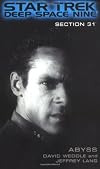
Heart of Darkness for Star Trek with Bashir confronting Section 31 once again. The story's atmosphere is indeed fraught with menace as layers of horrors are revealed about the novel's central villain, Locken. With a grandiose plot involving a missile and a red-haired villain the comparisons to Ian Fleming's Moonraker are quite obvious. The latest cast additions to the DS9 universe are fleshed out quite well, especially the new Jem-Hadar in residence. The novel even manages to give the worst show more of the Trek films, Insurrection an excuse to exist, with the surprise use of the holo-deck ship. A really gripping read. show less
I found this to be a surprisingly good book! The early DS9 novels didn't do a whole lot for me, but taking place after the series ended, this book really proved quite engaging. I was enthralled by all that was going on with the DS9 cast post-TV series. The story, of course, involves Section 31, which makes for a great antagonist. I'm especially interested in Commander Vaughn. There's certainly much more to him than meets the eye and I look forward to reading about him in later novels.
All and all it was pretty good, though I felt the ending kind of fell apart and was a little unbievable. Dr. Bashir is again confronted by the NSA of The Federation, Section 31 an organization that doesn't exist. This time to stop a gemetically enhanced mass murderer who has threatened the unoverse and started his own Jem'haDar Hatching facility in the Badlands. Ezri conviences Kira to let her go along as Ezri and Bashire are not Jadziah and Worf. Ro's expertise at the badlands comes in show more handy even more than you'd expect and Tarana'tar, the Jem'haDar that Odo sent to observe DS9 has his loyalty questioned successfully, but his tactics still like Federation tact. All in all pretty good. show less
While I concede that the plot line for this story is good, it's not entirely well thought out and the writing is very blatant and a trifle forced. Interactions from certain characters are highly over-characterized (i.e. Kira and Shul, most scenes between Dax and Bashir, and even ones between Vaugn and PrynnMei.) Nothing in this book is subtle, at all.
Ro Laren, while nicely written, is thrust into a horrible plot device used to make the story go faster. While the Ingavi are an interesting and show more somewhat well developed race, they are used only as a foil to help speed along the plot. There is very little mention of Ro's reluctance to go to Sindorin and there really should have been an emphasis on this fact in order for the reader to thoroughly believe that the Ingavi race was more than a mcguffin used by the authors when they needed something to fall back on.
There is also the idea that Vaugn would have a secretly hidden ship that he so happened to steal from Section 31. Ever wonder why Section 31 would allow anything to be stolen from them? I mean, taking my information I know from the series, it would appear that even if it looked like the protagonist was ahead of Section 31, the ending still revealed that he was still a step or two behind. So why would Vaugn have this ship and why would he be allowed to keep the ship? You don't learn anything about the ship until the end and you really don't see how it plays any point in being in the book except for to serve as a deus ex machina.
I have to say, I've read fan fiction that's been alot better than the writing in this book. You know it's a bad read when you can guess the next lines of what a character is going to say. This feels especially true for the interaction between Kira and Shul, where the entire conversation does not really serve any point in the book. It gives little insight into Kira's state of mind, especially considering that we already understand that not every Bajoran sees her as the black sheep of their faith (i.e. Ro Laren.) And I would assume Leeta would not either; a conversation between Leeta and Kira would have made for a better scenario.
On the other hand, there was Dax and Bashir. First of all, let me say that I am a big proponent of the Dax/Bashir pairing. Having said that: I don't believe that Ezri had any business being in the major plot of this book. And I mean this. Sometimes, too many crew members in the main plot is just that. Everything Ezri did, Ro could have done. The ONLY purpose Ezri served was that she was a foil to make Locken believe that Bashir was going to follow him. Everything else, Ro could have done, then there would be no need to include the horrible subplot of the Ingavi(those poor Ingavi) or Vaugn's Magical Mystery Ship. Even to a point, Ro should have been able to cause much more agitation between Bashir and Locken which, I think, would have built a better turning-point foundation.
As for the interactions between Vaugn and PrynnMei, I can't even say how disgusted I am with the character developement. I think the authors did not take into consideration that neither of these characters were in the series so readers would not have episodes and episodes of character information to form an opinion on either character. Vaugn to some extent has been fairly well developed, but not enough to understand the overzealous hatred that arises from PrynnMei or Vaugn's seemingly careless acceptance of her attitude.
I do think the plot had the best of intentions and quite a bit of it worked well. I think the best part of the plot was the detailing of Locken's base and plans. Locken's Jem'Hadar were certainly interesting to watch, but the First's conversation with Taran'atar did little to help understand either character really. It only felt like a plot device, which this book seems to be loaded with.
I can't recommend this book anyone. Read it if you realllllyyyy want to, but don't waste your time otherwise. show less
Ro Laren, while nicely written, is thrust into a horrible plot device used to make the story go faster. While the Ingavi are an interesting and show more somewhat well developed race, they are used only as a foil to help speed along the plot. There is very little mention of Ro's reluctance to go to Sindorin and there really should have been an emphasis on this fact in order for the reader to thoroughly believe that the Ingavi race was more than a mcguffin used by the authors when they needed something to fall back on.
There is also the idea that Vaugn would have a secretly hidden ship that he so happened to steal from Section 31. Ever wonder why Section 31 would allow anything to be stolen from them? I mean, taking my information I know from the series, it would appear that even if it looked like the protagonist was ahead of Section 31, the ending still revealed that he was still a step or two behind. So why would Vaugn have this ship and why would he be allowed to keep the ship? You don't learn anything about the ship until the end and you really don't see how it plays any point in being in the book except for to serve as a deus ex machina.
I have to say, I've read fan fiction that's been alot better than the writing in this book. You know it's a bad read when you can guess the next lines of what a character is going to say. This feels especially true for the interaction between Kira and Shul, where the entire conversation does not really serve any point in the book. It gives little insight into Kira's state of mind, especially considering that we already understand that not every Bajoran sees her as the black sheep of their faith (i.e. Ro Laren.) And I would assume Leeta would not either; a conversation between Leeta and Kira would have made for a better scenario.
On the other hand, there was Dax and Bashir. First of all, let me say that I am a big proponent of the Dax/Bashir pairing. Having said that: I don't believe that Ezri had any business being in the major plot of this book. And I mean this. Sometimes, too many crew members in the main plot is just that. Everything Ezri did, Ro could have done. The ONLY purpose Ezri served was that she was a foil to make Locken believe that Bashir was going to follow him. Everything else, Ro could have done, then there would be no need to include the horrible subplot of the Ingavi(those poor Ingavi) or Vaugn's Magical Mystery Ship. Even to a point, Ro should have been able to cause much more agitation between Bashir and Locken which, I think, would have built a better turning-point foundation.
As for the interactions between Vaugn and PrynnMei, I can't even say how disgusted I am with the character developement. I think the authors did not take into consideration that neither of these characters were in the series so readers would not have episodes and episodes of character information to form an opinion on either character. Vaugn to some extent has been fairly well developed, but not enough to understand the overzealous hatred that arises from PrynnMei or Vaugn's seemingly careless acceptance of her attitude.
I do think the plot had the best of intentions and quite a bit of it worked well. I think the best part of the plot was the detailing of Locken's base and plans. Locken's Jem'Hadar were certainly interesting to watch, but the First's conversation with Taran'atar did little to help understand either character really. It only felt like a plot device, which this book seems to be loaded with.
I can't recommend this book anyone. Read it if you realllllyyyy want to, but don't waste your time otherwise. show less
Lists
You May Also Like


Associated Authors
Statistics
- Works
- 3
- Also by
- 1
- Members
- 529
- Popularity
- #47,054
- Rating
- 3.6
- Reviews
- 6
- ISBNs
- 18
- Languages
- 1
