
Daphne Kalotay
Author of Russian Winter
About the Author
Image credit: American Library Association
Works by Daphne Kalotay
Tagged
Common Knowledge
- Gender
- female
- Education
- Vassar College
Boston University - Occupations
- creative writing teacher
- Awards and honors
- MacDowell Fellow
Christopher Isherwood Foundation
La Napoule Foundation
Yaddo
W.K. Rose Fellowship in the Creative Arts - Nationality
- Canada
USA - Places of residence
- New Jersey, USA
Brookline, Massachusetts, USA - Associated Place (for map)
- USA
Members
Reviews
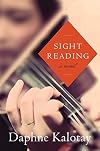
Hazel and Nicholas have what others might view as a cosmopolitan life – Nicholas is a young (at least relatively), much sought-after conductor who has traveled across the world in posts at conservatories and orchestras. He is about the music, to the fault of everything else in his life, including his beautiful wife Hazel and their young daughter Jessie. Hazel is a presence that is both strong in being the glue that keeps the nomadic household together, and ghost-like in being a fading show more presence when she should be speaking up for herself and her needs. Then there is Remy, a young conservatory violin student who works very hard and is willing to do what it takes to try and break out of always being second best. Daphne Kalotay brings us a character study of these three very different people in her latest book Sight Reading.
After the first few chapters the characters, and this book, could have become a cliche once Nicholas discovers he has fallen in love with Remy. Instead, Kalotay develops them and gives them even more depth as we grow to understand who each of these people are. And what I enjoyed best about this book and Kalotay’s approach is that she does this without lots of drama, it is quiet and subtle, building – much like the symphonies that Nicholas directs and Remy performs. Even during what could be big, dramatic events there is no melodrama, just life and moving on. But it is not just the characters Kalotay develops that make this book so enjoyable to read, for me it is how she weaves Boston into the story (a place I dearly love) and her depth of knowledge of music and instruments that she shares make this a very robust, smart novel.
** I received this book as an uncorrected proof for review from the publisher, Harper.
This review can be found on my book blog: www.BaileysandBooks.com. show less
After the first few chapters the characters, and this book, could have become a cliche once Nicholas discovers he has fallen in love with Remy. Instead, Kalotay develops them and gives them even more depth as we grow to understand who each of these people are. And what I enjoyed best about this book and Kalotay’s approach is that she does this without lots of drama, it is quiet and subtle, building – much like the symphonies that Nicholas directs and Remy performs. Even during what could be big, dramatic events there is no melodrama, just life and moving on. But it is not just the characters Kalotay develops that make this book so enjoyable to read, for me it is how she weaves Boston into the story (a place I dearly love) and her depth of knowledge of music and instruments that she shares make this a very robust, smart novel.
** I received this book as an uncorrected proof for review from the publisher, Harper.
This review can be found on my book blog: www.BaileysandBooks.com. show less
I am not a musician. When I was in elementary school, I played the viola for a while. I was laughingly banished to the back room of the house to practice so I can't possibly have been any good. That my music teacher called my mother when I quit to tell her that I needed to keep at it because I had perfect pitch was, I suspect, more the desperation of a music teacher long deafened by children drawing screechy bows across out of tune strings than any truth about my potential musical talent. I show more do, however, visibly wince when I hear someone belt out a flat note or have their instrument out of tune so maybe I have squandered untapped natural ability. (Really not likely.) In any case, I do enjoy reading about music, the making of music, and the completely foreign (to me) world of musicians so I was intrigued by Daphne Kalotay's newest novel, Sight Reading, set in the rarified world of classical music.
Composed mainly of a small chamber group of characters, lauded conductor and composer Nicholas Elko, his beautiful and accomodating wife Hazel, and the young second chair violin at the conservatory, Remy, the novel explores the quiet dramas of their changing personal lives from young adulthood to late middle age in an exquisite, extended symphony of lives. Opening with Hazel catching sight of Remy after many years, the novel skips back into the past to the beginning of the story, when Nicholas and Hazel were in the early years of their marriage, traveling around the world for Nicholas' promising career as a conductor and doting on preschool-aged daughter Jessie and Remy was simply a student in Nicholas' new student orchestra in Boston. But life keeps on moving, relationships change, marriages fail, and new formations appear as the novel progresses and each of the characters must adjust to the big and the mundane little things of life. At heart, this is a domestic novel wreathed in music and the musical world but not necessarily about music itself.
Throughout the narrative, Nicholas struggles with writing a symphony based in his Scottish childhood; it's to be his magnum opus. In the same way he seeks to capture the events, sights, and sounds from his past, the novel serves as the symphonic rendering of his, Hazel's, and Remy's lives, movement after movement after movement. And each stage of the novel takes a different tone. There is the desperation of Nicholas and Remy's affair and his falling in love with her against his will forcing him to end his marriage. There's the loneliness and fear of being forever alone, of continuing to hurt and feel unwanted, undesirable for so many years, that pervades Hazel's very being, even to the point of manifesting itself on her skin. There's the stagnation and writer's block that drives Nicholas into a wholly different world than the one he inhabits and there's the feeling of neglect and of being taken for granted, of not being included that Remy must fight even in this marriage she won so many years ago.
Deep and yet still common, everyday emotion underlies the whole of the narrative, this tale of divorce and remarriage, of parenting, of shared lives, of music and devotion. It is a subtle rendering and beautifully written. Kalotay has portrayed the world of professional musicians well and she manages to immerse even the unmusical into sound just through words on the page. Just as Remy strengthens her playing through the challenge of sight reading, playing a piece through without having seen or prepared it beforehand, so too must the characters take the challenge of sight reading their way through their lives. And when they each give themselves over to the unpredictability of this, they are in fact strengthened too.
Remy is perhaps the most fully rounded of the characters, the one whose inner life is most interesting. Hazel is almost too good, too blandly effacing, even when she is hurt. Her reaction to Nicholas' cheating and the fact that any ugliness or recriminations from the divorce either don't happen or are hidden in the undocumented, intervening years not in the book, make her seem as conciliatory and placid as Remy assumes she is. Nicholas' character is careless with other peoples' feelings but he comes off as selfish in a rather good natured and unthinking, absent-minded way rather than a considered and deliberate way, not that this fully absolves him. The notes of each characters' life mingles with the others, sometimes breaking out for a soaring solo and other times sublimating to the whole to create a complex, well-written piece about the very ordinariness of love and relationship. I wish I'd had the foresight to listen to some wonderful music as I was reading along so I could have been completely immersed in the world these characters inhabit. show less
Composed mainly of a small chamber group of characters, lauded conductor and composer Nicholas Elko, his beautiful and accomodating wife Hazel, and the young second chair violin at the conservatory, Remy, the novel explores the quiet dramas of their changing personal lives from young adulthood to late middle age in an exquisite, extended symphony of lives. Opening with Hazel catching sight of Remy after many years, the novel skips back into the past to the beginning of the story, when Nicholas and Hazel were in the early years of their marriage, traveling around the world for Nicholas' promising career as a conductor and doting on preschool-aged daughter Jessie and Remy was simply a student in Nicholas' new student orchestra in Boston. But life keeps on moving, relationships change, marriages fail, and new formations appear as the novel progresses and each of the characters must adjust to the big and the mundane little things of life. At heart, this is a domestic novel wreathed in music and the musical world but not necessarily about music itself.
Throughout the narrative, Nicholas struggles with writing a symphony based in his Scottish childhood; it's to be his magnum opus. In the same way he seeks to capture the events, sights, and sounds from his past, the novel serves as the symphonic rendering of his, Hazel's, and Remy's lives, movement after movement after movement. And each stage of the novel takes a different tone. There is the desperation of Nicholas and Remy's affair and his falling in love with her against his will forcing him to end his marriage. There's the loneliness and fear of being forever alone, of continuing to hurt and feel unwanted, undesirable for so many years, that pervades Hazel's very being, even to the point of manifesting itself on her skin. There's the stagnation and writer's block that drives Nicholas into a wholly different world than the one he inhabits and there's the feeling of neglect and of being taken for granted, of not being included that Remy must fight even in this marriage she won so many years ago.
Deep and yet still common, everyday emotion underlies the whole of the narrative, this tale of divorce and remarriage, of parenting, of shared lives, of music and devotion. It is a subtle rendering and beautifully written. Kalotay has portrayed the world of professional musicians well and she manages to immerse even the unmusical into sound just through words on the page. Just as Remy strengthens her playing through the challenge of sight reading, playing a piece through without having seen or prepared it beforehand, so too must the characters take the challenge of sight reading their way through their lives. And when they each give themselves over to the unpredictability of this, they are in fact strengthened too.
Remy is perhaps the most fully rounded of the characters, the one whose inner life is most interesting. Hazel is almost too good, too blandly effacing, even when she is hurt. Her reaction to Nicholas' cheating and the fact that any ugliness or recriminations from the divorce either don't happen or are hidden in the undocumented, intervening years not in the book, make her seem as conciliatory and placid as Remy assumes she is. Nicholas' character is careless with other peoples' feelings but he comes off as selfish in a rather good natured and unthinking, absent-minded way rather than a considered and deliberate way, not that this fully absolves him. The notes of each characters' life mingles with the others, sometimes breaking out for a soaring solo and other times sublimating to the whole to create a complex, well-written piece about the very ordinariness of love and relationship. I wish I'd had the foresight to listen to some wonderful music as I was reading along so I could have been completely immersed in the world these characters inhabit. show less

Stories that revolve around a physical object always intrigue me. The hidden history a thing has been a silent witness to can be a great way to tell a story and fire the imagination so that’s why I picked up this book which hinges on a woman selling her jewelry collection. For the most part it delivers, but it was a little prolonged in places where the pacing just dragged.
It does have a good sense of mystery and Nina’s dramatic past. While I can understand where she’s coming from, show more Nina is a jerk and continues to be a jerk because she can and people let her. She’s content that she’s revered and respected, but doesn’t care if no one likes her. She uses her history as an excuse to deny things to people, be rude and keep herself at a distance. I didn’t want to spend time with her, but finished the book so I could know what happened. It wasn’t wholly predictable and had some good moments of surprise. Nina’s past and Gregori’s present came together nicely. show less
It does have a good sense of mystery and Nina’s dramatic past. While I can understand where she’s coming from, show more Nina is a jerk and continues to be a jerk because she can and people let her. She’s content that she’s revered and respected, but doesn’t care if no one likes her. She uses her history as an excuse to deny things to people, be rude and keep herself at a distance. I didn’t want to spend time with her, but finished the book so I could know what happened. It wasn’t wholly predictable and had some good moments of surprise. Nina’s past and Gregori’s present came together nicely. show less

This book is told in exclusively narrative passages, with some dialogue to break up the pattern. I have to be in the mood for it, and tonight, I was. I liked the writing style for the first twenty pages. It helped me not notice how boring the main character is, but also how melodramatic she is about everything. She seems to believe she's the first college student to eat ramen and mac n'cheese, and won't actually mention the products by name, but by overly romantic description. This is one of show more many examples. Other things that she's a drama llama about and described in needlessly romantic prose include: her poverty, Kyra, Carl's death (how awful of her), Kyra, New York, and Kyra. She detaches herself from or ignores anything interesting or that could indicate forward plot movement, except Kyra. It wore so thin. This book would have been -way- more interesting from Kyra's POV, especially considering the second part. The main character exhibits weird xenophobia but definite classism throughout the whole first part of the novel, and it was unpleasant. There was mild homophobia mixed in there, too, towards the gay roommate. He's never even given a name, just referred to as gay, and his boyfriend shows up even less, but the MC mentions them together in every sentence they do appear. It's only a few sentences the whole novel, and both could have easily been cut. I'm puzzled as to why they were even there. The author introduces the possibility of romantic and sexual relationships between each roommate oddly. I wrote that a different way in my notes, and am proud I got it to make sense on here. The MC's crush on Kyra was plain from the beginning, though.
And then there's the second part of the novel. How does a talented, artistic, focused dancer who's successful enough not to have a day job wind up as a humanitarian worker? And on a paramilitary-sounding mission in the Middle East across several years? When did Kyra ever get enough experience? Mentions of her military-style jacket and her knowledge of the conflict are not enough, author. Who are the people she's mentioning? Yet more reasons the book should have been from Kyra's POV. Part two throws readers not into the present, as some of the previous passages do, but a few years from the original past that Part I was dedicated to. Suddenly the book is a paramilitary drama. Why? How? What? This is sloppy writing and poor world-building. I was expecting to and wanted to learn more about Kyra's dancing and wealthy background. If she were a real person, I'd have a little bit of a crush on her. Instead, this book progresses how it does. I soon started skimming, pausing to read Kyra's letters and some surrounding text. In one chapter, the main character's father is sick. In the next one, he's dead. It was a pointless interjection of events. This book is entirely about the MC's crush on Kyra, from start to finish. Roy's disgust and resentment of lesbians is treated as no more than a character quirk. This book has an ambiguous, boring ending. Given that the book is told in passive, narrative passages, it's like nothing really happened. I'm glad I gave it a try, though. show less
And then there's the second part of the novel. How does a talented, artistic, focused dancer who's successful enough not to have a day job wind up as a humanitarian worker? And on a paramilitary-sounding mission in the Middle East across several years? When did Kyra ever get enough experience? Mentions of her military-style jacket and her knowledge of the conflict are not enough, author. Who are the people she's mentioning? Yet more reasons the book should have been from Kyra's POV. Part two throws readers not into the present, as some of the previous passages do, but a few years from the original past that Part I was dedicated to. Suddenly the book is a paramilitary drama. Why? How? What? This is sloppy writing and poor world-building. I was expecting to and wanted to learn more about Kyra's dancing and wealthy background. If she were a real person, I'd have a little bit of a crush on her. Instead, this book progresses how it does. I soon started skimming, pausing to read Kyra's letters and some surrounding text. In one chapter, the main character's father is sick. In the next one, he's dead. It was a pointless interjection of events. This book is entirely about the MC's crush on Kyra, from start to finish. Roy's disgust and resentment of lesbians is treated as no more than a character quirk. This book has an ambiguous, boring ending. Given that the book is told in passive, narrative passages, it's like nothing really happened. I'm glad I gave it a try, though. show less
Lists
Awards


You May Also Like


Associated Authors
Statistics
- Works
- 5
- Members
- 1,188
- Popularity
- #21,642
- Rating
- 3.6
- Reviews
- 77
- ISBNs
- 55
- Languages
- 11