
Laura Marx Fitzgerald
Author of Under the Egg
About the Author
Laura Marx Fitzgerald studied art history at Harvard and Cambridge Universities. Her books for young readers include Under the Egg and The Gallery. (Bowker Author Biography)
Works by Laura Marx Fitzgerald
Tagged
Common Knowledge
- Birthdate
- 20th Century
- Gender
- female
- Agent
- Sara Crowe
- Nationality
- USA
- Associated Place (for map)
- USA
Members
Reviews
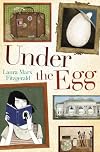
This middle-grade mystery novel seems like it was written just for me. You see, I hold an art history degree, love to conduct research (I'm a librarian by profession), and enjoy history - particularly WWII history. And this debut novel weaves art appreciation, restoration, and dating techniques, and bits of history from the Renaissance and World War II into a fast-paced mystery that is as quirky and as it is touching.
So what's it about? Here's the blurb:
When Theodora Tenpenny spills a show more bottle of rubbing alcohol on her late grandfather’s painting, she discovers what seems to be an old Renaissance masterpiece underneath. That’s great news for Theo, who’s struggling to hang onto her family’s two-hundred-year-old townhouse and support her unstable mother on her grandfather’s legacy of $463. There’s just one problem: Theo’s grandfather was a security guard at the Metropolitan Museum of Art, and she worries the painting may be stolen.
With the help of some unusual new friends, Theo's search for answers takes her all around Manhattan, and introduces her to a side of the city—and her grandfather—that she never knew. To solve the mystery, she'll have to abandon her hard-won self-reliance and build a community, one serendipitous friendship at a time.
I found the characters to be quite likable and unique and the solution to the mystery was satisfying. show less
So what's it about? Here's the blurb:
When Theodora Tenpenny spills a show more bottle of rubbing alcohol on her late grandfather’s painting, she discovers what seems to be an old Renaissance masterpiece underneath. That’s great news for Theo, who’s struggling to hang onto her family’s two-hundred-year-old townhouse and support her unstable mother on her grandfather’s legacy of $463. There’s just one problem: Theo’s grandfather was a security guard at the Metropolitan Museum of Art, and she worries the painting may be stolen.
With the help of some unusual new friends, Theo's search for answers takes her all around Manhattan, and introduces her to a side of the city—and her grandfather—that she never knew. To solve the mystery, she'll have to abandon her hard-won self-reliance and build a community, one serendipitous friendship at a time.
I found the characters to be quite likable and unique and the solution to the mystery was satisfying. show less
My 8-yr-old and I really, really enjoyed this book as a read-aloud. Kiddo is sensitive reader (and indeed so am I), so the beginning was a tough sell: a grandfather in a pool of blood whispering secrets with his final breath doesn't exactly scream 'a book for us.' However, the art mystery, the difficulties of managing family finances, and the growing network of friendships for a protagonist who starts out quite shut off from the world, invited us in anyway.
A for Eddie the librarian, who is show more probably my favorite character. More generally, I'll just note the refreshing absence of gender stereotypes in this novel's characterization.
We didn't know going in that the story centers on the Holocaust and the second world war. I'm sort of glad, since we might have skipped it for now if I had, and it's proven a good (and comparatively hopeful) basis for some important conversations. However, I'm also glad we were reading it aloud together, so that we could actual talk about these huge loads of trauma (and, yes, so I could summarize some of the most appalling bits).
A great invitation to discuss and think about research, Renaissance art, the art world, ownership and value, New York City, class and money, chickens, and all sorts of other neat topics too! show less
A for Eddie the librarian, who is show more probably my favorite character. More generally, I'll just note the refreshing absence of gender stereotypes in this novel's characterization.
We didn't know going in that the story centers on the Holocaust and the second world war. I'm sort of glad, since we might have skipped it for now if I had, and it's proven a good (and comparatively hopeful) basis for some important conversations. However, I'm also glad we were reading it aloud together, so that we could actual talk about these huge loads of trauma (and, yes, so I could summarize some of the most appalling bits).
A great invitation to discuss and think about research, Renaissance art, the art world, ownership and value, New York City, class and money, chickens, and all sorts of other neat topics too! show less
I bought this from Laura Marx Fitzgerald at least year's Princeton Children's Book Festival because it looked intriguing and she promised me that it was like the Westing Game. I think that's a decently fair synopsis -- a fun YA romp, with lots of puzzles that are not too clever for the young adult set, but not so juvenile to make the book unreadable to an adult reader.
What really made Under the Egg stand out for me was the way that it made art accessible to an art-naive reader, such as me show more and most of the YA set. Without being pedantic or preachy, Fitzgerald's evocative descriptions of art, and her loving understanding of how and why paintings are made will stick with me for awhile. show less
What really made Under the Egg stand out for me was the way that it made art accessible to an art-naive reader, such as me show more and most of the YA set. Without being pedantic or preachy, Fitzgerald's evocative descriptions of art, and her loving understanding of how and why paintings are made will stick with me for awhile. show less
Theodora Tenpenny, called Theo, and her mother have been struggling since the death of her grandfather, Jack. They subsist in their old Victorian home on the last of Jack’s savings, beets and pickled vegetables from their garden, and eggs from their chicken coop. As her mother stays secluded in her room in an algebraic haze, Theo is barely managing to keep their home together, but a directive from Jack in his last breaths may change all that. His clues lead Theo to a hidden painting in show more their house—a painting that may be worth a fortune if she can prove its authenticity. But as she uncovers the truth, she discovers her grandfather was concealing much more than just a painting.
I was drawn to Theo from the opening pages as she discovers a pair of shoes sitting on a mailbox as if they were waiting for her. Theo is not affluent; in fact, she and her mother only have $463 to their names, which is in immediate danger from Mom’s expensive tea habit. Theo is intelligent, hard-working, and a little proud with a few rough edges. She’s a chicken, her grandfather always told her. Chickens dig in, they roost, they don’t stop scratching until they’ve found what they’re looking for. Its these qualities that Theo and her mother must rely on to keep their house and their lives from falling apart.
I marvel at books that can find the adventure in an otherwise mundane life, and Under the Egg achieves just that. Theo’s pursuit of the mystery behind her grandfather’s painting is a grand hunt that takes readers across New York City and its cultural landmarks, from a swank auction house, to the Metropolitan Museum of Art, and even the New York Public Library. We are introduced to a thirteen-year-old who is on summer vacation and cut off from the world, secluded in her Victorian home with only her mother for company. To solve the mystery of Jack’s painting Theo must go to many places and talk to a wide variety of people (Fitzgerald delights in breaking expectations with her eclectic cast of characters), and by the end her world is busted wide open.
Early on she gains a trusty sidekick in Bodhi, the bored teenage daughter of celebrities. She walks a very fine line between endearing and obnoxious, but her enthusiasm and blunt manner are part of her charm. Not only that, but she’s a loyal sleuth’s assistant and friend.
“Where are the parents?” readers often ask when main characters in children’s books are notably without adult supervision. I think we often forget how easily we duck our parents as children when there are adventures to be had. Theo and Bodhi’s parents are present, but all notably absorbed in their own lives, and thus the girls have free run of the city.
Perhaps one of the most important characters in Under the Egg is the painting that Jack leaves for his granddaughter. Art history, particularly Renaissance era, features heavily throughout the story—so much so that I was surprised the book wasn’t accompanied with illustrations. Fitzgerald is so elegant in her descriptions of the paintings that visual aid is hardly needed; at one point, I surprised myself to realize I’d identified a classic painting before she’d even finished describing it. Fitzgerald’s intimate knowledge of art and Manhattan give the story much of its substance.
But it’s not all art history. As Theo delves deeper into the mystery, she discovers the painting carries a dark legacy, including being smuggled through Europe during World War II. The painting’s true history reveals a tragic, bittersweet past, culminating in a twist as Theo learns her true mission. For a while there it looks like Theo may not achieve the happy ending she hopes for, but Fitzgerald is careful to leave no loose ends.
I thoroughly enjoyed this book. It’s a relatively quick read full of quirky characters, efficient but descriptive prose, and peppered in equal parts with humor and sadness. It’s a must read for kids who love a mystery or have an interest in art or history. If someone wanted to, say, adapt it into a film (preferably an independent production), I wouldn’t object. show less
I was drawn to Theo from the opening pages as she discovers a pair of shoes sitting on a mailbox as if they were waiting for her. Theo is not affluent; in fact, she and her mother only have $463 to their names, which is in immediate danger from Mom’s expensive tea habit. Theo is intelligent, hard-working, and a little proud with a few rough edges. She’s a chicken, her grandfather always told her. Chickens dig in, they roost, they don’t stop scratching until they’ve found what they’re looking for. Its these qualities that Theo and her mother must rely on to keep their house and their lives from falling apart.
I marvel at books that can find the adventure in an otherwise mundane life, and Under the Egg achieves just that. Theo’s pursuit of the mystery behind her grandfather’s painting is a grand hunt that takes readers across New York City and its cultural landmarks, from a swank auction house, to the Metropolitan Museum of Art, and even the New York Public Library. We are introduced to a thirteen-year-old who is on summer vacation and cut off from the world, secluded in her Victorian home with only her mother for company. To solve the mystery of Jack’s painting Theo must go to many places and talk to a wide variety of people (Fitzgerald delights in breaking expectations with her eclectic cast of characters), and by the end her world is busted wide open.
Early on she gains a trusty sidekick in Bodhi, the bored teenage daughter of celebrities. She walks a very fine line between endearing and obnoxious, but her enthusiasm and blunt manner are part of her charm. Not only that, but she’s a loyal sleuth’s assistant and friend.
“Where are the parents?” readers often ask when main characters in children’s books are notably without adult supervision. I think we often forget how easily we duck our parents as children when there are adventures to be had. Theo and Bodhi’s parents are present, but all notably absorbed in their own lives, and thus the girls have free run of the city.
Perhaps one of the most important characters in Under the Egg is the painting that Jack leaves for his granddaughter. Art history, particularly Renaissance era, features heavily throughout the story—so much so that I was surprised the book wasn’t accompanied with illustrations. Fitzgerald is so elegant in her descriptions of the paintings that visual aid is hardly needed; at one point, I surprised myself to realize I’d identified a classic painting before she’d even finished describing it. Fitzgerald’s intimate knowledge of art and Manhattan give the story much of its substance.
But it’s not all art history. As Theo delves deeper into the mystery, she discovers the painting carries a dark legacy, including being smuggled through Europe during World War II. The painting’s true history reveals a tragic, bittersweet past, culminating in a twist as Theo learns her true mission. For a while there it looks like Theo may not achieve the happy ending she hopes for, but Fitzgerald is careful to leave no loose ends.
I thoroughly enjoyed this book. It’s a relatively quick read full of quirky characters, efficient but descriptive prose, and peppered in equal parts with humor and sadness. It’s a must read for kids who love a mystery or have an interest in art or history. If someone wanted to, say, adapt it into a film (preferably an independent production), I wouldn’t object. show less
Lists
Awards


You May Also Like


Associated Authors
Statistics
- Works
- 3
- Members
- 1,003
- Popularity
- #25,716
- Rating
- 3.9
- Reviews
- 49
- ISBNs
- 25
- Languages
- 3