
Vincent P. O'Hara
Author of Struggle for the Middle Sea: The Great Navies at War in the Mediterranean Theater, 1940-1945
About the Author
Vincent P. O'Hara was born and reared in San Diego, California, where he developed his life-long enthusiasm for naval history. He holds a history degree from the University of California, Berkeley, and is a business consultant, researcher, and cartographer
Image credit: via Audible
Works by Vincent P. O'Hara
Struggle for the Middle Sea: The Great Navies at War in the Mediterranean Theater, 1940-1945 (2009) 89 copies, 2 reviews
In Passage Perilous: Malta and the Convoy Battles of June 1942 (Twentieth-Century Battles) (2012) 25 copies, 2 reviews
Six Victories: North Africa Malta and the Mediterranean Convoy War November 1941–March 1942 (2019) 22 copies
Associated Works
MHQ: The Quarterly Journal of Military History — Winter 2009 (2008) — Author "The Unintended Revolution" — 9 copies
MHQ: The Quarterly Journal of Military History — Summer 2005 (2005) — Author "The Battles of Buenos Aires" — 7 copies
MHQ: The Quarterly Journal of Military History — Autumn 2006 (2006) — Author "Ironclad Huascar's Mastery in the Guano War" — 6 copies
Tagged
Common Knowledge
- Gender
- male
Members
Reviews
In Passage Perilous: Malta and the Convoy Battles of June 1942 (Twentieth-Century Battles) by Vincent P. O'Hara
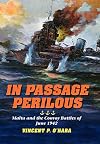
A crisp analysis of the the climactic convoy battles of 1942 wherein it's demonstrated that a cross-over point had been reached in the comparative abilities of the Royal Navy and Regia Marina, in which the British forces had essentially lost the war of attrition to the Italians; though this is perhaps a commentary on how Britain's world-wide commitments had caught up with her whereas the Italians had only one naval theater that mattered. O'Hara also muses on some of the ironies of history, show more particularly how the much celebrated North African campaign was really a sideshow for all involved, except that in 1940 the British had to go on the offensive SOME WHERE and taking on the Italians was their best option. The problem is that fighting in North Africa was arguably the choice that meant the empire East of Suez could not be defended, with all the history that follows in the wake of that debacle. show less
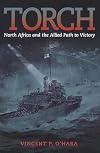
As is the case of most of O'Hara's studies the particular attraction is the detailed examination of the operational matters at hand that he provides. This is certainly the most careful accounting I have yet seen of how the French defended their neutrality, and it was a sufficiently stiff fight that one is grateful that there was no emergency effort to crash Northwest Europe in 1942; it would have simply been a bigger Dieppe. This is not to say that the critics of a Mediterranean adventure show more didn't have a point, as nothing short of full-fledged assault on France was really going to do the job of beating the Germans, but sometimes you have no good options.
Another plus of this book, because O'Hara takes the French seriously, is to consider what the real French options were, whereupon the notion that Vichy should have just jumped at the Allied intervention looks much less much inviting considering the realities. As dubious as the regime of Laval and Petain now looks, one can appreciate their desire to save an at least semi-sovereign France from a full-blown Axis occupation, with all that entailed. O'Hara's further suggestion is that Admiral Darlan deserves some appreciation from a distance, as it took his influence to allow for a full-blown French participation in the liberation of France. show less
Another plus of this book, because O'Hara takes the French seriously, is to consider what the real French options were, whereupon the notion that Vichy should have just jumped at the Allied intervention looks much less much inviting considering the realities. As dubious as the regime of Laval and Petain now looks, one can appreciate their desire to save an at least semi-sovereign France from a full-blown Axis occupation, with all that entailed. O'Hara's further suggestion is that Admiral Darlan deserves some appreciation from a distance, as it took his influence to allow for a full-blown French participation in the liberation of France. show less
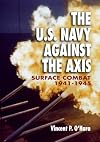
An excellant survey and analysis of how the surface forces of the USN performed in the war against Japan (mostly), with success being attributed not just to weight of metal and superior logistics, but to a willingness to be self-critical in regards to doctrine and operations. In this respect the battle off Samar becomes the USN's masterpiece of the war, as an unexceptional formation of basically auxiliary vessels is able to inflict savage damage on the remaining elite force of the Imperial show more Japanese Navy due to better doctrine and training.
O'Hara ends his book on the plea that the need remains for honest self-criticism as a foundation of success, as compared to the example of how the IJN squandered its advantages due to the failure to rise above stereotypical thinking and self-serving assumptions. show less
O'Hara ends his book on the plea that the need remains for honest self-criticism as a foundation of success, as compared to the example of how the IJN squandered its advantages due to the failure to rise above stereotypical thinking and self-serving assumptions. show less
Struggle for the Middle Sea: The Great Navies at War in the Mediterranean Theater, 1940-1945 by Vincent P. O'Hara
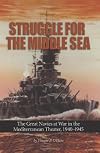
Though overshadowed by the larger battles in the Atlantic and the Pacific, the conflict in the Mediterranean, as Vincent O’Hara states in the beginning of this book, was “World War II’s longest air-land-sea campaign,” one that involved five of the world’s six largest navies. His book, an account of the clash between the surface forces, offers a balanced examination of the conflict that corrects many of the misconceptions which clutter our understanding of the conflict there. What show more emerges is a very different take on the war in the Mediterranean, one that provides far better insight into how the war developed and changed as a result.
Foremost among the myths that O’Hara pursues is that of Italian incompetence, which he dispels convincingly by noting their success in achieving their primary strategic objectives throughout most of the war, as well as the tenacious challenge they posed to the British. Though the Germans are traditionally seen as the Axis power which did the bulk of the heavy lifting in the region, O’Hara disputes this as well, noting that the Kriegsmarine’s combat performance there was in fact inferior to that of the much-disparaged Regia Marina. Nor are the British and French spared from O’Hara’s revisionary analysis, as he makes a strong case for the French fleet’s ongoing effort to preserve their nation’s sovereignty while arguing that the British only triumphed in the Mediterranean as a result of the infusion of American forces into the region in the fall of 1942.
O’Hara’s points are presented in a convincing and forthright manner, one that aids the book in challenging traditional attitudes about the war there. Yet it suffers from two significant flaws. The first is O’Hara’s focus on the surface actions, a curious decision which marginalizes vital components of the sea war. Even the famous air raid on the Italian naval base on Taranto, one of the turning points of naval history, is addressed in a mere two sentences that offer little consideration of the broader impact of the raid. O’Hara’s almost exclusive reliance upon secondary and published sources is the other major limitation of his work, as his trodding of ground well covered by others limits the real novelty of his argument. Such deficiencies limit the impact of what is otherwise a provocative reexamination of the war in the Mediterranean, one that every student of naval conflict in the Second World War can read for enjoyment as well as enlightenment. show less
Foremost among the myths that O’Hara pursues is that of Italian incompetence, which he dispels convincingly by noting their success in achieving their primary strategic objectives throughout most of the war, as well as the tenacious challenge they posed to the British. Though the Germans are traditionally seen as the Axis power which did the bulk of the heavy lifting in the region, O’Hara disputes this as well, noting that the Kriegsmarine’s combat performance there was in fact inferior to that of the much-disparaged Regia Marina. Nor are the British and French spared from O’Hara’s revisionary analysis, as he makes a strong case for the French fleet’s ongoing effort to preserve their nation’s sovereignty while arguing that the British only triumphed in the Mediterranean as a result of the infusion of American forces into the region in the fall of 1942.
O’Hara’s points are presented in a convincing and forthright manner, one that aids the book in challenging traditional attitudes about the war there. Yet it suffers from two significant flaws. The first is O’Hara’s focus on the surface actions, a curious decision which marginalizes vital components of the sea war. Even the famous air raid on the Italian naval base on Taranto, one of the turning points of naval history, is addressed in a mere two sentences that offer little consideration of the broader impact of the raid. O’Hara’s almost exclusive reliance upon secondary and published sources is the other major limitation of his work, as his trodding of ground well covered by others limits the real novelty of his argument. Such deficiencies limit the impact of what is otherwise a provocative reexamination of the war in the Mediterranean, one that every student of naval conflict in the Second World War can read for enjoyment as well as enlightenment. show less
You May Also Like


Associated Authors
Statistics
- Works
- 20
- Also by
- 4
- Members
- 453
- Popularity
- #54,168
- Rating
- 3.9
- Reviews
- 9
- ISBNs
- 41
- Favorited
- 1