
David Hobbs
Author of The British Pacific Fleet: The Royal Navy's Most Powerful Strike Force
About the Author
This ground-breaking new work by David Hobbs describes the background, creation and expansion of the BPF form its first tentative strikes, through operations off the coast of Japan to its impact on the immediate post-war period, including the opinions of USN liaison officers attached to the British show more flagships. The book is the first to demonstrate the real scope and scale of the BPF's impressive achievement. show less
Works by David Hobbs
Associated Works
Where the Writer Meets the Road: A Collection of Articles, Broadcast Intros and Profiles (2015) — Foreword — 7 copies
Tagged
Common Knowledge
- Gender
- male
Members
Reviews
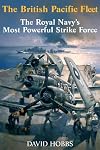
Having finally gotten around to reading this book after it's been bouncing around assorted TBR lists for five or six years, I'm left with the following reactions.
One, this is very much a general history of the British Pacific Fleet in total, in that David Hobbs devotes as much time to logistics and support as he does to combat operations. Not to mention he covers the whole period from 1944, when the BPF was a gleam in London's eye, to its phase out in 1948. What leaves one most impressed is show more the performance of Admiral Bruce Fraser and the efforts of his staff to create a meaningful force to uphold British interests in the face of Washington's often tepid response, and at a time when British resources were rather threadbare.
That's the thing, this whole enterprise was rather on the knife-edge of practicality for most of its wartime existence. Yes, the whole adventure is a tribute to British pluck and improvisation (with a lot of help from friends), but the more cynical might see this mostly as an exercise in grandstanding by a fast-fading imperial power desperately trying to maintain its relevance. It turns out that on the days of maximum effort off Okinawa things could have gone rather badly for the BPF. On one hand, the carrier "Formidable" took a serious "kamikaze" hit on her much vaunted armored flight deck that delivered serious internal damage (which sent her to the dockyard), while, on the other, the carrier "Illustrious" suffered an "own goal" in the form of an accident that caused a major hanger fire that decimated her aircraft on hand, and had the potential to really threaten the survival of the ship. One can imagine Okinawa turning into a seagoing equivalent of the "Market-Garden" fiasco.
Still, the BPF was lucky as well as good, and Hobbs does a convincing job of arguing that the operational experience gained in 1945 set the tone for the Royal Navy for the duration of the Cold War. This book also certainly represents an upgrade over John Winton's "The Forgotten Fleet."
Considering that this book is a rather dry exercise in quasi-official history, the reader might want to first hunt down Norman Hanson's "Carrier Pilot" from 1979, to get a more personal take on the whole business. show less
One, this is very much a general history of the British Pacific Fleet in total, in that David Hobbs devotes as much time to logistics and support as he does to combat operations. Not to mention he covers the whole period from 1944, when the BPF was a gleam in London's eye, to its phase out in 1948. What leaves one most impressed is show more the performance of Admiral Bruce Fraser and the efforts of his staff to create a meaningful force to uphold British interests in the face of Washington's often tepid response, and at a time when British resources were rather threadbare.
That's the thing, this whole enterprise was rather on the knife-edge of practicality for most of its wartime existence. Yes, the whole adventure is a tribute to British pluck and improvisation (with a lot of help from friends), but the more cynical might see this mostly as an exercise in grandstanding by a fast-fading imperial power desperately trying to maintain its relevance. It turns out that on the days of maximum effort off Okinawa things could have gone rather badly for the BPF. On one hand, the carrier "Formidable" took a serious "kamikaze" hit on her much vaunted armored flight deck that delivered serious internal damage (which sent her to the dockyard), while, on the other, the carrier "Illustrious" suffered an "own goal" in the form of an accident that caused a major hanger fire that decimated her aircraft on hand, and had the potential to really threaten the survival of the ship. One can imagine Okinawa turning into a seagoing equivalent of the "Market-Garden" fiasco.
Still, the BPF was lucky as well as good, and Hobbs does a convincing job of arguing that the operational experience gained in 1945 set the tone for the Royal Navy for the duration of the Cold War. This book also certainly represents an upgrade over John Winton's "The Forgotten Fleet."
Considering that this book is a rather dry exercise in quasi-official history, the reader might want to first hunt down Norman Hanson's "Carrier Pilot" from 1979, to get a more personal take on the whole business. show less
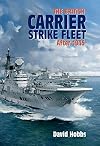
When it comes to aviation and the Royal Navy it seems safe to say that if David Hobbs doesn't know it then it's probably not important. However, it also means that this tome often has some of the flavor of official history and feels more like a reference book than a narrative history. Anyway, the real core of this work is the "CVA-1" debacle of the 1960s which almost drove the RN out of the carrier business, even though there was a continuing need for to provide air support for the British show more expeditionary mission. Hobbs observes that there was something of a perfect storm situation between how the RN wasn't managing its resources very well, the RAF was traumatized by the loss of the main nuclear deterrent mission to the RN and apparently determined to sabotage the project (to save its own nuclear-armed bomber force) and an economic situation that was bad and couldn't be ignored by Britain's political leadership. Whatever the issues with the new British fleet carriers and their air groups Hobbs observes that they represent a capability that never should have been lost in the first place so long as London has a serious interest in force projection. show less
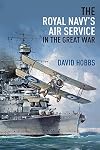
It is difficult to find today someone better suited to write about the history of British naval aviation than David Hobbs. A career naval officer who served as a pilot in the Fleet Air Arm (FAA), after his retirement in 1997 he served as the curator of the Fleet Air Arm Museum before becoming a prolific author of books about the senior service’s employment of aircraft during the 20th century. While his previous works have concentrated on the Second World War and the postwar FAA, this book show more goes back further in time to recount the history of the FAA’s precursor, the Royal Naval Air Service (RNAS), and the many roles it performed in the First World War.
In it, Hobbs’s expertise is on full display. It’s an impressively comprehensive work, one that starts with the Admiralty’s prewar experimentation with both airplanes and lighter-than-air craft. It is here that Hobbs first makes his argument that, as one of the most technologically advanced military services in the world at that time, the Royal Navy was not only open to the changes flight made possible but continually pushed the new technology to its very limits. This becomes especially apparent with the start of the war, as the Royal Navy’s eclectic collection of planes were pressed quickly into service. What stands out here is the ambition in their employment, as within months the RNAS found itself engaged in a wide variety of missions, from coastal patrols to air strikes against Zeppelin sheds. Success came more through luck and the determination of the personnel than through the capability of their equipment, as the pilots often strained to reach their targets and employ their modest weaponry to best effect.
The limitations of aviation technology did little to deter its use, however. As the war continued naval officers continually explored ways of using aircraft to attain their goals. Planes were employed to intercept Zeppelins over England, kite balloons aided artillery spotting in the Dardanelles, and experiments were conducted to mount torpedoes onto planes which could be dropped to sink enemy ships. Key to much of this was Winston Churchill, who as First Lord of the Admiralty was an enthusiastic advocate for innovation and who saw the RNAS – a new branch of the navy unburdened by tradition – as the perfect vehicle for introducing it to warfare. Because of this, RNAS personnel found themselves not only investigating the potential of naval aviation, but operating armored cars and manning armored trains on the Western Front as well. These duties were transferred to the Army once Churchill left, allowing the RNAS to concentrate on developing the Navy’s airborne capabilities.
Foremost among these was the use of aircraft in fleet operations. Initially this involved the use of seaplanes, which could be launched and landed on the water. Doing so required the seaplane carriers to remain stationary while they deployed and recovered the planes, which understandably limited their utility for the Grand Fleet. Because of this, wheeled planes were far more desirable, and over time several ships were equipped with platforms that allowed them to be launched while at sea. What this didn’t permit, though, was the recovery of the planes after their flights, which made them one-shot weapons that had to be ditched after their use. The solution to this was the adoption of a ship that allowed for landings as well as take-offs, as well as the mastery of the challenging task of landing a plane aboard a ship. The culmination of this was the HMS Argus, the world’s first “true” aircraft carrier, which Hobbs regards as the “crowning achievement” of the RNAS before its absorption into the newly-created Royal Air Force in April 1918, a move which soon cost the Royal Navy its position at the forefront of naval aviation, thanks to the RAF’s lack of interest in sea power.
Hobbs relates the history of the RNAS with both empathy and enthusiasm. His description of the service is very thorough, with chapters that encompass everything from their operations to their training and the acquisition of their aircraft. These he bases on an extensive use of specialist histories, memoirs, and archival research, which he supplements with an impressive collection of photographs and illustrations that he employs effectively throughout his text. His admiration for the men who served in the RNAS shines through on every page, yet he never overstates their achievements, preferring instead to let the descriptions of their missions speak for themselves. It is this combination of passion and authority that makes Hobbs’s book a work that is unlikely to be surpassed as a history of the RNAS, and one that belongs on the shelves of anyone interested in the history of the Royal Navy during the First World War or of the development of airpower in that conflict. show less
In it, Hobbs’s expertise is on full display. It’s an impressively comprehensive work, one that starts with the Admiralty’s prewar experimentation with both airplanes and lighter-than-air craft. It is here that Hobbs first makes his argument that, as one of the most technologically advanced military services in the world at that time, the Royal Navy was not only open to the changes flight made possible but continually pushed the new technology to its very limits. This becomes especially apparent with the start of the war, as the Royal Navy’s eclectic collection of planes were pressed quickly into service. What stands out here is the ambition in their employment, as within months the RNAS found itself engaged in a wide variety of missions, from coastal patrols to air strikes against Zeppelin sheds. Success came more through luck and the determination of the personnel than through the capability of their equipment, as the pilots often strained to reach their targets and employ their modest weaponry to best effect.
The limitations of aviation technology did little to deter its use, however. As the war continued naval officers continually explored ways of using aircraft to attain their goals. Planes were employed to intercept Zeppelins over England, kite balloons aided artillery spotting in the Dardanelles, and experiments were conducted to mount torpedoes onto planes which could be dropped to sink enemy ships. Key to much of this was Winston Churchill, who as First Lord of the Admiralty was an enthusiastic advocate for innovation and who saw the RNAS – a new branch of the navy unburdened by tradition – as the perfect vehicle for introducing it to warfare. Because of this, RNAS personnel found themselves not only investigating the potential of naval aviation, but operating armored cars and manning armored trains on the Western Front as well. These duties were transferred to the Army once Churchill left, allowing the RNAS to concentrate on developing the Navy’s airborne capabilities.
Foremost among these was the use of aircraft in fleet operations. Initially this involved the use of seaplanes, which could be launched and landed on the water. Doing so required the seaplane carriers to remain stationary while they deployed and recovered the planes, which understandably limited their utility for the Grand Fleet. Because of this, wheeled planes were far more desirable, and over time several ships were equipped with platforms that allowed them to be launched while at sea. What this didn’t permit, though, was the recovery of the planes after their flights, which made them one-shot weapons that had to be ditched after their use. The solution to this was the adoption of a ship that allowed for landings as well as take-offs, as well as the mastery of the challenging task of landing a plane aboard a ship. The culmination of this was the HMS Argus, the world’s first “true” aircraft carrier, which Hobbs regards as the “crowning achievement” of the RNAS before its absorption into the newly-created Royal Air Force in April 1918, a move which soon cost the Royal Navy its position at the forefront of naval aviation, thanks to the RAF’s lack of interest in sea power.
Hobbs relates the history of the RNAS with both empathy and enthusiasm. His description of the service is very thorough, with chapters that encompass everything from their operations to their training and the acquisition of their aircraft. These he bases on an extensive use of specialist histories, memoirs, and archival research, which he supplements with an impressive collection of photographs and illustrations that he employs effectively throughout his text. His admiration for the men who served in the RNAS shines through on every page, yet he never overstates their achievements, preferring instead to let the descriptions of their missions speak for themselves. It is this combination of passion and authority that makes Hobbs’s book a work that is unlikely to be surpassed as a history of the RNAS, and one that belongs on the shelves of anyone interested in the history of the Royal Navy during the First World War or of the development of airpower in that conflict. show less
To a large degree what this book represents is the official history that the Royal Naval Air Service of the Great War never had, as it was wound up and combined with the Royal Flying Corps to create the Royal Air Force before that war had even ended. This remains a sore point with the author as the Royal Navy was on the verge of deploying a true carrier strike force, that likely would have made history by attacking the Imperial German High Seas Fleet in its sanctuaries; never mind the almost show more twenty years of lost time that stunted naval aviation development without there being a proper Fleet Air Arm. To be fair though, the RNAS had its fingers in so many pies that one can understand the higher authorities deciding that amalgamation was the way to efficiency, not to mention that amalgamation worked out professionally for many naval pilots as they would have had no place in the RN after 1918; the RAF being their one hope for careers as military professionals. show less
You May Also Like


Associated Authors
Statistics
- Works
- 30
- Also by
- 1
- Members
- 406
- Popularity
- #59,888
- Rating
- 4.2
- Reviews
- 14
- ISBNs
- 64
- Languages
- 2