
Arthur Marder (1910–1980)
Author of The Road to War, 1904–1914
About the Author
Series
Works by Arthur Marder
From the Dardanelles to Oran: Studies of the Royal Navy in War and Peace, 1915-40 (1974) 32 copies, 1 review
Old Friends, New Enemies: The Royal Navy and the Imperial Japanese Navy, vol. 1: Strategic illusions, 1936-1941 (1981) 21 copies, 2 reviews
Old Friends, New Enemies: The Royal Navy and the Imperial Japanese Navy, vol. 2: The Pacific War, 1942-1945 (1990) 16 copies, 2 reviews
The Anatomy of British Sea Power: A History of British Naval Policy in the Pre-Dreadnought Era, 1880-1905 (1940) 13 copies, 1 review
Fear God and Dread Nought : The Correspondence of Admiral of the Fleet Lord Fisher of Kilverstone : Volume II Years of Power 1904 - 1914 (1956) — Editor; Editor — 6 copies, 1 review
Associated Works
Fear God and Dread Nought; the Correspondence of Admiral of the Fleet Lord Fisher of Kilverstone, Vol. I: The Making of an Admiral, 1854-1904 (1952) — Editor — 8 copies
Fear God and dread nought; the correspondence of Admiral of the Fleet Lord Fisher of Kilverstone (1959) — Editor — 7 copies
Fear God and Dread Nought Volume 3 Restoration, Abdication & Last Years 1914-1920 (1959) — Editor — 2 copies
Tagged
Common Knowledge
- Legal name
- Marder, Arthur Jacob
- Birthdate
- 1910-03-08
- Date of death
- 1980-12-25
- Gender
- male
- Education
- Harvard University (AB | 1931)
Harvard University (AM | 1934)
Harvard University (PhD | 1936) - Nationality
- USA
- Birthplace
- Boston, Massachusetts, USA
- Place of death
- Santa Barbara, California, USA
- Associated Place (for map)
- USA
Members
Reviews

The British hoped to keep the Japanese off their backs while they fought the Germans again. It had worked in WWI, but, since the Japanese were in an offended and expansionist mood, since the Allies had mal-treated them (as the Japanese put it!) after the Versailles Treaties, life with the former friend of the Russo-Japanese war was very tricky.
An old ally, who had been useful in WWI had to be balanced with the long-standing difficulty of facing the powerful USA's desire to be the paramount show more force in the Pacific.
Austerity in the arms procurement race wasn't going to help, and the foot-dragging about Singapore comes into play. A good book about a very large clash of ambitions in a three-power problem. show less
An old ally, who had been useful in WWI had to be balanced with the long-standing difficulty of facing the powerful USA's desire to be the paramount show more force in the Pacific.
Austerity in the arms procurement race wasn't going to help, and the foot-dragging about Singapore comes into play. A good book about a very large clash of ambitions in a three-power problem. show less
Old Friends, New Enemies: The Royal Navy and the Imperial Japanese Navy, vol. 1: Strategic illusions, 1936-1941 by Arthur J. Marder
V1 of 2 books of well researched and pentrative analysis of the Royal Navy's role fighting the Japanese. V1 written by Marder was dense but worth wading thjrough because it aptly exposes more of the "Montgomery" mentality. That is, we are the British military and have been conquering the world for centuries. Therefore, get out of our way, Yanks,and let us lead you to victory. Volume one ends with the WW2 equivalent of the "Charge of the Light Brigade" as Force Z, two battlehips one old, show more Repulse and one of the new and unsinkable type, the Prince of Wales, supported by a few old destroyers set off to sink the Japanese invasion fleet. With the loss of three bombers, the Japanese sink both ships quickly and efficiently. Sir Tom Phillips serves in the role of Lord Cardigan with Churchill beating the war drums in the background. show less
Old friends, new enemies : the Royal Navy and the Imperial Japanese Navy Vol. II the Pacific War 1942 - 45 by Arthur J. Marder

Arthur Marder, a great historian of WWI in the North Sea, brings his skills to the evolution of the relationship of the Royal and Japanese navies up to the end of WWII. In a sense, the Japanese Navy can be portrayed as a victim of the Army's mad drive to world domination, and that is the tack taken by Marder here. He implies a bit of a reluctance, shown by a tendency to commit strategic errors, to seriously attack the mentor, the Royal Navy, in WWII.
Fear God and Dread Nought : The Correspondence of Admiral of the Fleet Lord Fisher of Kilverstone : Volume II Years of Power 1904 - 1914 by John Arbuthnot Fisher
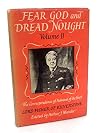
This volume covers the public career of this naval innovator. Marder is a very competent editor, and the materials are arranged to great effect. Thus, a good book for the serious student of the man and the service. For the psychologist, there is also material for the study of a very uninhibited personality.
Awards

You May Also Like


Associated Authors
Statistics
- Works
- 17
- Also by
- 3
- Members
- 472
- Popularity
- #52,189
- Rating
- 4.1
- Reviews
- 11
- ISBNs
- 39
- Favorited
- 1