
Alix Ohlin
Author of Inside
About the Author
Alix Ohlin teaches at Lafayette College.
Image credit: Author Alix Ohlin at the 2019 Texas Book Festival in Austin, Texas, United States. By Larry D. Moore, CC BY-SA 4.0, https://commons.wikimedia.org/w/index.php?curid=84417860
Works by Alix Ohlin
Nesting Season 1 copy
Associated Works
Tagged
Common Knowledge
- Canonical name
- Ohlin, Alix
- Birthdate
- 1972
- Gender
- female
- Education
- Harvard University
- Occupations
- professor
novelist
short story writer - Organizations
- Lafayette College
- Short biography
- Alix Ohlin's novel Inside and her story collection Signs and Wonders were both published on June 5, 2012. She is also the author of The Missing Person, a novel, and Babylon and Other Stories. Her work has appeared in Best American Short Stories, Best New American Voices, and on public radio’s Selected Shorts. Born and raised in Montreal, she currently lives in Easton, Pennsylvania, and teaches at Lafayette College and in the Warren Wilson MFA Program for Writers.
- Nationality
- Canada
- Birthplace
- Montréal, Québec, Canada
- Places of residence
- Montréal, Québec, Canada (birth)
Easton, Pennsylvania, USA - Associated Place (for map)
- Canada
Members
Reviews
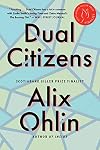
Dual Citizens follows the anything-but-straightforward life adventures of sisters Lark and Robin Brossard, from childhood to maturity. Older sister Lark narrates. The two are born and raised (after a fashion) in Montreal by their mother, Marianne, a beautiful but moody and perpetually aggrieved young woman whose greatest gift to her daughters seems to be an emotionally withholding, hands-off style of parenting that often veers distressingly close to neglect. With their mother providing room show more and board but little else (and even these are delivered grudgingly), the girls rely on each other for every other kind of support. Early in the book Lark establishes that she is the practical sister—a lover of order and routine—while Robin possesses an artistic temperament and a soul that is wild, free-spirited and creative but also darkly self-obsessed and impulsive. By a fluke the girls discover Robin’s affinity for the piano, and behind their mother’s back Lark arranges music lessons with a generous neighbour. This is typical of how Robin’s and Lark’s lives move forward: major developments resulting from accidental encounters, spontaneous decisions resulting in sudden and drastic shifts in trajectory. Lark leaves home for a small college in the US, Robin pursues a career on the concert stage. Fascinated by the methodical process of constructing stories out of images, Lark takes up film studies and becomes the protégé of a respected filmmaker named Lawrence Wheelock, later becoming his assistant, and finally his lover. Robin abandons music and falls off the grid, eventually resurfacing in rural Quebec where she’s operating a wolf sanctuary. The story of Lark and Robin covers decades and moves through moments of crisis familiar to all of us: failure, estrangement, illness, death. When the sisters come together again after years apart, both deeply altered by what they’ve witnessed and experienced, they rediscover their love and rekindle the unquestioning trust that from childhood has always bound them together. At its best, Alix Ohlin’s moving and intimate narrative convincingly renders life as we know it: a mostly unplanned construct more deeply influenced by chance than we’d care to admit, and made up of events, conversations, desires and choices that compel us to action and mould us into the person we become. If the book sometimes seems structurally random and even chaotic, that’s probably because it is: because life is chaotic, the world we live in unpredictable. The beauty of Dual Citizens is that it captures life’s chaos without pretense, and without apology. A finalist for the 2019 Scotiabank Giller Prize. show less

This is the story of the relationship between two sisters, Lark (the narrator and elder) and Robin. Their fathers are not in their lives and their mother is very neglectful. The sisters form a strong bond despite very different personalities. They go through life, sometimes close together, sometimes almost estranged, but always able to maintain the tie that binds them.
I liked this exploration of sibling, mother-daughter, mentor-student relationships very much. Well written, with strong show more characters and voices that rang true. I liked the way it made me think about "editing" our lives...our memories...our realities, consciously or otherwise, by ourselves or those who know us. Very well done. show less
I liked this exploration of sibling, mother-daughter, mentor-student relationships very much. Well written, with strong show more characters and voices that rang true. I liked the way it made me think about "editing" our lives...our memories...our realities, consciously or otherwise, by ourselves or those who know us. Very well done. show less
Inside by Alix Ohlin

What happens inside, behind closed doors, in private moments, and in minds and hearts: that's the stuff of Alix Ohlin's novel.
"'He wouldn’t let me in,' she said, 'and I refused to stay out.'"
Mitch's mother says that of his father. She is not a character with whom readers spend a lot of time, but her statement resonates throughout Inside.
The characters with whom readers do spend time?
First, Grace, who is a therapist in Montreal, when readers meet her in 1996.
Next, Anne, to whom readers are show more introduced as one of Grace's patients when Annie is a teenager.
And Mitch, whose first appearance is in Grace's segment (she met him when he was a graduate student and she was beginning to study psychology), but readers meet him directly in Iqaluit, in 2006.
To varying degrees, each of these characters nestles in at least one of the other character's narratives. Where there is not a tangible overlap, there is a thematic overlap.
Grace, Anne, and Mitch are all struggling with what is inside, with what they keep inside, with what is inside the people they love. Also under consideration? Outside. How it's connected with inside, or the ways in which it's disengaged, questions about how the break(s) occurred.
It's a delicate balance. In life, and in the narrative.
"That’s how it went: one day lovely, the next flawed. In this respect, was it so much different from anybody else’s life?"
On a daily basis, perhaps not so much. One person's life is a lot like another's. There are ups and downs in working lives, romantic encounters, family life, and friendships: the details are interchangeable.
As Inside begins, the differences are apparent. Even the two therapists have starkly different workdays, from the outside.
(In under 300 pages, this novel manages to fully flesh out all three characters, complete with details about day-to-day life at home, work and their significant relationships: deftly drawn and wholly believable.)
Paradoxically, as the novel progresses, the insides begin to blur.
Some of the external differences remain distinct, though people's lives echo and intersect in the narrative too, but the emotional strain and struggle is almost interchangeable.
Readers looking for plot will be frustrated by the shifting perspectives and the sense of disconnection that arises if you are only observing the outsides of the characters' lives, which do overlap but not often enough to satisfy a plot-hungry reader.
The work's cohesion builds from the shared experiences in characters' insides. The bulk of the narrative's action is internal, viewed through each of these three character's experiences, and it is the gradual layering of emotional intensity, across their narratives, that roots Inside.
Each of the following passages is pulled from one character's perspective, but altering the pronouns allows them to fit with or reflect the other characters' experiences too:
"The gap between what he said and what she didn’t know swelled between them like a bubble that kept expanding; sometimes, when she reached out her arms to hold him, the bubble felt like all she could touch."
"He would have been the perfect man for some other, better version of herself."
and
"It felt not like a repetition of the previous triangle but a new version of it, from another angle. A pattern stretching across the recent years of his life."
(I was equally attached to all three characters, and so completely inhabited the perspectives as drawn that I missed things that I should have seen, if I'd had a reader's distance, and not been so engrossed in the story as relayed by the characters. In some ways this is wonderful, but there is a risk.)
Readers who enjoy psychological narrative, who appreciate stories preoccupied with "inside", even when they aren't overtly named as such, will be immediately at home with Alix Ohlin's novel.
The risk, however, is that insides are messy; the stories are told by those who have survived, and while there are moments of elation, there are moments of devastation. In that respect, it's not any different from anyone else's life.
(This discussion appeared on BuriedInPrint, in the context of the novel's shortlisting for the Giller Prize; you will find more detailed information about the novel here.) show less
"'He wouldn’t let me in,' she said, 'and I refused to stay out.'"
Mitch's mother says that of his father. She is not a character with whom readers spend a lot of time, but her statement resonates throughout Inside.
The characters with whom readers do spend time?
First, Grace, who is a therapist in Montreal, when readers meet her in 1996.
Next, Anne, to whom readers are show more introduced as one of Grace's patients when Annie is a teenager.
And Mitch, whose first appearance is in Grace's segment (she met him when he was a graduate student and she was beginning to study psychology), but readers meet him directly in Iqaluit, in 2006.
To varying degrees, each of these characters nestles in at least one of the other character's narratives. Where there is not a tangible overlap, there is a thematic overlap.
Grace, Anne, and Mitch are all struggling with what is inside, with what they keep inside, with what is inside the people they love. Also under consideration? Outside. How it's connected with inside, or the ways in which it's disengaged, questions about how the break(s) occurred.
It's a delicate balance. In life, and in the narrative.
"That’s how it went: one day lovely, the next flawed. In this respect, was it so much different from anybody else’s life?"
On a daily basis, perhaps not so much. One person's life is a lot like another's. There are ups and downs in working lives, romantic encounters, family life, and friendships: the details are interchangeable.
As Inside begins, the differences are apparent. Even the two therapists have starkly different workdays, from the outside.
(In under 300 pages, this novel manages to fully flesh out all three characters, complete with details about day-to-day life at home, work and their significant relationships: deftly drawn and wholly believable.)
Paradoxically, as the novel progresses, the insides begin to blur.
Some of the external differences remain distinct, though people's lives echo and intersect in the narrative too, but the emotional strain and struggle is almost interchangeable.
Readers looking for plot will be frustrated by the shifting perspectives and the sense of disconnection that arises if you are only observing the outsides of the characters' lives, which do overlap but not often enough to satisfy a plot-hungry reader.
The work's cohesion builds from the shared experiences in characters' insides. The bulk of the narrative's action is internal, viewed through each of these three character's experiences, and it is the gradual layering of emotional intensity, across their narratives, that roots Inside.
Each of the following passages is pulled from one character's perspective, but altering the pronouns allows them to fit with or reflect the other characters' experiences too:
"The gap between what he said and what she didn’t know swelled between them like a bubble that kept expanding; sometimes, when she reached out her arms to hold him, the bubble felt like all she could touch."
"He would have been the perfect man for some other, better version of herself."
and
"It felt not like a repetition of the previous triangle but a new version of it, from another angle. A pattern stretching across the recent years of his life."
(I was equally attached to all three characters, and so completely inhabited the perspectives as drawn that I missed things that I should have seen, if I'd had a reader's distance, and not been so engrossed in the story as relayed by the characters. In some ways this is wonderful, but there is a risk.)
Readers who enjoy psychological narrative, who appreciate stories preoccupied with "inside", even when they aren't overtly named as such, will be immediately at home with Alix Ohlin's novel.
The risk, however, is that insides are messy; the stories are told by those who have survived, and while there are moments of elation, there are moments of devastation. In that respect, it's not any different from anyone else's life.
(This discussion appeared on BuriedInPrint, in the context of the novel's shortlisting for the Giller Prize; you will find more detailed information about the novel here.) show less

What happens inside, behind closed doors, in private moments, and in minds and hearts: that's the stuff of Alix Ohlin's novel.
"'He wouldn’t let me in,' she said, 'and I refused to stay out.'"
Mitch's mother says that of his father. She is not a character with whom readers spend a lot of time, but her statement resonates throughout Inside.
The characters with whom readers do spend time?
First, Grace, who is a therapist in Montreal, when readers meet her in 1996.
Next, Anne, to whom readers are show more introduced as one of Grace's patients when Annie is a teenager.
And Mitch, whose first appearance is in Grace's segment (she met him when he was a graduate student and she was beginning to study psychology), but readers meet him directly in Iqaluit, in 2006.
To varying degrees, each of these characters nestles in at least one of the other character's narratives. Where there is not a tangible overlap, there is a thematic overlap.
Grace, Anne, and Mitch are all struggling with what is inside, with what they keep inside, with what is inside the people they love. Also under consideration? Outside. How it's connected with inside, or the ways in which it's disengaged, questions about how the break(s) occurred.
It's a delicate balance. In life, and in the narrative.
"That’s how it went: one day lovely, the next flawed. In this respect, was it so much different from anybody else’s life?"
On a daily basis, perhaps not so much. One person's life is a lot like another's. There are ups and downs in working lives, romantic encounters, family life, and friendships: the details are interchangeable.
As Inside begins, the differences are apparent. Even the two therapists have starkly different workdays, from the outside.
(In under 300 pages, this novel manages to fully flesh out all three characters, complete with details about day-to-day life at home, work and their significant relationships: deftly drawn and wholly believable.)
Paradoxically, as the novel progresses, the insides begin to blur.
Some of the external differences remain distinct, though people's lives echo and intersect in the narrative too, but the emotional strain and struggle is almost interchangeable.
Readers looking for plot will be frustrated by the shifting perspectives and the sense of disconnection that arises if you are only observing the outsides of the characters' lives, which do overlap but not often enough to satisfy a plot-hungry reader.
The work's cohesion builds from the shared experiences in characters' insides. The bulk of the narrative's action is internal, viewed through each of these three character's experiences, and it is the gradual layering of emotional intensity, across their narratives, that roots Inside.
Each of the following passages is pulled from one character's perspective, but altering the pronouns allows them to fit with or reflect the other characters' experiences too:
"The gap between what he said and what she didn’t know swelled between them like a bubble that kept expanding; sometimes, when she reached out her arms to hold him, the bubble felt like all she could touch."
"He would have been the perfect man for some other, better version of herself."
and
"It felt not like a repetition of the previous triangle but a new version of it, from another angle. A pattern stretching across the recent years of his life."
(I was equally attached to all three characters, and so completely inhabited the perspectives as drawn that I missed things that I should have seen, if I'd had a reader's distance, and not been so engrossed in the story as relayed by the characters. In some ways this is wonderful, but there is a risk.)
Readers who enjoy psychological narrative, who appreciate stories preoccupied with "inside", even when they aren't overtly named as such, will be immediately at home with Alix Ohlin's novel.
The risk, however, is that insides are messy; the stories are told by those who have survived, and while there are moments of elation, there are moments of devastation. In that respect, it's not any different from anyone else's life.
(This discussion appeared on BuriedInPrint, in the context of the novel's shortlisting for the Giller Prize; you will find more detailed information about the novel here.) show less
"'He wouldn’t let me in,' she said, 'and I refused to stay out.'"
Mitch's mother says that of his father. She is not a character with whom readers spend a lot of time, but her statement resonates throughout Inside.
The characters with whom readers do spend time?
First, Grace, who is a therapist in Montreal, when readers meet her in 1996.
Next, Anne, to whom readers are show more introduced as one of Grace's patients when Annie is a teenager.
And Mitch, whose first appearance is in Grace's segment (she met him when he was a graduate student and she was beginning to study psychology), but readers meet him directly in Iqaluit, in 2006.
To varying degrees, each of these characters nestles in at least one of the other character's narratives. Where there is not a tangible overlap, there is a thematic overlap.
Grace, Anne, and Mitch are all struggling with what is inside, with what they keep inside, with what is inside the people they love. Also under consideration? Outside. How it's connected with inside, or the ways in which it's disengaged, questions about how the break(s) occurred.
It's a delicate balance. In life, and in the narrative.
"That’s how it went: one day lovely, the next flawed. In this respect, was it so much different from anybody else’s life?"
On a daily basis, perhaps not so much. One person's life is a lot like another's. There are ups and downs in working lives, romantic encounters, family life, and friendships: the details are interchangeable.
As Inside begins, the differences are apparent. Even the two therapists have starkly different workdays, from the outside.
(In under 300 pages, this novel manages to fully flesh out all three characters, complete with details about day-to-day life at home, work and their significant relationships: deftly drawn and wholly believable.)
Paradoxically, as the novel progresses, the insides begin to blur.
Some of the external differences remain distinct, though people's lives echo and intersect in the narrative too, but the emotional strain and struggle is almost interchangeable.
Readers looking for plot will be frustrated by the shifting perspectives and the sense of disconnection that arises if you are only observing the outsides of the characters' lives, which do overlap but not often enough to satisfy a plot-hungry reader.
The work's cohesion builds from the shared experiences in characters' insides. The bulk of the narrative's action is internal, viewed through each of these three character's experiences, and it is the gradual layering of emotional intensity, across their narratives, that roots Inside.
Each of the following passages is pulled from one character's perspective, but altering the pronouns allows them to fit with or reflect the other characters' experiences too:
"The gap between what he said and what she didn’t know swelled between them like a bubble that kept expanding; sometimes, when she reached out her arms to hold him, the bubble felt like all she could touch."
"He would have been the perfect man for some other, better version of herself."
and
"It felt not like a repetition of the previous triangle but a new version of it, from another angle. A pattern stretching across the recent years of his life."
(I was equally attached to all three characters, and so completely inhabited the perspectives as drawn that I missed things that I should have seen, if I'd had a reader's distance, and not been so engrossed in the story as relayed by the characters. In some ways this is wonderful, but there is a risk.)
Readers who enjoy psychological narrative, who appreciate stories preoccupied with "inside", even when they aren't overtly named as such, will be immediately at home with Alix Ohlin's novel.
The risk, however, is that insides are messy; the stories are told by those who have survived, and while there are moments of elation, there are moments of devastation. In that respect, it's not any different from anyone else's life.
(This discussion appeared on BuriedInPrint, in the context of the novel's shortlisting for the Giller Prize; you will find more detailed information about the novel here.) show less
Awards


You May Also Like


Associated Authors
Statistics
- Works
- 13
- Also by
- 3
- Members
- 566
- Popularity
- #44,191
- Rating
- 3.6
- Reviews
- 29
- ISBNs
- 52
- Languages
- 3
