
Michael L. Cooper
Author of Dust to Eat: Drought and Depression in the 1930s
About the Author
Michael L. Cooper has written a number of books for young adults on various aspects of American history, including a companion book, Fighting for Honor: Japanese Americans and World War II, which was named a 2002 Best Book for Young Adults. He lives in Washington, D.C.
Works by Michael L. Cooper
Fighting Fire!: Ten of the Deadliest Fires in American History and How We Fought Them (2014) 48 copies, 6 reviews
From Slave to Civil War Hero: The Life and Times of Robert Smalls (Rainbow Biography) (1994) 29 copies
Bound for the Promised Land: The Great Black Migration (Migration of the Negro Series) (1995) 18 copies
Associated Works
Tagged
Common Knowledge
Members
Reviews
"If the Great Spirit had desired me to be a white man he would have made me so in the first place. He put in your heart certain wishes and plans; in my heart he put other and different desires. Each man is good in the sight of the Great Spirit. It is not necessary that eagles should be crows."
—Sitting Bull (Teton Sioux)
“A great general has said that the only good Indian is a dead one, and that high sanction of his destruction has been an enormous factor in promoting Indian massacres. In show more a sense, I agree with the sentiment, but only in this: that all the Indian there is in the race should be dead. Kill the Indian in him, and save the man . . .”
—Richard Henry Pratt
Michael L. Cooper has synthesized information from a number of scholarly works and Native American memoirs to create an engaging and informative book for young people about Indian boarding schools in the US. The schools were essentially the brainchild of Brigadier General Richard Henry Pratt, who’d been a frontier Indian fighter before becoming an educator. In the late nineteenth century, he aimed to solve the “Indian problem” (indigenous resistance to white settlement) by killing the Indian inside in order to save the man—in other words, by sending the Indian to school to learn the white man’s ways. In 1879, Pratt met with forty warriors and renowned Sioux chiefs on the Rosebud Reservation in South Dakota, reminding them that things had not gone well for them with the whites. The huge herds of bison were disappearing and with them the Indian way of life. If the chiefs wanted their people to survive, they’d best send their children a thousand miles away to the school he’d founded. Needless to say, the Native Americans initially resisted. “The white people are all thieves and liars,” said Spotted Tail, the most powerful and respected Brûlé chief. “We do not want our children to learn such things.” In the end, however, the chiefs relented. Within days, 84 boys and girls were packed off, travelling first by steamboat and then by train to what was the first residential Indian school in the USA: the Carlisle School in Cumberland Valley, Pennsylvania. This, the largest and the most famous Indian boarding school, would be the model for dozens of others across the country.
There were, in fact, some schools on Indian reservations, but Pratt didn’t like the idea of them. Students remained too much under the influence of their family, friends, and tribe. What was needed was to “cut the tribal connection”—rip children from their homes and their culture—so that they could be properly assimilated into white society. The farther from home they could be transported, the better. The fact that their families were at such a distance would not stop some children from running away from these places and trying to return home.
Upon arrival at the schools, indigenous kids had their hair cut (a frightening violation of their bodies and identities); students were bathed; boys were forced into military-style uniforms (something the chiefs would be appalled by when they visited their children and grandchildren in the spring of 1880); all children were given Christian names; and they were forbidden to speak their own language. With no words to communicate their frustration and despair, it’s no wonder kids ran—some never to be seen again. Kids rebelled in other ways, too. A pair of girls twice attempted to set their dormitory on fire. They ended up serving an 18-month sentence in the Pennsylvania State Women’s Penitentiary. Perhaps the most powerful and inspiring act of resistance was that of a youth facing corporal punishment for arguing with a teacher. The boy told Superintendent Pratt that the man was “muy loco” (very crazy) if he thought he was going to strap a Native American kid: “Nobody has ever struck me in all my life, and nobody ever will. I could break your neck with my bare hands.”
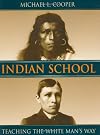
Cooper covers an amazing amount of ground in this relatively short book. While the Carlisle Indian Industrial School is his main focus, other Native American residential schools are also mentioned. The historical context, administration, governing philosophy, curriculum, training, routines, and sports programs are among the many topics considered. Cooper includes many high-quality black-and-white photographs, which show conditions at the school, including the labour students performed every afternoon. Boys were trained for a number of trades; girls were prepared for their future domestic duties. Pratt loved taking “before-and-after” photographs of his students. One of these can be seen on the front cover of the book. At the top, we see a young long-haired, hoop-earring-ed Navajo student upon his arrival at Carlisle, and, at the bottom, we’re presented with an image of the same young man three years later, barbered and dressed in suit and tie. A photograph of the massive student cemetery at Carlisle bears testimony to the huge loss of life at the institution. Profoundly homesick and malnourished kids living in crowded conditions often succumbed to contagious diseases, such as TB and influenza.
What makes Cooper’s book so engaging and valuable is his judicious use of direct quotations from the Native American students themselves. Pratt, government officials, and teachers are also quoted. The material is well organized, and the writing is clear and fluent. Cooper finishes by recommending three websites. Only one of the addresses is current, but it isn’t hard to find the new online sites for the “Native American Press Archives” and the “Index of Native American Resources on the Internet” simply by googling. A “Reading for Young People” section, a bibliography, and an index are also included.
I learned a lot from this book and recommend it for anyone over the age of 11 or 12. Though it is now 20 years old, it still provides an excellent and often moving introduction to a dark chapter in American history. show less
—Sitting Bull (Teton Sioux)
“A great general has said that the only good Indian is a dead one, and that high sanction of his destruction has been an enormous factor in promoting Indian massacres. In show more a sense, I agree with the sentiment, but only in this: that all the Indian there is in the race should be dead. Kill the Indian in him, and save the man . . .”
—Richard Henry Pratt
Michael L. Cooper has synthesized information from a number of scholarly works and Native American memoirs to create an engaging and informative book for young people about Indian boarding schools in the US. The schools were essentially the brainchild of Brigadier General Richard Henry Pratt, who’d been a frontier Indian fighter before becoming an educator. In the late nineteenth century, he aimed to solve the “Indian problem” (indigenous resistance to white settlement) by killing the Indian inside in order to save the man—in other words, by sending the Indian to school to learn the white man’s ways. In 1879, Pratt met with forty warriors and renowned Sioux chiefs on the Rosebud Reservation in South Dakota, reminding them that things had not gone well for them with the whites. The huge herds of bison were disappearing and with them the Indian way of life. If the chiefs wanted their people to survive, they’d best send their children a thousand miles away to the school he’d founded. Needless to say, the Native Americans initially resisted. “The white people are all thieves and liars,” said Spotted Tail, the most powerful and respected Brûlé chief. “We do not want our children to learn such things.” In the end, however, the chiefs relented. Within days, 84 boys and girls were packed off, travelling first by steamboat and then by train to what was the first residential Indian school in the USA: the Carlisle School in Cumberland Valley, Pennsylvania. This, the largest and the most famous Indian boarding school, would be the model for dozens of others across the country.
There were, in fact, some schools on Indian reservations, but Pratt didn’t like the idea of them. Students remained too much under the influence of their family, friends, and tribe. What was needed was to “cut the tribal connection”—rip children from their homes and their culture—so that they could be properly assimilated into white society. The farther from home they could be transported, the better. The fact that their families were at such a distance would not stop some children from running away from these places and trying to return home.
Upon arrival at the schools, indigenous kids had their hair cut (a frightening violation of their bodies and identities); students were bathed; boys were forced into military-style uniforms (something the chiefs would be appalled by when they visited their children and grandchildren in the spring of 1880); all children were given Christian names; and they were forbidden to speak their own language. With no words to communicate their frustration and despair, it’s no wonder kids ran—some never to be seen again. Kids rebelled in other ways, too. A pair of girls twice attempted to set their dormitory on fire. They ended up serving an 18-month sentence in the Pennsylvania State Women’s Penitentiary. Perhaps the most powerful and inspiring act of resistance was that of a youth facing corporal punishment for arguing with a teacher. The boy told Superintendent Pratt that the man was “muy loco” (very crazy) if he thought he was going to strap a Native American kid: “Nobody has ever struck me in all my life, and nobody ever will. I could break your neck with my bare hands.”
Cooper covers an amazing amount of ground in this relatively short book. While the Carlisle Indian Industrial School is his main focus, other Native American residential schools are also mentioned. The historical context, administration, governing philosophy, curriculum, training, routines, and sports programs are among the many topics considered. Cooper includes many high-quality black-and-white photographs, which show conditions at the school, including the labour students performed every afternoon. Boys were trained for a number of trades; girls were prepared for their future domestic duties. Pratt loved taking “before-and-after” photographs of his students. One of these can be seen on the front cover of the book. At the top, we see a young long-haired, hoop-earring-ed Navajo student upon his arrival at Carlisle, and, at the bottom, we’re presented with an image of the same young man three years later, barbered and dressed in suit and tie. A photograph of the massive student cemetery at Carlisle bears testimony to the huge loss of life at the institution. Profoundly homesick and malnourished kids living in crowded conditions often succumbed to contagious diseases, such as TB and influenza.
What makes Cooper’s book so engaging and valuable is his judicious use of direct quotations from the Native American students themselves. Pratt, government officials, and teachers are also quoted. The material is well organized, and the writing is clear and fluent. Cooper finishes by recommending three websites. Only one of the addresses is current, but it isn’t hard to find the new online sites for the “Native American Press Archives” and the “Index of Native American Resources on the Internet” simply by googling. A “Reading for Young People” section, a bibliography, and an index are also included.
I learned a lot from this book and recommend it for anyone over the age of 11 or 12. Though it is now 20 years old, it still provides an excellent and often moving introduction to a dark chapter in American history. show less
Remembering Manzanar: Life in a Japanese Relocation Camp (Carter G Woodson Award Book (Awards)) by Michael L. Cooper
This nonfiction historical book provides a detailed account of what life was like for many Japanese-Americans who were forced into internment camps in the wake of Pearl Harbor. Cooper tells the story of the Manzanar camp in a way that is very informational while still reading like a narrative. One aspect that is particularly great about this book is his inclusion of original photographs depicting the daily lives of those in the camp. This book is an excellent resource for children grades show more 5-12 and provides a great deal of information about this dark period in United States history. show less
Cooper, M. L. (2004). Dust to eat: drought and depression in the 1930s. New York: Clarion Books.
Grades 4 through 7
After a period of great prosperity, the United States was hit with a succession of misfortunes that resulted in millions losing everything they had. The crash of the stock market in October of 1929 marked the beginning of a time of extreme poverty, unemployment, hunger, disease, intolerance, and discrimination in the US. Hit hard by the stock market crash, the Great Plains had to show more face yet another trial: a great dust storm that swallowed states whole, destroying everything in its path. Years of farming removed the protective layer of native grasses that held the soil into place; combined with a harsh drought, these conditions made the earth exposed. When the storm came, there was nothing to keep the soil from being carrying away. Thousands fled the area in search of more opportunities in California. There, they found that the dream of a job and a home gave way to the nightmare of the camps, hunger, disease, and many times death. It was only when the U.S. joined the allies during WW II that the Great Depression came to an end, having deeply changed the country, its people, and its politics.
Dust to eat is a well-researched and beautifully illustrated account of one of the darkest periods of American history. Drawing for numerous primary sources, Cooper paints a powerful picture of the plight of the Okies. Cooper’s writing is historically accurate, and his extensive research gives readers access to a very authentic recreation of that time period. The most powerful element of Cooper’s book is the human suffering portrayed in the many firsthand accounts and the black-and-white pictures, many of them by Dorothea Lange. The audience can hear and see human misery in the words and images Cooper chose to include in his book. Dust to eat is not an easy read but a very important one. Children may be shocked by the horrors others had to endure, many of them children themselves, but they will learn the importance of solidarity, tolerance, and compassion, and charity. show less
Grades 4 through 7
After a period of great prosperity, the United States was hit with a succession of misfortunes that resulted in millions losing everything they had. The crash of the stock market in October of 1929 marked the beginning of a time of extreme poverty, unemployment, hunger, disease, intolerance, and discrimination in the US. Hit hard by the stock market crash, the Great Plains had to show more face yet another trial: a great dust storm that swallowed states whole, destroying everything in its path. Years of farming removed the protective layer of native grasses that held the soil into place; combined with a harsh drought, these conditions made the earth exposed. When the storm came, there was nothing to keep the soil from being carrying away. Thousands fled the area in search of more opportunities in California. There, they found that the dream of a job and a home gave way to the nightmare of the camps, hunger, disease, and many times death. It was only when the U.S. joined the allies during WW II that the Great Depression came to an end, having deeply changed the country, its people, and its politics.
Dust to eat is a well-researched and beautifully illustrated account of one of the darkest periods of American history. Drawing for numerous primary sources, Cooper paints a powerful picture of the plight of the Okies. Cooper’s writing is historically accurate, and his extensive research gives readers access to a very authentic recreation of that time period. The most powerful element of Cooper’s book is the human suffering portrayed in the many firsthand accounts and the black-and-white pictures, many of them by Dorothea Lange. The audience can hear and see human misery in the words and images Cooper chose to include in his book. Dust to eat is not an easy read but a very important one. Children may be shocked by the horrors others had to endure, many of them children themselves, but they will learn the importance of solidarity, tolerance, and compassion, and charity. show less
Fighting Fire!: Ten of the Deadliest Fires in American History and How We Fought Them by Michael L. Cooper
From the "Great Fire of 1760," which destroyed 349 homes in Boston, to San Diego's "Witch Fire" of 2007, which destroyed 3,069 homes and buildings, burned half a million acres and killed 17 people, Fighting Fire! details ten of America's worst fires. Presented chronologically in individual chapters, Fighting Fire! combines an account of each fire with the evolution of fire fighting practices, and the public's evolving view of fires, fire safety, and firefighters.
With plenty of photographs, show more quotes, and illustrations, Fighting Fire! is an engrossing read. Consider this passage from "Fire on the Water, New York, 1904," which is accompanied by several photographs.
Some passengers saved themselves in grisly ways. "I didn't have no life preserver at all," said ten-year-old Henry Ferneissen. "I went down twice and I swallowed a whole lot of water, but pretty soon I caught hold of a dead woman and then somebody grabbed me with a hook. If it hadn't been for that dead woman I'd been drowned sure."
One hour after embarking, the General Slocum was a smoldering ruin and most of its thirteen hundred passengers were dead. One survivor said, "To my dying day I'll never forget the scene. Around me were scores of bodies, most of them charred and burned."
The General Slocum tragedy is the worse peacetime maritime accident in American history. It was New York's deadliest disaster until the twenty-first century.
Each tragic fire brought about some change or warning, albeit often small or initially unheeded, that informed future generations. Following the fire in Boston, 1760, building codes and street design were re-examined. Fire Prevention Week, recognized each year in October, is in remembrance of the Great Chicago Fire of 1871, which began on October 8. The San Francisco fire of 1906, highlighted the importance of reliable water supplies. The Triangle Shirtwaist Factory Fire of 1911, prompted new workplace safety regulations. Out of each tragedy came knowledge that benefits us today.
Well-researched and documented, this is a perfect choice for school assignments or for anyone interested in becoming a firefighter.
Also included:
Table of Contents
Introduction
Fire Engines in American History
Fire Museums to Visit
Recommended Reading
Websites to Visit
Source Notes
Glossary
Bibliography
Index
http://shelf-employed.blogspot.com show less
With plenty of photographs, show more quotes, and illustrations, Fighting Fire! is an engrossing read. Consider this passage from "Fire on the Water, New York, 1904," which is accompanied by several photographs.
Some passengers saved themselves in grisly ways. "I didn't have no life preserver at all," said ten-year-old Henry Ferneissen. "I went down twice and I swallowed a whole lot of water, but pretty soon I caught hold of a dead woman and then somebody grabbed me with a hook. If it hadn't been for that dead woman I'd been drowned sure."
One hour after embarking, the General Slocum was a smoldering ruin and most of its thirteen hundred passengers were dead. One survivor said, "To my dying day I'll never forget the scene. Around me were scores of bodies, most of them charred and burned."
The General Slocum tragedy is the worse peacetime maritime accident in American history. It was New York's deadliest disaster until the twenty-first century.
Each tragic fire brought about some change or warning, albeit often small or initially unheeded, that informed future generations. Following the fire in Boston, 1760, building codes and street design were re-examined. Fire Prevention Week, recognized each year in October, is in remembrance of the Great Chicago Fire of 1871, which began on October 8. The San Francisco fire of 1906, highlighted the importance of reliable water supplies. The Triangle Shirtwaist Factory Fire of 1911, prompted new workplace safety regulations. Out of each tragedy came knowledge that benefits us today.
Well-researched and documented, this is a perfect choice for school assignments or for anyone interested in becoming a firefighter.
Also included:
Table of Contents
Introduction
Fire Engines in American History
Fire Museums to Visit
Recommended Reading
Websites to Visit
Source Notes
Glossary
Bibliography
Index
http://shelf-employed.blogspot.com show less
Lists
Awards


You May Also Like


Associated Authors
Statistics
- Works
- 17
- Also by
- 1
- Members
- 611
- Popularity
- #41,143
- Rating
- 3.8
- Reviews
- 18
- ISBNs
- 26
- Languages
- 1