
Jenny Davidson
Author of The Explosionist
About the Author
Image credit: Courtesy of Serpent's Tail Press
Series
Works by Jenny Davidson
The Other Amazon 1 copy
Associated Works
The Strange Case of Dr. Jekyll and Mr. Hyde and Other Stories (1877) — Introduction, some editions — 2,790 copies, 25 reviews
Tagged
Common Knowledge
- Birthdate
- 1971
- Gender
- female
- Education
- Yale University (PhD)
Radcliffe College (AB) - Occupations
- professor (English and Comparative Literature)
- Organizations
- Columbia University
- Awards and honors
- Guggenheim Fellowship (2005)
- Nationality
- UK (birth)
USA - Birthplace
- London, England, UK
- Places of residence
- New York, New York, USA
- Associated Place (for map)
- London, England, UK
Members
Reviews
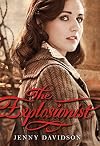
Sophie is your basic 15 year old teen with a crush on her young science teacher, tempestuous friendships at boarding school and an insatiable curiousity about the world around her. She lives in 1938 Scotland, the specter of war looming again after the Great War of a few decades earlier. In that war, England fell to Europe and Scotland aligned itself with the Scandanavian nations, calling itself the Hanseatic League. Sophie is a ward of her Great Aunt Tabitha, who is a spiritualist, and as show more interested in seances as the political and scientific world.
This is an alternate world to the one we live in. Napoleon won at Waterloo, changing the European landscape from 1815 on. Deleware seceded with the South in North America, leaving it split into two countries. Names such as Nobel, Edison, Freud, Houdini are all delved into and either still alive, or pursuing interesting parts of their "normal" lives. It was richly written, but I found it a little distracting, and as a result, it took a long time to get into the story. show less
This is an alternate world to the one we live in. Napoleon won at Waterloo, changing the European landscape from 1815 on. Deleware seceded with the South in North America, leaving it split into two countries. Names such as Nobel, Edison, Freud, Houdini are all delved into and either still alive, or pursuing interesting parts of their "normal" lives. It was richly written, but I found it a little distracting, and as a result, it took a long time to get into the story. show less

Author Jenny Davidson is both an English and Comparative Literature professor and an inveterate reader. She reads everything from classics to old but forgotten books, from high-brow literature to popular novels. Reading Style is a mix of all of these things. Although it refers to some literary theory, the author explains early on that what informed her decisions to talk about specific books was not a desire to”[make] an argument about style” but to share passages that “speak to [her] show more strongly.”
Lately I’ve been loving books about books and books about people who loves books. In many ways, Reading Style did not disappoint. Author Jenny Davidson is fun and passionate and clearly very much in love with the written word. Sharing her passion for particular sentences and writing styles was generally enjoyable. There were a few sections where she focused on authors who weren’t to my taste and I was surprised how much this could make a section drag. Perhaps this shouldn’t have surprised me though, given how liberally she quoted and how much my enjoyment of the book depended on entering into her enthusiasm. When I wasn’t loving the authors she was sharing, I often enjoyed the thought-provoking points she raised about the merits of style and substance in literature.
Even though I’m someone who enjoys thinking about the roles literature plays in our lives, the author sometimes waxed a bit too philosophical for me. In the age old criticism of literary criticism, it’s fair to say that I sometimes felt the author was investing too much meaning in the text she shared. I also sometimes found her writing very dense and hard to follow. Unfortunately, two of the last chapters were focused on authors I didn’t enjoy. They were also some of the trickier chapters to get through. As a result, I finished the book feeling very ready to be done with it. However, parts of the book were truly fantastic and if you’re someone who loves beautiful writing, I’d recommend giving this a shot.
This review first published on Doing Dewey. show less
Lately I’ve been loving books about books and books about people who loves books. In many ways, Reading Style did not disappoint. Author Jenny Davidson is fun and passionate and clearly very much in love with the written word. Sharing her passion for particular sentences and writing styles was generally enjoyable. There were a few sections where she focused on authors who weren’t to my taste and I was surprised how much this could make a section drag. Perhaps this shouldn’t have surprised me though, given how liberally she quoted and how much my enjoyment of the book depended on entering into her enthusiasm. When I wasn’t loving the authors she was sharing, I often enjoyed the thought-provoking points she raised about the merits of style and substance in literature.
Even though I’m someone who enjoys thinking about the roles literature plays in our lives, the author sometimes waxed a bit too philosophical for me. In the age old criticism of literary criticism, it’s fair to say that I sometimes felt the author was investing too much meaning in the text she shared. I also sometimes found her writing very dense and hard to follow. Unfortunately, two of the last chapters were focused on authors I didn’t enjoy. They were also some of the trickier chapters to get through. As a result, I finished the book feeling very ready to be done with it. However, parts of the book were truly fantastic and if you’re someone who loves beautiful writing, I’d recommend giving this a shot.
This review first published on Doing Dewey. show less
Let’s make this very clear from the start: I LOVE alternate histories. So if you say to me, “Check it out - this is a detailed look at how the world might have changed if Napoleon had defeated Wellington at Waterloo,” I will be on page 15 before you’ve finished your sentence. And if you follow that up with “And it’s got this awesome plot with political intrigue and ghosts and murder,” I will have run off with your book in my hand. (I’ll give it back after I’ve finished. show more Maybe.)
The Explosionist delivers a rip-roaring story, with all of the above elements in spades. Sophie is a schoolgirl in Scotland, which has fully split from England since Napoleon’s victory and is now part of the Hanseatic League. It is a turbulent time in Sophie’s Scotland, with terrorist bombings on the rise, and the country seems to be slowly gearing up for war with Europe. In Sophie’s own life, she is not only negotiating the everyday trials of being a teenager - her roommates’ constant teasing about Sophie’s crush on her science teacher, for instance - but she has also been drawn into investigation of a dangerous plot. While looking for further information from a medium who delivered a strange message to Sophie during one of her Great-aunt’s seances, Sophie and Mikael stumble onto a murder. Not knowing who they can trust, the two friends conduct their own investigation. What they find has implications for the entire world, and puts Sophie in immediate danger.
Davidson’s world-building is extraordinarily well done. It is clear that the history, science, and culture of The Explosionist has been given serious thought, and the world that has been created is both interesting and plausible. The implications of a single change in history ripple through all aspects of the story, from the current political situation to the worldview of teenage girls in Scotland. I was especially curious about two choices that Davidson made, one of which is integral to the story and one of which was mentioned only in passing.
Multiple times in the story, Davidson alludes to great cultural and scientific achievements such as “the theology of Count Tolstoy, the novels of Richard Wagner, the verse of Albert Einstein, or the operas of James Joyce” (page 62). There were just enough of these asides to be distracting, and to make me feel like Davidson was trying to make some point beyond showcasing the subtle differences between this world and ours. Whether her point was that genius will come forward in whatever form is cultivated, or that great achievements like “the Wittenberg Uncertainty Principle” would eventually come to light even without their original creators, I’m not sure. Perhaps this is something that Davidson will address in a sequel.
Much more central to the plot is the genuine spiritualism that is found in Sophie’s world. The spiritualists in the world of The Explosionist have much in common with the spiritualist movement that was popular in certain American and European social circles in the late 1800s and early 1900s, where societies of wealthy women would gather for seances and other communications with the spirit world. There is one major difference - in Davidson’s book, spiritualism is not only widely believed, but is genuine and commonplace, to the point where it can be difficult to tune a radio without interference from spirit voices. In fact, the mysterious plot that Sophie and Mikael investigate cannot be unraveled without significant guidance from spirits, or without Sophie’s unwanted talents as a spirit medium. It is not clear whether this advance in spirit communication also stems somehow from Wellington’s defeat at Waterloo, or whether this is a difference that has always existed in the world of The Explosionist.
Davidson created not only a complete world for her novel, but also a web of well-rounded and complex characters. With one key exception, even characters who are doing wrong believe that they are acting for the good of the country. Sophie’s Great-Aunt Tabitha is especially compelling. Her own faith in the IRYLNS program, a training program for perfect secretaries that she created and still champions, is thrown up against her increasing desire to keep Sophie out of the program. Ultimately, we see a woman who truly believes that people would be better off without any emotions thrown for a loop by her love for her ward. The choices made by Great-aunt Tabitha are the most chilling part of the novel.While I did not see anything on the author’s website, it sure feels like there will be a sequel coming. I hope to enjoy Sophie’s further adventures, and to learn more about Jenny Davidson’s imaginative version of history.
On my blog show less
The Explosionist delivers a rip-roaring story, with all of the above elements in spades. Sophie is a schoolgirl in Scotland, which has fully split from England since Napoleon’s victory and is now part of the Hanseatic League. It is a turbulent time in Sophie’s Scotland, with terrorist bombings on the rise, and the country seems to be slowly gearing up for war with Europe. In Sophie’s own life, she is not only negotiating the everyday trials of being a teenager - her roommates’ constant teasing about Sophie’s crush on her science teacher, for instance - but she has also been drawn into investigation of a dangerous plot. While looking for further information from a medium who delivered a strange message to Sophie during one of her Great-aunt’s seances, Sophie and Mikael stumble onto a murder. Not knowing who they can trust, the two friends conduct their own investigation. What they find has implications for the entire world, and puts Sophie in immediate danger.
Davidson’s world-building is extraordinarily well done. It is clear that the history, science, and culture of The Explosionist has been given serious thought, and the world that has been created is both interesting and plausible. The implications of a single change in history ripple through all aspects of the story, from the current political situation to the worldview of teenage girls in Scotland. I was especially curious about two choices that Davidson made, one of which is integral to the story and one of which was mentioned only in passing.
Multiple times in the story, Davidson alludes to great cultural and scientific achievements such as “the theology of Count Tolstoy, the novels of Richard Wagner, the verse of Albert Einstein, or the operas of James Joyce” (page 62). There were just enough of these asides to be distracting, and to make me feel like Davidson was trying to make some point beyond showcasing the subtle differences between this world and ours. Whether her point was that genius will come forward in whatever form is cultivated, or that great achievements like “the Wittenberg Uncertainty Principle” would eventually come to light even without their original creators, I’m not sure. Perhaps this is something that Davidson will address in a sequel.
Much more central to the plot is the genuine spiritualism that is found in Sophie’s world. The spiritualists in the world of The Explosionist have much in common with the spiritualist movement that was popular in certain American and European social circles in the late 1800s and early 1900s, where societies of wealthy women would gather for seances and other communications with the spirit world. There is one major difference - in Davidson’s book, spiritualism is not only widely believed, but is genuine and commonplace, to the point where it can be difficult to tune a radio without interference from spirit voices. In fact, the mysterious plot that Sophie and Mikael investigate cannot be unraveled without significant guidance from spirits, or without Sophie’s unwanted talents as a spirit medium. It is not clear whether this advance in spirit communication also stems somehow from Wellington’s defeat at Waterloo, or whether this is a difference that has always existed in the world of The Explosionist.
Davidson created not only a complete world for her novel, but also a web of well-rounded and complex characters. With one key exception, even characters who are doing wrong believe that they are acting for the good of the country. Sophie’s Great-Aunt Tabitha is especially compelling. Her own faith in the IRYLNS program, a training program for perfect secretaries that she created and still champions, is thrown up against her increasing desire to keep Sophie out of the program. Ultimately, we see a woman who truly believes that people would be better off without any emotions thrown for a loop by her love for her ward. The choices made by Great-aunt Tabitha are the most chilling part of the novel.While I did not see anything on the author’s website, it sure feels like there will be a sequel coming. I hope to enjoy Sophie’s further adventures, and to learn more about Jenny Davidson’s imaginative version of history.
On my blog show less
Reviewed by Amber Gibson for TeensReadToo.com
In a world where Europe is split into two competing factions on the brink of war, the 1930s are dominated by the Enlightenment principles of science and reason. The basis of this parallel universe is that Napoleon defeated Wellington at the Battle of Waterloo in 1815. Jenny Davidson skillfully incorporates elements of historical research, science-fiction, and the paranormal to create a world utterly unrecognizable to readers in the twenty-first show more century. With her clever plot and vivid descriptions, Davidson prevents readers from becoming confused and overwhelmed by the drastic differences of her imaginary world.
Fifteen-year-old Sophie Hunter is living in Scotland, a member of the New Hanseatic League, and attending an all-girls preparatory school with hopes of a university education. However, her future hangs in jeopardy due to the threat of war between the New Hanseatic League and Europe. Terrorist attacks by the Brother of the Northern Liberties are all too common, and the mood throughout the country is tense. In the event of war, all of Scotland's young women would be called upon to serve the country in various national agencies, dashing Sophie's dreams of becoming a scientist.
Sophie's already turbulent life becomes even more confusing after she attends one of her great-aunt Tabitha's seances. The medium delivers a shocking anonymous message to Sophie, insinuating that she will encounter great danger. When the medium is murdered shortly thereafter, Sophie knows that the prophecy is not to be taken lightly. She vows to uncover the mysteries behind the tangle of Scotland's political web, to save herself and her friends from a disastrous fate.
As fate would have it, war might soon be upon them. Sophie plans on joining IRLYNS, serving her country as is her duty if the unthinkable should occur. Short for the Institute for the Recruitment of Young Ladies for National Security and pronounced "irons," IRLYNS aims to train intelligent young women to be personal assistants to Scotland's most powerful government officials. Great-aunt Tabitha, Sophie's guardian since the death of her parents many years ago, is actually one of the founders of IRLYNS, and Sophie expects her to be proud of her noble intentions. However, great-aunt Tabitha strongly discourages her niece from joining IRLYNS, and Sophie's curiosity is piqued. Could the secrets behind IRLYNS be in any way connected to the precarious state of the country?
Although she lives in a bizarre world, readers will surely be able to relate to Sophie's idealism and youthful exuberance. A loyal friend with strong morals, readers will find Sophie very likable. Her crush on her chemistry teacher, Mr. Peterson, is reminiscent of Hermione's infatuation with Gilderoy Lockhart. Thankfully, Mr. Peterson is infinitely more worthy of admiration. Then there is Sophie's amusing relationship with Mikael, her best guy friend from Sweden. Slowly, Sophie discovers what readers will see all along, that Sophie harbors more than feelings of friendship for Mikael.
Davidson skillfully tempers suspense and danger with laughter and good times, creating a magical world that defies genre stereotypes. Deeper than a typical adventure story, THE EXPLOSIONIST challenges readers with questions of ethics and the rightful boundaries of the government. Insightful readers will explore their own political beliefs, and even draw parallels from Sophie's world to current events of today. Davidson's abrupt ending will surely leave readers hoping for a sequel! show less
In a world where Europe is split into two competing factions on the brink of war, the 1930s are dominated by the Enlightenment principles of science and reason. The basis of this parallel universe is that Napoleon defeated Wellington at the Battle of Waterloo in 1815. Jenny Davidson skillfully incorporates elements of historical research, science-fiction, and the paranormal to create a world utterly unrecognizable to readers in the twenty-first show more century. With her clever plot and vivid descriptions, Davidson prevents readers from becoming confused and overwhelmed by the drastic differences of her imaginary world.
Fifteen-year-old Sophie Hunter is living in Scotland, a member of the New Hanseatic League, and attending an all-girls preparatory school with hopes of a university education. However, her future hangs in jeopardy due to the threat of war between the New Hanseatic League and Europe. Terrorist attacks by the Brother of the Northern Liberties are all too common, and the mood throughout the country is tense. In the event of war, all of Scotland's young women would be called upon to serve the country in various national agencies, dashing Sophie's dreams of becoming a scientist.
Sophie's already turbulent life becomes even more confusing after she attends one of her great-aunt Tabitha's seances. The medium delivers a shocking anonymous message to Sophie, insinuating that she will encounter great danger. When the medium is murdered shortly thereafter, Sophie knows that the prophecy is not to be taken lightly. She vows to uncover the mysteries behind the tangle of Scotland's political web, to save herself and her friends from a disastrous fate.
As fate would have it, war might soon be upon them. Sophie plans on joining IRLYNS, serving her country as is her duty if the unthinkable should occur. Short for the Institute for the Recruitment of Young Ladies for National Security and pronounced "irons," IRLYNS aims to train intelligent young women to be personal assistants to Scotland's most powerful government officials. Great-aunt Tabitha, Sophie's guardian since the death of her parents many years ago, is actually one of the founders of IRLYNS, and Sophie expects her to be proud of her noble intentions. However, great-aunt Tabitha strongly discourages her niece from joining IRLYNS, and Sophie's curiosity is piqued. Could the secrets behind IRLYNS be in any way connected to the precarious state of the country?
Although she lives in a bizarre world, readers will surely be able to relate to Sophie's idealism and youthful exuberance. A loyal friend with strong morals, readers will find Sophie very likable. Her crush on her chemistry teacher, Mr. Peterson, is reminiscent of Hermione's infatuation with Gilderoy Lockhart. Thankfully, Mr. Peterson is infinitely more worthy of admiration. Then there is Sophie's amusing relationship with Mikael, her best guy friend from Sweden. Slowly, Sophie discovers what readers will see all along, that Sophie harbors more than feelings of friendship for Mikael.
Davidson skillfully tempers suspense and danger with laughter and good times, creating a magical world that defies genre stereotypes. Deeper than a typical adventure story, THE EXPLOSIONIST challenges readers with questions of ethics and the rightful boundaries of the government. Insightful readers will explore their own political beliefs, and even draw parallels from Sophie's world to current events of today. Davidson's abrupt ending will surely leave readers hoping for a sequel! show less
Lists
Awards


You May Also Like


Associated Authors
Statistics
- Works
- 10
- Also by
- 3
- Members
- 457
- Popularity
- #53,729
- Rating
- 3.7
- Reviews
- 38
- ISBNs
- 32