
Dale A. Dye
Author of Platoon [novelization]
About the Author
Image credit: U.S. Marine Corps photo by Sgt. Christopher R. Rye, cropped by uploader (defenseimagery.mil)
Works by Dale A. Dye
Associated Works
Tagged
Common Knowledge
- Birthdate
- 1944-10-08
- Gender
- male
- Awards and honors
- Bronze Star
- Nationality
- USA
- Places of residence
- Cape Girardeau, Missouri, USA (birth)
- Associated Place (for map)
- Missouri, USA
Members
Reviews

Dye wrote this after serving in the US Marines. This fictionalization of Vietnam was kinda funny and Oliver Stone made it look bizarre and cheap to fight in the war. The good thing was that Dye then went on to be a full blown booster for Bush's Invasion of Iraq which was absurd on every level considering the US commanders fought it exactly like they fought the Vietnam War beforehand. It was great to see him with his tail between his legs acting like some kind of hero doing press appearances show more for the liberal news who were also gung-ho for the Iraq war. show less

Retired Marine Sergeant Major Quick died at his cabin in a remote part of the Ozark Mountains - never knowing what had happened to his son, a confirmed POW in Laos during the Vietnam war. When the American POW's were released in Hanoi after the war, his son and many other confirmed prisoners from Laos were not a part of that contingent of freed soldiers. It was reported that 213 POW's were collected from various prison camps in Laos and were en route to Hanoi. The prisoners and guards, over show more three-hundred men in total, were following the Ho Chi Minh trail northward. However, just prior to reaching the gateway into North Vietnam, the entire group vanished. There were no survivors, evidence on the trails or documentation regarding the march and its outcome - 213 American families would never know what happened. So it was said...
After the Vietnam War ended, Sergeant Major Quick spent four years with the "Spooks" in South East Asia trying to solve the mystery of his missing son. He had heard rumors of existing evidence, and followed up on every lead. He created a log of his own during this time and recorded every tidbit of information - keeping it hidden and secret from the Spooks and others. After his death, this package and other pertinent information ended up in the hands of Marine Gunner Shake Davis. Warrant Officer Davis and Sergeant Major Quick served together in Vietnam and other hot spots during their careers. They were close friends, and it was Shake who held the Sergeant Major's head in his arms - comforting the older man until his heart finally stopped and he took a last breath. The Warrant Officer was contemplating retirement and was ready to sign the papers when these secret documents arrived. In order for him to carry on, Shake had to find a way back to Vietnam with a good enough cover - one that would enable him to conduct his clandestine investigation behind the scenes. The perfect opportunity came up when the Marine Corps asked Shake to postpone his retirement and join up with a MIA delegation in Vietnam. This was also a front for the real reason the government was sending him there. Shake Davis was tasked with spying on Vietnamese military strength, tactics and weapons in addition to those discussions about MIA's. Could he do this and conduct his private investigation about the Laos disappearances at the same time?
Shake Davis found Vietnam much different from how he remembered it during the war. Most of the people encountered were not even born when the war was fought and did not show any resentment for the Americans. It was a different story with the older generation. There were many secrets, ex-soldiers harbored guilt and wanted retribution, there were indeed survivors of the Laos March and evidence of what had happened was also available and hidden in a secret place. However, people are now dying and Shake Davis is in the cross-hairs of assassins; somebody was going to great lengths in wanting to keep the Laos file a secret.
This book is a cloak and dagger thriller with many twists and turns. Shake eventually finds himself at the outer walls of Hue and the Imperial Palace. The familiarity of these sights forces him to relive the battles he fought here during the 1968 Tet offensive. When his mind stops the movie, he realizes that he is standing in the exact place where his foxhole had been some forty-two years earlier. In fact, he even meets a former NVA soldier, who turns out to be the one who fought Shake, hand to hand, in this very spot.
The truth is out there! Can Warrant Officer Davis find it? Will the US and Vietnamese governments try to stop him? Will he escape the assassins? Will there be closure? This is a stay up late at night book - well worth the reader having to drag his ass the next day. Highly recommended. Well done Dale!
John Podlaski, Author
Cherries - A Vietnam War Novel show less
After the Vietnam War ended, Sergeant Major Quick spent four years with the "Spooks" in South East Asia trying to solve the mystery of his missing son. He had heard rumors of existing evidence, and followed up on every lead. He created a log of his own during this time and recorded every tidbit of information - keeping it hidden and secret from the Spooks and others. After his death, this package and other pertinent information ended up in the hands of Marine Gunner Shake Davis. Warrant Officer Davis and Sergeant Major Quick served together in Vietnam and other hot spots during their careers. They were close friends, and it was Shake who held the Sergeant Major's head in his arms - comforting the older man until his heart finally stopped and he took a last breath. The Warrant Officer was contemplating retirement and was ready to sign the papers when these secret documents arrived. In order for him to carry on, Shake had to find a way back to Vietnam with a good enough cover - one that would enable him to conduct his clandestine investigation behind the scenes. The perfect opportunity came up when the Marine Corps asked Shake to postpone his retirement and join up with a MIA delegation in Vietnam. This was also a front for the real reason the government was sending him there. Shake Davis was tasked with spying on Vietnamese military strength, tactics and weapons in addition to those discussions about MIA's. Could he do this and conduct his private investigation about the Laos disappearances at the same time?
Shake Davis found Vietnam much different from how he remembered it during the war. Most of the people encountered were not even born when the war was fought and did not show any resentment for the Americans. It was a different story with the older generation. There were many secrets, ex-soldiers harbored guilt and wanted retribution, there were indeed survivors of the Laos March and evidence of what had happened was also available and hidden in a secret place. However, people are now dying and Shake Davis is in the cross-hairs of assassins; somebody was going to great lengths in wanting to keep the Laos file a secret.
This book is a cloak and dagger thriller with many twists and turns. Shake eventually finds himself at the outer walls of Hue and the Imperial Palace. The familiarity of these sights forces him to relive the battles he fought here during the 1968 Tet offensive. When his mind stops the movie, he realizes that he is standing in the exact place where his foxhole had been some forty-two years earlier. In fact, he even meets a former NVA soldier, who turns out to be the one who fought Shake, hand to hand, in this very spot.
The truth is out there! Can Warrant Officer Davis find it? Will the US and Vietnamese governments try to stop him? Will he escape the assassins? Will there be closure? This is a stay up late at night book - well worth the reader having to drag his ass the next day. Highly recommended. Well done Dale!
John Podlaski, Author
Cherries - A Vietnam War Novel show less

Okay, that was excellent. At first I was under the impression that its prose was quite simplistic and the book was mainly of interest just for the historical setting, but as it turns out it was extremely well-written.
A good mix of fact and fiction. Opening one's eyes to what went on and managing to entertain without pulling punches - rather, if anything it twists the knife. I can only imagine it would have been a very difficult book to write.
A good mix of fact and fiction. Opening one's eyes to what went on and managing to entertain without pulling punches - rather, if anything it twists the knife. I can only imagine it would have been a very difficult book to write.
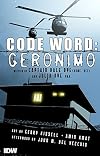
The graphic format of this publication does not work at all on my NOOK. None of the illustrations transferred to the device, although I was able to read it and see the pictures clearly using Adobe Digital Editions on my laptop--which also shows the color very clearly. The Afterword, obviously a straight text file, comes through just fine on the NOOK. The book was not available in a Kindle edition through Net Galley, so I can't comment on that, although I notice that Amazon is marketing the show more kindle edition.
E-reader issues aside, the graphic format works well for this story, but I kept having to step back from my military background and relationships and remind myself that it was precisely that - a comic book telling the story of a brave adventure. The only cataloging data I found has it designated as a graphic. It's not intended to be an historical reporting, but was obviously written as a patriotic salute to a very brave group of warriors. That said, I suspect that parts will be difficult to grasp for someone without a military jargon grounding, but it's probably ok for a generation used to playing action video games. The authors are very spare with their 'word-balloons' and that tendenchttp://www.librarything.com/work/11739601/summary/78014028#y keeps the reader's eye moving right along.
For me, the most interesting part of the work is the Afterward "Perspectives" by John M. DelVecchio, a noted author of fictional works about Vietnam, giving us a short but insightful history of Geronimo the person, and Geronimo as the choice for naming the operation. It also gives us a short bio of Osama bin Laden with a time line of Al Quaeda activities, and finally presents the reader with a description of Navy SEALS - their organization and the rigorous training program an applicant must pass before earning that coveted trident patch.
We are assured that no real names of American participants have been revealed, but must take it on faith that no other secrets have been inadvertently displayed. The author's quote buried in the Afterward "Due to entirely appropriate security concerns, there is some creative license in our script." would have been much better inserted at the beginning of the book. I found DelVecchio's Afterward quite informative until the end when in the closing section "Perspective-Lessons Learned; Unfinished Business; Closure" we are given the oft-repeated mantra of look what happened in Korea, look what happened in Vietnam, if we don't stay in Afghanistan and clean up this mess, the world is doomed. (italics my interpretation - not intended as a quote of Del Vecchio's actual words.) The tone, while patriotic, is a bit jingoistic for my taste. This turned what could have been a reasonably accessible story of an episode in American history into a politicized lecture that spoiled the overall effect for me. It must be assumed that the authors agree or they wouldn't (or shouldn't) have allowed that section to close their work.
I'm not seeing it as a best seller, but I do see this as the unfortunate(?) beginning of a wave of this kind of publication. Will it be the coming way to teach history? Who knows? If it presents facts to a generation more accustomed to the sound bite format to capture information than it's probably better than a totally uninformed public, but I for one hope that our accomplishments as Americans, and the analysis of that history does not totally depend on Hollywood screenwriters to be promulgated. show less
E-reader issues aside, the graphic format works well for this story, but I kept having to step back from my military background and relationships and remind myself that it was precisely that - a comic book telling the story of a brave adventure. The only cataloging data I found has it designated as a graphic. It's not intended to be an historical reporting, but was obviously written as a patriotic salute to a very brave group of warriors. That said, I suspect that parts will be difficult to grasp for someone without a military jargon grounding, but it's probably ok for a generation used to playing action video games. The authors are very spare with their 'word-balloons' and that tendenchttp://www.librarything.com/work/11739601/summary/78014028#y keeps the reader's eye moving right along.
For me, the most interesting part of the work is the Afterward "Perspectives" by John M. DelVecchio, a noted author of fictional works about Vietnam, giving us a short but insightful history of Geronimo the person, and Geronimo as the choice for naming the operation. It also gives us a short bio of Osama bin Laden with a time line of Al Quaeda activities, and finally presents the reader with a description of Navy SEALS - their organization and the rigorous training program an applicant must pass before earning that coveted trident patch.
We are assured that no real names of American participants have been revealed, but must take it on faith that no other secrets have been inadvertently displayed. The author's quote buried in the Afterward "Due to entirely appropriate security concerns, there is some creative license in our script." would have been much better inserted at the beginning of the book. I found DelVecchio's Afterward quite informative until the end when in the closing section "Perspective-Lessons Learned; Unfinished Business; Closure" we are given the oft-repeated mantra of look what happened in Korea, look what happened in Vietnam, if we don't stay in Afghanistan and clean up this mess, the world is doomed. (italics my interpretation - not intended as a quote of Del Vecchio's actual words.) The tone, while patriotic, is a bit jingoistic for my taste. This turned what could have been a reasonably accessible story of an episode in American history into a politicized lecture that spoiled the overall effect for me. It must be assumed that the authors agree or they wouldn't (or shouldn't) have allowed that section to close their work.
I'm not seeing it as a best seller, but I do see this as the unfortunate(?) beginning of a wave of this kind of publication. Will it be the coming way to teach history? Who knows? If it presents facts to a generation more accustomed to the sound bite format to capture information than it's probably better than a totally uninformed public, but I for one hope that our accomplishments as Americans, and the analysis of that history does not totally depend on Hollywood screenwriters to be promulgated. show less
Awards

You May Also Like


Associated Authors
Statistics
- Works
- 20
- Also by
- 5
- Members
- 334
- Popularity
- #71,210
- Rating
- 4.0
- Reviews
- 11
- ISBNs
- 54
- Languages
- 6
