
Libbie Hawker
Author of The Ragged Edge of Night
About the Author
Series
Works by Libbie Hawker
Associated Works
Songs of Blood and Gold — Contributor — 4 copies
Tagged
Common Knowledge
- Other names
- Ironside, L. M.
- Gender
- female
- Occupations
- zoo curator
show dog handler
bookseller
dyer - Agent
- Natalie Fischer
- Nationality
- USA
- Places of residence
- Seattle, Washington, USA
Bellingham, Washington, USA
Tacoma, Washington, USA
Salt Lake City, Utah, USA
San Juan Island, Washington, USA
Friday Harbor, Washington, USA - Associated Place (for map)
- Washington, USA
Members
Reviews
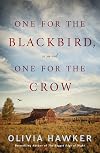
"I ain't fool enough to think I'm wise, exactly, but I have learned one scrap of wisdom, at least: whatever a body expects their life to be, that's what they'll make of it."
This was my favorite quote from the book—and one that perfectly encapsulates the underlying theme of this novel.
One for the Blackbird, One for the Crow is an eye opening historical fiction story of homesteading life on the Wyoming prairie in the late 1800s. But, it's really more a story of healing, connectedness and show more mindfulness.
It's a slow ride with a few predictable peaks and an understated love story. The beauty is in the development of the characters and their personal evolution and the intricate descriptions of all things prairie.
Overall, I found the writing quality to be very good and the style enjoyable. "Flowery" is a word that keeps popping into my head, so I'm letting it out. There were, however, several times where I found the internal and external dialogue to be a bit hokey and the foreshadowing overly obvious. Hence, four stars vs five.
Really happy I read this book and would definitely recommend it to anyone (mostly "anyhers") who love history, nature and have a deep appreciation of personal growth. show less
This was my favorite quote from the book—and one that perfectly encapsulates the underlying theme of this novel.
One for the Blackbird, One for the Crow is an eye opening historical fiction story of homesteading life on the Wyoming prairie in the late 1800s. But, it's really more a story of healing, connectedness and show more mindfulness.
It's a slow ride with a few predictable peaks and an understated love story. The beauty is in the development of the characters and their personal evolution and the intricate descriptions of all things prairie.
Overall, I found the writing quality to be very good and the style enjoyable. "Flowery" is a word that keeps popping into my head, so I'm letting it out. There were, however, several times where I found the internal and external dialogue to be a bit hokey and the foreshadowing overly obvious. Hence, four stars vs five.
Really happy I read this book and would definitely recommend it to anyone (mostly "anyhers") who love history, nature and have a deep appreciation of personal growth. show less
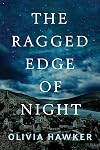
Beautiful story set in WWII about the power of resistance and love in the midst of evil and totalitarianism. Yet another angle on the war - I'm always impressed when authors come up with a fresh story - and this one is based on a real person and true family lore and experience. Joseph Anton Starzmann was a Catholic friar until the Nazis disbanded his order and shipped off the special-needs children he had been teaching and caring for. He is then drafted into the Wehrmacht where he paratroops show more into Latvia to "liberate" Riga. After being wounded in this maneuver, he tries to adapt to civilian life, but seeks God's purpose and answers an ad in a Catholic newspaper from a desperate widow seeking a father for her 3 children in the small country town of Unterboihingen. This charming village has been largely untouched by the war except for the rations and food shortages, but the people look out for each other, have set up a barter system and are mainly loyal to their German heritage, not the Fuhrer's distortion of it. Here Anton becomes husband to Elisabeth, a courageous and devout woman, and father to Albert, Paul, and Maria. He also begins to teach music to local children, befriends the parish priest, Fr. Emil, and quietly finds ways to subvert the Nazis. It is 1943 and resistance is growing - even in Germany, which was so heartening to read about. The Red Orchestra has devised and network and a plan to try to bring down Hitler from within. The White Rose, a teen version of resistance is also spreading. Anton's first love is God, then his new family, then his country and his actions align with his beliefs at every turn. Though the town mostly shares the same views of goodness and right - they vote to take in refugees at one point - there are still dissenters (party loyalists) and even a gauleiter (Herr Franke/Mobelbauer) who watches and reports back to the SS. Anton is haunted by his inability to save his former students and is determined to make a difference any way he can. "Day after day it rises. Like a tide, it swells. Every outrage, every death, each new act of inhumanity wrings from us another drop of resolve, even when we think our spirits dust dry and deadened. We flow together; we merge; ...we are a river eroding its banks. We will no longer be contained. There is a greater force. Its name is Widerstand, resist." Though the author was aware of her grandfather-in-law's (the real Anton Starzmann's) subtle defiance for many years, she chose to write about it in 2016, seeing parallels of rising hatred and abuse of power in our own country. Thus this is a call to action, but also a song of hope. Don't miss it. show less
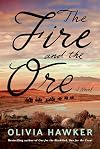
This book is an exploration of polygamy – i.e., plural marriage – how it forms and how it operates. It’s an exploration of a topic that is controversial because of its place in early Mormon society and curious because it runs contrary to how much of society has organized itself. I live in the American South and am a Protestant Christian. Southern Christians would never deign to practice public plural marriages. (Polyamory is another matter, practiced but only only in secret!)
In this show more book of historical fiction on the nineteenth-century American frontier, three women have their stories converge by circumstance. Through very different experiences, they all marry one man and encounter all of the nuanced jealousies one would imagine in that relationship. Yet somehow – and Hawker wants to explore this in detail – they decide to work together in a form of a sisterhood. In the author’s note at the end, Hawker explains that the profiles for these characters were drawn from her relatives, and the desire for peaceful sisterhood is true. And the “true” story actually contains five wives, not three.
I liked this book because it talked about something that I didn’t know much about. Again, polyamory, not polygamy, is the name of the game in the evangelical American South. But I really didn’t like the ending. It seemed to whitewash everything into a fairy-tale ending – “…and they lived happily ever after.” I would have liked some deeper drama there instead of an idealization of being sister-wives. I understand that diverse opinions will always exist about this topic, especially among those whose families have participated in such an arrangement. Nonetheless, the ending just was not compelling enough for me.
Those interested in the history of the American frontier will find this story interesting, especially about the pilgrimage from the American midwest to Utah. Further, those interested in religious history, including frontier religion, Mormonism, and the broad cultural piety that enveloped early America, will find much to digest here. Save for the practice of polygamy, most of the nuances of the Mormon religion are not explored here, and a light sprinkling of Christian piety abounds in its place. Finally, the story has a tinge of feminism to it. It celebrates strong women who make choices for their lives and for their families’ lives, even amidst a patriarchal society and a fool-headed US president.
Polygamy does not necessarily lead to weak women. That’s the main theme I take from this book. I wish it didn’t whitewash the difficulties in the denouement of the book. Rather, I follow Ralph Waldo Emerson that part of personal strength consists of being able to live with contradictions. These women show how they found strength in the midst of contradictory times and uncertain (and discomforting) experiences. Perhaps the next generation will write a book about similar themes in our times. show less
In this show more book of historical fiction on the nineteenth-century American frontier, three women have their stories converge by circumstance. Through very different experiences, they all marry one man and encounter all of the nuanced jealousies one would imagine in that relationship. Yet somehow – and Hawker wants to explore this in detail – they decide to work together in a form of a sisterhood. In the author’s note at the end, Hawker explains that the profiles for these characters were drawn from her relatives, and the desire for peaceful sisterhood is true. And the “true” story actually contains five wives, not three.
I liked this book because it talked about something that I didn’t know much about. Again, polyamory, not polygamy, is the name of the game in the evangelical American South. But I really didn’t like the ending. It seemed to whitewash everything into a fairy-tale ending – “…and they lived happily ever after.” I would have liked some deeper drama there instead of an idealization of being sister-wives. I understand that diverse opinions will always exist about this topic, especially among those whose families have participated in such an arrangement. Nonetheless, the ending just was not compelling enough for me.
Those interested in the history of the American frontier will find this story interesting, especially about the pilgrimage from the American midwest to Utah. Further, those interested in religious history, including frontier religion, Mormonism, and the broad cultural piety that enveloped early America, will find much to digest here. Save for the practice of polygamy, most of the nuances of the Mormon religion are not explored here, and a light sprinkling of Christian piety abounds in its place. Finally, the story has a tinge of feminism to it. It celebrates strong women who make choices for their lives and for their families’ lives, even amidst a patriarchal society and a fool-headed US president.
Polygamy does not necessarily lead to weak women. That’s the main theme I take from this book. I wish it didn’t whitewash the difficulties in the denouement of the book. Rather, I follow Ralph Waldo Emerson that part of personal strength consists of being able to live with contradictions. These women show how they found strength in the midst of contradictory times and uncertain (and discomforting) experiences. Perhaps the next generation will write a book about similar themes in our times. show less
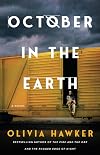
It is The Great Depression in the United States, a time of devastating poverty; families torn apart, starvation, crops ruined, no work. Del Wensley, wife of an up and coming End Times preacher knows what is expected of a wife in God fearing Kentucky. When she catches him being unfaithful and learns of repeated indiscretions, she has had enough and takes to the rails, joining the hobo life of those times. Fortunately for her, she meets Luisa who is well schooled in the way of hobo society as show more she works her way back to the son and uncle she has left behind while she tries to earn money. They form a strong bond, demonstrating that they are more benevolent and charitable than the moneyed class or the pious, hypocritical self proclaimed do gooders.
This is a heart wrenching but hopeful story. Beautifully descriptive, I felt as if I were on those railroad cars, looking out into the changing terrain as the women crisscrossed the America of the 1930s. It was fascinating learning about the hobo culture, poor individuals living a dangerous life, traveling from place to place looking for work and guided by a strict moral code. I loved the evolution of Del from someone who inherently knows there is something wrong with the position in life to which has been prescribed to an independent, clever, self sufficient woman in control of her destiny.
Although reflective of the time in which it was set, I saw this also as an allegory for our times, especially regarding the perceived role of women among religious zealots as well as the gap between the rich and the poor that lives on and the insensitive treatment of those struggling just to make a living.
I wasn’t sure about this book when I read the synopsis, but I am so glad I chose to read it and highly recommend it. Olivia Hawker (pen name) is a captivating story teller.
Thank you to #netgalley, @hawker.books and #lakeunionpub for the ARC. show less
This is a heart wrenching but hopeful story. Beautifully descriptive, I felt as if I were on those railroad cars, looking out into the changing terrain as the women crisscrossed the America of the 1930s. It was fascinating learning about the hobo culture, poor individuals living a dangerous life, traveling from place to place looking for work and guided by a strict moral code. I loved the evolution of Del from someone who inherently knows there is something wrong with the position in life to which has been prescribed to an independent, clever, self sufficient woman in control of her destiny.
Although reflective of the time in which it was set, I saw this also as an allegory for our times, especially regarding the perceived role of women among religious zealots as well as the gap between the rich and the poor that lives on and the insensitive treatment of those struggling just to make a living.
I wasn’t sure about this book when I read the synopsis, but I am so glad I chose to read it and highly recommend it. Olivia Hawker (pen name) is a captivating story teller.
Thank you to #netgalley, @hawker.books and #lakeunionpub for the ARC. show less
Lists
Awards


You May Also Like


Associated Authors
Statistics
- Works
- 34
- Also by
- 3
- Members
- 2,372
- Popularity
- #10,825
- Rating
- 3.9
- Reviews
- 118
- ISBNs
- 86
- Favorited
- 2