
David Maine (1) (1963–)
Author of The Preservationist
For other authors named David Maine, see the disambiguation page.
Works by David Maine
Tagged
Common Knowledge
- Birthdate
- 1963-11-28
- Gender
- male
- Education
- Oberlin College ( [1985])
University of Arizona (MFA ∙ Creative Writing) - Occupations
- teacher
writer - Relationships
- Khan, Uzma Aslam (wife)
- Nationality
- USA
- Birthplace
- Hartford, Connecticut, USA
- Places of residence
- Oberlin, Ohio, USA
Lahore, Pakistan
Honolulu, Hawaii, USA
Rabat, Morocco
Farmington, Connecticut, USA
Tucson, Arizona, USA - Associated Place (for map)
- USA
Members
Reviews

Fallen tells, in novel form, the stories of Adam, Eve, Cain, and Abel in reverse time order, starting with Cain's struggle with the aftermath of his murder of Abel. We begin with the consequences -- Cain's guilt and his life of exile -- and work our way backwards. Unresolved (purposely so, I think) is why Cain develops the way that he does and why he commits an act so unthinkable to his father.
Interestingly, predation and sex mark the differences between life in the Garden and life show more afterwards. Immediately after Eve shares the apple with Adam, they fall into sex together (no mention in this book whether they had sex prior to the apple). Upon leaving the Garden, they find themselves reduced to predation for food, just like the animals around them. The birth of Cain is from struggle and pain, as it is for the animals around them as well. Cain himself is constantly troubled by ill-temper, a difficult presence for his own mother and father.
Cain is stung by jealousy of Abel's ease and favor, both with their parents and with God. God rewards Abel's seemingly natural (God-given?) gift as a herdsman while disdaining Cain's offerings from the fields. Cain resists subordination in any form, to God or to his parents.
Cain's isolation and disassociation from his parents climaxes with his coming of age sexually and his participatory witnessing of his parents' lovemaking.
Eventually exiled from his father's house -- the book clearly shows the parallel between the expulsion of Adam and Eve from the Garden and Cain from his parents' house and land -- Cain only grows more distant and more difficult, culminating in his murder of Abel.
In the aftermath, Cain is left to pick up the pieces just as Adam and Eve had to do after leaving the Garden. Cain has not been exiled from a Paradise, but from his family and the community of other people.
A good, provocative read. show less
Interestingly, predation and sex mark the differences between life in the Garden and life show more afterwards. Immediately after Eve shares the apple with Adam, they fall into sex together (no mention in this book whether they had sex prior to the apple). Upon leaving the Garden, they find themselves reduced to predation for food, just like the animals around them. The birth of Cain is from struggle and pain, as it is for the animals around them as well. Cain himself is constantly troubled by ill-temper, a difficult presence for his own mother and father.
Cain is stung by jealousy of Abel's ease and favor, both with their parents and with God. God rewards Abel's seemingly natural (God-given?) gift as a herdsman while disdaining Cain's offerings from the fields. Cain resists subordination in any form, to God or to his parents.
Cain's isolation and disassociation from his parents climaxes with his coming of age sexually and his participatory witnessing of his parents' lovemaking.
Eventually exiled from his father's house -- the book clearly shows the parallel between the expulsion of Adam and Eve from the Garden and Cain from his parents' house and land -- Cain only grows more distant and more difficult, culminating in his murder of Abel.
In the aftermath, Cain is left to pick up the pieces just as Adam and Eve had to do after leaving the Garden. Cain has not been exiled from a Paradise, but from his family and the community of other people.
A good, provocative read. show less
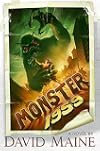
The other books I've read by David Maine have taken well-known Bible stories as their starting point. This book takes its inspiration from the King Kong story, mixed with 1950s B-Movies about monsters. K is the monster (a massive weird amalgamation of other creatures) who lives on an island where the locals make regular sacrifices to him. Then along come a group of Americans and instead of sacrificing one of their own people, the locals sacrifice a blonde American woman instead. The monster show more is then captured and taken to the USA where he is put in a circus. The book is structured as if it was a movie, but the story is fleshed out so that we see the motivation of characters, the details you wouldn't see in a film, but interestingly it goes in the other opposite direction from the films it parodies regarding the monster as it doesn't try to humanise him and assign human thoughts to him. Whilst the setting of the book is the 1950s, there are also references to political events from around the world from various periods. Some reviews I've read found Maine's political comments too much, but to me it seemed entirely appropriate as 1950s films were so entrenched in ideology and particularly the monster movies which were usually very thinly disguised references to communism. show less
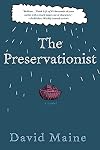
This is a retelling of the Biblical story of Noah's ark. It is narrated alternately by Noah (Noe), his wife, his teenage son Sem,and his son Cham's wife Ilya. Noe comes across as stern and distant, and thoroughly disliked. His belief in God seems misplaced. Ilya states, "The distruction of the known world isn't anything a sane person can look upon without terror. But what left me truly cold, genuinely afraid, was Noe's reaction to it all. Which was. in a word, jubilation."
When the flood show more begins and people are drowning, Ilya asks if everyone else will be drowned: "Praise God, I hope so.
--That's disgusting.
--They were sinners.
--So are we all."
"Only a man could call a child filth. No woman could look on a dead infant and feel such happiness.
--Ilya said Sem.
--And only a man's god would show love for his creation by destroying it.
Noe's face had clouded over no less than the sky--Take care in tempting God's wrath woman.
I wanted to say, what can he do that he hasn't done already."
While the Biblical roots are present in this novel, and the ethical and moral complexity of a God who destroys are considered, the book is also a family drama. It also deals with some of the practical details that are glossed over in the Bible--how did they get the animals from all over the world; how did Noah, a poor man, obtain the means to build the ark; how did they get rid of the animal poop on the ark; and most of all how do you survive cooped up with this family through 40 days of rain. show less
When the flood show more begins and people are drowning, Ilya asks if everyone else will be drowned: "Praise God, I hope so.
--That's disgusting.
--They were sinners.
--So are we all."
"Only a man could call a child filth. No woman could look on a dead infant and feel such happiness.
--Ilya said Sem.
--And only a man's god would show love for his creation by destroying it.
Noe's face had clouded over no less than the sky--Take care in tempting God's wrath woman.
I wanted to say, what can he do that he hasn't done already."
While the Biblical roots are present in this novel, and the ethical and moral complexity of a God who destroys are considered, the book is also a family drama. It also deals with some of the practical details that are glossed over in the Bible--how did they get the animals from all over the world; how did Noah, a poor man, obtain the means to build the ark; how did they get rid of the animal poop on the ark; and most of all how do you survive cooped up with this family through 40 days of rain. show less
egina Moss is an emotionally distant mother whose daughter Anna is struggling in her freshman year at college. What makes Regina's inability to meaningfully talk to and connect with her daughter so surprising is that Regina is also a psychiatrist. She not only works in a psychiatric hospital but she also spends hours listening to her private clients as they try to work through the things that are weighing on them and to face reality, something Regina seems incapable of doing herself.
At first show more glance, Regina is a completely trustworthy narrator who is still grieving the tragedy in her past. She and her daughter have a difficult relationship. She is immersed in her professional life almost completely and developing an interest in one of the new, young techs on her ward. But as facts about Regina's life come to light, she has to expand or alter her backstory, peeling back the sanitized and imagined past layer by layer to reveal the truth that still haunts her and drives her present no matter how deeply she's tried to bury it in her subconscious.
This tale of a manipulated truth, slowly revealed only through necessity, showcases a classic unreliable narrator. Separated into three sections: Lunacy, Hysteria, and Bedlam, each section is told in short numbered passages which serve to make each bit feel self-contained although they clearly build on one another. Everything about the book, Regina's life, the revealing truths, her relationship with Anna, and her feelings about everyone in her life past and present, grows incrementally. And as the shifting sands of Regina's story cover over the previous layer, the reader can't help but be caught up in wanting to see past the obfuscation to the uncontestably true core, to finally know the whole story. A fascinating look at the many ways in which we compensate for guilt and grief and living after a major loss and how we lie to ourselves and others, this was a surprisingly riveting novel. show less
At first show more glance, Regina is a completely trustworthy narrator who is still grieving the tragedy in her past. She and her daughter have a difficult relationship. She is immersed in her professional life almost completely and developing an interest in one of the new, young techs on her ward. But as facts about Regina's life come to light, she has to expand or alter her backstory, peeling back the sanitized and imagined past layer by layer to reveal the truth that still haunts her and drives her present no matter how deeply she's tried to bury it in her subconscious.
This tale of a manipulated truth, slowly revealed only through necessity, showcases a classic unreliable narrator. Separated into three sections: Lunacy, Hysteria, and Bedlam, each section is told in short numbered passages which serve to make each bit feel self-contained although they clearly build on one another. Everything about the book, Regina's life, the revealing truths, her relationship with Anna, and her feelings about everyone in her life past and present, grows incrementally. And as the shifting sands of Regina's story cover over the previous layer, the reader can't help but be caught up in wanting to see past the obfuscation to the uncontestably true core, to finally know the whole story. A fascinating look at the many ways in which we compensate for guilt and grief and living after a major loss and how we lie to ourselves and others, this was a surprisingly riveting novel. show less
Lists
Awards


You May Also Like


Associated Authors
Statistics
- Works
- 5
- Members
- 1,087
- Popularity
- #23,625
- Rating
- 3.7
- Reviews
- 60
- ISBNs
- 54
- Languages
- 6