
Nicholas Thomas (1) (1960–)
Author of Cook : The Extraordinary Voyages of Captain James Cook
For other authors named Nicholas Thomas, see the disambiguation page.
About the Author
Nicholas Thomas has curated exhibitions in many countries and has been the Director of the Museum of Archaeology and Anthropology in Cambridge since 2006. His many books include Islanders: The Pacific in the Age of Empire (2012), which won the Wolfson History Prize.
Series
Works by Nicholas Thomas
Tattoo: Bodies, Art, and Exchange in the Pacific and the West - History of Tatooing (2005) 26 copies, 1 review
Artefacts of Encounter: Cook’s Voyages, Colonial Collecting and Museum Histories (2016) — Editor — 19 copies
Narratives of Nation in the South Pacific (Studies in Anthropology and History) (1997) — Editor — 5 copies
Discoveries: Art, Science and Exploration from the University of Cambridge Museums (2014) — Author — 5 copies
Cook's sites 2 copies
George Nuku. Oceans. Collections. Reflections — Author — 1 copy
Associated Works
Tagged
Common Knowledge
- Birthdate
- 1960-04-21
- Gender
- male
- Organizations
- University of Cambridge
- Birthplace
- Sydney, Australia
- Associated Place (for map)
- Sydney, Australia
Members
Reviews
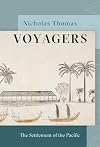
This is a deeply disappointing book. Written by an academic with expertise in the field, it purports to tell the story of the peopling of the Pacific. It doesn't.
I have many issues with the writing.
First is the the irritating habit of hedging statements. So many sentences and statements start with a qualifiers: but; while: to the contrary; though; notwithstanding. The content would be so much more readable and compelling if the author could just make explicit, positive, statements.
Second is show more the wandering narrative. As an example, the author starts to tell the story of the first people in the New Guinea area - east of the Wallace line. There is some talk of "easy" crossings - where land remained in sight on both sides, and the more challenging crossings requiring better boats, more sailing/navigation skills, and a lot of confidence. So far, so good. But then the story peters out. The first Lapita people arrive in the area (the focus of the book) but I was never clear which parts of that movement was through unsettled areas, and which involved interaction with earlier arrivals. I wanted more about those interactions, the human story, but nada.
Then there is the issue of intentional sailing for new lands for settling. Island canoes carrying men and women, breeding stock of domestic animals, and seedlings of crops for the new lands. The author tells us how we can't apply 19th and 20th knowledge of boats and societies to explain motives and means of voyages 2,000 years ago - but then goes on to do just that! The motivational effect of the "mana" gained by the founders and so on.
I think the fundamental problem is getting a writer who has been schooled in academic writing to write for a general audience. Different techniques are needed. The author needs to be thinking of the audience. While academic papers will attract a feeding frenzy in the legendary shark pool of academia, the general public just want wants the story. It needs to be true, but it also needs to be logical, ordered, built up layer by layer. This book misses the mark.
Then there is the presentation in the book. Was there an editor? And, if so, did their hand shake as they accepted remuneration for this production?? There are a series of maps at the start of the book, each showing parts of the Pacific and the islands. There is zero attempt to link these static maps to the text. There needs to be some connection to the text - some highlighting of start and destination islands for trading and settlement mentioned in the text.
And photos. There is a motley collection of photos that do very little to enhance the text. Many seem little more than holiday snaps with vanishingly little to do with the book's content. Agghh!
It is so disappointing. There is huge potential for awe at the amazing feats of the people who settled the Pacific and built vibrant societies across such a massive area. But the awe has been smothered here. show less
I have many issues with the writing.
First is the the irritating habit of hedging statements. So many sentences and statements start with a qualifiers: but; while: to the contrary; though; notwithstanding. The content would be so much more readable and compelling if the author could just make explicit, positive, statements.
Second is show more the wandering narrative. As an example, the author starts to tell the story of the first people in the New Guinea area - east of the Wallace line. There is some talk of "easy" crossings - where land remained in sight on both sides, and the more challenging crossings requiring better boats, more sailing/navigation skills, and a lot of confidence. So far, so good. But then the story peters out. The first Lapita people arrive in the area (the focus of the book) but I was never clear which parts of that movement was through unsettled areas, and which involved interaction with earlier arrivals. I wanted more about those interactions, the human story, but nada.
Then there is the issue of intentional sailing for new lands for settling. Island canoes carrying men and women, breeding stock of domestic animals, and seedlings of crops for the new lands. The author tells us how we can't apply 19th and 20th knowledge of boats and societies to explain motives and means of voyages 2,000 years ago - but then goes on to do just that! The motivational effect of the "mana" gained by the founders and so on.
I think the fundamental problem is getting a writer who has been schooled in academic writing to write for a general audience. Different techniques are needed. The author needs to be thinking of the audience. While academic papers will attract a feeding frenzy in the legendary shark pool of academia, the general public just want wants the story. It needs to be true, but it also needs to be logical, ordered, built up layer by layer. This book misses the mark.
Then there is the presentation in the book. Was there an editor? And, if so, did their hand shake as they accepted remuneration for this production?? There are a series of maps at the start of the book, each showing parts of the Pacific and the islands. There is zero attempt to link these static maps to the text. There needs to be some connection to the text - some highlighting of start and destination islands for trading and settlement mentioned in the text.
And photos. There is a motley collection of photos that do very little to enhance the text. Many seem little more than holiday snaps with vanishingly little to do with the book's content. Agghh!
It is so disappointing. There is huge potential for awe at the amazing feats of the people who settled the Pacific and built vibrant societies across such a massive area. But the awe has been smothered here. show less

Very 'Western perspective ' and I am not sold. Examination seems to come from an outsider's perspective (and by outsider's I mean this reads sort of like it was written by white people who do not have any tattoos of their own) that carries the aftertaste of othering which i find unpleasant
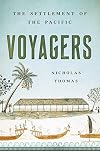
An award-winning scholar explores the sixty-thousand-year history of the Pacific islands in this dazzling, deeply researched account.
One of the Best Books of 2021 — Wall Street Journal
The islands of Polynesia, Melanesia, and Micronesia stretch across a huge expanse of ocean and encompass a multitude of different peoples. Starting with Captain James Cook, the earliest European explorers to visit the Pacific were astounded and perplexed to find populations thriving thousands of miles from show more continents. Who were these people? From where did they come? And how were they able to reach islands dispersed over such vast tracts of ocean?
In Voyagers, the distinguished anthropologist Nicholas Thomas charts the course of the seaborne migrations that populated the islands between Asia and the Americas from late prehistory onward. Drawing on the latest research, including insights gained from genetics, linguistics, and archaeology, Thomas provides a dazzling account of these long-distance migrations, the seagoing technologies that enabled them, and the societies they left in their wake. show less
One of the Best Books of 2021 — Wall Street Journal
The islands of Polynesia, Melanesia, and Micronesia stretch across a huge expanse of ocean and encompass a multitude of different peoples. Starting with Captain James Cook, the earliest European explorers to visit the Pacific were astounded and perplexed to find populations thriving thousands of miles from show more continents. Who were these people? From where did they come? And how were they able to reach islands dispersed over such vast tracts of ocean?
In Voyagers, the distinguished anthropologist Nicholas Thomas charts the course of the seaborne migrations that populated the islands between Asia and the Americas from late prehistory onward. Drawing on the latest research, including insights gained from genetics, linguistics, and archaeology, Thomas provides a dazzling account of these long-distance migrations, the seagoing technologies that enabled them, and the societies they left in their wake. show less
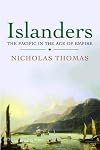
This book attempts to chronicle the histories of the peaceful and idyllic isles of the pacific (micronesia, melanesia and polynesia) until the advent of the colonial powers whose unbridled rapaciousness led to the permanent unsettlement of their peaceful existence and brought about violence, disease, slavery and indentured labour.
Lists
Awards


You May Also Like


Associated Authors
Statistics
- Works
- 40
- Also by
- 3
- Members
- 986
- Popularity
- #26,110
- Rating
- 3.7
- Reviews
- 6
- ISBNs
- 106
- Languages
- 3