
Ted van Lieshout
Author of Brothers
About the Author
Image credit: Ted van Lieshout [credit: Ted van Lieshout; copied from Wikipedia]
Series
Works by Ted van Lieshout
Rozen voor de zwijnen: de minstens 100 spreekwoorden van Bruegel (Kunstprentenboeken van Leopold) (2023) 8 copies
Boer Boris en de luchtballon 3 copies
Boer Boris en de Sneeuwpop 1 copy
Eten en drinken 1 copy
Associated Works
Tagged
Common Knowledge
- Canonical name
- Lieshout, Ted van
- Legal name
- Lieshout, Theodorus Adrianus van
- Birthdate
- 1955-12-21
- Gender
- male
- Occupations
- writer
poet
illustrator - Awards and honors
- Theo Thijssen prijs (2009)
- Nationality
- Netherlands
- Birthplace
- Eindhoven, Netherlands
- Places of residence
- Eindhoven, Netherlands
Amsterdam, Netherlands - Associated Place (for map)
- Netherlands
Members
Reviews
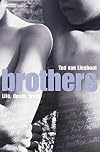
Luke's brother Marius died six months ago, and his mother is about to burn his things to say goodbye. In fear of his mother burning Marius's diary, Luke claims it as his own and starts writing in it himself. Eventually, Luke begins reading his brother's entries and writing back to him “in the margins,” starting a dialogue with his dead brother through which he copes with his loss and shares secrets with him they were never able to in Marius's life.
I read this book because I like reading show more about male relationships, whether they be romantic, friendly, or familial. But what really makes or breaks a story like this (with such sad subject matter) for me personally is the attitude it takes. Surely, a book with such a premise will be emotional and at least a bit heavy, and this emotional content is part of the attraction, but whether it works for me depends on how unrelentingly heavy and dramatic it decides to be. Luckily, Brothers isn't interested in manhandling our emotions to get every drop of tears and heartfelt whimpers out of the story it can. Instead, the writing takes a simple and (often humorously) honest style. It's emotional and sensitive, but without being sentimental.
The best part of this book is surely the “dialogue” between Luke and Maus. The feel of Luke getting to know his brother better after he has died, and in a way being able to talk back to him, is very surreal. And though Maus is dead, this has not made him a saint in Luke's eyes, and we can see through how Luke “interacts” with him that they are still very much brothers—ready to reproach him, to tease or be teased by him, and ready to be angered by him as well. As such the book is frequently funny, sometimes sly and witty, sometimes more bawdy and embarrassing, as young boys often are. Besides my tendency to enjoy anything with a little humor a lot more, I really appreciated that this novel did not, like many sad/touching stories, feel the need to paint all memories and occurrences in a uniform coat of angst and sorrow, and it actually made the more emotional parts a lot more poignant for me.
On the other hand, in the last 1/3 of the book the dialogue ends and Luke begins once again merely writing in Maus's diary. This last bit is still generally well done, but it loses some of the original feel (and almost all the humor) the dialogue gave it. It's more just the general coping with death/coming out story. Still, by then we're very invested in the characters and the end is still an engaging read, and its a fantastic one overall.
I'm not entirely sure who I'd recommend this novel to, though. Certainly, there is absolutely no need to restrict this simply to YA readers. If you're someone who's into stories concerning male/brother bonding/relationships, or somewhat tragic bittersweet stories, or stories about young people searching for (particularly gay) identity, then this is a very good and perhaps refreshingly unique option. But this novel is probably pretty much exactly what you think it is when I tell you 'It's a sweet, sad, funny story about a boy writing in his dead brother's diary and coming to terms with being gay.' The execution for what it is is wonderful, but nothing surprising that I'm confident will reach out to readers beyond those directly interested in its subject matter.
If you have any interest at all, though, I highly recommend it. It deserves to be read by a much, much wider audience than I think it has been. I myself am extremely sad this author has written many more works (of both poetry and prose), yet they are yet (if ever) to be translated into English. But at least we have this one, and it shall be going on my mental 'good for a reread someday' shelf. Though I've only just finished, much of me already looks forward to revisiting Luke and Maus and their wonderful stories again. show less
I read this book because I like reading show more about male relationships, whether they be romantic, friendly, or familial. But what really makes or breaks a story like this (with such sad subject matter) for me personally is the attitude it takes. Surely, a book with such a premise will be emotional and at least a bit heavy, and this emotional content is part of the attraction, but whether it works for me depends on how unrelentingly heavy and dramatic it decides to be. Luckily, Brothers isn't interested in manhandling our emotions to get every drop of tears and heartfelt whimpers out of the story it can. Instead, the writing takes a simple and (often humorously) honest style. It's emotional and sensitive, but without being sentimental.
The best part of this book is surely the “dialogue” between Luke and Maus. The feel of Luke getting to know his brother better after he has died, and in a way being able to talk back to him, is very surreal. And though Maus is dead, this has not made him a saint in Luke's eyes, and we can see through how Luke “interacts” with him that they are still very much brothers—ready to reproach him, to tease or be teased by him, and ready to be angered by him as well. As such the book is frequently funny, sometimes sly and witty, sometimes more bawdy and embarrassing, as young boys often are. Besides my tendency to enjoy anything with a little humor a lot more, I really appreciated that this novel did not, like many sad/touching stories, feel the need to paint all memories and occurrences in a uniform coat of angst and sorrow, and it actually made the more emotional parts a lot more poignant for me.
On the other hand, in the last 1/3 of the book the dialogue ends and Luke begins once again merely writing in Maus's diary. This last bit is still generally well done, but it loses some of the original feel (and almost all the humor) the dialogue gave it. It's more just the general coping with death/coming out story. Still, by then we're very invested in the characters and the end is still an engaging read, and its a fantastic one overall.
I'm not entirely sure who I'd recommend this novel to, though. Certainly, there is absolutely no need to restrict this simply to YA readers. If you're someone who's into stories concerning male/brother bonding/relationships, or somewhat tragic bittersweet stories, or stories about young people searching for (particularly gay) identity, then this is a very good and perhaps refreshingly unique option. But this novel is probably pretty much exactly what you think it is when I tell you 'It's a sweet, sad, funny story about a boy writing in his dead brother's diary and coming to terms with being gay.' The execution for what it is is wonderful, but nothing surprising that I'm confident will reach out to readers beyond those directly interested in its subject matter.
If you have any interest at all, though, I highly recommend it. It deserves to be read by a much, much wider audience than I think it has been. I myself am extremely sad this author has written many more works (of both poetry and prose), yet they are yet (if ever) to be translated into English. But at least we have this one, and it shall be going on my mental 'good for a reread someday' shelf. Though I've only just finished, much of me already looks forward to revisiting Luke and Maus and their wonderful stories again. show less

Vooral een dialoog tussen de 15-jarige en de bijna 60-jarige Ted. Over homoseksualiteit en pedofilie. Is het kind schuldig? Of is het vooral de volwassene die het kind benadert, die schuldig is? Tussendoor enkele brieven van en aan meneer Timmermans ('Mijn meneer') en de geschiedenis van een internetpagina waarop Ted van Lieshout wordt aangemerkt als pedofiel. In eerste instantie vreemd om te lezen, een beetje theoretisch, maar uiteindelijk een heel bijzonder boek. Knap en eerlijk.
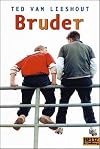
"Brother" is the story of two brothers. One of them, Marius, is dead - and six months after his death, Luuk finds Marius' diary. At first, he only writes in it, but then he also starts reading it, and through this he gets the chance to get to know his brother even after Marius is dead. It's a stunning YA novel about loss and love and the search for one's identity; it's beautifully written and really touching. I loved it a lot.
"Bruder" erzählt die Geschichte zweier Brüder, Marius und Luuk. show more Marius ist seit sechs Monaten tot als Luuk sein Tagebuch findet und beginnt, selbst hineinzuschreiben. Später liest er dann auch darin, und es kommt zu einer Art Gespräch zwischen den beiden Brüdern, in dem sich herausstellt, dass sie sich ähnlicher sind als Luuk dachte.
"Bruder" ist ein wunderschönes Buch über Liebe, Trauer und Verlust, und über die Suche nach der eigenen Identität. Die Beziehung der beiden Brüder wirkt sehr realistisch und Luuks Trauer ist understated, aber spürbar und sehr berührend. show less
"Bruder" erzählt die Geschichte zweier Brüder, Marius und Luuk. show more Marius ist seit sechs Monaten tot als Luuk sein Tagebuch findet und beginnt, selbst hineinzuschreiben. Später liest er dann auch darin, und es kommt zu einer Art Gespräch zwischen den beiden Brüdern, in dem sich herausstellt, dass sie sich ähnlicher sind als Luuk dachte.
"Bruder" ist ein wunderschönes Buch über Liebe, Trauer und Verlust, und über die Suche nach der eigenen Identität. Die Beziehung der beiden Brüder wirkt sehr realistisch und Luuks Trauer ist understated, aber spürbar und sehr berührend. show less

Dit boek was een paar jaar terug prentenboek van het jaar en het thema van de Kinderboekenweek. In die week heb ik het voorgelezen aan peuters. Ik vond het boek niet heel fijn lezen, de illustraties waren wel mooi, maar ik ben niet erg enthousiast over het boek. Het liedje erbij vind ik daarentegen wel erg leuk…
Lists
Awards


You May Also Like


Associated Authors
Statistics
- Works
- 95
- Also by
- 2
- Members
- 628
- Popularity
- #40,131
- Rating
- 4.0
- Reviews
- 22
- ISBNs
- 134
- Languages
- 9
- Favorited
- 4