
François Villon
Author of The Poems of Francois Villon
About the Author
Villon is one of the first great French lyric poets and one of the greatest French poets of any age. His "testaments" are mock wills, written in a racy blend of French and underworld slang. Scattered here and there among the ironic items of bequest are exquisite ballads and lyrics, some show more crystallizing classic themes of medieval literature. Villon's poetry uses traditional forms to create a powerful poetic personality during a period in which poetic individualism was rare. Indeed, his exquisite "Ballad of the Hanged Men" ("Ballade des Pendus") (1489) offers one of the most immediate depictions of death in Western poetry. Moreover, his dissolute life, lived among thieves and prostitutes, makes him a prototype of later decadent or bohemian poets. He was at various times arrested, imprisoned, tortured, and nearly put to death; his final sentence was commuted to exile by King Louis XI on accession to the throne, when he declared amnesties of all sorts, according to the usual practice of the time. It is not known how Villon spent his last years, after his release from prison. Villon's poetry has been translated by Rossetti (see Vol. 1), Synge (see Vol. 1), and Swinburne (see Vol. 1). (Bowker Author Biography) show less
Disambiguation Notice:
His real name was either François de Montcorbier or François de Loges. He was baptized with both names after the two French countrysides his parents came from. He was raised by his uncle Guillaume de Villon in Paris and took his name to express his gratitude.
Image credit: From Wikimedia Commons
Series
Works by François Villon
Lieder und Balladen, ins Deutsche übertragen und mit einem Nachwort.: Das Kleine Testament / Die Balladen / Das Große Testament (2001) 5 copies
Le Lais - Le Testament - Poésies diverses - Les Ballades en jargon, édition bilingue français/ancien français (2004) 5 copies
Oeuvres complètes de François Villon Suivies d'un choix des poésies de ses disciples (French Edition) (2012) 4 copies
Ten poems 3 copies
Balladen — Author — 3 copies
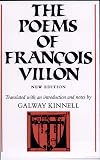
The Poems of François Villon. 3 copies
POESÍA 3 copies
Gedichten 2 copies
The Book of Francois Villon 2 copies
Soife mortas mi: kvar baladoj 2 copies
François Villon. Oeuvres : . Le Lais. Le Testament. Les Ballades. Préface de René Lacôte (1968) 2 copies
François Villon. Oeuvres. Préface, gloses et notices sur tous les personnages cités et sur les particularités du temps, par André Mary (1959) 2 copies
Gedichten frans en nederlands 2 copies
Oeuvre Complete (Jannet, ed.) 2 copies
A Nagy Testamentum. Balladák 1 copy
Ouevres Poétiques 1 copy
Nagy testámentuma 2. kiadás 1 copy
Ballades 1 copy
Ballade des menus propos 1 copy
Dielo 1 copy
Villon : [básně 1 copy
Oeuvres poétiques de François Villon Tomes I et II (2 volumes)- Les testaments-Poésies diverses 1 copy
Oeuvres - Edition André Mary 1 copy
Françoise Villon 1 copy
Poes 1 copy
LasterLieder 1 copy
Poesie... 1 copy
Villon 1 copy
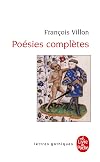
Poésies / François Villon. Préface de Tristan Tzara. Commentaires et notes de Pierre Savinel. = Oeuvres completes 1 copy, 1 review
Œuvres 1 copy
Poems 1 copy
Le poesie di F. V. 1 copy
The Last Ballad 1 copy
Básně 1 copy
Balladen van Villon 1 copy
Le Testament Villon I: Texte 1 copy
Já, Francois Villon 1 copy
Šibeničník 1 copy
Oeuvres: Le lais, Le testament, Poésies diverses = Obras: El legado, El testamento, Poésias diversas (1981) 1 copy
Francois Villon versei 1 copy
Complete works 1 copy
Ouvres 1 copy
Art: and How to Study It 1 copy
Villon oeuvres 1 copy
Poésies 1 copy
Die lasterhaften Lieder 1 copy
Balade și alte poeme 1 copy
The legacy, and other poems 1 copy
Testamentos 1 copy
Ballader og andre vers 1 copy
Ballate 1 copy
Complete Poems, F5 1 copy
Poésie Complète 1 copy
Villon, Poésies, Edition Présentée, Etablie et Annotée par Pierre Michel, Préfaces de Clément Marot et de Théophile Gautier (1972) 1 copy
Poesia 1 copy
The Legacy and other Poems 1 copy
Poésies choisies 1 copy
Poems of Francois Villon 1 copy
Paul Valéry 1 copy
Associated Works
World Poetry: An Anthology of Verse from Antiquity to Our Time (1998) — Contributor — 499 copies, 2 reviews
The Graphic Canon, Vol. 1: From the Epic of Gilgamesh to Shakespeare to Dangerous Liaisons (2012) — Contributor — 304 copies, 7 reviews
The Ribald Reader: 2000 Years of Lusty Love and Laughter (1906) — Contributor — 19 copies, 2 reviews
Oogst Der Tijden. keur uit de werken van schrijvers en dichters aller volken en eeuwen (1940) — Contributor — 12 copies
Tagged
Common Knowledge
- Canonical name
- Villon, François
- Legal name
- de Montcorbier, François
de Loges, François
Des Loges de Montcorbier, François - Birthdate
- 1431
- Date of death
- 1463 (circa)
- Gender
- male
- Education
- University of Paris
- Occupations
- poet
thief
highwayman - Nationality
- France
- Birthplace
- Paris, France
- Places of residence
- Paris, France
- Disambiguation notice
- His real name was either François de Montcorbier or François de Loges.
He was baptized with both names after the two French countrysides his parents came from.
He was raised by his uncle Guillaume de Villon in Paris and took his name to express his gratitude. - Associated Place (for map)
- Paris, France
Members
Reviews
That man is lucky who has nothing
You have to love Francois Villon. He was a kind of literary Caravaggio. He had that similar ability to show piercing light on his poetic canvas. Living in the early 1400s, in a sort of underworld, he was a a rough and ready rascal squeezing out a living on edges of the law, writing poetry, and somehow he got lucky – he got an education and he survived the gallows for the crime of theft. But he cheats death and uses his talent to write poetry.
Not many of show more us get that chance. What does he do with it? He writes a poetic testament, a long series of poems, autobiographical, current and immediate. He is acutely aware that this testament and the rest of his poems are all he has to leave the world. He tells us that he bequeaths these greatest of gifts – his poems and his library to his mother. To the rest of his world he offered his body to be interred into the earth.
For everyone else he knew (and all of us who read him) he also bequeaths an attitude to living. That the pretentions and vanities that we live by are no good to us. Only a poor wretch such as Villon has the wisdom to expose the vanities of the age he lives in. Only when you have nothing to lose, can you write such words as this:
Bien est eureux qui riens n’y a! (That man is lucky who has nothing!)
What do any of us have to offer when we leave this earth? Property? Money? Assets? Cars? Jewellery? Stocks and Shares? Villon knew such things were useless (and told us all for future education). He only had a dirty old threadbare shirt on his back for property. Nothing is something that cannot cause harm.
His legacy to us? Follow his lead and you have nothing to fear. There is so much more to live for without fear – in his view these are love and generosity. Miserliness, status and life without love are the most wretched elements of life. Villon does away with them all and expresses love, not as some unrequited courtly virtue popular since Plutarch but something fleshy and real. He writes of his love for fat Margot, the prostitute. In the world of brothels there is love that inverts poverty, oppression and wretchedness. In the Ballad of Fat Margot, Villon is common and bawdy. You have to love his freedom to make poetry out of these words:
"Then both drunk we sleep like dogs
When we awake, her belly starts to quiver
And she mounts me, to spare love's fruit
I groan, squashed beneath her weight-
This lechery of hers will ruin me."
Or this
"I am a lecher, and she's a lecher with me
Which one of us is better? We're both alike
the one as worthy as the other. bad rat, bad cat
We both love filth and filth pursues us
we flee from honour, honour flees from us"
I love those subversive elements in his writing – and here’s another:
"I give them leave to start a school
where pupil teaches master"
Villon encountered human abjectness and turned into something fresh - a way to live one’s life – a sort of lived poetry. Perhaps this is what drew later writers to him like Rimbaud and Jean Genet. After the human carnage of WW1, Villon’s human acceptance and re-imagining of human abjectness made sense to people like TS Eliot. show less
You have to love Francois Villon. He was a kind of literary Caravaggio. He had that similar ability to show piercing light on his poetic canvas. Living in the early 1400s, in a sort of underworld, he was a a rough and ready rascal squeezing out a living on edges of the law, writing poetry, and somehow he got lucky – he got an education and he survived the gallows for the crime of theft. But he cheats death and uses his talent to write poetry.
Not many of show more us get that chance. What does he do with it? He writes a poetic testament, a long series of poems, autobiographical, current and immediate. He is acutely aware that this testament and the rest of his poems are all he has to leave the world. He tells us that he bequeaths these greatest of gifts – his poems and his library to his mother. To the rest of his world he offered his body to be interred into the earth.
For everyone else he knew (and all of us who read him) he also bequeaths an attitude to living. That the pretentions and vanities that we live by are no good to us. Only a poor wretch such as Villon has the wisdom to expose the vanities of the age he lives in. Only when you have nothing to lose, can you write such words as this:
Bien est eureux qui riens n’y a! (That man is lucky who has nothing!)
What do any of us have to offer when we leave this earth? Property? Money? Assets? Cars? Jewellery? Stocks and Shares? Villon knew such things were useless (and told us all for future education). He only had a dirty old threadbare shirt on his back for property. Nothing is something that cannot cause harm.
His legacy to us? Follow his lead and you have nothing to fear. There is so much more to live for without fear – in his view these are love and generosity. Miserliness, status and life without love are the most wretched elements of life. Villon does away with them all and expresses love, not as some unrequited courtly virtue popular since Plutarch but something fleshy and real. He writes of his love for fat Margot, the prostitute. In the world of brothels there is love that inverts poverty, oppression and wretchedness. In the Ballad of Fat Margot, Villon is common and bawdy. You have to love his freedom to make poetry out of these words:
"Then both drunk we sleep like dogs
When we awake, her belly starts to quiver
And she mounts me, to spare love's fruit
I groan, squashed beneath her weight-
This lechery of hers will ruin me."
Or this
"I am a lecher, and she's a lecher with me
Which one of us is better? We're both alike
the one as worthy as the other. bad rat, bad cat
We both love filth and filth pursues us
we flee from honour, honour flees from us"
I love those subversive elements in his writing – and here’s another:
"I give them leave to start a school
where pupil teaches master"
Villon encountered human abjectness and turned into something fresh - a way to live one’s life – a sort of lived poetry. Perhaps this is what drew later writers to him like Rimbaud and Jean Genet. After the human carnage of WW1, Villon’s human acceptance and re-imagining of human abjectness made sense to people like TS Eliot. show less
You could be excused to think that Villon owns his place in history simply due to his lifestyle and reputation of outlaw, coupled with the fact that, for long, not many poets from the Middle Ages were republished (and so who did we have to compare him to?). And indeed, the myth Villon has become so deeply entrenched that, even some of his poems ended up by being merged to his criminal life, even if unfairly and wrongly. For example, his widely celebrated 'Ballade des Pendus' ('Ballad of the show more Hanged') is said to have been written in prison and while he awaited execution (for theft -again- and yet another street brawl), a claim which is rather dubious given that it doesn't deal with a coming to term with a sentencing but Christian charity, besides not being his only poem hinting at the gallows -far from that! Ha! But never mind. Such myths, after all, contributed to add to an already colourful life.
The thing, though, is that Villon was far more than a petty criminal. True, he widely used the Parisian slang of the poor and then criminal underworld; his verses targeting people who would have been lost to history had they not been named in his 'Testament' otherwise (e.g. fellow delinquents, prostitutes, magistrates, law enforcers, clergy etc.). This, of course, and besides being poetry written in medieval French, can make him very difficult to understand indeed for a modern reader (thank goodness for editions accompanied with explanatory notes!). Yet, his reputation and lifestyle shouldn't fool us; for Villon truly was a maestro of the ballade and the rondeaux, well-established forms in his time perhaps but that he delivered with his own, unique masterful stroke and twist.
The fact is, he used these forms as a way to cock a snook at pretty much everybody (including himself, for his derision could be self-deprecating too) and it's what made him original, or, at least, as distinctive as his evocation of poverty, decline, a life on the margins, and, of course, death.
Even more revealing (and interesting!) is that his poetry was not all about sarcasm and piss taking either. He was, after all, a complex man with his own idiosyncrasies; telling about painful unrequited love while lauding prostitutes, having contempt for authorities and conventions while longing for respectability and acceptance, or, again, exhorting others to mercy and charity while indulging himself in some venomous attacks and cruel railleries. For all his contempt, bitterness, and ridiculing, he could also show himself particularly sentimental too (e.g. 'Ballade pour prier Nostre Dame' about is mother...).
In the end, though, if Villon surely was an 'enfant terrible' of French poetry, one who had nothing to envy to the 'poètes maudits' who would succeed him albeit centuries later, his lifestyle and final demise (he was ultimately pardoned and so escaped the gallows, before disappearing God knows where) shouldn't obscure his obvious talent as a poet. He might have been a gaudy satirist and cruel banterer, mocking from people to conventions and even himself (although not without some sad bitterness) yet there was no one who wrote ballades and rondeaux like he did. He overshadowed all his contemporaries... and rightly so! show less
The thing, though, is that Villon was far more than a petty criminal. True, he widely used the Parisian slang of the poor and then criminal underworld; his verses targeting people who would have been lost to history had they not been named in his 'Testament' otherwise (e.g. fellow delinquents, prostitutes, magistrates, law enforcers, clergy etc.). This, of course, and besides being poetry written in medieval French, can make him very difficult to understand indeed for a modern reader (thank goodness for editions accompanied with explanatory notes!). Yet, his reputation and lifestyle shouldn't fool us; for Villon truly was a maestro of the ballade and the rondeaux, well-established forms in his time perhaps but that he delivered with his own, unique masterful stroke and twist.
The fact is, he used these forms as a way to cock a snook at pretty much everybody (including himself, for his derision could be self-deprecating too) and it's what made him original, or, at least, as distinctive as his evocation of poverty, decline, a life on the margins, and, of course, death.
Even more revealing (and interesting!) is that his poetry was not all about sarcasm and piss taking either. He was, after all, a complex man with his own idiosyncrasies; telling about painful unrequited love while lauding prostitutes, having contempt for authorities and conventions while longing for respectability and acceptance, or, again, exhorting others to mercy and charity while indulging himself in some venomous attacks and cruel railleries. For all his contempt, bitterness, and ridiculing, he could also show himself particularly sentimental too (e.g. 'Ballade pour prier Nostre Dame' about is mother...).
In the end, though, if Villon surely was an 'enfant terrible' of French poetry, one who had nothing to envy to the 'poètes maudits' who would succeed him albeit centuries later, his lifestyle and final demise (he was ultimately pardoned and so escaped the gallows, before disappearing God knows where) shouldn't obscure his obvious talent as a poet. He might have been a gaudy satirist and cruel banterer, mocking from people to conventions and even himself (although not without some sad bitterness) yet there was no one who wrote ballades and rondeaux like he did. He overshadowed all his contemporaries... and rightly so! show less

4) [Francois Villon Selected Poems] translated by Peter Dale
Francois Villon (1431-1463) was a murderer, theif, brawler and jailbird, but he found the the time and inspiration to write poetry that has been acclaimed as some of the best of French lyricism. He was no fifteenth century courtier writing flowery verse to the lady of his dreams; no pandering powdered flunky, but a man steeped in the ordure of medieval Paris; more at home in the criminal underworld than the higher circles of show more society. His poetry is full of rage, of protest and a feel of a man banging his head against a wall, determined to be heard as he rails against the injustices that he sees all around him.
Villon held no official positions or place in society but we still know quite a bit about him from two sources; unfortunately one of these is the criminal records of the time and the other is his own version of events mainly in his long poem Le Testement. He was born in 1431 and his early education was on the streets of Paris. He was taken under the wing of a churchman Guillaume de Villon and received an education and in 1449 he received his degree in Paris, which also fortunately entitled him to the protection of the church as opposed to civil law. He led a riotous life as a student and surfaced officially again in 1455 as a result of his murder of a priest in a dagger fight. He fled Paris, but a plea of self defence was accepted and he was pardoned in 1446. In that same year he was implicated in the famous robbery of the college of Navarre, he fled again and this time he was banished, making whatever living he could as a clerk and vagabond. In 1460 he was found in Orleans and imprisoned for his part in the robbery, freed in a general amnesty he was subsequently imprisoned by the Bishop of Aussigny in Meung-sur-Loire. He was tortured and held in appalling conditions, until another amnesty secured his release. He then composed his famous Le Testement with its opening stanzas telling of his treatment at the hands of the Bishop. He slunk back to Paris but was soon arrested again for brawling and this time sentenced to death by strangulation and hanging. He escaped the gallows by yet another amnesty, but now broken in health he disappears from view in 1463.
Villons life of hard knocks gave him plenty to write about and most of this poured out of him in Le Testement. His earlier Le Lais was a dry run for his masterpiece, but these and a few other shorter poems notably: Villons Debate with his Heart and Ballad of the Hanged Man are all that his reputation is based on. He was writing 20 years before the invention of the printing press and he joked about his testement being heard throughout France, he could hardly have imagined that it would become one of the most famous poems in French literature.
Villons subject matter is the human condition; the unfairness of the haves and the have nots, the degradation of the human spirit through poverty and age, the ability of love to make a fool of both men and women and finally the futility of an existence when all that we have to look forward to is a painful death. These are themes as relevant today as they were for Villon and it is his incorrigible spirit, his defiance and his humour that hold us spellbound when we read his poems. The final lines of Le Testement show a man who is able to raise a glass of wine as the curtain falls on his life:
"Prince, gentle as a merlin hear
what part he did upon the pall
he swigged his wine, dark red and clear
prepared to leave this world and all.
The first 1000 lines of Le Testement are superb indeed; the poet uses them to reflect on his life and times. How much of this is authentic we cannot know for sure, after all it is Villons testement, but its intensity of feeling speaks in volumes to us. We learn of his imprisonement and torture in some biting irony:
"He fattened me for half a year
on one small loaf and water free
Generous? Tight? a sows ear
God deal with him as he with me."
(He was subjected to water torture in the Bishop of Aussigny's prison)
Villons testement however is no panegyric; on the one hand he says he is innocent and his conscience is clear and on the other he admits to the most apalling behaviour, the poems constant movement between these two positions gives it an authenticity and realism that is enthralling.
Many of the 205 stanzas are are of eight lines with a regular rhyming scheme and these are interspersed with a number of ballads that have become famous down the years. These ballads develop out of the longer poem and are an essential part of it. In one of these he speaks with the voice of an old woman; Le Regrets de la Belle Haulmiere (The old woman regrets the days of her youth). The old woman has outlived her lover who has treated her badly:
"But now he is dead this thirty year
While I survive grey haired and old
Oh, when I see what filth appears
When I am naked I grow cold:
Poor dry shrivelled, fold on fold
What once I was, what now in age:
Meagre and rank, nothing to hold
I almost lose my mind in rage."
The old woman almost loses her mind in rage and this is symptomatic of Villon's poetry; a railing against the world, against the human condition will break through the irony and humour. Villon as one would expect does no see love through the rose coloured glasses of the courtly lover; it is bawdy, bestial and not to be trusted; stanza 69 is a double ballade with the refrain "happy the man who has none of it.". His views on women are somewhat refreshing for a medieval man; all are decent and respectable to begin with, it is life and human nature that changes things. This is wonderful humanist poetry. Villon's ability to drop the reader right into the life and times of Medieval Paris is uncanny, with his trenchant observations of life, which he is able to portray in terse energetic lines.
I read the Penguin classics edition translated by Peter Dale. It has both the original french and the English translation on opposite pages. Dale has taken some liberties with the text to provide a strict metrical translation with the rhyming scheme in tact. This is fine because you can always refer back to the original french if you choose to do so. There is much for the modern reader to enjoy here and for me it was a five star read. show less
Francois Villon (1431-1463) was a murderer, theif, brawler and jailbird, but he found the the time and inspiration to write poetry that has been acclaimed as some of the best of French lyricism. He was no fifteenth century courtier writing flowery verse to the lady of his dreams; no pandering powdered flunky, but a man steeped in the ordure of medieval Paris; more at home in the criminal underworld than the higher circles of show more society. His poetry is full of rage, of protest and a feel of a man banging his head against a wall, determined to be heard as he rails against the injustices that he sees all around him.
Villon held no official positions or place in society but we still know quite a bit about him from two sources; unfortunately one of these is the criminal records of the time and the other is his own version of events mainly in his long poem Le Testement. He was born in 1431 and his early education was on the streets of Paris. He was taken under the wing of a churchman Guillaume de Villon and received an education and in 1449 he received his degree in Paris, which also fortunately entitled him to the protection of the church as opposed to civil law. He led a riotous life as a student and surfaced officially again in 1455 as a result of his murder of a priest in a dagger fight. He fled Paris, but a plea of self defence was accepted and he was pardoned in 1446. In that same year he was implicated in the famous robbery of the college of Navarre, he fled again and this time he was banished, making whatever living he could as a clerk and vagabond. In 1460 he was found in Orleans and imprisoned for his part in the robbery, freed in a general amnesty he was subsequently imprisoned by the Bishop of Aussigny in Meung-sur-Loire. He was tortured and held in appalling conditions, until another amnesty secured his release. He then composed his famous Le Testement with its opening stanzas telling of his treatment at the hands of the Bishop. He slunk back to Paris but was soon arrested again for brawling and this time sentenced to death by strangulation and hanging. He escaped the gallows by yet another amnesty, but now broken in health he disappears from view in 1463.
Villons life of hard knocks gave him plenty to write about and most of this poured out of him in Le Testement. His earlier Le Lais was a dry run for his masterpiece, but these and a few other shorter poems notably: Villons Debate with his Heart and Ballad of the Hanged Man are all that his reputation is based on. He was writing 20 years before the invention of the printing press and he joked about his testement being heard throughout France, he could hardly have imagined that it would become one of the most famous poems in French literature.
Villons subject matter is the human condition; the unfairness of the haves and the have nots, the degradation of the human spirit through poverty and age, the ability of love to make a fool of both men and women and finally the futility of an existence when all that we have to look forward to is a painful death. These are themes as relevant today as they were for Villon and it is his incorrigible spirit, his defiance and his humour that hold us spellbound when we read his poems. The final lines of Le Testement show a man who is able to raise a glass of wine as the curtain falls on his life:
"Prince, gentle as a merlin hear
what part he did upon the pall
he swigged his wine, dark red and clear
prepared to leave this world and all.
The first 1000 lines of Le Testement are superb indeed; the poet uses them to reflect on his life and times. How much of this is authentic we cannot know for sure, after all it is Villons testement, but its intensity of feeling speaks in volumes to us. We learn of his imprisonement and torture in some biting irony:
"He fattened me for half a year
on one small loaf and water free
Generous? Tight? a sows ear
God deal with him as he with me."
(He was subjected to water torture in the Bishop of Aussigny's prison)
Villons testement however is no panegyric; on the one hand he says he is innocent and his conscience is clear and on the other he admits to the most apalling behaviour, the poems constant movement between these two positions gives it an authenticity and realism that is enthralling.
Many of the 205 stanzas are are of eight lines with a regular rhyming scheme and these are interspersed with a number of ballads that have become famous down the years. These ballads develop out of the longer poem and are an essential part of it. In one of these he speaks with the voice of an old woman; Le Regrets de la Belle Haulmiere (The old woman regrets the days of her youth). The old woman has outlived her lover who has treated her badly:
"But now he is dead this thirty year
While I survive grey haired and old
Oh, when I see what filth appears
When I am naked I grow cold:
Poor dry shrivelled, fold on fold
What once I was, what now in age:
Meagre and rank, nothing to hold
I almost lose my mind in rage."
The old woman almost loses her mind in rage and this is symptomatic of Villon's poetry; a railing against the world, against the human condition will break through the irony and humour. Villon as one would expect does no see love through the rose coloured glasses of the courtly lover; it is bawdy, bestial and not to be trusted; stanza 69 is a double ballade with the refrain "happy the man who has none of it.". His views on women are somewhat refreshing for a medieval man; all are decent and respectable to begin with, it is life and human nature that changes things. This is wonderful humanist poetry. Villon's ability to drop the reader right into the life and times of Medieval Paris is uncanny, with his trenchant observations of life, which he is able to portray in terse energetic lines.
I read the Penguin classics edition translated by Peter Dale. It has both the original french and the English translation on opposite pages. Dale has taken some liberties with the text to provide a strict metrical translation with the rhyming scheme in tact. This is fine because you can always refer back to the original french if you choose to do so. There is much for the modern reader to enjoy here and for me it was a five star read. show less
I liked those yellow-covered Garner editions of great French authors. They seem dated now. He was a rogue, was Villon, and I enjoyed trying to understand his poetry when I was a student. Multiple pencil annotations spoil this copy – my translations of words and phrases. ‘Idea of death, inseparable from idea of woman – makes him think of waning beauty of woman’ I have scribbled pompously at the end of Le testament.
Lists
Awards


You May Also Like


Associated Authors
Statistics
- Works
- 206
- Also by
- 7
- Members
- 1,967
- Popularity
- #13,069
- Rating
- 4.1
- Reviews
- 23
- ISBNs
- 186
- Languages
- 19
- Favorited
- 24