
Robert E. Wells (1)
Author of Is a Blue Whale the Biggest Thing There Is?
For other authors named Robert E. Wells, see the disambiguation page.
About the Author
Image credit: via Albert Whitman
Works by Robert E. Wells
Tagged
Common Knowledge
- Gender
- male
Members
Reviews
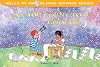
"Can You Count to a Googol?" is a picture book that teaches the reader about multiplication, starting at 1 and ending at a Googol(a number with 100 zeros). This book explains in imaginative illustrations what 1 multiplied by 10 looks like, what 10 multiplied by 10 looks like, and so on. The illustrations catch the eye and create an interactive experience in learning multiplication. I would read this with my own students one day to show them how math can be full of fun and imagination.
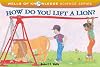
How Do You Lift A Lion? introduces the concept of simple machines. Posing the question of how to lift a lion, it introduces gravity and how levers can be used to lift heavy weight with less effort. Asking how to pull a panda on a pallet leads to explaining friction and how wheels and axles can be used to reduce friction. Finally, the book inquires how to deliver a basket of bananas to a baboon birthday party and describes how pulleys work to change the direction of force. The back of the show more book contains more examples of simple machines as well as a glossary of terms.
This book is a good example of an informational book because it provides a lot of information in an engaging approach. The questions catch the reader's attention and the solutions posed clearly explain why the task would be difficult and how simple machines can help solve the problem. The information uses accurate technical terms, and the illustration also help clarify the new vocabulary and concepts.
GENRE: Informational
USES:
- have students look around and bring item or take pictures of simple machines to share with the class
- have students build and experiment with their own simple machines to complete tasks
- combine with a science unit about simple machines (levers, wheels, pulleys, etc.) show less
This book is a good example of an informational book because it provides a lot of information in an engaging approach. The questions catch the reader's attention and the solutions posed clearly explain why the task would be difficult and how simple machines can help solve the problem. The information uses accurate technical terms, and the illustration also help clarify the new vocabulary and concepts.
GENRE: Informational
USES:
- have students look around and bring item or take pictures of simple machines to share with the class
- have students build and experiment with their own simple machines to complete tasks
- combine with a science unit about simple machines (levers, wheels, pulleys, etc.) show less
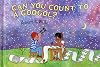
This book shows how adding a zero to the end of a number makes it ten times bigger. It uses everyday things to try to explain how big numbers can get. It goes all the way to googol, which is a 1 with 100 zeros behind it.
I thought this book was well written and illustrated and does a good job of trying to explain big numbers in simple terms.
This book can be used to illustrate multiplying by ten as well as exponents of 10. This can be used in elementary classes to illustrate just how big show more numbers can be and the concept of multiplying by 10. It can be used in upper elementary and middle school classes to help with exponents although it would take some creativity. show less
I thought this book was well written and illustrated and does a good job of trying to explain big numbers in simple terms.
This book can be used to illustrate multiplying by ten as well as exponents of 10. This can be used in elementary classes to illustrate just how big show more numbers can be and the concept of multiplying by 10. It can be used in upper elementary and middle school classes to help with exponents although it would take some creativity. show less
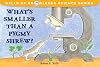
I absolutely loved this particular science book because it was very funny and light spirited.. However it also depicted many animals that were very small. I felt like this book was the most successful science book I've read because it's style, tone, and content were perfect. The book started off talking about how small a shrew might feel when next to an elephant, the biggest mammal, to talking about atoms, electrons,neutrons. This is the first children's book that I've seen that talked about show more animals and they're sizes to chemistry and made it flow very well. I would definitely read this book to my future science class. show less
Lists
Awards


You May Also Like


Statistics
- Works
- 17
- Members
- 3,337
- Popularity
- #7,653
- Rating
- 4.2
- Reviews
- 91
- ISBNs
- 133
- Languages
- 3
- Favorited
- 1