
Charles Lane (1) (1961–)
Author of The Day Freedom Died: The Colfax Massacre, the Supreme Court, and the Betrayal of Reconstruction
For other authors named Charles Lane, see the disambiguation page.
About the Author
Charles Lane is a Washington Post editorial board member and op-ed columnist. A finalist for the 2009 Pulitzer Prize in editorial writing, he was the Post's Supreme Court correspondent prior to joining the editorial board. As editor of the New Republic, he took action against the journalistic fraud show more of Stephen Glass, events that were recounted in the 2003 film Shattered Glass. He has also worked as a foreign correspondent in Europe and Latin America. He is the author of two previous books. show less
Works by Charles Lane
The Day Freedom Died: The Colfax Massacre, the Supreme Court, and the Betrayal of Reconstruction (2008) 207 copies, 4 reviews
Associated Works
Tagged
Common Knowledge
- Legal name
- Lane, Charles Mark
- Other names
- Lane, Chuck
- Birthdate
- 1961
- Gender
- male
- Education
- Bethesda-Chevy Chase High School
Harvard University
Yale Law School - Occupations
- journalist
editor - Organizations
- The Washington Post
The New Republic - Nationality
- USA
- Associated Place (for map)
- USA
Members
Reviews
Freedom's Detective: The Secret Service, the Ku Klux Klan and the Man Who Masterminded America's First War on Terror by Charles Lane
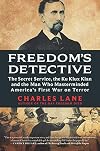
I have a fan theory about TV detective Columbo: he’s a sociopath who, in police work, finds a socially acceptable outlet for his mental illness. Think about it: he lies about his personal life to manipulate, he never shows any genuine emotion, and he toys with suspects like a cat with a mouse. See? Sociopath.
I have similar thoughts about the subject of this biography, Hiram C. Whitley, second Chief of the United States Secret Service under President Ulysses S. Grant. Whitley strikes me as show more indifferent to anything but winning, preferably through infiltration and subterfuge, with morality and ethics mere expendable luxuries — assuming he considered them at all.
Maybe I’m too hard on Whitley. After all, he managed to attract, marry, and keep a deeply religious woman throughout his shady and sometimes violent career. She must have found in him the same deep-down decency that earned him trust and respect from his Federal paymasters as he led the Secret Service into a murky and clandestine war against the Ku Klux Klan.
This is the most intriguing part of his story, though the book’s subtitle is mildly misleading. The fight against white supremacist terrorists is just part of Whitley’s life, so don’t expect it to fill the entire book. You’ll also get a liberal dose of anti-counterfeiting stings and one highly amusing operation to get rid of the Attorney General’s criminal stepson, an operation so reminiscent of a Mission Impossible script that I wouldn’t be surprised to learn rubber masks were involved.
Whitley’s methods seem normal to the modern reader, but were considered dubious at the time: infiltration of terrorist cells by covert agents, misdirection and lying, and deliberate playing on Klan nerves with the possibility that your fellow Klansman could be a Fed. Many thought such tactics discreditable, so much so that testimony from detectives faced unfriendly scrutiny from courts suspicious of men capable of such things. I suppose we’ve come to accept different standards today.
This is a brief, comfortable biography of a man whose "situational honesty" won him few friends except when powerful men needed a dirty job done. Whitley’s disregard for ethical guardrails eventually proved his downfall, and nearly killed the Secret Service itself at the hands of Southern Democrats grateful for an excuse to end Federal interference in the Klan’s paramilitary enforcement of white supremacy.
This, perhaps, is the real lesson of Whitley’s life. Evil men will always be among us, and it will often be necessary to follow them into the sewers to bring them to justice. But as Americans have learned time and again, from Whitley’s professional implosion to Abu Ghraib, you can go so far down into the sewers that you lose first your way, then yourself, and then everything you were fighting for in the first place. show less
I have similar thoughts about the subject of this biography, Hiram C. Whitley, second Chief of the United States Secret Service under President Ulysses S. Grant. Whitley strikes me as show more indifferent to anything but winning, preferably through infiltration and subterfuge, with morality and ethics mere expendable luxuries — assuming he considered them at all.
Maybe I’m too hard on Whitley. After all, he managed to attract, marry, and keep a deeply religious woman throughout his shady and sometimes violent career. She must have found in him the same deep-down decency that earned him trust and respect from his Federal paymasters as he led the Secret Service into a murky and clandestine war against the Ku Klux Klan.
This is the most intriguing part of his story, though the book’s subtitle is mildly misleading. The fight against white supremacist terrorists is just part of Whitley’s life, so don’t expect it to fill the entire book. You’ll also get a liberal dose of anti-counterfeiting stings and one highly amusing operation to get rid of the Attorney General’s criminal stepson, an operation so reminiscent of a Mission Impossible script that I wouldn’t be surprised to learn rubber masks were involved.
Whitley’s methods seem normal to the modern reader, but were considered dubious at the time: infiltration of terrorist cells by covert agents, misdirection and lying, and deliberate playing on Klan nerves with the possibility that your fellow Klansman could be a Fed. Many thought such tactics discreditable, so much so that testimony from detectives faced unfriendly scrutiny from courts suspicious of men capable of such things. I suppose we’ve come to accept different standards today.
This is a brief, comfortable biography of a man whose "situational honesty" won him few friends except when powerful men needed a dirty job done. Whitley’s disregard for ethical guardrails eventually proved his downfall, and nearly killed the Secret Service itself at the hands of Southern Democrats grateful for an excuse to end Federal interference in the Klan’s paramilitary enforcement of white supremacy.
This, perhaps, is the real lesson of Whitley’s life. Evil men will always be among us, and it will often be necessary to follow them into the sewers to bring them to justice. But as Americans have learned time and again, from Whitley’s professional implosion to Abu Ghraib, you can go so far down into the sewers that you lose first your way, then yourself, and then everything you were fighting for in the first place. show less
The day freedom died : the Colfax massacre, the Supreme Court, and the betrayal of Reconstruction by Charles Lane
On Easter Sunday, 1873, white Democrats massacred roughly eighty blacks at a county courthouse in Louisiana. This is a detailed story of the massacre and its aftermath, which involved white resistance to Reconstruction and slowly fading white Republican commitment thereto, despite the active efforts of some white Republicans, as well as the continued activism of black Republicans—in some cases, costing them their lives, as whites were willing to kill black witnesses who were willing to show more testify to their crimes. As white violence in the South escalated, President Grant proved unwilling to ramp up military commitments, and the courts struck down the key laws that Republicans had meant to guarantee black rights, destroying the attempt to prosecute the massacres’ major perpetrators. Careful, depressing read. show less
The Day Freedom Died: The Colfax Massacre, the Supreme Court, and the Betrayal of Reconstruction by Charles Lane
The Day Freedom Died is and isn't an easy book to read. On the one hand, the story of conflict in Louisiana during the Reconstruction period following the US Civil War is compellingly told. On the other hand, the story centers around the killing of some 65 blacks in Grant Parish, Louisiana, as part of the conflict over whether the more liberal Republicans or the mostly white supremacist Democrats would control the state government. It was a bloody time and Lane doesn't pull any punches, so show more the book is horrifying in spots.
The conflict originated in how the US government would bring formerly Confederate states back into the Union after the Civil War and how these states would integrate former slaves into society. Initially, at least, Republicans from the North and new freedmen were elected into governorships and state legislatures, while former Confederates were removed from power. As these (mostly) Democrats fought back politically, more violent means were also used, among other objectives, to affect elections. In Grant Parish, this resulted in two full slates of candidates being confirmed simultaneously for parish offices. When the black and Northern white Republicans in the parish asserted what appears to be their legal right to the offices by occupying the local courthouse, the supremacist whites raised an army of more than a hundred to take back what they viewed as their legal appointments. The result was more than 60 blacks dead and 2 or 3 whites from the supremacist group dead in what appears to have been a very unequal fight.
But the story doesn't end there. The US District Attorney in New Orleans (a Republican appointed by President Grant) wanted to prosecute at least the leaders of the supremacist faction under laws enacted by Congress to allow federal courts to enforce the 13-15th amendments to the Constitution. After significant legal drama, this case went all the way to the Supreme Court, where the case was thrown out and the ability to enforce the amendments was gutted except for equal protection considerations. This decision effectively gutted the Reconstruction and put back in place many of the post-war racial policies that lasted until the 1960s and the civil rights movement.
All in all, this was a fascinating book, highly recommended. show less
The conflict originated in how the US government would bring formerly Confederate states back into the Union after the Civil War and how these states would integrate former slaves into society. Initially, at least, Republicans from the North and new freedmen were elected into governorships and state legislatures, while former Confederates were removed from power. As these (mostly) Democrats fought back politically, more violent means were also used, among other objectives, to affect elections. In Grant Parish, this resulted in two full slates of candidates being confirmed simultaneously for parish offices. When the black and Northern white Republicans in the parish asserted what appears to be their legal right to the offices by occupying the local courthouse, the supremacist whites raised an army of more than a hundred to take back what they viewed as their legal appointments. The result was more than 60 blacks dead and 2 or 3 whites from the supremacist group dead in what appears to have been a very unequal fight.
But the story doesn't end there. The US District Attorney in New Orleans (a Republican appointed by President Grant) wanted to prosecute at least the leaders of the supremacist faction under laws enacted by Congress to allow federal courts to enforce the 13-15th amendments to the Constitution. After significant legal drama, this case went all the way to the Supreme Court, where the case was thrown out and the ability to enforce the amendments was gutted except for equal protection considerations. This decision effectively gutted the Reconstruction and put back in place many of the post-war racial policies that lasted until the 1960s and the civil rights movement.
All in all, this was a fascinating book, highly recommended. show less
The Day Freedom Died: The Colfax Massacre, the Supreme Court, and the Betrayal of Reconstruction by Charles Lane
I had a superficial understanding on the state of black Americans after the civil war, and scant knowledge of the realities of the life the freed slaves faced for years. This book really gave clarity to the hardships endured by the freedmen, which didn't improve much for the next 100 years. A painful, sad saga, but a worthwhile read.
You May Also Like


Associated Authors
Statistics
- Works
- 3
- Also by
- 1
- Members
- 309
- Popularity
- #76,231
- Rating
- 3.9
- Reviews
- 7
- ISBNs
- 29
- Languages
- 1