
Stephen Budiansky
Author of Her Majesty's Spymaster: Elizabeth I, Sir Francis Walsingham, and the Birth of Modern Espionage
About the Author
Stephen Budiansky, scientist & journalist, is a correspondent for "The Atlantic Monthly." His five highly acclaimed books include "If a Lion Could Talk: Animal Intelligence & the Evolution of Consciousness" & "The Nature of Horses." He lives in Leesburg, Virginia. (Bowker Author Biography)
Works by Stephen Budiansky
Her Majesty's Spymaster: Elizabeth I, Sir Francis Walsingham, and the Birth of Modern Espionage (2005) 549 copies, 12 reviews
The Character of Cats: The Origins, Intelligence, Behavior, and Stratagems of Felis silvestris catus (2002) 282 copies, 2 reviews
Perilous Fight: America's Intrepid War with Britain on the High Seas, 1812-1815 (2011) 255 copies, 2 reviews
Code Warriors: NSA's Codebreakers and the Secret Intelligence War Against the Soviet Union (2016) 218 copies, 3 reviews
Air Power: The Men, Machines, and Ideas That Revolutionized War, from Kitty Hawk to Iraq (2003) 156 copies, 1 review
Blackett's War: The Men Who Defeated the Nazi U-Boats and Brought Science to the Art of Warfare (2013) 151 copies, 3 reviews
If a Lion Could Talk: Animal Intelligence and the Evolution of Consciousness (1998) 125 copies, 1 review
"In from the Cold" 1 copy
Associated Works
The Tiger in the House: A Cultural History of the Cat (1920) — Introduction, some editions — 224 copies, 3 reviews
MHQ: The Quarterly Journal of Military History — Spring 2009 (2009) — Author "Giant Killer" — 6 copies
MHQ: The Quarterly Journal of Military History — Summer 2010 (2010) — Author "In Review: The Father of Us All: War and History, Ancient and Modern" — 4 copies
MHQ: The Quarterly Journal of Military History — Spring 2011 (2011) — Author "America'a Coming Out Party" — 3 copies
MHQ: The Quarterly Journal of Military History — Spring 2020 (2020) — Author "Trial by Fire" — 1 copy
Tagged
Common Knowledge
- Canonical name
- Budiansky, Stephen
- Birthdate
- 1957-03-03
- Gender
- male
- Education
- Yale University (BS|1978)
Harvard University (MS|1979) - Occupations
- journalist
military historian
correspondent
biographer - Organizations
- Nature
US News & World Report - Nationality
- USA
- Birthplace
- Boston, Massachusetts, USA
- Places of residence
- Loudon County, Virginia, USA
- Associated Place (for map)
- USA
Members
Reviews
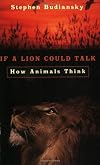
It's been a few years since I read this, but from memory it's a behaviourist's view of the mentation and emotional world of animals and of the human capacity to anthropomorphise, projecting conscious intent and emotional values on mechanistic stimulus/response processes.
I vacillated about buying into the 'animal as machine' concept, but ultimately it doesn't fit with my experience of animals, at least not the higher ones. While I wouldn't impute the full human range of emotions to animals, I show more do believe that they are on a spectrum of feeling with us, and not in a completely different order of experiencing. Perhaps I'm deluding myself.
My understanding of evolution is that it proceeds in incremental steps, building on previous developments to produce more adaptive characteristics. It therefore seems unlikely to me that the human way of perceiving the world is entirely without precedent. The alternative, I guess, is that humans, too, are stimulus/response mechanisms with delusions of grandeur but, again, that doesn't entirely match my own experience which, in the end, is all I have upon which to base a judgement. show less
I vacillated about buying into the 'animal as machine' concept, but ultimately it doesn't fit with my experience of animals, at least not the higher ones. While I wouldn't impute the full human range of emotions to animals, I show more do believe that they are on a spectrum of feeling with us, and not in a completely different order of experiencing. Perhaps I'm deluding myself.
My understanding of evolution is that it proceeds in incremental steps, building on previous developments to produce more adaptive characteristics. It therefore seems unlikely to me that the human way of perceiving the world is entirely without precedent. The alternative, I guess, is that humans, too, are stimulus/response mechanisms with delusions of grandeur but, again, that doesn't entirely match my own experience which, in the end, is all I have upon which to base a judgement. show less
Perilous Fight: America's Intrepid War with Britain on the High Seas, 1812-1815 by Stephen Budiansky
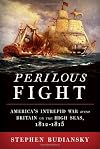
Perilous Fight focuses on the naval side of the War of 1812, and especially the character of the American officers and sailors. The war had been brewing for years over the issue of impressment, taking sailors off of American ships and enrolling them into the Royal Navy and American ships carrying trade between blockaded France and her colonies. However, the Navy was in an awful state, due to the doctrine of President Jefferson that an expensive navy was a step towards debt and tyranny.
The US show more Navy was anchored by the six "super-Frigates" of the Constitution-class (see Toll's Six Frigates for details), which started the war by winning a series of sharp single-ship actions against the British Royal Navy. Some of this was due to larger more heavily gunned ships, but the key element was human. American sailors were well-paid volunteers and their officers promoted by meritocracy. The British Navy was a colossos that strode the world, but their ships had been sailing on blockade duty for years, the sailors were impressed by violence and trickery, and gunnery practice was discouraged.
Single-ship victories could raise morale, but Secretary of Navy William Jones recognized that the war was an economic one, and the path to victory would be in causing enough damage to British trade that mercantile interests would force a treaty. Fast sailing sloops of war wrought havoc across the Atlantic. The frigate USS Essex made the long journey into the Pacific, leading an epic campaign against British whalers that had them interfering in Polynesian tribal wars, before finally being sunk by the British in Valparaiso.
This economic warfare was also carried out by privateers, private ventures to capture ships with a government license. Privateers made a mixed contribution, while they amplified the power of the small Navy, their profit-minded mission meant capturing ships rather than burning them, and privateers and their prizes were often recaptured. Thousands of American sailors wound up in Dartmoor Prison, with some of the better sections focusing on their experience.
Toll's Six Frigates is a better picture of the era, though one focused more on the Barbary Corsairs than the more consequential War of 1812. As a naval history, the land campaigns get short shrift, with the raid on Washington DC the only land battle with significant page count. Still, this is a great book for the era. show less
The US show more Navy was anchored by the six "super-Frigates" of the Constitution-class (see Toll's Six Frigates for details), which started the war by winning a series of sharp single-ship actions against the British Royal Navy. Some of this was due to larger more heavily gunned ships, but the key element was human. American sailors were well-paid volunteers and their officers promoted by meritocracy. The British Navy was a colossos that strode the world, but their ships had been sailing on blockade duty for years, the sailors were impressed by violence and trickery, and gunnery practice was discouraged.
Single-ship victories could raise morale, but Secretary of Navy William Jones recognized that the war was an economic one, and the path to victory would be in causing enough damage to British trade that mercantile interests would force a treaty. Fast sailing sloops of war wrought havoc across the Atlantic. The frigate USS Essex made the long journey into the Pacific, leading an epic campaign against British whalers that had them interfering in Polynesian tribal wars, before finally being sunk by the British in Valparaiso.
This economic warfare was also carried out by privateers, private ventures to capture ships with a government license. Privateers made a mixed contribution, while they amplified the power of the small Navy, their profit-minded mission meant capturing ships rather than burning them, and privateers and their prizes were often recaptured. Thousands of American sailors wound up in Dartmoor Prison, with some of the better sections focusing on their experience.
Toll's Six Frigates is a better picture of the era, though one focused more on the Barbary Corsairs than the more consequential War of 1812. As a naval history, the land campaigns get short shrift, with the raid on Washington DC the only land battle with significant page count. Still, this is a great book for the era. show less
I haven't decided whether this "academic mystery" that is more satire than mystery will appear on my favorite books of the year list or on the worst books of the year list. My view of it changed often, almost page by page. At times, I thought it was (1) a masterpiece of "detective fiction," or (2) a stupid piece of drivel.
Ted Gilpin, professor of Cognitive and Deconstructivist Studies, at an Ohio college, notices similarities between the deaths of faculty members and and those in classic show more mysteries, such as Gaudy Night by Dorothy L. Sayers and The Poisoned Chocolates Case by Anthony Berkeley (an underappreciated classic, as far as I'm concerned).
Anyway, this book is more satire than mystery but it takes on the classic mystery, it skewers universities and professors, and it pokes fun at the corporate world/corporate doublespeak. At this Ohio college, for instance, a vice-president wants to sell naming rights to courses.
At times, it's ho hum but, at other times, it's brilliant and hilarious. It's clever, but it's also too aware that it's clever, which is part of what bothers me with this book.
Enjoyable, if you're willing to skim through the dull parts. show less
Ted Gilpin, professor of Cognitive and Deconstructivist Studies, at an Ohio college, notices similarities between the deaths of faculty members and and those in classic show more mysteries, such as Gaudy Night by Dorothy L. Sayers and The Poisoned Chocolates Case by Anthony Berkeley (an underappreciated classic, as far as I'm concerned).
Anyway, this book is more satire than mystery but it takes on the classic mystery, it skewers universities and professors, and it pokes fun at the corporate world/corporate doublespeak. At this Ohio college, for instance, a vice-president wants to sell naming rights to courses.
At times, it's ho hum but, at other times, it's brilliant and hilarious. It's clever, but it's also too aware that it's clever, which is part of what bothers me with this book.
Enjoyable, if you're willing to skim through the dull parts. show less
What a mixed bag! The discussion of the co-evolution of humans alongside domesticated animals and plants is so well articulated, as is the critique of our persistent romanticized view of "nature," now created from afar since so many of us have such a mediated experience with anything remotely wild and even then, what appears wild when we are only occasionally stepping out of the built environment may still be profoundly shaped by co-evolutionary forces that we don't recognize. I've read show more similar analyses in other books (e.g. pieces by Temple Grandin), but those were written at a later date, so it was interesting to read this argument at a much earlier point in that conversation. So those parts were great, but the diatribes against animal rights advocates is completely out of control. By contrast to his thoughtful analysis and deconstruction of naive understandings about the relations between people and animals and plants, in discussing animal rights movements the author gives into self-indulgent slams against tactics and doesn't attempt to address any of the real problems this movement was trying to surface. Interestingly, he predicted a great backlash against their perspective because of the tactics, but that is not in fact how history has played out. show less
Lists
Awards


You May Also Like


Associated Authors
Statistics
- Works
- 21
- Also by
- 5
- Members
- 3,446
- Popularity
- #7,371
- Rating
- 3.7
- Reviews
- 58
- ISBNs
- 114
- Languages
- 6
- Favorited
- 3

