
Leonard Mlodinow
Author of The Grand Design
About the Author
Leonard Mlodinow was born in Chicago, Illinois, in 1954. He received bachelor's degrees in math and physics and a master's degree in physics from Brandeis University and a PhD in theoretical physics from the University of California, Berkeley. He was a Bantrell Research Fellow in Theoretical show more Physics at the California Institute of Technology, and then became an Alexander von Humboldt fellow at the Max-Planck-Institute for Physics and Astrophysics in Munich, Germany. In the 1980s, he wrote for numerous television shows including MacGyver, Star Trek: the Next Generation, and Night Court. In 1993, he decided to switch to computer gaming and became producer, executive producer and designer of several award-winning games. From 1997 to 2003, he was the vice president for software development and then vice president and publisher for math education at Scholastic Inc. In 2005, he began teaching at the California Institute of Technology. He is now a full-time writer. His books include Euclid's Window, Feynman's Rainbow, A Briefer History of Time with Stephen Hawking, The Drunkard's Walk, The Grand Design with Stephen Hawking, and War of the Worldviews with Deepak Chopra. He has also written two children's books with Matt Costello: The Last Dinosaur and Titanic Cat. (Bowker Author Biography) show less
Series
Works by Leonard Mlodinow
Euclid's Window : The Story of Geometry from Parallel Lines to Hyperspace (2001) 754 copies, 13 reviews
The Upright Thinkers: The Human Journey from Living in Trees to Understanding the Cosmos (2015) 356 copies, 14 reviews
Associated Works
Tagged
Common Knowledge
- Canonical name
- Mlodinow, Leonard
- Birthdate
- 1954
- Gender
- male
- Education
- Brandeis University
University of California, Berkeley (PhD|theoretical physics) - Occupations
- professor
screenwriter
physicist - Organizations
- California Institute of Technology
- Agent
- Susan Ginsburg
- Nationality
- USA
- Birthplace
- Chicago, Illinois, USA
- Places of residence
- Chicago, Illinois, USA (birth)
- Associated Place (for map)
- Chicago, Illinois, USA
Members
Discussions
Reading A Briefer History of Time by Stephen Hawking & More in Journey In Books (Sunday 11:22am)
Reviews
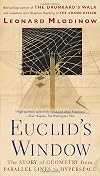
Leonard Mlodinow is a science writer with a sense of humor. In Euclid’s Window, he tells the story of the development (or should I say, evolution?) of geometry from the pre-Socratic Greeks to modern day.
The Greeks made some remarkable discoveries, among them the fact that the length of the diagonal of a square could not be expressed as a ratio of the lengths of its sides—or, as we would say today, the square root of two is irrational.
Not much is known about the person known as Euclid, show more but he seems to have systematized all that Greek civilization knew about geometry. His work, The Elements, shows how the Greeks had demanded rigor and logic in their approach to mathematics. To them, it was not sufficient to be able to calculate, one had to prove that the method of calculation was demonstrably valid. The entire work consists of many theorems derived from just a few definitions and (he thought) self-evident postulates.
But one of his postulates seemed just a little less self-evident than the others: the so-called parallel postulate, which asserts that parallel lines never intersect one another. For 2,000 years, geometers attempted unsuccessfully to show that the parallel postulate could be derived from the other postulates. Euclid himself may have been aware that there was something fishy about the postulate since he refrained from using it in his proofs of his first 28 theorems. It turns out that the parallel postulate is “true” only in a special kind of space, now called Euclidian space, which is basically a “flat” plane, that may be infinite in extent.
It was not until the 19th century when Carl Friedrich Gauss (and others, independently) figured out that logically consistent geometries could be created in which the parallel postulate was not true. For example, the postulate (and thus, much of Euclidian geometry that depends on it) is not valid on the surface of a sphere, like our planet earth. Nevertheless, Euclidian geometry is accurate and valid for practical purposes unless the objects being studied are large enough to be affected by the curvature of the earth.
Other exotic, but logically consistent, geometries were developed in the late 19th century. They found a practical use when Albert Einstein was wrestling with what came to be his general theory of relativity. He found he could make sense of what we call gravity if space itself was “curved.” He was delighted to discover that curved space geometry that fit his theory already had been worked out.
Geometry has come to play a role in modern efforts to combine quantum mechanics with general relativity. The Uncertainty Principle of quantum theory decrees that certain physical traits form complementary pairs that possess a certain limitation: the more precisely you measure one trait, the less precisely you can measure the other. The value of these complementary quantities beyond their limiting precision is fundamentally undetermined, not merely beyond the scope of our current instruments. And when you apply the uncertainty principle to gravity, you are driven to some rather bizarre conclusions about the geometry of space.
Efforts to make quantum theory consistent with general relativity have led to the development of string theory or M-theory, which are driven by insights of mathematics, not physical principles as Einstein’s theories were. Mlodinow writes:
“M-theory appears to have the property that what we perceive as position and time, that is, the coordinates of a string…are really mathematical arrays known as matrices. Only in an approximate sense, when strings are far apart (but still close on the scale of everyday life) do the matrices resemble coordinates—because all the diagonal elements of the array become identical and the off-diagonal elements tend toward zero. It’s the most profound change in the concept of space since Euclid.”
This can be pretty heady and heavy stuff, but Mlodinow makes it pretty enjoyable. He peppers his discourse with wry asides, for example, he observes:
“In the case of the Crusades, ‘contact’ with the Europeans was about as desirable as contact with the Martians in War of the Worlds.”
Whenever he needs two real life examples to explain a concept, he uses his impish young sons Nicolai and Alexei. When the reader is likely to want a simple answer to a complex issue, he admonishes, “Dream on!”
This book might have been subtitled A History of the Concept of Space. It shows how mathematics as well as science develops by building on pre-existing ideas. It is a well-told tale, well worth reading.
(JAB) show less
The Greeks made some remarkable discoveries, among them the fact that the length of the diagonal of a square could not be expressed as a ratio of the lengths of its sides—or, as we would say today, the square root of two is irrational.
Not much is known about the person known as Euclid, show more but he seems to have systematized all that Greek civilization knew about geometry. His work, The Elements, shows how the Greeks had demanded rigor and logic in their approach to mathematics. To them, it was not sufficient to be able to calculate, one had to prove that the method of calculation was demonstrably valid. The entire work consists of many theorems derived from just a few definitions and (he thought) self-evident postulates.
But one of his postulates seemed just a little less self-evident than the others: the so-called parallel postulate, which asserts that parallel lines never intersect one another. For 2,000 years, geometers attempted unsuccessfully to show that the parallel postulate could be derived from the other postulates. Euclid himself may have been aware that there was something fishy about the postulate since he refrained from using it in his proofs of his first 28 theorems. It turns out that the parallel postulate is “true” only in a special kind of space, now called Euclidian space, which is basically a “flat” plane, that may be infinite in extent.
It was not until the 19th century when Carl Friedrich Gauss (and others, independently) figured out that logically consistent geometries could be created in which the parallel postulate was not true. For example, the postulate (and thus, much of Euclidian geometry that depends on it) is not valid on the surface of a sphere, like our planet earth. Nevertheless, Euclidian geometry is accurate and valid for practical purposes unless the objects being studied are large enough to be affected by the curvature of the earth.
Other exotic, but logically consistent, geometries were developed in the late 19th century. They found a practical use when Albert Einstein was wrestling with what came to be his general theory of relativity. He found he could make sense of what we call gravity if space itself was “curved.” He was delighted to discover that curved space geometry that fit his theory already had been worked out.
Geometry has come to play a role in modern efforts to combine quantum mechanics with general relativity. The Uncertainty Principle of quantum theory decrees that certain physical traits form complementary pairs that possess a certain limitation: the more precisely you measure one trait, the less precisely you can measure the other. The value of these complementary quantities beyond their limiting precision is fundamentally undetermined, not merely beyond the scope of our current instruments. And when you apply the uncertainty principle to gravity, you are driven to some rather bizarre conclusions about the geometry of space.
Efforts to make quantum theory consistent with general relativity have led to the development of string theory or M-theory, which are driven by insights of mathematics, not physical principles as Einstein’s theories were. Mlodinow writes:
“M-theory appears to have the property that what we perceive as position and time, that is, the coordinates of a string…are really mathematical arrays known as matrices. Only in an approximate sense, when strings are far apart (but still close on the scale of everyday life) do the matrices resemble coordinates—because all the diagonal elements of the array become identical and the off-diagonal elements tend toward zero. It’s the most profound change in the concept of space since Euclid.”
This can be pretty heady and heavy stuff, but Mlodinow makes it pretty enjoyable. He peppers his discourse with wry asides, for example, he observes:
“In the case of the Crusades, ‘contact’ with the Europeans was about as desirable as contact with the Martians in War of the Worlds.”
Whenever he needs two real life examples to explain a concept, he uses his impish young sons Nicolai and Alexei. When the reader is likely to want a simple answer to a complex issue, he admonishes, “Dream on!”
This book might have been subtitled A History of the Concept of Space. It shows how mathematics as well as science develops by building on pre-existing ideas. It is a well-told tale, well worth reading.
(JAB) show less
You probably think you know a lot about emotions. You experience them directly on a daily basis, you can name most of them, and you see them expressed in others. You’ve likely been taught that emotions are discrete, universal, and that you’re better off suppressing them or otherwise overcoming them with reason. This is the conventional view of emotion, and it has been handed down to you through millennia of intellectual history. It’s also entirely misguided.
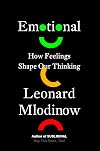
In Emotional: How Feelings show more Shape Our Thinking, theoretical physicist and science popularizer Leonard Mlodinow shows us why the traditional view of emotion fails to hold up to scientific scrutiny—in particular to the latest findings of affective neuroscience—and how a new picture is emerging of emotion as a core component of cognition—integrated with and complementary to reason.
To understand what emotions are, it’s useful to start with what they’re not, and unfortunately that requires unlearning centuries of false notions and oversimplifications.
The confusion stems from a model of the brain known as the “triune brain.” Originally formulated by the neuroscientist Paul MacLean, this model describes the brain as being composed of three discrete parts: (1) the reptilian cortex (lizard brain), responsible for our most basic instinctual behaviors; (2) the limbic system, responsible for the higher emotions found in mammals, primates, and humans; and (3) the neocortex, responsible for complex planning, abstract thinking, and language. These structures, the theory goes, were sequentially added to the mammalian brain over the course of evolution.
Except that the theory is wrong, or at best a major oversimplification. The latest science tells us that the three proposed structures of the triune brain are neither anatomically nor physiologically distinct, at least not entirely. All three structures send signals back and forth between themselves with significant anatomical overlap. The brain evolved—not by adding sequential layers on top of the basic lizard brain—but in a more integrated and complex manner with all three layers evolving simultaneously. Additionally, it is now known that emotions are not localized to specific areas of the brain within the limbic system, but are instead more widely distributed.
And it goes even deeper than that. Research also tells us that our emotions and logical reasoning are impacted, often subconsciously, by the information we receive from our sensory organs (capturing information about our environment) and from our internal sensors (capturing information about things like blood pressure, heart rate, ect.). All of this information is sent to the brain, impacting what is called our “core affect,” a term for how good or bad we feel overall in a particular situation. Because much of this happens at a subconscious level, we are often unaware of why we feel a particular way and are blind to the impact this has on our decision making.
Mlodinow offers two compelling examples to drive home the point. First, he shows how our gastrointestinal system (sometimes referred to as our “second brain” due to the complexity and magnitude of its neural activity) communicates bidirectionally with the brain and how this can have major impacts on our emotions and thinking. Studies have even demonstrated links between gut bacteria and the state of our mental health.
Second, Mlodinow shows how our decision-making process is colored by our emotions even when we’re completely unaware of it. In an incredible study that instantly became a classic, it was found that parole officers were significantly more likely to deny parole—not based on the facts of the case—but based strictly on the time of day the case was heard. In cases heard directly before lunch, parole was almost never granted, whereas the first cases heard at the start of the day were granted 60 percent of the time. Similar research has shown that this affects other professions as well, for example when doctors overprescribe antibiotics later in the day (as a result of fatigue).
The simple fact that the hearing officers were hungry or that doctors were tired was enough to drastically sway decision making. This shows that our brains are not neatly divided into a rational part and an emotional part, of which reason has complete control over; rather, cognition is an integrated mix of reason and emotion and can be impacted by factors we are not even aware of, including hunger, stress, and poor health more generally.
But emotions do not always lead to poor outcomes, and, in fact, often facilitate better decision making by providing our rational faculties with critical information. Mlodinow discusses several examples throughout the book, including the story of Stanislav Petrov, the lieutenant colonel of the Soviet Air Defense Force who used emotion to override a rational thought process that would have otherwise triggered a nuclear war.
So while it’s true that sometimes emotion leads you in the wrong direction (eating too much junk food or consuming too much alcohol), other times it leads you in the right direction (sacrificing your well-being for the sake of your child). Rather than labeling emotion as good or bad, then, it’s probably best to think of emotion as a source of valuable information to use in your decision making processes.
But here’s the key takeaway: Even when emotion gets in the way of your goals, you counteract it, not solely via the use of reason, but with other countervailing emotions. If you want to resist the impulse to eat an entire carton of ice cream, for example, you’ll likely have to employ other emotions, such as the desire for better health, the aspiration for a leaner body, or the pride associated with self-control. Reason alone will never help you overcome a desire in the absence of some other accompanying motivating force.
As Mlodinow repeatedly reminds us, even when you’re behaving according to strict rules of logic, you cannot have goals or evaluate evidence without giving either some kind of emotional weight. Without emotions, we would have no desire to do or think about anything at all. The trick then, is not to oppose or suppress emotions, but to learn how to manage them effectively to align with your goals.
Here’s how to do that, according to the latest science.
How to Manage Emotions
As a quick recap, the traditional theory of emotions, as Mlodinow describes it below, is largely incorrect:
“The fundamental tenets of the traditional theory were that there are a handful of basic emotions shared by all humans; that those emotions have fixed triggers and cause specific behaviors; and that each arises in some dedicated structure within the brain.”
Instead, what affective neuroscience tells us is that there are many more emotions than we previously thought, that each emotion is complex and varied (e.g., different forms of fear), that different people can experience emotion differently, that emotion can be influenced by culture and context, that emotion is not localized to specific areas of the brain, and that emotion is used in tandem with reason when we think about anything. Emotion is better thought of as a functional state that drives us towards certain behaviors.
But most importantly, affective neuroscience shows us that emotion can be managed and manipulated for our own benefit. Here’s what the latest research suggests.
Let’s start with the positive emotions (happiness, joy, contentment, etc.). Obviously, we all desire positive emotional states but cannot simply wish them into existence. Emotions are often automatic, arising from a particular context, event, or thought pattern. I can’t just say to myself “be happy” and expect anything to change. But here’s what I can do, according to the research on the subject.
In general, the best thing I can do is something that shouldn’t be too surprising: exercise and eat healthy, nutritious foods. In the first part of the book, Mlodinow explored all the various ways in which the body’s “core affect” can influence emotion and decision making. A sedentary lifestyle with a poor diet creates a general negative feeling that is shown to amplify negative emotions. The act of exercising, eating well, and even meditating produces a positive core affect that will materialize in a greater overall mood. And so taking care of your body is the single best thing you can do—not only for your physical health—but for your mental health as well.
Other behaviors recommended by researchers in the field to enhance happiness include:
-Spending time with family and friends and generally prioritizing experiences over material possessions
-Expressing gratitude for everything you have
-Engaging in acts of kindness towards others
-Cultivating optimism and positivity
-Living in the present moment and savoring life’s simple pleasures
-Dedicating yourself to a lifelong goal or project
This is all good advice when things are going according to plan, but what do we do about life’s inevitable hardships and the associated emotions of fear, anxiety, sadness, depression, anger, envy, shame, guilt, etc.? Life is full of challenges, missed opportunities, disappointments, and pain. How do we deal with this without getting overwhelmed?
It’s useful to start with the general recognition that negative emotions, while unpleasant, ultimately evolved to help us recognize suboptimal conditions and to make the appropriate changes. Without negative emotions, you’d have little desire to change anything at all, so we can begin with a sense of gratitude for the emotional states that allow us to alter our behavior for the better.
Problems occur, however, when we let our negative emotions spin out of control, negatively impacting our lives or causing us to make poor decisions. Since we can’t avoid negative emotions, we shouldn’t try to fight, avoid, suppress, or dwell on them. Instead, we can use a few strategies to help us manage these negative emotions and even turn them into something positive. Mlodinow discusses three such strategies: acceptance, reappraisal, and expression.
Those familiar with Stoicism and Buddhism will recognize the first strategy—acceptance. Rather than fighting against our emotions, we simply accept them and the circumstances that produce them, while finding alternative emotions to combat them and to give us the motivation to persevere. By focusing only on what we can control—and accepting that which we can’t—we can direct our energy to dealing with any difficult situation we encounter.
This is how James Stockdale was able to endure more than seven years as a prisoner of war. In 1965, his plane was shot down over Vietnam, leading to his imprisonment and years of torture and solitary confinement. After Stockdale was released and returned to the US, he wrote a series of books and lectured on how Stoicism, particularly the philosophy of Epictetus, helped him to endure the horrors of imprisonment in a hostile, foreign country. Ultimately, Stockdale embraced the strategy of acceptance. In a 1993 speech, Stockdale described his thoughts after his plane was hit:
“After ejection … I whispered to myself: I’m leaving the world of technology and entering the world of Epictetus … as I ejected from that airplane was the understanding that a Stoic always kept separate files in his mind for (A) those things that are “up to him” and (B) those things that are “not up to him.” Another way of saying it is (A) those things that are “within his power” and (B) those things that are “beyond his power.” Still another way of saying it is (A) those things that are within the grasp of “his Will, his Free Will” and (B) those things that are beyond it. All in category B are “external,” beyond my control, ultimately dooming me to fear and anxiety if I covet them. All in category A are up to me, within my power, within my will, and properly subjects for my total concern and involvement. They include my opinions, my aims, my aversions, my own grief, my own joy, my judgments, my attitude about what is going on, my own good, and my own evil.”
Stockdale, like all practicing Stoics, learned to replace one emotion (desire for external things outside one’s control) with another (desire to work on one’s own character and virtue regardless of circumstances). In this view, Stoics do not suppress emotions—as is commonly perceived—but rather reappraise/substitute them. Stoics do not lack desire, they just channel desire inward.
Practicing acceptance does not mean that we’ll never experience pain; it only means that when we do, we can focus on reappraising it as a challenge to overcome, an opportunity to build character, or as a necessary path toward something better.
And this brings us to the second strategy discussed by Mlodinow—reappraisal. As mentioned previously, the best way to counteract a negative emotion is with a countervailing emotion. In the case of Stockdale, rather than succumbing to fear, anxiety, and depression, Stockdale used his study of Stoicism to reframe the situation as an opportunity to apply his training and develop his character in the context of a situation he had no control over.
If this can work for Stockdale in the context of years of torture and imprisonment, it can work for the rest of us, who, while facing our own unique hardships, will probably never have to endure such brutal conditions.
Reappraisal also works in a variety of situations. For example, we can take emotions like the fear of public speaking and reappraise them, converting the negative energy we feel into positive motivation to deliver an effective speech or presentation. We can’t help but feel the fear, but we can use it in a constructive way.
Over time, and as we face and conquer our negative emotions, we develop confidence and skill in our ability to do so, setting off a virtuous cycle. This can be aided by Mlodinow’s third strategy—expression. Essentially, this is positive self-talk and the cultivation of optimism. While it sounds a little far-fetched, there is actually plenty of research supporting the idea that confidence and the phenomenon of the self-fulfilling prophecy enhances performance. Positive expression is just one means towards greater confidence in your ability to handle adversity.
Overall, we can see that it is almost never advantageous to suppress emotions or to try to reason yourself out of negative ones. You either have to reappraise negative emotions into something constructive or else override one emotion with another. Stoicism is particularly attuned to this strategy, which accounts for its widespread appeal and revival in recent years. But you don’t have to be a Stoic to take advantage of this general advice.
A Better View of Emotions
Affective neuroscience, by giving us a more complete picture of our emotion as fully integrated with our cognition, shows us that emotion is not our enemy to be overcome by our rational faculties. Emotions are functional states, sources of information the brain needs to make decisions, guiding our behavior in the right direction. But that requires that we understand where our emotions come from, how they impact us, and how we can leverage them for our own benefit. In this regard, Mlodinow’s latest book gives us all the tools we need for one of the most critical life skills one can develop: emotional intelligence. show less
In Emotional: How Feelings show more Shape Our Thinking, theoretical physicist and science popularizer Leonard Mlodinow shows us why the traditional view of emotion fails to hold up to scientific scrutiny—in particular to the latest findings of affective neuroscience—and how a new picture is emerging of emotion as a core component of cognition—integrated with and complementary to reason.
To understand what emotions are, it’s useful to start with what they’re not, and unfortunately that requires unlearning centuries of false notions and oversimplifications.
The confusion stems from a model of the brain known as the “triune brain.” Originally formulated by the neuroscientist Paul MacLean, this model describes the brain as being composed of three discrete parts: (1) the reptilian cortex (lizard brain), responsible for our most basic instinctual behaviors; (2) the limbic system, responsible for the higher emotions found in mammals, primates, and humans; and (3) the neocortex, responsible for complex planning, abstract thinking, and language. These structures, the theory goes, were sequentially added to the mammalian brain over the course of evolution.
Except that the theory is wrong, or at best a major oversimplification. The latest science tells us that the three proposed structures of the triune brain are neither anatomically nor physiologically distinct, at least not entirely. All three structures send signals back and forth between themselves with significant anatomical overlap. The brain evolved—not by adding sequential layers on top of the basic lizard brain—but in a more integrated and complex manner with all three layers evolving simultaneously. Additionally, it is now known that emotions are not localized to specific areas of the brain within the limbic system, but are instead more widely distributed.
And it goes even deeper than that. Research also tells us that our emotions and logical reasoning are impacted, often subconsciously, by the information we receive from our sensory organs (capturing information about our environment) and from our internal sensors (capturing information about things like blood pressure, heart rate, ect.). All of this information is sent to the brain, impacting what is called our “core affect,” a term for how good or bad we feel overall in a particular situation. Because much of this happens at a subconscious level, we are often unaware of why we feel a particular way and are blind to the impact this has on our decision making.
Mlodinow offers two compelling examples to drive home the point. First, he shows how our gastrointestinal system (sometimes referred to as our “second brain” due to the complexity and magnitude of its neural activity) communicates bidirectionally with the brain and how this can have major impacts on our emotions and thinking. Studies have even demonstrated links between gut bacteria and the state of our mental health.
Second, Mlodinow shows how our decision-making process is colored by our emotions even when we’re completely unaware of it. In an incredible study that instantly became a classic, it was found that parole officers were significantly more likely to deny parole—not based on the facts of the case—but based strictly on the time of day the case was heard. In cases heard directly before lunch, parole was almost never granted, whereas the first cases heard at the start of the day were granted 60 percent of the time. Similar research has shown that this affects other professions as well, for example when doctors overprescribe antibiotics later in the day (as a result of fatigue).
The simple fact that the hearing officers were hungry or that doctors were tired was enough to drastically sway decision making. This shows that our brains are not neatly divided into a rational part and an emotional part, of which reason has complete control over; rather, cognition is an integrated mix of reason and emotion and can be impacted by factors we are not even aware of, including hunger, stress, and poor health more generally.
But emotions do not always lead to poor outcomes, and, in fact, often facilitate better decision making by providing our rational faculties with critical information. Mlodinow discusses several examples throughout the book, including the story of Stanislav Petrov, the lieutenant colonel of the Soviet Air Defense Force who used emotion to override a rational thought process that would have otherwise triggered a nuclear war.
So while it’s true that sometimes emotion leads you in the wrong direction (eating too much junk food or consuming too much alcohol), other times it leads you in the right direction (sacrificing your well-being for the sake of your child). Rather than labeling emotion as good or bad, then, it’s probably best to think of emotion as a source of valuable information to use in your decision making processes.
But here’s the key takeaway: Even when emotion gets in the way of your goals, you counteract it, not solely via the use of reason, but with other countervailing emotions. If you want to resist the impulse to eat an entire carton of ice cream, for example, you’ll likely have to employ other emotions, such as the desire for better health, the aspiration for a leaner body, or the pride associated with self-control. Reason alone will never help you overcome a desire in the absence of some other accompanying motivating force.
As Mlodinow repeatedly reminds us, even when you’re behaving according to strict rules of logic, you cannot have goals or evaluate evidence without giving either some kind of emotional weight. Without emotions, we would have no desire to do or think about anything at all. The trick then, is not to oppose or suppress emotions, but to learn how to manage them effectively to align with your goals.
Here’s how to do that, according to the latest science.
How to Manage Emotions
As a quick recap, the traditional theory of emotions, as Mlodinow describes it below, is largely incorrect:
“The fundamental tenets of the traditional theory were that there are a handful of basic emotions shared by all humans; that those emotions have fixed triggers and cause specific behaviors; and that each arises in some dedicated structure within the brain.”
Instead, what affective neuroscience tells us is that there are many more emotions than we previously thought, that each emotion is complex and varied (e.g., different forms of fear), that different people can experience emotion differently, that emotion can be influenced by culture and context, that emotion is not localized to specific areas of the brain, and that emotion is used in tandem with reason when we think about anything. Emotion is better thought of as a functional state that drives us towards certain behaviors.
But most importantly, affective neuroscience shows us that emotion can be managed and manipulated for our own benefit. Here’s what the latest research suggests.
Let’s start with the positive emotions (happiness, joy, contentment, etc.). Obviously, we all desire positive emotional states but cannot simply wish them into existence. Emotions are often automatic, arising from a particular context, event, or thought pattern. I can’t just say to myself “be happy” and expect anything to change. But here’s what I can do, according to the research on the subject.
In general, the best thing I can do is something that shouldn’t be too surprising: exercise and eat healthy, nutritious foods. In the first part of the book, Mlodinow explored all the various ways in which the body’s “core affect” can influence emotion and decision making. A sedentary lifestyle with a poor diet creates a general negative feeling that is shown to amplify negative emotions. The act of exercising, eating well, and even meditating produces a positive core affect that will materialize in a greater overall mood. And so taking care of your body is the single best thing you can do—not only for your physical health—but for your mental health as well.
Other behaviors recommended by researchers in the field to enhance happiness include:
-Spending time with family and friends and generally prioritizing experiences over material possessions
-Expressing gratitude for everything you have
-Engaging in acts of kindness towards others
-Cultivating optimism and positivity
-Living in the present moment and savoring life’s simple pleasures
-Dedicating yourself to a lifelong goal or project
This is all good advice when things are going according to plan, but what do we do about life’s inevitable hardships and the associated emotions of fear, anxiety, sadness, depression, anger, envy, shame, guilt, etc.? Life is full of challenges, missed opportunities, disappointments, and pain. How do we deal with this without getting overwhelmed?
It’s useful to start with the general recognition that negative emotions, while unpleasant, ultimately evolved to help us recognize suboptimal conditions and to make the appropriate changes. Without negative emotions, you’d have little desire to change anything at all, so we can begin with a sense of gratitude for the emotional states that allow us to alter our behavior for the better.
Problems occur, however, when we let our negative emotions spin out of control, negatively impacting our lives or causing us to make poor decisions. Since we can’t avoid negative emotions, we shouldn’t try to fight, avoid, suppress, or dwell on them. Instead, we can use a few strategies to help us manage these negative emotions and even turn them into something positive. Mlodinow discusses three such strategies: acceptance, reappraisal, and expression.
Those familiar with Stoicism and Buddhism will recognize the first strategy—acceptance. Rather than fighting against our emotions, we simply accept them and the circumstances that produce them, while finding alternative emotions to combat them and to give us the motivation to persevere. By focusing only on what we can control—and accepting that which we can’t—we can direct our energy to dealing with any difficult situation we encounter.
This is how James Stockdale was able to endure more than seven years as a prisoner of war. In 1965, his plane was shot down over Vietnam, leading to his imprisonment and years of torture and solitary confinement. After Stockdale was released and returned to the US, he wrote a series of books and lectured on how Stoicism, particularly the philosophy of Epictetus, helped him to endure the horrors of imprisonment in a hostile, foreign country. Ultimately, Stockdale embraced the strategy of acceptance. In a 1993 speech, Stockdale described his thoughts after his plane was hit:
“After ejection … I whispered to myself: I’m leaving the world of technology and entering the world of Epictetus … as I ejected from that airplane was the understanding that a Stoic always kept separate files in his mind for (A) those things that are “up to him” and (B) those things that are “not up to him.” Another way of saying it is (A) those things that are “within his power” and (B) those things that are “beyond his power.” Still another way of saying it is (A) those things that are within the grasp of “his Will, his Free Will” and (B) those things that are beyond it. All in category B are “external,” beyond my control, ultimately dooming me to fear and anxiety if I covet them. All in category A are up to me, within my power, within my will, and properly subjects for my total concern and involvement. They include my opinions, my aims, my aversions, my own grief, my own joy, my judgments, my attitude about what is going on, my own good, and my own evil.”
Stockdale, like all practicing Stoics, learned to replace one emotion (desire for external things outside one’s control) with another (desire to work on one’s own character and virtue regardless of circumstances). In this view, Stoics do not suppress emotions—as is commonly perceived—but rather reappraise/substitute them. Stoics do not lack desire, they just channel desire inward.
Practicing acceptance does not mean that we’ll never experience pain; it only means that when we do, we can focus on reappraising it as a challenge to overcome, an opportunity to build character, or as a necessary path toward something better.
And this brings us to the second strategy discussed by Mlodinow—reappraisal. As mentioned previously, the best way to counteract a negative emotion is with a countervailing emotion. In the case of Stockdale, rather than succumbing to fear, anxiety, and depression, Stockdale used his study of Stoicism to reframe the situation as an opportunity to apply his training and develop his character in the context of a situation he had no control over.
If this can work for Stockdale in the context of years of torture and imprisonment, it can work for the rest of us, who, while facing our own unique hardships, will probably never have to endure such brutal conditions.
Reappraisal also works in a variety of situations. For example, we can take emotions like the fear of public speaking and reappraise them, converting the negative energy we feel into positive motivation to deliver an effective speech or presentation. We can’t help but feel the fear, but we can use it in a constructive way.
Over time, and as we face and conquer our negative emotions, we develop confidence and skill in our ability to do so, setting off a virtuous cycle. This can be aided by Mlodinow’s third strategy—expression. Essentially, this is positive self-talk and the cultivation of optimism. While it sounds a little far-fetched, there is actually plenty of research supporting the idea that confidence and the phenomenon of the self-fulfilling prophecy enhances performance. Positive expression is just one means towards greater confidence in your ability to handle adversity.
Overall, we can see that it is almost never advantageous to suppress emotions or to try to reason yourself out of negative ones. You either have to reappraise negative emotions into something constructive or else override one emotion with another. Stoicism is particularly attuned to this strategy, which accounts for its widespread appeal and revival in recent years. But you don’t have to be a Stoic to take advantage of this general advice.
A Better View of Emotions
Affective neuroscience, by giving us a more complete picture of our emotion as fully integrated with our cognition, shows us that emotion is not our enemy to be overcome by our rational faculties. Emotions are functional states, sources of information the brain needs to make decisions, guiding our behavior in the right direction. But that requires that we understand where our emotions come from, how they impact us, and how we can leverage them for our own benefit. In this regard, Mlodinow’s latest book gives us all the tools we need for one of the most critical life skills one can develop: emotional intelligence. show less
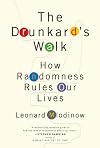
I would normally give a book like this four stars, for I enjoyed it very much, but on reflection I think Mlodinow did a very good job making probability (and a little statistics) quite accessible to the general reader. I got a kick looking at some of the Goodreads comments when I was finished... "I'm a mathematician and this book was drivel", "I'm a mathematician and this book was great", "I'm an English major and I liked it." (All paraphrased, of course) One reviewer even carped that the show more title didn't show up until quite late in the book. Lighten up, Francis... background and setup are okay, right? Guess not.
Chill out folks...the math is good, the stories entertaining, the history enlightening, and the flow very good. If you're a mathematician sneering at a physicist's treatment of your world, bring it down a notch or three - he made probability readable and was spot on in doing it. If you're an English teacher, don't be offended when Mlodinow points out arbitrary grading of papers.
Like Nate Silver's The Signal and the Noise, complex subject matter made easy is something to be applauded. So...five stars. show less
Chill out folks...the math is good, the stories entertaining, the history enlightening, and the flow very good. If you're a mathematician sneering at a physicist's treatment of your world, bring it down a notch or three - he made probability readable and was spot on in doing it. If you're an English teacher, don't be offended when Mlodinow points out arbitrary grading of papers.
Like Nate Silver's The Signal and the Noise, complex subject matter made easy is something to be applauded. So...five stars. show less
The Upright Thinkers: The Human Journey from Living in Trees to Understanding the Cosmos by Leonard Mlodinow
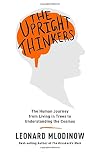
A well done thought provoking book by a physicist who can take complexity and make it appealing to us average folks in a narrative style. Mlodinow walks us through the earliest of our origin who gazed out in wonder at the star studded night sky to the leading theorists of the twentieth century on quantum mechanics we think rules the universe. And I emphasize, we think, as eventually even Einstein's work will in all likelihood be shown inadequate. That is the challenge and allure that awaits show more some of us who will be around to see and hear. These are the kinds of ideas this author looks at in the book while sentimentally managing to weave in the life and experiences his father. show less
Lists
Awards


You May Also Like


Associated Authors
Statistics
- Works
- 20
- Also by
- 1
- Members
- 13,958
- Popularity
- #1,647
- Rating
- 3.8
- Reviews
- 332
- ISBNs
- 310
- Languages
- 26
- Favorited
- 3

