

Gordon Bell (1) (1934–)
Author of Total Recall: How the E-Memory Revolution Will Change Everything
For other authors named Gordon Bell, see the disambiguation page.
Gordon Bell (1) has been aliased into C. Gordon Bell.
Works by Gordon Bell
Works have been aliased into C. Gordon Bell.
Associated Works
Works have been aliased into C. Gordon Bell.
Tagged
Common Knowledge
- Birthdate
- 1934-08-19
- Date of death
- 2024-05–17
- Gender
- male
- Organizations
- National Science Foundation
American Academy of Arts and Sciences (Fellow, 1994)
American Association for the Advancement of Science (Fellow, 1983)
ACM (Fellow, 1994)
IEEE (Fellow, 1974)
National Academy of Engineering (1977) (show all 9)
National Academy of Science (2007)
Australian Academy of Technological Sciences and Engineering (Fellow, 2009)
The Computer History Museum (Founder) - Awards and honors
- John von Neumann Medal (1992)
Vladimir Karapetoff Outstanding Technical Achievement Award
National Medal of Technology (1991) - Nationality
- USA
- Associated Place (for map)
- USA
Members
Reviews
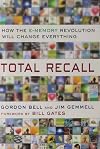
I used to have more of a soft spot for futurist books than I do now. I find that many of the gee-whiz predictions about how things will be lack plausibility, often due to the authors' limitations in understanding human nature.
Bell's book however, besides being generally more practical and grounded in technological fact, seems to show fairly good insight into what people really need and want from technology. While the book starts out in starry-eyed mode, it improves quickly enough by delving show more into what is currently available in total information tech, and what seems just around the corner.
Bell paints a fairly believable picture of how most information about our lives--from what we experience perceptually to all of the digital traces we leave--will all soon be cheaply stored and accessible. He makes a good case for thinking this is a positive advance, and much of the book is spent describing how we can already set the wheels of "total recall" in motion. The ideas are often presented based on Bell's own experiences developing the MyLifeBits system for Microsoft.
People interested in the areas of "personal informatics" will have already though through some of these issues. I found plenty more food for thought here, though, and I especially valued the many reference to extant technologies and the ideas for new technologies. The book is a little repetitive and fairly thin overall, but as a monograph, it serves its purpose pretty well. show less
Bell's book however, besides being generally more practical and grounded in technological fact, seems to show fairly good insight into what people really need and want from technology. While the book starts out in starry-eyed mode, it improves quickly enough by delving show more into what is currently available in total information tech, and what seems just around the corner.
Bell paints a fairly believable picture of how most information about our lives--from what we experience perceptually to all of the digital traces we leave--will all soon be cheaply stored and accessible. He makes a good case for thinking this is a positive advance, and much of the book is spent describing how we can already set the wheels of "total recall" in motion. The ideas are often presented based on Bell's own experiences developing the MyLifeBits system for Microsoft.
People interested in the areas of "personal informatics" will have already though through some of these issues. I found plenty more food for thought here, though, and I especially valued the many reference to extant technologies and the ideas for new technologies. The book is a little repetitive and fairly thin overall, but as a monograph, it serves its purpose pretty well. show less

This is an interesting and thought-provoking book. I don't totally buy into the main idea - that one should, now that it's technically feasible, create and preserve a record of every moment of one's entire life. Do people really want to remember the bad as well as the good? Why waste gigabytes on recording the mundane and the trivial that are inevitably part of a normal life? But the technology will certainly help us to keep digital records of the highlights and whatever else we consider to show more be important or useful to preserve, whether it be documents, photos, data or whatever. For example, the capability for real-time monitoring of health and exercise is a major advance that has already evolved since this book was published. The book contains many helpful ideas on how to digitize and preserve various aspects of life, and one can simply adopt those which seem worthwhile and ignore the rest. show less
As I began reading it soon felt like an infomercial. Thus, I set it aside for a few days. but later resumed because it is a topic I am very interested in. For the rest of the book, I used speed reading techniques.
As a boy I dreamed of having a computer in the basement. I imagined that I could put it together from scrap parts. I had no idea how I could pay for the air conditioning bill, but knew that I had to do it. I imagined that it could be doing complex computations that would not be show more practical without a computer, and that it could work for hours or days on those problems while I was off doing other things.
The author of this book has a dream and he is living his dream, so I read with great interest his account of Total Recall, and MyLifeBits. I wondered if I could obtain a copy of the hardware/software that he is using. But after a bit of an Internet search I concluded that it does not exist as a commercial product.
The first two sections of the book detail his experiences in getting his pictures, email, paper documents, and electronic records from various places, including at least one former place of employment, all into his storage and recall system.
In the third and last section of the book, he admits that there are some concerns; data loss, backup, the mass of data storage require, but even more importantly, some concerns about recording and keeping everything. Privacy concerns of our own selves, and out of respect for others are part of it. Another part of it is that there are some things that we would rather forget because they are embarrassing, or unpleasant, or compromising. As a technologist, he feels that these problems are solvable. My feeling is that these problems will cause the adoption of this kind of technology to be slow.
It is easy to have the impression that the adoption of the recent technologies, such as the Internet was quite rapid, but like so many other technologies, it takes many years from inception, to early adopters, to easily useable, and then to mainstream. What he describes requires both hardware and software, which increases the cost, and they are not yet available in a single package, so, it will be quite a few years for this to become common. show less
As a boy I dreamed of having a computer in the basement. I imagined that I could put it together from scrap parts. I had no idea how I could pay for the air conditioning bill, but knew that I had to do it. I imagined that it could be doing complex computations that would not be show more practical without a computer, and that it could work for hours or days on those problems while I was off doing other things.
The author of this book has a dream and he is living his dream, so I read with great interest his account of Total Recall, and MyLifeBits. I wondered if I could obtain a copy of the hardware/software that he is using. But after a bit of an Internet search I concluded that it does not exist as a commercial product.
The first two sections of the book detail his experiences in getting his pictures, email, paper documents, and electronic records from various places, including at least one former place of employment, all into his storage and recall system.
In the third and last section of the book, he admits that there are some concerns; data loss, backup, the mass of data storage require, but even more importantly, some concerns about recording and keeping everything. Privacy concerns of our own selves, and out of respect for others are part of it. Another part of it is that there are some things that we would rather forget because they are embarrassing, or unpleasant, or compromising. As a technologist, he feels that these problems are solvable. My feeling is that these problems will cause the adoption of this kind of technology to be slow.
It is easy to have the impression that the adoption of the recent technologies, such as the Internet was quite rapid, but like so many other technologies, it takes many years from inception, to early adopters, to easily useable, and then to mainstream. What he describes requires both hardware and software, which increases the cost, and they are not yet available in a single package, so, it will be quite a few years for this to become common. show less
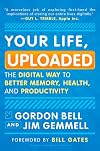
I enjoyed this book. I've been in the process of going digital with all my stuff for several years and have accomplished a lot. This book will give you some basics on getting started, but I've your already doing this, don't expect many ideas on advanced topics.
This book really focuses on what you can accomplish by having all your stuff in a digital way and what the future can potentially hold. I suspect that if your a software developer you will get a very good idea on what you could do with show more a product. He goes so far a to list several key areas of development and the types of companies that he would invest in to get the products out there.
I should also point out that the main focus is on getting your physical stuff into the computer. But very little is mentioned about all the current digital outputs out there. I would have like to see some mention of dealing with the systems like twitter, facebook, etc. and how to get this into your digital memory. I've done pretty well with some aspects of this and getting my lifestream in order. Perhaps his next book will address this area.
Overall a good read and written in a nice conversational style which makes it an enjoyable and quick read. show less
This book really focuses on what you can accomplish by having all your stuff in a digital way and what the future can potentially hold. I suspect that if your a software developer you will get a very good idea on what you could do with show more a product. He goes so far a to list several key areas of development and the types of companies that he would invest in to get the products out there.
I should also point out that the main focus is on getting your physical stuff into the computer. But very little is mentioned about all the current digital outputs out there. I would have like to see some mention of dealing with the systems like twitter, facebook, etc. and how to get this into your digital memory. I've done pretty well with some aspects of this and getting my lifestream in order. Perhaps his next book will address this area.
Overall a good read and written in a nice conversational style which makes it an enjoyable and quick read. show less
You May Also Like


Associated Authors
Statistics
- Works
- 1
- Also by
- 1
- Members
- 256
- Popularity
- #89,546
- Rating
- 3.5
- Reviews
- 9
- ISBNs
- 25
- Languages
- 5