
Dorothea Lasky
Author of Astro Poets: Your Guides to the Zodiac
About the Author
Author of AWE, Black Life, and Thunderbird, and coeditor of Open the Door: How to Excite Young People About Poetry, the Missouri-born Dorothea Lasky is an assistant professor of poetry at Columbia University and lives in New York City.
Works by Dorothea Lasky
Associated Works
Tagged
Common Knowledge
- Birthdate
- 1978-03-28
- Gender
- female
- Occupations
- dichter
docent - Organizations
- Columbia University’s School of the Arts
- Nationality
- USA
- Birthplace
- St. Louis, Missouri, USA
- Places of residence
- New York, New York, USA
- Associated Place (for map)
- USA
Members
Reviews
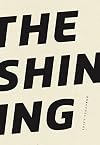
(Full disclosure: I received a free e-ARC for review through Edelweiss. Content warning for violence.)
It’s a perfect temperature in here And everything is clean
Except the souls
This part is a fairy tale But only the ending of one
And when you finally
Get to the bottom of the glass You’ll find me
That terrible terror of being That’s me
***
Dorothea Lasky's THE SHINING is a feminist reimagining of the King novel and Kubrick film, in which she manages to transmogrify the already macabre into show more poetry that's sometimes more bizarre than the source material. Though it initially feels like we're thrust into the POV of Jack's wife Wendy, Lasky in fact places herself in the Overlook Hotel, perhaps as an unsuspecting guest who's terrorized by villains both worldly and supernatural. Through Lasky, the audience becomes the hotel's quarry.
Lasky's poetry is delightfully eerie and grotesque; my favorite line, perhaps, concerns the phalluses undulating on the green carpet running up and down the hotels stairs. It's been years since I've read or watched THE SHINING however, and I feel like I might have gotten more out of this collection if I'd refreshed my memory first. As it is, I suspect that many of the references went over my head. show less
It’s a perfect temperature in here And everything is clean
Except the souls
This part is a fairy tale But only the ending of one
And when you finally
Get to the bottom of the glass You’ll find me
That terrible terror of being That’s me
***
Dorothea Lasky's THE SHINING is a feminist reimagining of the King novel and Kubrick film, in which she manages to transmogrify the already macabre into show more poetry that's sometimes more bizarre than the source material. Though it initially feels like we're thrust into the POV of Jack's wife Wendy, Lasky in fact places herself in the Overlook Hotel, perhaps as an unsuspecting guest who's terrorized by villains both worldly and supernatural. Through Lasky, the audience becomes the hotel's quarry.
Lasky's poetry is delightfully eerie and grotesque; my favorite line, perhaps, concerns the phalluses undulating on the green carpet running up and down the hotels stairs. It's been years since I've read or watched THE SHINING however, and I feel like I might have gotten more out of this collection if I'd refreshed my memory first. As it is, I suspect that many of the references went over my head. show less
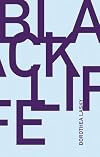
Dorothea Lasky’s new book, Black Life, brims with the chaos of real life and real people fighting to express themselves when shiny and happy words aren’t sufficient. A unifying component of the poems is frequent references to her father’s battle with dementia, and sprinkled among these are tiny images, made all the more terrifying for their brevity: helpless rest home patients with bald baby heads being beaten by staff. Fire as both purifier and destroyer also makes appearances in show more unexpected contexts.
Talking about life, she twists around the state of health into the dimensions of inner and outer well-being, with the two often in fierce juxtaposition. She muses on Emily Dickinson’s muse, on anorexia, and refers to pop culture as freely as old boyfriends and husbands. Her voice alters from that of a hyperactive teen to a stalker to an overly-kind ghost. In all of it, she is seldom quiet or sedate.
In frequent references to poetry, she contrasts the kinds of poetry that exist: pretty and intangible or ugly and real. Therein, she makes it appear that it would be worse to be ignored than blasphemed, and that flowery prose often hides an uncertain intent. From “I Am a Politician”,
I am a politician
Just watch:
I will be very nice to you
But when I turn around I will write the creepiest poems about you that
Have ever been written.
Or worse yet,
I will write nothing about you at all
And will instead
Write about the water cascading endlessly in the ocean
Full of flowers and lovers at their very best...
She doesn’t hide from revealing insecurity, such that her poems often appear inspired by it. In “I Just Feel So Bad”, she expresses both loneliness as well as the concept of needing pain in order to function, trying to understand what she has to give and what she can take when thinking “nice” thoughts doesn’t work. Her answer is in the final phrases:
I have no home
No bread
I am destitute
But inside me
Is a little voice
That must speak
It gets louder when you listen
"ARS Poetica” has a kinesthetic energy to it, almost as if it's the adverbs that matter most...being whatever needs being, but in a big way.
There is a romantic abandon in me always
I want to feel the dread for others
I only feel it through song
Only through song am I able to sum up so many words into a few
Like when he said I am no good
I am no good
Goodness is not the point anymore
Holding on to things
Now that’s the point
The collection is varied and intense. Being about a decade older than Lasky, there were mental moments when I wanted to tell her to relax a bit and slow down. To realize that not all problems will be resolved as quickly as we'd like, but that it's okay to wait them out. The vivid descriptions and staccato action at times felt like it was too edgy to get close to, like the wild person at the party who gets the attention and the laughs but who is terrifying to be alone with for more than a moment. show less
Talking about life, she twists around the state of health into the dimensions of inner and outer well-being, with the two often in fierce juxtaposition. She muses on Emily Dickinson’s muse, on anorexia, and refers to pop culture as freely as old boyfriends and husbands. Her voice alters from that of a hyperactive teen to a stalker to an overly-kind ghost. In all of it, she is seldom quiet or sedate.
In frequent references to poetry, she contrasts the kinds of poetry that exist: pretty and intangible or ugly and real. Therein, she makes it appear that it would be worse to be ignored than blasphemed, and that flowery prose often hides an uncertain intent. From “I Am a Politician”,
I am a politician
Just watch:
I will be very nice to you
But when I turn around I will write the creepiest poems about you that
Have ever been written.
Or worse yet,
I will write nothing about you at all
And will instead
Write about the water cascading endlessly in the ocean
Full of flowers and lovers at their very best...
She doesn’t hide from revealing insecurity, such that her poems often appear inspired by it. In “I Just Feel So Bad”, she expresses both loneliness as well as the concept of needing pain in order to function, trying to understand what she has to give and what she can take when thinking “nice” thoughts doesn’t work. Her answer is in the final phrases:
I have no home
No bread
I am destitute
But inside me
Is a little voice
That must speak
It gets louder when you listen
"ARS Poetica” has a kinesthetic energy to it, almost as if it's the adverbs that matter most...being whatever needs being, but in a big way.
There is a romantic abandon in me always
I want to feel the dread for others
I only feel it through song
Only through song am I able to sum up so many words into a few
Like when he said I am no good
I am no good
Goodness is not the point anymore
Holding on to things
Now that’s the point
The collection is varied and intense. Being about a decade older than Lasky, there were mental moments when I wanted to tell her to relax a bit and slow down. To realize that not all problems will be resolved as quickly as we'd like, but that it's okay to wait them out. The vivid descriptions and staccato action at times felt like it was too edgy to get close to, like the wild person at the party who gets the attention and the laughs but who is terrifying to be alone with for more than a moment. show less
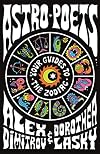
This book was the book I randomly pulled from the stand because it’s cover just caught my eye & I said I need this. Next thing I know, I’m an astrology student as of almost over a year and half. It’s definitely more of a “fun astrology read” rather than an educational book on astrology. It was so much fun to read and even back then when I had no knowledge on astrology other than the stereotypes of some sun signs - it piqued my interest to recall when my friends birthdays were and show more kinda connect the dots. I’m biased because this book changed my life in a way. show less
I thought this was a super fun book. It was a really casual, modern and interesting look at the horoscope signs with lots of emphasis on the everyday behaviors of each sign instead of the more textbook characteristics you usually get. For instance, they provide examples of what texting would be like between two signs. And some of them were laugh out loud funny. In fact I resembled a couple of them :) Thanks to NetGalley and the publisher for allowing me to read an advanced copy. This opinion show more is entirely my own. show less
Awards

You May Also Like


Associated Authors
Statistics
- Works
- 14
- Also by
- 4
- Members
- 377
- Popularity
- #64,010
- Rating
- 3.5
- Reviews
- 7
- ISBNs
- 26
- Languages
- 1