

Stephen Neill (1900–1984)
Author of A History of Christian Missions
About the Author
Image credit: via Boston University
Works by Stephen Neill
The story of the Christian church in India and Pakistan, (Christian world mission books) (1970) 15 copies
The layman in Christian history; a project of the Department on the Laity of the World Council of Churches (1963) 14 copies
De groei der oecumenische beweging 5 copies
Foundation beliefs: Lectures delivered at the Kodaikanal Missionary Convention, May 1941 (1948) 4 copies
The difference in being a Christian 4 copies
The Ministry of the Church. A review by various authors of a book entitled The Apostolic Ministry 3 copies
História Das Missões 3 copies
The Pelican History of the Church 2 copies
Gyan Kosh 1 copy
Kristittynä eläminen 1 copy
Associated Works
Exempla historica : Epochen der Weltgeschichte in Biographien 24 : Kolonisatoren, Kaufleute, Erfinder (1983) — Author — 5 copies
Tagged
Common Knowledge
- Canonical name
- Neill, Stephen
- Legal name
- Neill, Stephen Charles
- Birthdate
- 1900-12-31
- Date of death
- 1984-06-20
- Gender
- male
- Education
- Trinity College, University of Cambridge (BA|1923)
- Occupations
- Anglican priest (ordained 1928)
missionary (India)
bishop (Tinnevelly ∙ India)
ecumenist
Principal of theological college
Professor of Missions (show all 7)
Professor of Philosophy and Religious Studies - Organizations
- Church of England
World Council of Churches
University of Hamburg
University of Nairobi
Church of South India
Church Missionary Society - Awards and honors
- Fellow, British Academy (1969)
Prize Fellowship (Trinity, Theology, 1924) - Nationality
- UK
- Birthplace
- Edinburgh, Scotland, UK
- Places of residence
- Dohnavur, Tamil Nadu, India
Palayamkottai, Tamil Nadu, India
Geneva, Switzerland
Hamburg, Germany
Kenya - Place of death
- Oxford, Oxfordshire, England, UK
- Map Location
- Scotland, UK
Members
Reviews
A very complete, succint global history of Christian missions up to the 1980s. Feels dated today, because of facts it could hardly deal with, each for a different reason:
* takes an œcumenical approach, for instance to Romanist and Greek/Russian iconodulic missions;
* takes seriously liberation theory;
* ignores Reformed missionary activity in the XVI century;
* ignores the liberal destruction of mainstream European Christianity;
* predates the conservative resurgence, the Calvinistic show more renaissance, the global South and the revelation of the then-hidden, astonishing advance of Protestantism in China.
We still lack a more decidedly Reformed, even Evangelical, and more recent approach to the subject. show less
* takes an œcumenical approach, for instance to Romanist and Greek/Russian iconodulic missions;
* takes seriously liberation theory;
* ignores Reformed missionary activity in the XVI century;
* ignores the liberal destruction of mainstream European Christianity;
* predates the conservative resurgence, the Calvinistic show more renaissance, the global South and the revelation of the then-hidden, astonishing advance of Protestantism in China.
We still lack a more decidedly Reformed, even Evangelical, and more recent approach to the subject. show less
Why I read this work?
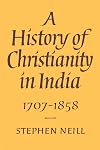
As I’m from Tamil Nadu, and specifically, Tirunelveli, a small town of million people. This work is of great interest to me.
Rasa Clarinda's Grave is famous in Tirunelveli. Although, most are unfamiliar with background story.
The most famous is Bishop Robert Caldwell, who is popular among minds of Tamil People.
If you don't know anything about Indian Christianity, this would give you a good outline of it.
Robert Frykenberg’s work and others on South Indian show more Christianity draws same sources.
Who is the author?
Apparently, he was an academic, missionary. This is his, Magnus Opus work, contribution to History of Indian Christianity.
An Erudite, Scholarly work on Indian Christianity. This work is pretty much what there is to know about Indian Christianity.
Although, contemporary Indian Christianity from 1950-Present is missing.
The Work contains 18 Chapters, runs about 600 pages. I tried to post an outline, but it’s long.
What I like about this work?
This work is thorough.
Stephen’s Neil’s writing is clear, precise, paragraphs are clearly organized.
The outline is well-organized with sub-headings. It makes it easy for the reader.
Who’d I recommend this to?
-Indian History
-South Indian History
-Christian History in India
-Missionaries
-Academics
-Tamil History
Narrative of Christianity:
The main narrative of Christianity is that the World is fallen, i.e wickedness, turmoil, relationship failures, wars, pain, suffering.
Most of the it stems from human heart i.e pride, envy, gluttony, and et all deadly sins, some unknown.
Jesus of Nazareth, lived among his creation, and took all this away from the world. He is the cure for change of human heart.
Deus Vult,
Gottfried show less
As I’m from Tamil Nadu, and specifically, Tirunelveli, a small town of million people. This work is of great interest to me.
Rasa Clarinda's Grave is famous in Tirunelveli. Although, most are unfamiliar with background story.
The most famous is Bishop Robert Caldwell, who is popular among minds of Tamil People.
If you don't know anything about Indian Christianity, this would give you a good outline of it.
Robert Frykenberg’s work and others on South Indian show more Christianity draws same sources.
Who is the author?
Apparently, he was an academic, missionary. This is his, Magnus Opus work, contribution to History of Indian Christianity.
An Erudite, Scholarly work on Indian Christianity. This work is pretty much what there is to know about Indian Christianity.
Although, contemporary Indian Christianity from 1950-Present is missing.
The Work contains 18 Chapters, runs about 600 pages. I tried to post an outline, but it’s long.
What I like about this work?
This work is thorough.
Stephen’s Neil’s writing is clear, precise, paragraphs are clearly organized.
The outline is well-organized with sub-headings. It makes it easy for the reader.
Who’d I recommend this to?
-Indian History
-South Indian History
-Christian History in India
-Missionaries
-Academics
-Tamil History
Narrative of Christianity:
The main narrative of Christianity is that the World is fallen, i.e wickedness, turmoil, relationship failures, wars, pain, suffering.
Most of the it stems from human heart i.e pride, envy, gluttony, and et all deadly sins, some unknown.
Jesus of Nazareth, lived among his creation, and took all this away from the world. He is the cure for change of human heart.
Deus Vult,
Gottfried show less

This book is comprised of five chapters: Why Missions?, What the Missionaries Did Wrong, What the Missionaries Did Right, Where Do We Go from Here?, and The Missionary of the Future. Reading if forty years later the most valuable sections are on what missionaries did right and wrong. The correctives that Neill calls for have largely been implemented and although things have changed a lot for both western and non-western churches these lessons are still pertinent for missions.
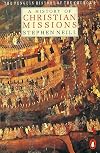
A History of Christian Missions traces the expansion of Christianity from its origins in the Middle East to Rome, the rest of Europe and the colonial world, and assesses its position as a major religious force worldwide. Many of the world’s religions have not actively sought converts, largely because they have been too regional in character. Buddhism, Islam and Christianity, however, are the three chief exceptions to this, and Christianity in particular has found a home in almost every show more country in the world. Professor Stephen Neill’s comprehensive and authoritative survey examines centuries of missionary activity, beginning with Christ and working through the Crusades and the colonization of Asia and Africa up to the present day, concluding with a shrewd look ahead to what the future may hold for the Christian Church. show less
You May Also Like


Associated Authors
Statistics
- Works
- 79
- Also by
- 1
- Members
- 2,936
- Popularity
- #8,722
- Rating
- 3.8
- Reviews
- 15
- ISBNs
- 68
- Languages
- 4