
David Thomas Moore
Author of Two Hundred and Twenty-one Baker Streets
About the Author
Works by David Thomas Moore
Monstrous Little Voices: New Tales From Shakespeare's Fantasy World (2016) — Editor — 74 copies, 2 reviews
Journal of the Plague Year: An Omnibus of Post-Apocalyptic Tales (2014) — Editor — 31 copies, 3 reviews
Associated Works
Tagged
Common Knowledge
- Gender
- male
- Nationality
- Australia
- Birthplace
- Adelaide, South Australia, Australia
- Associated Place (for map)
- South Australia, Australia
Members
Reviews
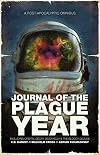
While it’s ending
Journal of the Plague Year: A Post-Apocalyptic Omnibus, by Malcolm Cross, C.B. Harvey and Adrian Tchaikovsky (Abaddon Books, $9.99).
Existing within the “Afterblight” universe, this collection of novellas occur during and immediately after a rampaging epidemic—the Cull—kills roughly 96% of the population.
Why such a high mortality rate? Well, it attacks everyone who has a blood type other than O Neg. The universal donors turn out to be the only survivors.
In this show more case, the first and last novellas are much, much stronger than the one in the middle. C. B. Harvey’s “Dead Kelly,” set in the Australian Outback, was just a touch too Mad Max for me.
But the other two? Fantastico.
In “Orbital Decay,” Malcolm Cross writes a novella of intense humanity (not to mention madness and pure human fuckery) as the six astronauts on the International Space Station are stuck in orbit while the world dies beneath them. With tense pacing, excellent characterization, and a few good surprises, it also reveals some interesting bits of information about the nature of the Cull, and was, for my money, the best of the three novellas.
Adrian Tchaikovsky’s “The Bloody Deluge” invokes some powerful ghosts—the title refers to the powerful Swedes attempt to roll right over the top of Poland in the 17th century—in a tale of a wannabe-Charlemagne conquering in the name of holy … something. Is it a real religious revival? Not at the top.
But when the religion-fueled, backward-looking armies of the new order chase a scientist who’s probably the last true prince of reason to the doorstep of a warrior abbot, they get more than they expected.
While I haven’t read all the Afterblight books, I did enjoy School’s Out Forever, and have Hooded Man in the queue.
Reviewed on The United States of Armageddon: www.kelmunger.tumblr.com show less
Journal of the Plague Year: A Post-Apocalyptic Omnibus, by Malcolm Cross, C.B. Harvey and Adrian Tchaikovsky (Abaddon Books, $9.99).
Existing within the “Afterblight” universe, this collection of novellas occur during and immediately after a rampaging epidemic—the Cull—kills roughly 96% of the population.
Why such a high mortality rate? Well, it attacks everyone who has a blood type other than O Neg. The universal donors turn out to be the only survivors.
In this show more case, the first and last novellas are much, much stronger than the one in the middle. C. B. Harvey’s “Dead Kelly,” set in the Australian Outback, was just a touch too Mad Max for me.
But the other two? Fantastico.
In “Orbital Decay,” Malcolm Cross writes a novella of intense humanity (not to mention madness and pure human fuckery) as the six astronauts on the International Space Station are stuck in orbit while the world dies beneath them. With tense pacing, excellent characterization, and a few good surprises, it also reveals some interesting bits of information about the nature of the Cull, and was, for my money, the best of the three novellas.
Adrian Tchaikovsky’s “The Bloody Deluge” invokes some powerful ghosts—the title refers to the powerful Swedes attempt to roll right over the top of Poland in the 17th century—in a tale of a wannabe-Charlemagne conquering in the name of holy … something. Is it a real religious revival? Not at the top.
But when the religion-fueled, backward-looking armies of the new order chase a scientist who’s probably the last true prince of reason to the doorstep of a warrior abbot, they get more than they expected.
While I haven’t read all the Afterblight books, I did enjoy School’s Out Forever, and have Hooded Man in the queue.
Reviewed on The United States of Armageddon: www.kelmunger.tumblr.com show less
Two Hundred and Twenty-One Baker Streets: An Anthology of Holmesian Tales Across Time and Space by David Thomas Moore
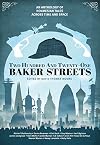
As I made my way through David Thomas Moore's anthology "Two Hundred and Twenty-One Baker Streets: An Anthology of Holmesian Tales Across Time and Space" I couldn't help but think 'I wish I had edited this book'. Not because I think it's poorly edited, needed work, or anything like that, but because I'm bloody envious of how good it is while being so far off the beaten track of a typical Sherlock Holmes anthology. Of the 14 stories presented, all of which are more or less 'alternate show more universe' takes on Holmes and Watson, there is only one clunker, which is mighty impressive given the ease with which most stories could have gone wildly off the rails. Be aware, in some stories you will not find anyone named Sherlock Holmes. This antho isn't about mimicry of ACD's writing style, or structure of stories; it's about characters, iconic characters whose bundle of traits are 'universal' in a literary, not literal, sense, and work in any place or time. I like this book. Its smart. It's challenging. It's an exploration. The concept behind it and the various ideas that drive it, work for me. Easily the best book of Sherlock Holmes related fiction I've read this year. show less
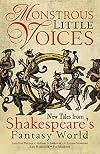
Monstrous Little Voices is a novella anthology, containing five somewhat interlinked novellas written by Jonathan Barnes, Emma Newman, Kate Heartfield, Foz Meadows and Adrian Tchaikovsky. They are more or less set in the world of some of Shakespeare's plays, but extended beyond what happens in the original play, and tweaked so that all the referenced plays actually happened in the same world of fairies, magic and politics.
This was an interesting read, even when the stories touched upon show more Shakespearean plays I was not very familiar with. My favourite story was definitely the opening one, "Coral Bones" which extended the story of The Tempest beyond where the play ended and included some neat genderfluid characterisation. My second favourite story was probably the closing one, "On the Twelfth Night", mainly for the way it played with narrative by writing in the second person. That story would not have really made sense without all the stories preceding it, however. I was particularly impressed by how the later stories seemed to be aware of events in the earlier stories. An excellent feat of narrative planning.
I definitely recommend this anthology to fans of Shakespeare and fans of fantasy fiction generally. And theatre. These novellas push Shakespeare's plays into new territory, giving them some modern sensibilities without literally modernising the settings. As always, individual comments on the stories are below.
~
"Coral Bones" by Foz Meadows — What happens after The Tempest. Miranda has left the island, but the real world did not bring her as much joy as she hoped. Luckily, she still has Ariel, the genderfluid fairy who helped raise her and keep her sane. This was a very strong start to the anthology, which had me wanting to come back for more every time I had to set it aside. The main story is neatly intertwined with flashbacks to the island, which serve to build up our understanding of and sympathy for Miranda's relationship with Ariel. In the meantime, we also see quite clearly Miranda learning about herself and the world and, thanks to Ariel's influence (or really, just her presence from an early age), questioning her place and identity in it.
"The Course of True Love" by Kate Heartfield — This novella involves some of the characters from Midsummer Night's Dream but mainly focused on a hedge witch (well, a wyrtwitch) who stumbles upon a prisoner of Titania's and ends up helping him out. This wasn't a bad novella but I just didn't love it as much as the previous one, which set the bar quite high. I suspect if I'd read it in isolation without the comparison, I would have enjoyed it more. As it was, it was well written enough, but didn't push the envelope like "Coral Bones" did.
"The Unkindest Cut" by Emma Newman — A young woman is fated to marry her love in an alliance that will end a war. But even though it has been foretold, nothing is straightforward when Prospero is involved, or the cursed knife from Macbeth. Not a bad story, but I thought it ended a little abruptly. I didn't dislike the ending, but wouldn't've minded seeing more, or more immediately before the end. (Also, it was a depressing ending, which I wouldn't have wished upon the main character. :-/ ) It was a nice touch to have the Miranda from "Coral Bones" appear and I am impressed with the planning that must have gone into this anthology.
"Even in the Cannon’s Mouth" by Adrian Tchaikovsky — I felt a bit lost during the middle of this story. I think it might have been because of the more theatrical/script-like scene changes the author used. It took me a little while to get used to paying attention to them properly. That said, I liked the version of Macbeth that appeared in this one (and had sort of been mentioned in earlier stories, but not nearly as clearly). I especially loved the ending as it involved Macbeth. Not to be too obvious with the spoilers, but a favourite loophole-fail is resolved. I also got the impression that this story was leading into some sort of climax in the last story...
"On the Twelfth Night" by Jonathan Barnes — This last story was fascinating in many ways. It did sort of tie up some of the weirder elements of the plot brought up in the previous story, but that wasn't what really made it stand out. Usually, it was written in second person... and (very minor spoiler) the second person was Shakespeare's wife. Not quite the wife of the Shakespeare that we know, though, but rather a non-playwright from a parallel universe. I found it quite a compelling read (especially compared with the previous novella, which did not hold my interest). Unfortunately, for readers who might have picked these novellas up individually rather than in the collected volume, I'm not sure that this novella would work as well as a standalone. But it does make an excellent conclusion to this anthology.
4.5 / 5 stars
You can read more of my reviews on my blog. show less
This was an interesting read, even when the stories touched upon show more Shakespearean plays I was not very familiar with. My favourite story was definitely the opening one, "Coral Bones" which extended the story of The Tempest beyond where the play ended and included some neat genderfluid characterisation. My second favourite story was probably the closing one, "On the Twelfth Night", mainly for the way it played with narrative by writing in the second person. That story would not have really made sense without all the stories preceding it, however. I was particularly impressed by how the later stories seemed to be aware of events in the earlier stories. An excellent feat of narrative planning.
I definitely recommend this anthology to fans of Shakespeare and fans of fantasy fiction generally. And theatre. These novellas push Shakespeare's plays into new territory, giving them some modern sensibilities without literally modernising the settings. As always, individual comments on the stories are below.
~
"Coral Bones" by Foz Meadows — What happens after The Tempest. Miranda has left the island, but the real world did not bring her as much joy as she hoped. Luckily, she still has Ariel, the genderfluid fairy who helped raise her and keep her sane. This was a very strong start to the anthology, which had me wanting to come back for more every time I had to set it aside. The main story is neatly intertwined with flashbacks to the island, which serve to build up our understanding of and sympathy for Miranda's relationship with Ariel. In the meantime, we also see quite clearly Miranda learning about herself and the world and, thanks to Ariel's influence (or really, just her presence from an early age), questioning her place and identity in it.
"The Course of True Love" by Kate Heartfield — This novella involves some of the characters from Midsummer Night's Dream but mainly focused on a hedge witch (well, a wyrtwitch) who stumbles upon a prisoner of Titania's and ends up helping him out. This wasn't a bad novella but I just didn't love it as much as the previous one, which set the bar quite high. I suspect if I'd read it in isolation without the comparison, I would have enjoyed it more. As it was, it was well written enough, but didn't push the envelope like "Coral Bones" did.
"The Unkindest Cut" by Emma Newman — A young woman is fated to marry her love in an alliance that will end a war. But even though it has been foretold, nothing is straightforward when Prospero is involved, or the cursed knife from Macbeth. Not a bad story, but I thought it ended a little abruptly. I didn't dislike the ending, but wouldn't've minded seeing more, or more immediately before the end. (Also, it was a depressing ending, which I wouldn't have wished upon the main character. :-/ ) It was a nice touch to have the Miranda from "Coral Bones" appear and I am impressed with the planning that must have gone into this anthology.
"Even in the Cannon’s Mouth" by Adrian Tchaikovsky — I felt a bit lost during the middle of this story. I think it might have been because of the more theatrical/script-like scene changes the author used. It took me a little while to get used to paying attention to them properly. That said, I liked the version of Macbeth that appeared in this one (and had sort of been mentioned in earlier stories, but not nearly as clearly). I especially loved the ending as it involved Macbeth. Not to be too obvious with the spoilers, but a favourite loophole-fail is resolved. I also got the impression that this story was leading into some sort of climax in the last story...
"On the Twelfth Night" by Jonathan Barnes — This last story was fascinating in many ways. It did sort of tie up some of the weirder elements of the plot brought up in the previous story, but that wasn't what really made it stand out. Usually, it was written in second person... and (very minor spoiler) the second person was Shakespeare's wife. Not quite the wife of the Shakespeare that we know, though, but rather a non-playwright from a parallel universe. I found it quite a compelling read (especially compared with the previous novella, which did not hold my interest). Unfortunately, for readers who might have picked these novellas up individually rather than in the collected volume, I'm not sure that this novella would work as well as a standalone. But it does make an excellent conclusion to this anthology.
4.5 / 5 stars
You can read more of my reviews on my blog. show less
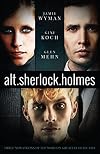
This ambitious anthology re-stages Sherlock Holmes through the vantage point of three different authors. I absolutely adored the first two. Jamie Wyman sets her versions of Holmes and Watson in a 1930s traveling circus. The cast is vivid and the atmosphere of the period is utilized in a wonderful way. Gini Koch moves her great detective to Los Angeles, where she (yes, a gender twist) works to solve crimes in the sordid underworld of reality TV. The approach is fascinating, and I especially show more love how she rewrote Irene Adler. The last portion of the book lost me in a big way. While Sherlock has always had issues with drug use, immersing him and Watson in the drug culture of late 1960s New York City just didn't set right with me. The writing of the setting itself is fantastic, but the setting and turbulence of the time took over a bit too much, it seemed, as the stories lacked cohesive beginnings, middles, and ends, and became more of overviews of the events of the period through Watson's eyes. show less
Lists
You May Also Like


Associated Authors
Statistics
- Works
- 10
- Also by
- 4
- Members
- 374
- Popularity
- #64,495
- Rating
- 3.6
- Reviews
- 17
- ISBNs
- 25