
About the Author
Brant Pitre, PH.D., is a professor of sacred Scripture at Notre Dame Seminary in New Orleans. He is the author of the bestselling book Jesus and the Jewish Roots of the Eucharist: Unlocking the Secrets of the Last Supper and The Case for Jesus: The Biblical and Historical Evidence for Christ. More show more information about his work can be found at BrantPitre.com. show less
Image credit: Dr. Brant Pitre
Series
Works by Brant Pitre
Jesus and the Jewish Roots of the Eucharist: Unlocking the Secrets of the Last Supper (2011) 991 copies, 33 reviews
Jesus and the Jewish Roots of Mary: Unveiling the Mother of the Messiah (2018) 474 copies, 2 reviews
A Catholic Introduction to the Bible: The Old Testament (2018) — Author; Author — 266 copies, 3 reviews
Introduction to the Spiritual Life: Walking the Path of Prayer with Jesus (2021) 106 copies, 1 review
Jesus, the Tribulation, and the End of the Exile: Restoration Eschatology and the Origin of the Atonement (2005) 57 copies
The Road to Emmaus 6 copies
Jesus and the Jewish Roots of Advent 6 copies
The Fourth Cup and the New Passover 6 copies
The Jewish Roots of Holy Week 4 copies
A Biblical Explanation of the Mass 4 copies
New Eve: Episode 1 of Lectio: Mary 2 copies
Why We Confess 2 copies
The Origin of the Bible 2 copies
The Case of Jesus (DVD) 1 copy
Lectio - Eucharist (DVD set) 1 copy
THE BIBLE AND THE MASS 1 copy
A Biblical Tour of Heaven 1 copy
Exodus A Bible Study 1 copy
The Old Testament 1 copy
Eucharistic Theology 1 copy
Were the Gospels Anonymous? 1 copy
Em defesa do Cristo: As evidências bíblicas e históricas de Jesus (Portuguese Edition) (2023) 1 copy
Jewish Roots of Holy Week 1 copy
Gospel of Matthew (DVD set) 1 copy
The Dark Night of the Soul 1 copy
Associated Works
The Sacred Text: Excavating the Texts, Exploring the Interpretations, and Engaging the Theologies of the Christian Scriptures (2010) — Contributor — 2 copies
Tagged
Common Knowledge
- Other names
- Pitre, Brant James
- Birthdate
- 1975
- Gender
- male
- Education
- Louisiana State University (BA)
Vanderbilt University Divinity School (MTS)
University of Notre Dame (PhD) - Occupations
- seminary professor
theologian - Organizations
- Roman Catholic Church
Notre Dame Seminary, New Orleans, Louisiana, USA - Nationality
- USA
- Places of residence
- Gray, Louisiana, USA
- Associated Place (for map)
- Louisiana, USA
Members
Discussions
Dr Brant Pitre - Scholarly Consideration of Traditional Views in Catholic Tradition (March 2016)
Reviews
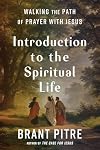
I've started to explore the spiritual classics this year, and really appreciate this introduction--both to the classics themselves, and to how they're rooted in Scripture and Jewish tradition.
Being a nondenominational Protestant myself (who grew up in the Presbyterian church and still misses its liturgy and practice of--for example--quiet self-examination and confession prior to Communion), I often feel the classics are underutilized in my (non-)denomination. I'd love to see them show more incorporated more, and feel that this read provides a solid base for how to start that--as well as to see, again, the biblical and traditional roots.
Biblical Hebrew and Greek are such rich languages; English translations of the Bible often only capture one facet of the original texts' meaning. Pitre often goes back to the original text and provides further context and scope--truly fascinating.
Anyone curious about prayer of any type, including Christian meditation and lectio divina; Christian tradition and classics; and resources for further study will find much to enjoy here.
I received an eARC of the book from the publisher via NetGalley. All opinions are my own. show less
Being a nondenominational Protestant myself (who grew up in the Presbyterian church and still misses its liturgy and practice of--for example--quiet self-examination and confession prior to Communion), I often feel the classics are underutilized in my (non-)denomination. I'd love to see them show more incorporated more, and feel that this read provides a solid base for how to start that--as well as to see, again, the biblical and traditional roots.
Biblical Hebrew and Greek are such rich languages; English translations of the Bible often only capture one facet of the original texts' meaning. Pitre often goes back to the original text and provides further context and scope--truly fascinating.
Anyone curious about prayer of any type, including Christian meditation and lectio divina; Christian tradition and classics; and resources for further study will find much to enjoy here.
I received an eARC of the book from the publisher via NetGalley. All opinions are my own. show less
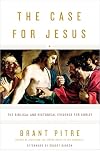
First off, this is an evangelical book. It plays that a bit sly and appeals to objectivity a lot, but the afterword is unambiguous about it being a quote "weapon" in the hands of evangelicals. However, unlike the title cousin "The Case for Christ" it isn't disgustingly dishonest and manipulative - rather, it attempts to offer a rebuttal to the historical view of Jesus and source skepticism from modern biblical scholarship, primarily from the often directly addressed Bart Ehrman. The main show more method used to rebut that scholarship is however simply restating church traditions as fact, which is a bit limp of a retort when the point of modern scholarship was to question what was simply asserted by theologians.
It once again appears that the primary target audience isn't people genuinely questioning the historical facts or even seeking to proselytize the unconverted, but to give a book of affirmations to Christians struggling with their faith. Not that there's anything wrong with that. show less
It once again appears that the primary target audience isn't people genuinely questioning the historical facts or even seeking to proselytize the unconverted, but to give a book of affirmations to Christians struggling with their faith. Not that there's anything wrong with that. show less
I picked up this very recent book because of an interview with the author that was featured in the Jesuit weekly America, and I was intrigued because here was a very young Biblical scholar taking on a project to radically revise some of the assumptions and presentations of both the Gospels and Jesus Christ himself in the field of Biblical scholarship as currently dominated by form and source critics. I wanted to read this because as the author states, he had his faith challenged by the show more assumptions and answers that the dominant school of form critics presented about Jesus and the first generations of Christian teaching about Him, which is something that happened to me as well when I encountered these assumptions when I studied at the Catholic University of America. He is concerned that he almost lost his faith, and that a whole generation of Catholic young people were losing theirs because of the shift from an uncritical approach to the Gospels that most of us have before we encounter the modern critical approach that seems to dispel all of the most cherished ideas and beliefs we have about Christ and the people who wrote about him in the canonical Gospels. He decided to take a fresh look at questions like "Were the Gospel writers anonymous", " when were the Gospels written?", "did Jesus present himself as Divine", and other related questions that have been presented by both religious and agnostic commentators in a way that tilt towards a secular understanding of the historical Jesus that minimizes his divinity and makes him a creature of several anonymous followers presenting their master as the Son of God in a rather clumsy way. Pitre wants to correct all of this, claiming that there is an abundance of both internal and external textual evidence that affirms traditional understandings for who wrote the Gospels (Mark, Matthew, Luke and John), and for the notion that Jesus pretty explicitly claimed a divinity for himself that cannot be rationalized away. He gives new evidence for dating the Gospels much closer to the 60's AD rather than the seventies and eighties, rejects the notion that the Gospels were composed after a rather long game of "telephone" in the collective memories of various Christian communities, and that there is good grounds for asserting that at least two of the Gospels (Matthew and John) were written by the apostles of those names, and that the others were written by near witnesses who knew the apostles and therefore had accesss to reliable accounts of Jesus' life. Perhaps the best thing that he does is to try and situate Jesus within the context of first century Judaism (as all such scholarship should), in his self understanding as Messiah and Son of Man as presented in the Book of Daniel, which most first century Jews would have understood immediately. His use of parables, his allusions to the Prophets and the Psalms all point to his understanding of himself as a divine figure, a figure anticipated by those first century Jews as expected to arrive in the "fourth kingdom" of the Romans and who would usher in the "fifth kingdom" of the Kingdom of God. Finally, Pitre gives evidence for Jesus' positive assertion of who he was after hiding his "Messianic secret" as the main cause for his execution by the Romans through the behest of the Sanhedrin, and not because he was a Zealot or because he had threatened the Temple itself. He shows that there is more than enough evidence that he was accused and found guilty of blasphemy for asserting his divinity and equality with God, the punishment for which was death.
I started this book feeling almost giddy with excitement for Pitre's perspective on each of these questions and others that I have omitted here, that the disappointment and threat that I experienced in modern biblical studies back in college could be rolled back by a new approach backed by evidence and not just customary faith. I felt this way for most of the book, but by the end, I now feel sort of wary about his conclusions, not because his scholarship is bad (it's very good, and as someone who does not read Hebrew, Greek, Aramaic, etc, it's hard to criticize that anyway), but because I still feel as though he is not challenging some other basic assumptions that affirm his case. One of those assumptions is that while he makes a good case for believing that the Gospel writers were actually much closer in time to the lives of the first witnesses to Christ (the Apostles Matthew and John most prominently), there still is the question of the reliability of both memory and eyewitness testimony, for which it is axiomatic in legal circles that both witness memory and testimony are largely unreliable as evidence in a legal case, which ought to apply to this case as well. He does a good job of showing that our assumptions about the veracity of the Gospels and how they were composed are mostly reflections of how we ourselves write histories and compose narratives, and not how they were done in the ancient world, all of which are immensely helpful reminders when we talk about context, and that's fine, but even chronicles written only two decades instead of five would be troublesome to us now. The section on the "lost" or Gnostic Gospels as competitors or similar to the four canonical gospels was needed and he spears this scholarship well, but he needs more than just the assumption that the early church fathers regarded them as forgeries to totally destroy that area of contention to the degree he wants to.
In the end, Pitre realizes the limits of his ability, or anyone's ability, to prove whether Jesus was the Son of God or not, but I think he succeeds in pointing out the biases and weaknesses of the form critical approach and that we can still be open to believing in the Gospels as faithful proclaimers of Christ as they were once presented than is now customary. This book is a work of apologetics as well as biblical scholarship, so the reader will see this and does well to keep it in mind while reading. It is meant for non-specialists who have some familiarity with the questions involved, and he leavens the book with a modern style that has the occasional snarky remark to it that readers will find amusing as well as accessible. I recommend this book to anyone with more than a casual interest in Christology, or even just interested in good, sharp scholarship. It's a good book for Lent, too, as the last chapters will relate heavily to this period in the liturgical year. show less
I started this book feeling almost giddy with excitement for Pitre's perspective on each of these questions and others that I have omitted here, that the disappointment and threat that I experienced in modern biblical studies back in college could be rolled back by a new approach backed by evidence and not just customary faith. I felt this way for most of the book, but by the end, I now feel sort of wary about his conclusions, not because his scholarship is bad (it's very good, and as someone who does not read Hebrew, Greek, Aramaic, etc, it's hard to criticize that anyway), but because I still feel as though he is not challenging some other basic assumptions that affirm his case. One of those assumptions is that while he makes a good case for believing that the Gospel writers were actually much closer in time to the lives of the first witnesses to Christ (the Apostles Matthew and John most prominently), there still is the question of the reliability of both memory and eyewitness testimony, for which it is axiomatic in legal circles that both witness memory and testimony are largely unreliable as evidence in a legal case, which ought to apply to this case as well. He does a good job of showing that our assumptions about the veracity of the Gospels and how they were composed are mostly reflections of how we ourselves write histories and compose narratives, and not how they were done in the ancient world, all of which are immensely helpful reminders when we talk about context, and that's fine, but even chronicles written only two decades instead of five would be troublesome to us now. The section on the "lost" or Gnostic Gospels as competitors or similar to the four canonical gospels was needed and he spears this scholarship well, but he needs more than just the assumption that the early church fathers regarded them as forgeries to totally destroy that area of contention to the degree he wants to.
In the end, Pitre realizes the limits of his ability, or anyone's ability, to prove whether Jesus was the Son of God or not, but I think he succeeds in pointing out the biases and weaknesses of the form critical approach and that we can still be open to believing in the Gospels as faithful proclaimers of Christ as they were once presented than is now customary. This book is a work of apologetics as well as biblical scholarship, so the reader will see this and does well to keep it in mind while reading. It is meant for non-specialists who have some familiarity with the questions involved, and he leavens the book with a modern style that has the occasional snarky remark to it that readers will find amusing as well as accessible. I recommend this book to anyone with more than a casual interest in Christology, or even just interested in good, sharp scholarship. It's a good book for Lent, too, as the last chapters will relate heavily to this period in the liturgical year. show less
Jesus and the Jewish Roots of the Eucharist: Unlocking the Secrets of the Last Supper by Brant Pitre
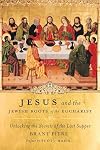
Over the past few months, Dr. Pitre's book has received quite a bit of attention — and quite a few rave reviews — from the Catholic media and blogs. It's hard to know what to add at this point, since I have to agree with the consensus: this is a well-written and fascinating exploration of the connections between Jewish and Catholic ritual, between messianic expectations and the actions of Christ, and between the Old and New Covenants. While there were a couple of places where the attempt show more to connect the dots seemed a bit strained, most of the reasoning is quite good. This book sheds light on some fascinating ideas that have been forgotten by most Catholics, and it does so in a clear and straightforward style. show less
 This review was written for LibraryThing Early Reviewers.
Lists
You May Also Like


Associated Authors
Statistics
- Works
- 91
- Also by
- 2
- Members
- 3,179
- Popularity
- #8,037
- Rating
- 4.4
- Reviews
- 58
- ISBNs
- 67
- Languages
- 5
- Favorited
- 2
