
Jennifer Tolbert Roberts
Author of The Ancient Greek World (The World in Ancient Times)
About the Author
Works by Jennifer Tolbert Roberts
Associated Works
Athenian Political Thought and the Reconstitution of American Democracy (1994) — Contributor — 28 copies
War and democracy : a comparative study of the Korean War and the Peloponnesian War (2000) — Contributor — 8 copies
Tagged
Common Knowledge
- Birthdate
- 1947-02-13
- Gender
- female
- Education
- Yale University (PhD)
- Occupations
- historian
university professor - Organizations
- City University of New York Graduate Center
- Nationality
- USA
- Associated Place (for map)
- USA
Members
Reviews
The Plague of War: Athens, Sparta, and the Struggle for Ancient Greece (Ancient Warfare and Civilization) by Jennifer T. Roberts
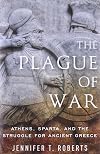
The Peloponnesian War is one of those subjects which, whenever a new book is published about it, begs the question, "do we really need another book on it?" This is understandable considering that 1) having been written about for nearly 2,500 years it has been one of the most worked-over events in human history, 2) the first of these books, Thucydides's [b:History of the Peloponnesian War|261243|History of the Peloponnesian show more War|Thucydides|https://images.gr-assets.com/books/1422072332s/261243.jpg|804111], ranks as one of the foundational texts of Western historiography and in many respects will never be bettered, and 3) recently (i.e. within the past half-century) [a:Donald Kagan|12805|Donald Kagan|https://images.gr-assets.com/authors/1411665575p2/12805.jpg] wrote both a four-volume history of the war AND a single-volume condensed version which are difficult to top as a modern account for the conflict. With all of these books, is there space for another?
The answer, as Jennifer Roberts proves, is a clear yes. She demonstrates this by fitting the conflict within the context of Greek city-state relations in the 5th and 4th centuries BCE. By widening her focus, she shows the war not as the culmination of inter-city-state rivalry as it has sometimes been presented, but as one of a series of conflicts which neither began nor ended with the war itself. This is not a novel revelation (anybody who has more than a passing familiarity with Hellenic Greek history understands this), but by adopting this approach Roberts makes several more obscure points clearer, foremost among them being that Sparta was not so much the ultimate victor as merely temporarily ascendant among the city-states, with their defeat of Athens setting the stage for their own downfall a generation later.
Roberts's approach offers one of the best assessments of the impact of the war upon ancient Greece. While lacking the immediacy of the ancient sources or the thoroughness of Kagan's coverage, she draws upon both sources as well as others to provide a clear-eyed understanding of its true significance. It makes for an excellent resource for anyone seeking to understand a conflict which became one of the great referential points of Western history, because while it may have been only one of many wars the Greeks fought with each other, it has endured in the popular imagination in ways which make it relevant even today. show less
The answer, as Jennifer Roberts proves, is a clear yes. She demonstrates this by fitting the conflict within the context of Greek city-state relations in the 5th and 4th centuries BCE. By widening her focus, she shows the war not as the culmination of inter-city-state rivalry as it has sometimes been presented, but as one of a series of conflicts which neither began nor ended with the war itself. This is not a novel revelation (anybody who has more than a passing familiarity with Hellenic Greek history understands this), but by adopting this approach Roberts makes several more obscure points clearer, foremost among them being that Sparta was not so much the ultimate victor as merely temporarily ascendant among the city-states, with their defeat of Athens setting the stage for their own downfall a generation later.
Roberts's approach offers one of the best assessments of the impact of the war upon ancient Greece. While lacking the immediacy of the ancient sources or the thoroughness of Kagan's coverage, she draws upon both sources as well as others to provide a clear-eyed understanding of its true significance. It makes for an excellent resource for anyone seeking to understand a conflict which became one of the great referential points of Western history, because while it may have been only one of many wars the Greeks fought with each other, it has endured in the popular imagination in ways which make it relevant even today. show less
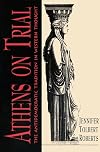
This is historiography, i.e. not history but history of history. How was Athenian democracy vieed throughout the 21/2 millennia since it briefly flourished. I knew that Plato didn't like it much and neither did Socrates, if his views can be seen separately..What is surprising is that writers ever since, at least until the 19th century, had little time for it either, preferring Sparta for its discipline and toughness, looking down on its apparent fickle mob rule or looking to Rome for its show more republican spirit. As for more recent commentators they tend to deny Athens was any kind of democracy because they had slaves and talk as if the Athenians invented slavery- but didn't everybody have slaves?
Elegantly written, with a touch of irony here and thereeven if at times hard to keep up with a string of scholars I've never heard of.Mind you I came to this on the recommendation of Cartledge's more recent book on similar theme, which was impossibly tangled in its own scholarliness.
Best quote in the book, and from an unexpected source:
"The meaning of democracy is precisely that the people, from time to time, should be called upon to judge the achievements and acts of a government, to judge whether the program of the government is of any use, or whether the men are of any use who take it upon themselves to execute that program"
A. Hitler. show less
Elegantly written, with a touch of irony here and thereeven if at times hard to keep up with a string of scholars I've never heard of.Mind you I came to this on the recommendation of Cartledge's more recent book on similar theme, which was impossibly tangled in its own scholarliness.
Best quote in the book, and from an unexpected source:
"The meaning of democracy is precisely that the people, from time to time, should be called upon to judge the achievements and acts of a government, to judge whether the program of the government is of any use, or whether the men are of any use who take it upon themselves to execute that program"
A. Hitler. show less
The Plague of War: Athens, Sparta, and the Struggle for Ancient Greece (Ancient Warfare and Civilization) by Jennifer T. Roberts
Very well written. The book is detailed with the academic depth of coverage you would expect from the Oxford University Press but is still readable by an average adult. Too often authors dumb a topic down to an overview of little value or fill the book with unexplained references that make the book difficult to read and requires a separate book to explain the first book.
Professor Roberts provides a history of the conflict between Athens and Sparta for the leadership of Ancient Greece that is show more easy to read and understand. show less
Professor Roberts provides a history of the conflict between Athens and Sparta for the leadership of Ancient Greece that is show more easy to read and understand. show less
This review was written for LibraryThing Member Giveaways.
The Plague of War: Athens, Sparta, and the Struggle for Ancient Greece (Ancient Warfare and Civilization) by Jennifer T. Roberts
Being close to 400 pages this books is very encyclopedic in its treatment of The Spartan and Athenian wars. The best part of the book is the introduction which provides a historiological treatment of the period over the span of time. The footnotes invite the reader to explore diverse aspects of the wars that are of interest to the curious historian. The prose is a bit hard to read at time with too much information. It loses its steam and energy midstream. Not a literary classic but a good show more time to read for the beginning student. show less
This review was written for LibraryThing Member Giveaways.
Lists
Awards

You May Also Like


Associated Authors
Statistics
- Works
- 10
- Also by
- 6
- Members
- 435
- Popularity
- #56,231
- Rating
- 4.1
- Reviews
- 8
- ISBNs
- 26