
Zlata Filipović
Author of Zlata's Diary: A Child's Life in Sarajevo
About the Author
Works by Zlata Filipović
Zlata'nın Günlüğü 1 copy
Zlatayude Diarykurippukal 1 copy
Associated Works
The Freedom Writers Diary: How a Teacher and 150 Teens Used Writing to Change Themselves and the World Around Them (1999) — Foreword, some editions — 2,284 copies, 76 reviews
Tagged
Common Knowledge
- Canonical name
- Filipović, Zlata
- Birthdate
- 1980-12-3
- Gender
- female
- Education
- St. Andrew's College, Dublin
University of Oxford (BA, Human Science)
Trinity College, Dublin - Agent
- Susanna Lea Associates
- Nationality
- Bosnia and Herzegovina
- Places of residence
- Sarajevo, Bosnia-Herzegovina
Paris, Île-de-France, France
Dublin, County Dublin, Ireland
Members
Reviews
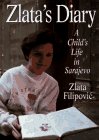
Then a child living through a war, Zlata Filipovic has often been compared to Anne Frank. That's cliches and, at least for me, misleading as to what to expect from this book. After all, even though the Bosnian war quickly escalated into an ethnic conflict, she was not a recluse fearing arrest and deportation, nor was she faced with racist policies affecting her daily life.
Having said that, her experience remains of course an horrible one. You may or may not have in mind the atrocities show more perpetrated upon civilians back then and there (and I don't want to go into a political argument, here's not the place for that) having some of such atrocities being described first-hand by a young teenage girl makes for an haunting read.
Indeed, if it is sad enough to see a childhood wasted because of a stupid and barbaric conflict, worst is the way the war slowly creeps into her life until what this diary is, at its core, all about: the infamous siege of Sarajevo she had to endure with her family.
Really, there's no word.
The whole is a descent into hell where nothing is spared -the isolation, uncertainties, fear, deprivations and shortages, on top of the refugee crisis, constant shelling, hidden snippers and people dying all around her (including some of her schoolmates, as young as she was). Reading this while bearing in mind that, here's what a child had to go through is frightening. The fact she, in a way, got used to it is also seriously disturbing:
'Mimmy, I've noticed that I don't write to you any more about the war or the shooting. That's probably because I've become used to it. All I care about is that the shells don't fall within 50 metres of my house, that we've got wood, water and, of course, electricity.'
Such testimony obviously is hard but, beyond the siege of Sarajevo and the Bosnian war, here's after all a voice telling of how conflicts affect children on a very human and personal level. Don't we all tend to forget that too easily when facing wars on the news or else? Even if it can only serve as such a reminder, then 'Zlata's Diary' deserves to be read. show less
Having said that, her experience remains of course an horrible one. You may or may not have in mind the atrocities show more perpetrated upon civilians back then and there (and I don't want to go into a political argument, here's not the place for that) having some of such atrocities being described first-hand by a young teenage girl makes for an haunting read.
Indeed, if it is sad enough to see a childhood wasted because of a stupid and barbaric conflict, worst is the way the war slowly creeps into her life until what this diary is, at its core, all about: the infamous siege of Sarajevo she had to endure with her family.
Really, there's no word.
The whole is a descent into hell where nothing is spared -the isolation, uncertainties, fear, deprivations and shortages, on top of the refugee crisis, constant shelling, hidden snippers and people dying all around her (including some of her schoolmates, as young as she was). Reading this while bearing in mind that, here's what a child had to go through is frightening. The fact she, in a way, got used to it is also seriously disturbing:
'Mimmy, I've noticed that I don't write to you any more about the war or the shooting. That's probably because I've become used to it. All I care about is that the shells don't fall within 50 metres of my house, that we've got wood, water and, of course, electricity.'
Such testimony obviously is hard but, beyond the siege of Sarajevo and the Bosnian war, here's after all a voice telling of how conflicts affect children on a very human and personal level. Don't we all tend to forget that too easily when facing wars on the news or else? Even if it can only serve as such a reminder, then 'Zlata's Diary' deserves to be read. show less
http://nhw.livejournal.com/1095084.html
This is the diary of a bright eleven-year-old, Zlata Filipović, whose relatively normal life growing up in Sarajevo was suddenly and abruptly disrupted by the outbreak of war in April 1992; her daily life shifts suddenly from worrying about school and partying with friends and family, to hiding from snipers and artillery fire in her home and waiting to hear which of her friends has been killed. For those of us who deal with international affairs on a show more daily basis, it's a pretty good reminder that conflict is not really about the political leaders whose childishness Zlata excoriates; it is about ordinary people whose lives suddenly become hell because of evil decisions made by evil men.
Zlata comes across as a perceptive child, and it is interesting how her interpretation of the conflict shifts from essentially reflecting the Sarajevo consensus to more bitter and wiser invective against everyone responsible for the situation. But this is also a story whose telling in itself changes the teller: by the middle of the book, her diary-keeping has made her a celebrity; by the end (December 1993), she is being evacuated from Sarajevo with her family at the personal instructons of the French Minister of Defence.
But she doesn't let it go to her head. Comparisons with Anne Frank by external commentators are inevitable; Zlata just remarks that she hopes not to suffer the same fate. Even after the outside world "discovers" her, she still writes about family gossip as unselfconsciously as she did before the war started. show less
This is the diary of a bright eleven-year-old, Zlata Filipović, whose relatively normal life growing up in Sarajevo was suddenly and abruptly disrupted by the outbreak of war in April 1992; her daily life shifts suddenly from worrying about school and partying with friends and family, to hiding from snipers and artillery fire in her home and waiting to hear which of her friends has been killed. For those of us who deal with international affairs on a show more daily basis, it's a pretty good reminder that conflict is not really about the political leaders whose childishness Zlata excoriates; it is about ordinary people whose lives suddenly become hell because of evil decisions made by evil men.
Zlata comes across as a perceptive child, and it is interesting how her interpretation of the conflict shifts from essentially reflecting the Sarajevo consensus to more bitter and wiser invective against everyone responsible for the situation. But this is also a story whose telling in itself changes the teller: by the middle of the book, her diary-keeping has made her a celebrity; by the end (December 1993), she is being evacuated from Sarajevo with her family at the personal instructons of the French Minister of Defence.
But she doesn't let it go to her head. Comparisons with Anne Frank by external commentators are inevitable; Zlata just remarks that she hopes not to suffer the same fate. Even after the outside world "discovers" her, she still writes about family gossip as unselfconsciously as she did before the war started. show less
Reading an 11-year-old’s diary when she’s a happy child and then suffering the fates of the Bosnian War is tragic and sad. Pages of the diary were published during the war in 1991-93 when she lived in Sarajevo, and she knew she was being compared to Anne Frank. Her writing is exemplary for her age but she never understood why there was a war and why peace wasn’t coming. She was both hopeful and sometimes suicidal as friends were killed and families, friends, and neighbors were show more displaced. From the introduction we learn her family eventually escapes to Paris and from Wikipedia we learn she went to Oxford and now champions the cause of children suffering through war. Of course an inspiration. Reading about war from a child’s perspective is eye-opening to say the least. I am glad she left us this legacy. show less
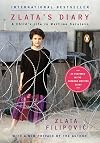
I remember seeing this book around a lot in my local library in the mid '90s, as its author, Zlata Filipović, ultimately settled in Ireland once her family had finally been evacuated from Sarajevo. I'm not quite sure why I hesitated to read it then—Filipović is only a few years older than me and I had read Anne Frank's Diary more than once—but I came across it again recently and decided to finally pick it up. It's a useful historical record to have, and my younger self might have show more connected to it more strongly had I read it years ago, but today it just struck me as being very much written by an 11-year-old. show less
Lists
Awards


You May Also Like


Associated Authors
Statistics
- Works
- 5
- Also by
- 2
- Members
- 2,864
- Popularity
- #8,955
- Rating
- 3.8
- Reviews
- 31
- ISBNs
- 83
- Languages
- 12
- Favorited
- 1