
Ervand Abrahamian
Author of A History of Modern Iran
About the Author
Ervand Abrahamian is Distinguished Professor of Iranian and Middle Eastern history and politics at Baruch College, City University of New York. He is a co-author, with Bruce Cunnings and Moshe of Investing the Axis of evil: The Truth About North Korea, Iran, and Syria (The New Press) Abrahamian was show more elected to the American Academy of Arts and Sciences in 2010. He Lives in Brooklyn, New York. show less
Works by Ervand Abrahamian
Associated Works
Tagged
Common Knowledge
- Birthdate
- 1940-12-07
- Gender
- male
- Education
- University of Oxford (BA | 1963)
Columbia University (PhD | 1969)
University of Oxford (MA | 1966) - Short biography
- Abrahamian is an Iran-born Armenian who was raised in England and now teaches at the Baruch College, CUNY.
- Nationality
- Iran (birth)
USA - Birthplace
- Tegign, Iran
- Associated Place (for map)
- Tegign, Iran
Members
Reviews
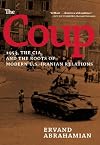
The Coup tells the tragic story of Mohammad Mossadeq, his attempt to nationalize the Iranian oil industry, and the collaboration of Western powers to oust him for it. Perhaps what was most painful about this story was realizing how close Mossadeq was to overcoming it, that the initial coup attempt had failed as he had been informed of it prior. Yet one fatal mistake led to his downfall and changed Iranian politics forever. Truly disgusting and unsurprising work by the foreign usurpers in the show more name of preserving the Western petroleum empire. Abrahamian does an incredible job recounting this story and the reasons and events leading up to it, of course being limited by the availability of evidence and documentation from the powers that implemented the coup. A vital read for anyone who seeks to understand US-Iranian relations and the history of Western intervention.
This book is yet another recount in the infinitely long lineage of ways that western governments, alleged champions of democracy and liberty for all, have imposed their will upon resource-rich nations to extract, deposing all those who may stand up for their people. Indeed, it is this way of life that has ailed the nations of the Global South and allows the North to enjoy its opulence on their behalf. My heart bleeds for the people of the world who will forever suffer under our forceful imperialist hand. We shall forever be washing ourselves of these national sins. show less
This book is yet another recount in the infinitely long lineage of ways that western governments, alleged champions of democracy and liberty for all, have imposed their will upon resource-rich nations to extract, deposing all those who may stand up for their people. Indeed, it is this way of life that has ailed the nations of the Global South and allows the North to enjoy its opulence on their behalf. My heart bleeds for the people of the world who will forever suffer under our forceful imperialist hand. We shall forever be washing ourselves of these national sins. show less
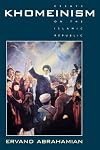
In “Khomeinism: Essays on the Islamic Republics,” Iranian historian Ervand Abrahamian offers a superb analysis of the ideology and complexities of Khomeini.
Abrahamian argues in this book that Khomeini’s ideology, rather than being Islamic fundamentalist, not unlike the Afghan mujahideen, as he is frequently depicted in the West, is akin to that of a Third World populist.
According to Abrahamian, populism “is a more apt term for describing Khomeini, his ideas, and his movement show more because this term is associated with ideological adaptability and intellectual flexibility, with political protests against the established order, and with socioeconomic issues that fuel mass opposition to the status quo.” In contrast to ‘populism’, the term ‘fundamentalism’ “implies religious inflexibility, intellectual purity, political traditionalism, even social conservatism, and the centrality of scriptural-doctrinal principles.”
Through an analysis of Khomeini’s shifting views on issues such as private property, the state, and society, Abrahamian demonstrates how “Khomeini broke sharply with Shii [sic – Shia] traditions, borrowed radical rhetoric from foreign sources, including Marxism, and presented a bold appeal to the public based not on theological themes but on real economic, social, and political grievances. In short, he transformed Shiism from a conservative quietist faith into a militant political ideology that challenged both the imperial powers and the country’s upper class. The final product has more in common with Third World populism — especially that of Latin America — than with conventional Shiism” or Islamic fundamentalism.
An excellent book for students of the Middle East and Islam! show less
Abrahamian argues in this book that Khomeini’s ideology, rather than being Islamic fundamentalist, not unlike the Afghan mujahideen, as he is frequently depicted in the West, is akin to that of a Third World populist.
According to Abrahamian, populism “is a more apt term for describing Khomeini, his ideas, and his movement show more because this term is associated with ideological adaptability and intellectual flexibility, with political protests against the established order, and with socioeconomic issues that fuel mass opposition to the status quo.” In contrast to ‘populism’, the term ‘fundamentalism’ “implies religious inflexibility, intellectual purity, political traditionalism, even social conservatism, and the centrality of scriptural-doctrinal principles.”
Through an analysis of Khomeini’s shifting views on issues such as private property, the state, and society, Abrahamian demonstrates how “Khomeini broke sharply with Shii [sic – Shia] traditions, borrowed radical rhetoric from foreign sources, including Marxism, and presented a bold appeal to the public based not on theological themes but on real economic, social, and political grievances. In short, he transformed Shiism from a conservative quietist faith into a militant political ideology that challenged both the imperial powers and the country’s upper class. The final product has more in common with Third World populism — especially that of Latin America — than with conventional Shiism” or Islamic fundamentalism.
An excellent book for students of the Middle East and Islam! show less
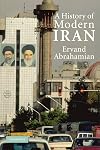
Iran has played such a major role, not only in the Middle East, but in the world's recent history that I thought I should learn a bit more about it. After researching several books on the subject, I picked this book. I'm glad I did. It's well written and delivers exactly what the title states. I would recommend this book to anyone who desires to know a bit more about Iran.
Lists
You May Also Like


Associated Authors
Statistics
- Works
- 14
- Also by
- 4
- Members
- 452
- Popularity
- #54,271
- Rating
- 4.1
- Reviews
- 3
- ISBNs
- 42
- Languages
- 3