
Hamid Dabashi
Author of Iran, a People Interrupted
About the Author
Hamid Dabashi is the Hagop Kevorkian Professor of Iranian Studies and Comparative Literature at Columbia University in New York. He is the author of many books including Brown Skin, White Masks (2011) and Can Non-Europeans Think? (2015).
Image credit: from Columbia University faculty page
Works by Hamid Dabashi
Theology of Discontent: The Ideological Foundation of the Islamic Revolution in Iran (1993) 35 copies
Associated Works
Tagged
Common Knowledge
- Canonical name
- Dabashi, Hamid
- Other names
- حمید دباشی
- Birthdate
- 1951-06-15
- Gender
- male
- Education
- University of Pennsylvania (PhD)
- Occupations
- Iranian Studies and Comparative Literature professor, Columbia University
- Organizations
- Columbia University
- Nationality
- Iran (birth)
- Birthplace
- Ahvaz, Iran
- Places of residence
- New York, New York, USA
- Map Location
- Iran
Members
Reviews

This was an almost aggressively terrible book, which I imagine in part must be due to the very short lead time between the events of the Green Revolution in Iran and the time of the book's publication. I picked up this book because I wanted to know more about Iranian history and the political tensions in the region—I'm shamefully ignorant. Yet I felt I learned little more about contemporary Iran than I'd already picked up from newspaper articles. Not only is there remarkably little in here show more about internal politics in Iran, Iran, The Green Movement and the USA reads like a partial first draft, poorly structured and only half thought through. The first few chapters are written like a newspaper op ed, but as the book progresses it becomes more a piece of academic theory, riddled with jargon which is italicised in random places for no good reason. If Dabashi did have anything worthwhile to say about the Revolution, I saw little of it here—due, in great part, to his impenetrable prose style. With sentences like
Dabashi gives Judith Butler a run for her money in terms of incomprehensibility. (No, he never explains how one can de-world, or re-world, a world.)
Dabashi's methodology is also shoddy. He spends much of the book talking about Iran's ongoing encounter with 'modernity' is causing so much upheaval (which irritated me greatly, because he never defines what he means by 'modernity', a term which I almost always find problematic when used in historical writing), and then turns around in the last chapter to lambast scholars who do use the term. He's either being a hypocrite or he's not aware of what he himself has written. I tend towards believing he's just being sloppy and imprecise in language usage, hence also his use of 'medieval' as shorthand for uncivilised and brutal. This medievalist found that quite inaccurate and, coupled with his use of 'modernity', revealing about Dabashi's conception of historical progress.
What caused me to finally lose faith in learning anything of worth from the book, however, was reaching the section towards the end in which he denounces feminists—they are, it seems, just as bad as religious fundamentalists who oppress women, who torture, rape, and murder people because... well, Dabashi's not quite clear about that, but apparently because they're angry. (Women who are righteously angry: what bitches, amirite? Moral equivalence!) Feeling very uneasy about some of the language Dabashi was using to pillory a "clearly non-Muslim" Western feminist historian for apparently Orientalising and condescending to Iranian Muslimahs, I went hunting through the endnotes and tracked down the offending interview online. Now, I neither speak nor read Persian, so I can't speak to the accuracy of his characterisation of this scholar's words, but this "clearly non-Muslim" woman is evidently, and quite obviously, an Iranian expatriate. That seems like more than simple sloppiness; that's outright misstating the facts in order to suit your case, and an undergrad historian should be aware that that's wrong.
I'd still be interested in reading more about the history of Iran, but I won't be using any more of Dabashi's writing to do so. Alternative recommendations are welcome. show less
"which means nothing more than re-worlding the world with the world we have known and lived and experienced, before it was de-worlded by the false binary of 'the West and the Rest'"
Dabashi gives Judith Butler a run for her money in terms of incomprehensibility. (No, he never explains how one can de-world, or re-world, a world.)
Dabashi's methodology is also shoddy. He spends much of the book talking about Iran's ongoing encounter with 'modernity' is causing so much upheaval (which irritated me greatly, because he never defines what he means by 'modernity', a term which I almost always find problematic when used in historical writing), and then turns around in the last chapter to lambast scholars who do use the term. He's either being a hypocrite or he's not aware of what he himself has written. I tend towards believing he's just being sloppy and imprecise in language usage, hence also his use of 'medieval' as shorthand for uncivilised and brutal. This medievalist found that quite inaccurate and, coupled with his use of 'modernity', revealing about Dabashi's conception of historical progress.
What caused me to finally lose faith in learning anything of worth from the book, however, was reaching the section towards the end in which he denounces feminists—they are, it seems, just as bad as religious fundamentalists who oppress women, who torture, rape, and murder people because... well, Dabashi's not quite clear about that, but apparently because they're angry. (Women who are righteously angry: what bitches, amirite? Moral equivalence!) Feeling very uneasy about some of the language Dabashi was using to pillory a "clearly non-Muslim" Western feminist historian for apparently Orientalising and condescending to Iranian Muslimahs, I went hunting through the endnotes and tracked down the offending interview online. Now, I neither speak nor read Persian, so I can't speak to the accuracy of his characterisation of this scholar's words, but this "clearly non-Muslim" woman is evidently, and quite obviously, an Iranian expatriate. That seems like more than simple sloppiness; that's outright misstating the facts in order to suit your case, and an undergrad historian should be aware that that's wrong.
I'd still be interested in reading more about the history of Iran, but I won't be using any more of Dabashi's writing to do so. Alternative recommendations are welcome. show less
 This review was written for LibraryThing Early Reviewers.
The first monograph to thoroughly document Shirin Neshat's video production, The Last Word provides both a beautiful reminder of her work's color and intensity and a crucial tool for her increasing number of fans and scholars. Neshat, who studied in the United States and has lived in New York for many years, found international success following the explosive release of her images of Muslim women wrapped in chadors with verses by rebel Persian poetesses traced on their faces, hands and feet. show more She became renowned when her short film Turbulent was awarded the Leone d'Oro at the 1999 Venice Biennale. With her camera persistently focused on the veiled women of the Muslim world, Neshat has continued to make striking and courageous work of rare beauty and intensity, and has presented it to continuing acclaim. She goes fearlessly into the widening gulf between conformism and revolt, submission and compliance, that characterizes the women of the Muslim world, seeking out images from the far sides of the divide that will both narrow the distance and help viewers sound its depths. The Last Word is a necessity for those who would approach, informed, the poetic works and the fierce commitment of an extraordinary artist. show less

great historical overview and analysis of the zhina uprising. loved the fact that he so willingly spoke about the power of women. when it comes to revolution, we don’t have enough folks willing to recognize that women are leading the charge.
don’t know that i agree with his prognosis and recommended solution, but i’m on board with like 90% of this so that’s good enough for me. will be recommending to friends.
don’t know that i agree with his prognosis and recommended solution, but i’m on board with like 90% of this so that’s good enough for me. will be recommending to friends.
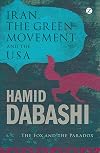
Iran, the Green Movement and the USA is Hamid Dabashi's exploration of the significance of the recent Green Movement in Iran, and the factors that have led to this popular uprising. It makes for an interesting and timely, if flawed, read.
Some of these flaws stem from the fact that it's not always clear who Dabashi expects his audience to be. As such the tone (and prose) are somewhat uneven: a nadir being the utterly awful phrase "a theocentric soteriology that feeds on its own messianic show more fanaticism" (p86) - a phrase which is not only obfuscatory and ugly, but also (in my opinion) wrong. However, Dabashi is at his best when he is passionately arguing for his country, for Obama to actively "bear witness" to the nascent civil rights movement (as he compellingly frames the Green Movement) and for the bizarre insistence of US commentators to announce the significance of the actions of Iranians, instead of allowing them their own voice. These passionate and personal passages sit at odds with the more academically-phrased portions of the book, which failed for me simply because they seemed to lack intellectual rigour and accessibility, making them a kind of unenvaging polemic.
Many of the issues of this monograph could have been managed with better editing - straight copies of text between introduction and chapter (pp 13 & 147) feel amateurish, and the book would undoubtedly have benefitted from greater consistency in language. However, this may partly be that this is a book that is reacting to and commenting on very recent events, and there was thus a desire to publish quickly. Indeed, it is in some respects already out-of-date - Dabashi's prediction that the civil rights protests that began in Iran would spread throughout the Middle East has been proven entirely correct.
While this is, in my eyes, a flawed book, it is nonetheless an important look at the events developing in Iran and I would recommend it to anyone with an interest in that region. One final note should go to the inspired illustrations, courtesy of Termeh, a Tehran-based poet and visual artist. Her work does much to enhance the strongest parts of the text, that call us to solidarity with the young people who are striving for freedom in a country they love deeply. show less
Some of these flaws stem from the fact that it's not always clear who Dabashi expects his audience to be. As such the tone (and prose) are somewhat uneven: a nadir being the utterly awful phrase "a theocentric soteriology that feeds on its own messianic show more fanaticism" (p86) - a phrase which is not only obfuscatory and ugly, but also (in my opinion) wrong. However, Dabashi is at his best when he is passionately arguing for his country, for Obama to actively "bear witness" to the nascent civil rights movement (as he compellingly frames the Green Movement) and for the bizarre insistence of US commentators to announce the significance of the actions of Iranians, instead of allowing them their own voice. These passionate and personal passages sit at odds with the more academically-phrased portions of the book, which failed for me simply because they seemed to lack intellectual rigour and accessibility, making them a kind of unenvaging polemic.
Many of the issues of this monograph could have been managed with better editing - straight copies of text between introduction and chapter (pp 13 & 147) feel amateurish, and the book would undoubtedly have benefitted from greater consistency in language. However, this may partly be that this is a book that is reacting to and commenting on very recent events, and there was thus a desire to publish quickly. Indeed, it is in some respects already out-of-date - Dabashi's prediction that the civil rights protests that began in Iran would spread throughout the Middle East has been proven entirely correct.
While this is, in my eyes, a flawed book, it is nonetheless an important look at the events developing in Iran and I would recommend it to anyone with an interest in that region. One final note should go to the inspired illustrations, courtesy of Termeh, a Tehran-based poet and visual artist. Her work does much to enhance the strongest parts of the text, that call us to solidarity with the young people who are striving for freedom in a country they love deeply. show less
This review was written for LibraryThing Early Reviewers.Lists
Awards


You May Also Like


Associated Authors
Statistics
- Works
- 40
- Also by
- 1
- Members
- 726
- Popularity
- #34,982
- Rating
- 3.6
- Reviews
- 12
- ISBNs
- 140
- Languages
- 2
