
Michael Benanav
Author of Men of Salt: Crossing the Sahara on the Caravan of White Gold
Works by Michael Benanav
Himalaya Bound: One Family's Quest to Save Their Animals--And an Ancient Way of Life (2018) 24 copies, 2 reviews
The Luck of The Jews: An Incredible Story of Loss, Love, and Survival in the Holocaust (2014) 1 copy, 1 review
Tagged
Common Knowledge
- Gender
- male
Members
Reviews
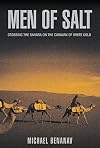
Michael Benanav is a Jewish, American journalist. Perhaps he does not have a death wish, but he does walk on the wild side. Reading that the camel caravans to the salt mines near Timbuktu are in danger of becoming extinct due to the truck transport of salt, Benanav decides to experience a camel journey before they become extinct. As much a mental journey as a grueling physical one, Benanav realizes that this harsh lifestyle has a richer, more complex history than the largely ignorant press show more has portrayed. Before he was allowed to participate in a long journey through one of the harshest deserts in the world, Benanav had to sign a waiver that if he were responsible for slowing down the caravan (and, thus, risking the lives of the camels and people), the caravan had the right to leave him to rot and die alone in the desert! Benanav does not leave us with easy answers concerning the fate of the caravans or the very real people he comes to respect. In many ways, Men of Salt leaves readers with more questions than answers. The questions, however, are so good that readers will seek more information and forever hold in hearts a much fuller, more human picture of both the people and the camels in this part of our world. Filled with pictures, this book is highly recommended for both middle school and high school libraries despite the fact that is an adult book. One of my favorites this or any year! show less
Himalaya Bound: One Family's Quest to Save Their Animals―And an Ancient Way of Life by Michael Benanav
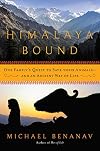
The Van Gurjars ("forest Gurjars") are a nomadic Muslim people found in the Shivalik Hills area of Uttarakhand, India, at the base of the Himalayas. Each summer they migrate with herds of semi-wild water buffalo to alpine pastures high up the mountains. Their sole source of income is selling milk to local communities. They are vegetarian, and treat their animals with an unreasonable amount of love. They have been doing this for over a thousand years. In the 1990s, new national parks were show more created for tourism, and this conflicted with the Van Gurjars way of life - people came to see the wild lands, not grazing cows. In 2006 India enacted a "Forest Act" that would protect native peoples, but local park officials took a fiefdom approach and put pressure on the Van Gurjars to stop their nomadic trek. Thus conflicts in the forms of bribes, threats, protests, etc.. have been ongoing.
Michael Benanav is an American journalist and nomad at heart who attached himself to a family of Van Gurjars and followed them on a migration season. It's a remarkable way of life with no technology and everything done by hand, he says the 15 year girls have the strength of Olympians. Nevertheless when they settle in towns they become depressed and wish to return to a nomadic existence. The contrast with modernity is stark, as they migrate up mountain roads trucks fly by horns honking. This is interesting look at a not well known nomadic people who seem to be on the cusp of disappearing, Benanav has done them a great service and an entertaining read. show less
Michael Benanav is an American journalist and nomad at heart who attached himself to a family of Van Gurjars and followed them on a migration season. It's a remarkable way of life with no technology and everything done by hand, he says the 15 year girls have the strength of Olympians. Nevertheless when they settle in towns they become depressed and wish to return to a nomadic existence. The contrast with modernity is stark, as they migrate up mountain roads trucks fly by horns honking. This is interesting look at a not well known nomadic people who seem to be on the cusp of disappearing, Benanav has done them a great service and an entertaining read. show less
Himalaya Bound: One Family's Quest to Save Their Animals--And an Ancient Way of Life by Michael Benanav
The Van Gujjars, are a nomadic people, a people who travel with their water buffalo from the Shiivak Region to the Himalayan plateaus. They travel from place to place, depending on climate, and always with focus on the animals and their needs, fresh grazing land. A way of life threatened now by new policies, ethical and environmental policies, and claimed National Parks. In ironic fashion, the very agency that should be the protectors, the National Parks are instead the harassers wanting show more them off of Park lands.
We learn the way they live their lives, culture, socio economical underpinnings, the importance of their families and there relationship with their animals, Their religion, the are from a tolerant Muslim culture which has drawn the unwelcome attention of the Islamic Foundation. The author was accepted, surprisingly by these people, traveled with them and worked alongside. Shared their happy moments, and from the enclosed photographs their was a whole lot of smiling going on,and their stresses, how they feel about being the last of their culture making this yearly pilgrimage.
Such a unique people,hard, hard workers,but so much joy, caring for each other, the family as a unit, was beautiful to read. Was a wonderfully informative read about a unique way of life threatened by progress, or what is seen as progress. The pictures, bg smiles, allows the reader to put faces to those mentioned in the book. show less
We learn the way they live their lives, culture, socio economical underpinnings, the importance of their families and there relationship with their animals, Their religion, the are from a tolerant Muslim culture which has drawn the unwelcome attention of the Islamic Foundation. The author was accepted, surprisingly by these people, traveled with them and worked alongside. Shared their happy moments, and from the enclosed photographs their was a whole lot of smiling going on,and their stresses, how they feel about being the last of their culture making this yearly pilgrimage.
Such a unique people,hard, hard workers,but so much joy, caring for each other, the family as a unit, was beautiful to read. Was a wonderfully informative read about a unique way of life threatened by progress, or what is seen as progress. The pictures, bg smiles, allows the reader to put faces to those mentioned in the book. show less
The Luck of The Jews: An Incredible Story of Loss, Love, and Survival in the Holocaust by Michael Benanav
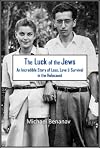
This is the story of how the paternal grandparents of the author survived the Holocaust and eventually made their way to Israel and then the United States. In addition to telling their stories, Michael Benanav tells how he tries to confirm parts of their stories by following in their footsteps to Romania, Russia, and Hungary. The stories of their survival and subsequent journeys to Israel and the U.S. are interesting, even fascinating in places. The trouble I had was that Michael didn't talk show more about being able to prove their stories in any kind of historical way. Maybe that's understandable for his grandmother because she was Romanian and her story generally didn't cross the Germans army. Her displacement, weeks-long march, and subsequent imprisonment was at the hands of the ruling despot of Romania, himself rabidly anti-Semitic. Perhaps there were few records of that period listing the names of those Jews who were removed from their homes, marched hundreds of miles into what is now Russia, and then left to fend for themselves if they could. Certainly Michael never relates that his grandmother was counted, tattooed, or added to the rolls by the Germans. His grandfather, however, was in the German army, albeit in a Jewish men's division. The Germans kept meticulous records of every person, and every train, where they went, what they were fed, what they did, etc. Why no discussion of those records of his grandfather? Without that kind of proof we are left with just the memories of two elderly people. Human memory is fluid and unreliable. At one point late in the book, Michael relates an argument between his grandparents about whether an incident late in their years in Israel happened before or after the birth of their first child. That was many, many years after the Holocaust, but they still couldn't remember for sure. So what of their memories of earlier incidences? Nonetheless, this is an interesting and sometimes riveting book. show less
Lists
Awards


You May Also Like


Statistics
- Works
- 6
- Members
- 172
- Popularity
- #124,307
- Rating
- 3.9
- Reviews
- 10
- ISBNs
- 12
- Languages
- 1
- Favorited
- 1