
Philip Gooden
Author of The Tainted Relic
About the Author
Disambiguation Notice:
Uses the pseudonym Philippa Morgan
Series
Works by Philip Gooden
The Mammoth Book of Literary Anecdotes: Over Five Centuries of Recollections, Essays and Quotes (Mammoth Books) (2002) 58 copies
Name Dropping: Darwinian Struggles, Oedipal Feelings, and Kafkaesque Ordeals---An A to Z Guide to the Use of Names in Everyday Language (2008) 24 copies
A Christmas Carol (The Charles Dickens Children's Collection) (2009) — Adapter — 23 copies, 3 reviews
Associated Works
Tagged
Common Knowledge
- Canonical name
- Gooden, Philip
- Other names
- Morgan, Philippa (pseudonym)
- Birthdate
- 20th century
- Gender
- male
- Education
- University of Oxford (Magdalen College) (English)
- Occupations
- teacher
- Organizations
- Crime Writers’ Association
- Awards and honors
- HRH Duke of Edinburgh English Speaking Union’s English Language Award for 2006
- Short biography
- Philip Gooden read English at Oxford and taught for many years. His other publications include Who’s Whose: A No-Nonsense Guide to Easily Confused Words and Faux Pas: A No-Nonsense Guide to Words and Phrases From Other Languages. Gooden is also the author of the Nick Revill series, historical mysteries set around Shakespeare’s Globe Theatre. He is the winner of the HRH Duke of Edinburgh English Speaking Union’s English Language Award for 2006 and lives in London.
- Nationality
- UK
- Places of residence
- London, England, UK
Bath, Somerset, England, UK - Disambiguation notice
- Uses the pseudonym Philippa Morgan
- Associated Place (for map)
- England, UK
Members
Reviews
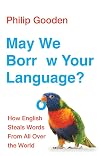
One billion other people around the world speak my language; except it isn’t really my language as English is famous for purloining and absorbing other peoples words and making them its own. This melding of languages has been happening for thousands of years. People have arrived in our island, stayed for a while, and left only smudges in the soil and a handful of words in the vocabulary. Careful searching in our language can uncover Celtic and Roman and Saxon words deep in our language. show more More than that, we have shamelessly stolen words and phrases as we have travelled the seas and oceans for places as far away as Hawaii and Australia, and claimed them as our own.
In this lovely book Gooden brings us a mere dusting of some of those words that are familiar and unusual, ancient and strange, but all looted from other languages. Each carefully selected word has details on its origin as well as a date when we misappropriated it into English, along with anecdotes and the story behind the word. There are nuggets of information in here on all his chosen words and each is written with wit and aplomb as he reveals the history and details on words as diverse as cwen, lust, delphinan and bathos. It is more than that though as these words mark the expansion of our language as we absorbed words into it, sometime taking the meanings, sometimes not. The ages of some of the words is fascinating too, I would have put juggernaut as a modern word; turns out it isn’t. It is a worthy addition for anyone with an etymological collection of books, and if you like Mark Forsyth this is right up your street. show less
In this lovely book Gooden brings us a mere dusting of some of those words that are familiar and unusual, ancient and strange, but all looted from other languages. Each carefully selected word has details on its origin as well as a date when we misappropriated it into English, along with anecdotes and the story behind the word. There are nuggets of information in here on all his chosen words and each is written with wit and aplomb as he reveals the history and details on words as diverse as cwen, lust, delphinan and bathos. It is more than that though as these words mark the expansion of our language as we absorbed words into it, sometime taking the meanings, sometimes not. The ages of some of the words is fascinating too, I would have put juggernaut as a modern word; turns out it isn’t. It is a worthy addition for anyone with an etymological collection of books, and if you like Mark Forsyth this is right up your street. show less
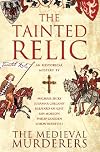
This was definitely an interesting read, and a fairly clever way to introduce new readers to the series characters of 6 historical mystery writers. For the most part, I enjoyed this, though the reasoning for a supposed holy relic from Jerusalem continuing to float around England for 500 years is tenuous, at best.
The plot is exactly as it says on the tin. The "tainted relic" is supposed to be a splinter from the True Cross, stained with Holy Blood. A curse was put on it when the family of its show more keeper was slain during the First Crusade. Barzak proclaimed that anyone who handled the sacred piece of wood would die once it left that person's possession. This novel follows the relic as it travels from the Holy Lan,d to France, and then on to England, from 1100 AD to the 1600s.
Each author contributes a self-contained "Act" to the story. The Prologue is by Simon Beaufort and features the knight, Geoffrey Mappstone, who is present in the Holy Land and writes the certificate of authenticity for the relic. The unusual deaths start right away, and this was a very good setup for the story to come.
Act 1, set in 1194 in Devonshire, features Sir John de Wolfe, who served as a coroner in medieval England (Bernard Knight). While nicely written and a good overview of his series and characters, I didn't enjoy this introduction to de Wolfe. The idea of adventures of one of the first coroners to hold the office was enticing, but de Wolfe is selfish and mean, IMO. I'm not sure I'd seek out this series.
Act 2, set in 1269 in Oxford, features the Falconer, penned by Ian Morson. The relic has come into the hands of monks who are dying pretty gruesome deaths, which the academic William Falconer sets out to solve. I enjoyed this section a lot, and quickly warmed to the characters here.
Act 3, set in 1323 in Lincolnshire, features former Knight Templar Sir Baldwin and is written by Michael Jeck. Perhaps surprisingly, this was perhaps my favorite act of the book - the plot moves at a fairly quick pace, and features a series of strange deaths, the aftereffects of which ripple through the town. It has a rather wry twist ending, too. I've tried and failed with the first book in Jeck's series featuring this character, but perhaps it is worth revisiting.
Act 4, set in 1353 Cambridge, features Susanna Gregory's series characters Matthew Bartholomew and Brother Michael of Michaelhouse, as the relic passes from a character in the previous act through the hands of several here, leading to a trail of improbable deaths. I found this act to be way too long, the plot too convoluted, and I actively disliked Bartholomew for most of it. Given my history with this character and this author, perhaps this is no surprise, but it was disappointing nonetheless. Gregory piles twist upon twist at the end, basically to prove that she can.
Act 5, set in 1600s London, is narrated by Nick Revill, one of the actors at Shakespeare's Globe Theater during the Elizabethan age. This is the only first person narration in the book, and I take it that this is a feature in Phillip Gooden's series. Revill is sent by Shakespeare into the depths of St Bartholomew's Fair to retrieve an early edition of a drawer play, but Nick and his friends stumble into more than they bargain for when the bookseller produces the ancient relic and its curse instead. The trio find him dead less than a hour later and are accused of committing the crime. This one has the most unusual solution of all, I'd wager.
There is a postscript epilogue at the end, also by Bernard Knight, in which the relic is unearthed from the mud of the Thames in 2005 by a construction worker who is working on the Millennium Dome. It is quite the fitting ending to this story, honestly, as the curse of the relic lives on.
I see that this group of writers has pooled together for 9 more books in a similar vein, and I'd definitely read more of these. I'm likely to seek out some of these series on their own as well, so overall, I'd say it's a win-win for me! show less
The plot is exactly as it says on the tin. The "tainted relic" is supposed to be a splinter from the True Cross, stained with Holy Blood. A curse was put on it when the family of its show more keeper was slain during the First Crusade. Barzak proclaimed that anyone who handled the sacred piece of wood would die once it left that person's possession. This novel follows the relic as it travels from the Holy Lan,d to France, and then on to England, from 1100 AD to the 1600s.
Each author contributes a self-contained "Act" to the story. The Prologue is by Simon Beaufort and features the knight, Geoffrey Mappstone, who is present in the Holy Land and writes the certificate of authenticity for the relic. The unusual deaths start right away, and this was a very good setup for the story to come.
Act 1, set in 1194 in Devonshire, features Sir John de Wolfe, who served as a coroner in medieval England (Bernard Knight). While nicely written and a good overview of his series and characters, I didn't enjoy this introduction to de Wolfe. The idea of adventures of one of the first coroners to hold the office was enticing, but de Wolfe is selfish and mean, IMO. I'm not sure I'd seek out this series.
Act 2, set in 1269 in Oxford, features the Falconer, penned by Ian Morson. The relic has come into the hands of monks who are dying pretty gruesome deaths, which the academic William Falconer sets out to solve. I enjoyed this section a lot, and quickly warmed to the characters here.
Act 3, set in 1323 in Lincolnshire, features former Knight Templar Sir Baldwin and is written by Michael Jeck. Perhaps surprisingly, this was perhaps my favorite act of the book - the plot moves at a fairly quick pace, and features a series of strange deaths, the aftereffects of which ripple through the town. It has a rather wry twist ending, too. I've tried and failed with the first book in Jeck's series featuring this character, but perhaps it is worth revisiting.
Act 4, set in 1353 Cambridge, features Susanna Gregory's series characters Matthew Bartholomew and Brother Michael of Michaelhouse, as the relic passes from a character in the previous act through the hands of several here, leading to a trail of improbable deaths. I found this act to be way too long, the plot too convoluted, and I actively disliked Bartholomew for most of it. Given my history with this character and this author, perhaps this is no surprise, but it was disappointing nonetheless. Gregory piles twist upon twist at the end, basically to prove that she can.
Act 5, set in 1600s London, is narrated by Nick Revill, one of the actors at Shakespeare's Globe Theater during the Elizabethan age. This is the only first person narration in the book, and I take it that this is a feature in Phillip Gooden's series. Revill is sent by Shakespeare into the depths of St Bartholomew's Fair to retrieve an early edition of a drawer play, but Nick and his friends stumble into more than they bargain for when the bookseller produces the ancient relic and its curse instead. The trio find him dead less than a hour later and are accused of committing the crime. This one has the most unusual solution of all, I'd wager.
There is a postscript epilogue at the end, also by Bernard Knight, in which the relic is unearthed from the mud of the Thames in 2005 by a construction worker who is working on the Millennium Dome. It is quite the fitting ending to this story, honestly, as the curse of the relic lives on.
I see that this group of writers has pooled together for 9 more books in a similar vein, and I'd definitely read more of these. I'm likely to seek out some of these series on their own as well, so overall, I'd say it's a win-win for me! show less
‘’If I had my way,’ said Scrooge, ‘every idiot who goes about with ‘’Merry Christmas’’ on his lips, would be boiled with his own pudding, and buried with a stake of holly through his heart.’’
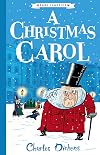
No Christmas holidays is ever complete without a new copy of A Christmas Carol. This is a beautiful abridged edition of Charles Dickens’ festive masterpiece for our little ones. Illustrated with black-and-white drawings, A Christmas Carol is once again there to remind us of door show more knockers coming alive, the horrible sound of chains forged by the sins of the wealthy, the sad school of the troubled youth, the jokes on the expense of our protagonist, the frightening moment of dying alone, unloved and robbed, and the warmth that touches our hearts each time we visit the Cratchits’ happy home.
‘’God bless us, every one!’’
Many thanks to Sweet Cherry Publishing and NetGalley for the ARC in exchange for an honest review.
My reviews can also be found on https://theopinionatedreaderblog.wordpress.com/ show less
No Christmas holidays is ever complete without a new copy of A Christmas Carol. This is a beautiful abridged edition of Charles Dickens’ festive masterpiece for our little ones. Illustrated with black-and-white drawings, A Christmas Carol is once again there to remind us of door show more knockers coming alive, the horrible sound of chains forged by the sins of the wealthy, the sad school of the troubled youth, the jokes on the expense of our protagonist, the frightening moment of dying alone, unloved and robbed, and the warmth that touches our hearts each time we visit the Cratchits’ happy home.
‘’God bless us, every one!’’
Many thanks to Sweet Cherry Publishing and NetGalley for the ARC in exchange for an honest review.
My reviews can also be found on https://theopinionatedreaderblog.wordpress.com/ show less

It's been a few years since I bought this book that has been sitting on the shelf ever since. What a mistake! It turned out to be a very entertaining mystery, filled with twists and turns, but also fun. It was peopled with an interesting collection of characters who portrayed the times very nicely. There were many references to Shakespeare's words and works, some I probably missed, some I had to look up, but I think I recognized most of them. The good news is that I have another one in the show more series also waiting to be read. show less
Awards


You May Also Like


Associated Authors
Statistics
- Works
- 49
- Also by
- 14
- Members
- 1,502
- Popularity
- #17,107
- Rating
- 3.4
- Reviews
- 27
- ISBNs
- 173
- Languages
- 5