
Brian Pinkney
Author of Max Found Two Sticks
About the Author
Brian Pinkney, author and illustrator, was born August 28, 1961. He has received the Coretta Scott King Award for his illustrations, three Coretta Scott King Honor Awards, and in 1997, he won the Boston Globe-Horn Book Award for his book, The Adventures of Sparrowboy. He has also won two Caldecott show more Honor awards for his illustrations with the books: The Faithful Friend, by Robert D. San Souci, and Duke Ellington: The Piano Prince and His Orchestra, by Andrea Davis Pinkney. Pinkney primarily uses the scratchboard illustrative technique with most of his books. Pinkney lives with his wife, Andrea, and their children in Brooklyn, New York. show less
Works by Brian Pinkney
Associated Works
Let's Clap, Jump, Sing & Shout; Dance, Spin & Turn It Out!: Games, Songs, and Stories from an African American Childhood (2017) — Illustrator — 82 copies, 2 reviews
Tagged
Common Knowledge
- Legal name
- Pinkney, Jerry Brian
- Other names
- Pinkney, J. Brian
- Birthdate
- 1961-08-28
- Gender
- male
- Education
- University of the Arts, Philadelphia (BFA)
School of Visual Arts (MFA|Illustration) - Occupations
- illustrator
- Agent
- Rebecca Sherman (Writers House)
- Relationships
- Pinkney, Andrea Davis (spouse)
Pinkney, Gloria Jean (mother)
Pinkney, Jerry (father)
Pinkney, Myles C. (brother) - Nationality
- USA
- Birthplace
- Boston, Massachusetts, USA
- Places of residence
- Brooklyn, New York, USA
- Associated Place (for map)
- USA
Members
Reviews
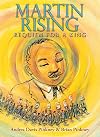
The multiaward-winning Pinkneys’ requiem lovingly explains in a set of “docu-poems” the events surrounding Dr. Martin Luther King Jr.’s assassination, particularly the Memphis sanitation workers’ strikes that brought him to the city where he eventually died.
The author humanizes King through the love he has for his family and movement comrades (including an April 4, 1968, pillow fight with his brother, Andrew Young, and Ralph Abernathy) as well as the viral bug he suffers with as he show more gives his last, prescient, and momentous “I’ve Been to the Mountaintop” speech. The illustrator, blending influences of Marc Chagall and Norman Lewis, gives the story a loosely drawn, vibrantly warm, watercolor haze, which, with halos of yellows and oranges and even wings, give King and his family an almost beatific, if not saintly, glow, even in their sorrows. The character of Henny Penny, who is a blend of the fabled chicken and a wise black grandmother, provides the Greek-chorus narration in a device that is understandable if sometimes-distracting. Catholicism creates hagiographies to explain their martyrs’ and other saints’ deaths, whether history concurs with their feats for the faith or, in some cases, their very existences. Even as U.S. black communities wrestle with Dr. King’s personal foibles, media-glossed images, and complex messages, here readers have a children’s book in which adults may also find succor, if not inspiration, considering the current reverting-to–pre–Civil Rights administration.
Spiritually vital. (author’s and illustrator’s notes, history, timeline, bibliography) (Poetry. 8-adult)
-Kirkus Review show less
The author humanizes King through the love he has for his family and movement comrades (including an April 4, 1968, pillow fight with his brother, Andrew Young, and Ralph Abernathy) as well as the viral bug he suffers with as he show more gives his last, prescient, and momentous “I’ve Been to the Mountaintop” speech. The illustrator, blending influences of Marc Chagall and Norman Lewis, gives the story a loosely drawn, vibrantly warm, watercolor haze, which, with halos of yellows and oranges and even wings, give King and his family an almost beatific, if not saintly, glow, even in their sorrows. The character of Henny Penny, who is a blend of the fabled chicken and a wise black grandmother, provides the Greek-chorus narration in a device that is understandable if sometimes-distracting. Catholicism creates hagiographies to explain their martyrs’ and other saints’ deaths, whether history concurs with their feats for the faith or, in some cases, their very existences. Even as U.S. black communities wrestle with Dr. King’s personal foibles, media-glossed images, and complex messages, here readers have a children’s book in which adults may also find succor, if not inspiration, considering the current reverting-to–pre–Civil Rights administration.
Spiritually vital. (author’s and illustrator’s notes, history, timeline, bibliography) (Poetry. 8-adult)
-Kirkus Review show less
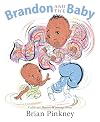
Love, love, love this new picture book by Caldecott Honor-Winning artist Brian Pinkney! In Brandon and The Baby, Brandon uses his special blanket to help him adapt to a brand new family dynamic - the arrival of his new baby brother! Brandon loves his blanket but he isn't so sure about his baby brother. Brandon filled with imagination, imagines his blanket becoming a toucan, a seal, and more, helping him become comfortable with the new family dynamic. The watercolor/ink drawings are dynamic show more and expressive, which fits the imaginative text perfectly. Simply a gem. show less
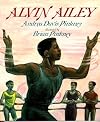
When I finished reading this book to him, my five-and-a-half-year-old said, "Mom, if I could live a life like his, I would be so happy!" He then proceeded to demonstrate a dance he'd made up about the book. "Here's where I swing my hips!" he said. "Now get ready...I'm about to sing!" and he danced while belting out his rendition of "Rocka My Soul in the Bosom of Abraham," which appears in the book.
This book earned five stars just for the living room performance it inspired, but it was darned show more good even without it. Not only is the story inspiring and the illustrations wonderful, this is one of the few books I've found about a boy who dances that doesn't use (or imply) the word "sissy." It's just about a boy---and then a man---who loves to dance so much that he finds a way to share this love with the world. Just the kind of message I want for my ballet- and jazz-loving son. show less
This book earned five stars just for the living room performance it inspired, but it was darned show more good even without it. Not only is the story inspiring and the illustrations wonderful, this is one of the few books I've found about a boy who dances that doesn't use (or imply) the word "sissy." It's just about a boy---and then a man---who loves to dance so much that he finds a way to share this love with the world. Just the kind of message I want for my ballet- and jazz-loving son. show less

Thumbelina, illustrated by Brian Pinkney.
Hans Christian Andersen's classic tale of a tiny girl - no bigger than a thumb - is considerably abridged in this adaptation by Brian Pinkney - winner of the Coretta Scott King Medal for In the Time of the Drums, and two-time recipient of a Caldecott Honor. In this retelling, the characters are of African, rather than European extraction, although no culturally specific details are given to anchor the story to a particular place. Like the original, show more this is a tale set in "fairy-land," and the storyteller (and reader) is free to imagine them as she wishes.
Unfortunately, although Pinkney's artwork is lovely, the narrative has been so watered down that the result is a bland, uninteresting copy of the original. In this version, the conversation in which Mole and Mouse discuss the chirping of the birds, their foolish devotion to song, has been omitted, condensed to Mole's single comment: "What a misfortune to be born a bird!" Whereas Mouse threatens to bite Thumbelina with her "sharp teeth" in the original, when informed of the tiny girl's reluctance to marry Mole, her response in Pinkney's adaptation is a mild "Come, come, you are lucky to have him."
The cumulative effect of these and other changes, is a story in which all the bite, all the danger, and all the grotesquery that gave the original such power, has been suppressed. Even Pinkney's lovely artwork, with its beautifully vivid palette, cannot save such a text! show less
Hans Christian Andersen's classic tale of a tiny girl - no bigger than a thumb - is considerably abridged in this adaptation by Brian Pinkney - winner of the Coretta Scott King Medal for In the Time of the Drums, and two-time recipient of a Caldecott Honor. In this retelling, the characters are of African, rather than European extraction, although no culturally specific details are given to anchor the story to a particular place. Like the original, show more this is a tale set in "fairy-land," and the storyteller (and reader) is free to imagine them as she wishes.
Unfortunately, although Pinkney's artwork is lovely, the narrative has been so watered down that the result is a bland, uninteresting copy of the original. In this version, the conversation in which Mole and Mouse discuss the chirping of the birds, their foolish devotion to song, has been omitted, condensed to Mole's single comment: "What a misfortune to be born a bird!" Whereas Mouse threatens to bite Thumbelina with her "sharp teeth" in the original, when informed of the tiny girl's reluctance to marry Mole, her response in Pinkney's adaptation is a mild "Come, come, you are lucky to have him."
The cumulative effect of these and other changes, is a story in which all the bite, all the danger, and all the grotesquery that gave the original such power, has been suppressed. Even Pinkney's lovely artwork, with its beautifully vivid palette, cannot save such a text! show less
Lists
Awards


You May Also Like


Associated Authors
Statistics
- Works
- 19
- Also by
- 31
- Members
- 2,748
- Popularity
- #9,332
- Rating
- 4.1
- Reviews
- 82
- ISBNs
- 78
- Languages
- 3
- Favorited
- 2