

Douglas Botting (1934–2018)
Author of The Pirates
About the Author
Douglas Botting is a writer, journalist, and biographer whose interests include travel, exploration, wild places, and conservation matters. His previous works include Gerald Durrell: The Authorized Biography, The Saga of Ring of Bright Water: The Enigma of Gavin Maxwell, as well as several travel show more guides. He lives near London. (Bowker Author Biography) show less
Image credit: douglasbotting.co.uk
Works by Douglas Botting
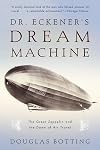
Dr. Eckener's Dream Machine: The Great Zeppelin and the Dawn of Air Travel (2001) 138 copies, 2 reviews
Nazi Gold: The Sensational Story of the World's Greatest Robbery - and the Greatest Criminal Cover-Up (1984) 88 copies, 2 reviews
Associated Works
Hitler's Bastard: Through Hell And Back In Nazi Germany And Stalin's Russia (2003) — Editor — 5 copies, 1 review
Tagged
Common Knowledge
- Legal name
- Botting, Douglas Scott
- Other names
- BOTTING, Douglas Scott
BOTTING, Douglas - Birthdate
- 1934-02-22
- Date of death
- 2018-02-06
- Gender
- male
- Education
- Epsom County Grammar School for Boys
University of Oxford (St Edmund Hall) - Occupations
- documentary filmmaker
investigative journalist
writer - Cause of death
- Alzheimer's disease
heart failure - Nationality
- UK
- Birthplace
- Kingston Upon Thames, Surrey, England
- Places of residence
- Worcester Park, London, England, UK (birth)
- Associated Place (for map)
- UK
Members
Reviews
An ardent, readable history, by British travel writer and biographer Botting (Gerald Durrell, 1999, etc.), traces the rise and fall (or self-immolation) of Zeppelin travel.
For nearly 40 years, the Zeppelin vied with the airplane for a niche in the air travel market. The brainchild of the eccentric German Count Ferdinand von Zeppelin, the lighter-than-air vehicles were originally intended as military machines—a use shot down by British airplanes in WWI. After Zeppelin’s death in 1917, show more management of the project fell to his top assistant, Dr. Hugo Eckener, an experienced and prudent pilot of both the vehicles and the enterprise. The war had proven airplanes faster and more powerful than Zeppelins, but they remained uncomfortable and unable to fly long distances. By contrast, Zeppelins could fly thousands of miles without stopping for fuel, and did so with unmatchable ease and grace. Both advantages made them natural vehicles for transcontinental passenger flights, and it was Eckener’s dream to establish such a service. After struggling to raise funds and develop a clientele, he sought to prove the Zeppelin’s capabilities through a first-class, around-the-world voyage in the largest, most-powerful airship ever built—the Graf Zeppelin. This voyage, the apex of Zeppelin flight, is the focus of Botting’s narrative, which describes the ship as “almost as long as the Titanic, twice as beautiful, and three times as fast”—suggesting that the flight of the Graf Zeppelin is as much Botting’s dream voyage as it was Eckener’s. Reconstructing the flight from passenger accounts, he marvels at what it must have been like to glide along so close to the earth’s surface. The 1928 trip established the Zeppelin as the supreme transcontinental air carrier, a position first challenged by worldwide depression and the rise of the Nazis in Germany, then literally exploded in flames with the Hindenburg disaster in 1937.
It wasn't the airplane that first romanced the public's imagination at the dawn of the twentieth century, but the great airships known as dirigibles, or zeppelins. Championing this great leap into the technological future was a visionary German entrepreneur, Dr. Hugo Eckener.
For Eckener, the development of the airship, especially coming in the aftermath of the First World War, represented an opportunity to shrink the world through safe and speedy international travel. Douglas Botting's engrossing story vividly recaptures the spirit of the times, when new technologies in communication, transportation, manufacturing, and other areas were revolutionizing society. The airship reached its apotheosis with the round-the-world flight of the Graf Zeppelin in 1929. They were a source of wonder wherever they flew, and Eckener was likened to Christopher Columbus, hailed around the world as the great explorer of his day. show less
For nearly 40 years, the Zeppelin vied with the airplane for a niche in the air travel market. The brainchild of the eccentric German Count Ferdinand von Zeppelin, the lighter-than-air vehicles were originally intended as military machines—a use shot down by British airplanes in WWI. After Zeppelin’s death in 1917, show more management of the project fell to his top assistant, Dr. Hugo Eckener, an experienced and prudent pilot of both the vehicles and the enterprise. The war had proven airplanes faster and more powerful than Zeppelins, but they remained uncomfortable and unable to fly long distances. By contrast, Zeppelins could fly thousands of miles without stopping for fuel, and did so with unmatchable ease and grace. Both advantages made them natural vehicles for transcontinental passenger flights, and it was Eckener’s dream to establish such a service. After struggling to raise funds and develop a clientele, he sought to prove the Zeppelin’s capabilities through a first-class, around-the-world voyage in the largest, most-powerful airship ever built—the Graf Zeppelin. This voyage, the apex of Zeppelin flight, is the focus of Botting’s narrative, which describes the ship as “almost as long as the Titanic, twice as beautiful, and three times as fast”—suggesting that the flight of the Graf Zeppelin is as much Botting’s dream voyage as it was Eckener’s. Reconstructing the flight from passenger accounts, he marvels at what it must have been like to glide along so close to the earth’s surface. The 1928 trip established the Zeppelin as the supreme transcontinental air carrier, a position first challenged by worldwide depression and the rise of the Nazis in Germany, then literally exploded in flames with the Hindenburg disaster in 1937.
It wasn't the airplane that first romanced the public's imagination at the dawn of the twentieth century, but the great airships known as dirigibles, or zeppelins. Championing this great leap into the technological future was a visionary German entrepreneur, Dr. Hugo Eckener.
For Eckener, the development of the airship, especially coming in the aftermath of the First World War, represented an opportunity to shrink the world through safe and speedy international travel. Douglas Botting's engrossing story vividly recaptures the spirit of the times, when new technologies in communication, transportation, manufacturing, and other areas were revolutionizing society. The airship reached its apotheosis with the round-the-world flight of the Graf Zeppelin in 1929. They were a source of wonder wherever they flew, and Eckener was likened to Christopher Columbus, hailed around the world as the great explorer of his day. show less

A large and complex book about a large and complex man. Douglas Botting is sympathetic to his subject while keeping a clear eye on his weaknesses. Durrell, one of the most important conservationists of the 20th century, comes across as a incredibly charismatic personality, but his ability to fly into a rage and harangue those around him must have been very hard to deal with. What his mother Louisa did to launch Gerald and his equally famous brother Lawrence, is never made clear, but show more certainly the three of them shared a love for alcohol that hampered their health in the long run - although, as Lawrence died at 78 and Gerald at 70, how much longer they might have lived had they handled the bottle better is a question.
While the stories of Durrell's childhood come mostly from his semifictional memoirs (My Family and Other Animals), Botting does a good job following up the important people in his life for their perspectives on his adulthood. The overriding image is of a great and visionary man, who also had the drive and energy to realize his dreams. If you've ever enjoyed any of Durrell's wonderful writing ("like crisp, fresh lettuce" - Lawrence Durrell) about the eccentric people and animals he encountered in his life, you should read this book to understand the man. If you've never read anything by Gerald Durrell, do so, and then read this book. show less
While the stories of Durrell's childhood come mostly from his semifictional memoirs (My Family and Other Animals), Botting does a good job following up the important people in his life for their perspectives on his adulthood. The overriding image is of a great and visionary man, who also had the drive and energy to realize his dreams. If you've ever enjoyed any of Durrell's wonderful writing ("like crisp, fresh lettuce" - Lawrence Durrell) about the eccentric people and animals he encountered in his life, you should read this book to understand the man. If you've never read anything by Gerald Durrell, do so, and then read this book. show less

This is a comprehensive, voluminous and satisfyingly complete biography of Gerald Durrell.
I loved him before reading the book and now I love him even more.
As far as I can see, the book tells us everything of importance about Gerry, his early years, his animal-catching expeditions, his relationships, including of course his two marriages, his books, his zoo, his breakdowns, physical illnesses and death.
It includes many great photos of Gerald, his family and his animals and extracts from show more wonderful poetic letters to Lee.
On the whole, we’re provided with many extracts from Gerry’s writings.
Since I’ve lived abroad for most of my life, I unfortunately never got to see Gerry on TV, nor any of his programmes.
Gerry was an amazing person and it was he who initiated captive breeding in order to prevent the extinction of many species. Preservation of as many species as possible was Gerry’s main aim in life.
Gerry was a gifted writer, wonderfully humorous, and a captivating raconteur.
He was a loving man, first and foremost towards animals, but also towards his friends and family. Sadly, I’m not certain that he loved himself since he did not look after his own body. He was a gourmand and became obese.
He also drank heavily. There has been much talk of his having an alcoholic gene, or perhaps a few of them, inherited from “Mother”, who was also a drinker, and which gene or genes his famous elder brother Larry also inherited. But we all possess some negative genes, and this does not mean that they have to control us. He could have sought help for his alcoholism, had he wanted, but he did not want to.
Gerry did nothing to tackle his drinking problem. He drank every day, felt he needed to drink, and functioned well, nonetheless.
Eventually his liver was destroyed by the drinking and he needed and received a liver transplant. This was a natural consequence of his practically life-long alcoholism.
I haven’t read many biographies but, even if I had, I think I would have regarded this as the best I had read.
It is absolutely well-written and absorbing.
I was moved to tears by several parts of the book, not least, when I got to the part of Gerry’s death. Though I never knew him really, I found it hard to accept that he was gone.
After Gerry’s death, the author, Douglas Botting, visited Corfu to research “the life and times, haunts and homes” of Gerry and his family.
One night he was struggling to get home from the beach in pitch black and was guided home by a firefly though it was too late in the year for fireflies and it was alone. He was led through a gap in the beach he couldn’t find, then led up an invisible path, then up another steeper path ninety degrees to the left; he then found himself at the garden gate of the house where he was staying.
The firefly went over the gate and he followed it across the unlit patio, “The kitchen door was somewhere there in the dark, and the firefly flickered unerringly towards it. As I reached for the doorknob the firefly fluttered up and settled on the back of my hand, winking the while. I was home.”
One of Botting’s friends, a distinguished political journalist, said “Good God!” “You know that was Gerald Durrell keeping an eye on you, helping you home.” And when Botting told the story to natives of Corfu, they all nodded and said “Gerald Durrell!”
Now I don’t know if I believe that Gerry had inhabited the body of a firefly, but I’m sure he had something to do with its appearance and guidance.
I really appreciated this excellent book and highly recommend it to all of Gerry’s fans. show less
I loved him before reading the book and now I love him even more.
As far as I can see, the book tells us everything of importance about Gerry, his early years, his animal-catching expeditions, his relationships, including of course his two marriages, his books, his zoo, his breakdowns, physical illnesses and death.
It includes many great photos of Gerald, his family and his animals and extracts from show more wonderful poetic letters to Lee.
On the whole, we’re provided with many extracts from Gerry’s writings.
Since I’ve lived abroad for most of my life, I unfortunately never got to see Gerry on TV, nor any of his programmes.
Gerry was an amazing person and it was he who initiated captive breeding in order to prevent the extinction of many species. Preservation of as many species as possible was Gerry’s main aim in life.
Gerry was a gifted writer, wonderfully humorous, and a captivating raconteur.
He was a loving man, first and foremost towards animals, but also towards his friends and family. Sadly, I’m not certain that he loved himself since he did not look after his own body. He was a gourmand and became obese.
He also drank heavily. There has been much talk of his having an alcoholic gene, or perhaps a few of them, inherited from “Mother”, who was also a drinker, and which gene or genes his famous elder brother Larry also inherited. But we all possess some negative genes, and this does not mean that they have to control us. He could have sought help for his alcoholism, had he wanted, but he did not want to.
Gerry did nothing to tackle his drinking problem. He drank every day, felt he needed to drink, and functioned well, nonetheless.
Eventually his liver was destroyed by the drinking and he needed and received a liver transplant. This was a natural consequence of his practically life-long alcoholism.
I haven’t read many biographies but, even if I had, I think I would have regarded this as the best I had read.
It is absolutely well-written and absorbing.
I was moved to tears by several parts of the book, not least, when I got to the part of Gerry’s death. Though I never knew him really, I found it hard to accept that he was gone.
After Gerry’s death, the author, Douglas Botting, visited Corfu to research “the life and times, haunts and homes” of Gerry and his family.
One night he was struggling to get home from the beach in pitch black and was guided home by a firefly though it was too late in the year for fireflies and it was alone. He was led through a gap in the beach he couldn’t find, then led up an invisible path, then up another steeper path ninety degrees to the left; he then found himself at the garden gate of the house where he was staying.
The firefly went over the gate and he followed it across the unlit patio, “The kitchen door was somewhere there in the dark, and the firefly flickered unerringly towards it. As I reached for the doorknob the firefly fluttered up and settled on the back of my hand, winking the while. I was home.”
One of Botting’s friends, a distinguished political journalist, said “Good God!” “You know that was Gerald Durrell keeping an eye on you, helping you home.” And when Botting told the story to natives of Corfu, they all nodded and said “Gerald Durrell!”
Now I don’t know if I believe that Gerry had inhabited the body of a firefly, but I’m sure he had something to do with its appearance and guidance.
I really appreciated this excellent book and highly recommend it to all of Gerry’s fans. show less
I suppose we've all seen the Goodyear or Fuji blimp and wondered what it might be like to go for a ride. (By the way, a blimp is a malformed balloon with rudder and fins, whereas a dirigible or zeppelin has a rigid skeleton making them more suitable for long distance trips and less susceptible to the effects of inclement weather. The U.S. Navy never did much with airships, especially after the Shenandoah was torn apart during a storm over Ohio in 1925.)
Anyway, Dr. Hugo Eckener might be show more considered the founding father of the modern passenger airship. He's one of those extraordinary people who devote their lives to a particular technology and are singularly good at it. He shepherded the program and was the driving force behind the around-the-world trip in 1929. Eckener was "drafter" by Count Zeppelin to take over his building program after Eckener, then a journalist, wrote critically of zeppelin development in 1906.
Funded by the Hearst fortune, the Graf Zeppelin's voyage was a sensation. That it survived was due to Eckener's skill who had become a meteorological expert and who managed even to tag along on the tails of a typhoon to gain extra speed. Their trip across Siberia was the fastest ever, exceeding even train travel by several days. There were several close shaves. Crossing the final mountain range, they had no reliable charts to indicate the height of the mountains and the maximum altitude of the GZ was about 8,500 feet, but to gain that altitude would have required dumping huge amounts of hydrogen that would have seriously degraded the performance. They wound their way through ever-narrowing valleys between mountain peaks with the sides of the mountains at times only 250 feet away from the GZ. It was an extraordinary display of airshipmanship.
It must have been a terrific way to travel, gliding across the countryside at a height of usually around 1,500 feet, although storms might loosen the sphincter more than a little. Apparently the passenger accommodations were quite luxurious although every precaution was taken to avoid anything that might have contributed to open flame. (It's ironic how many of the passengers got angry because they were not allowed to smoke and immolate themselves.)
As anyone who remembers elementary physics knows, the volume and lifting power of gas is greatly influenced by temperature. In the atmosphere temperature inversions are relatively common and approaching Los Angeles they hit one that had a 10 degree difference. Since in an airship that large, lift increase by 660 lbs for every one degree decrease in temperature, the ten degree difference that day made the ship 4000 lbs lighter which required venting substantial amounts of gas in order to land. That made for an almost catastrophic departure because they had no hydrogen gas at the facility and in order to get off they had to make an aerodynamic liftoff, using the engines to push it into the air. Unfortunately there were power lines at the end of the field. The cleared the gondola by a matter of feet and then had to dive down in order to bring the tail up which had a fin which would have hit the power lines on the way up. Tribute to extraordinary airship piloting but a real horror for the passengers.
Following their return to Germany, Eckener set about creating a transatlantic line and settled on South America as the perfect destination. It was too far for airplanes, and steamships were relatively slower. He inaugurated a trip that was 18,000 miles in length, from Spain to Argentina to Cuba to Lakehurst and back to Europe. There were some bumps along the way. They had to detour around Cuba because of storms and that pissed off some passengers who had paid enormous sums of money for the trip and wanted to land in Cuba. In any case, a terrific storm, had to be crossed in order to reach Lakehurst, something he could not bypass since it was a refueling point. The dirigible was tossed around like a "galloping horse" bucking up and down, terrifying everyone, but the ship suffered almost no damage.
For its brief time, the dirigible filled a need for long distance, nonstop travel. The cost was horribly high for passengers (about $70,000 in today's dollars) for the South America trip) and most of the money was made in first-trip-by-dirigible stamp cancellations and mail. Unfortunately, the dirigible was doomed, for even as the GZ was making its triumphant voyage, a British fighter pilot exceeded 350 mph in his plane. Of course, the Hindenburg was the final nail in the coffin.
Highly recommended.
Additional reading:
[book:The Golden Age of the Great Passenger Airships Graf Zeppelin and Hindenburg|1191918]
[book:The Great Dirigibles|817287]
[book:Ohio's Airship Disaster The Story of the Crash of the USS Shenandoah|3242235] show less
Anyway, Dr. Hugo Eckener might be show more considered the founding father of the modern passenger airship. He's one of those extraordinary people who devote their lives to a particular technology and are singularly good at it. He shepherded the program and was the driving force behind the around-the-world trip in 1929. Eckener was "drafter" by Count Zeppelin to take over his building program after Eckener, then a journalist, wrote critically of zeppelin development in 1906.
Funded by the Hearst fortune, the Graf Zeppelin's voyage was a sensation. That it survived was due to Eckener's skill who had become a meteorological expert and who managed even to tag along on the tails of a typhoon to gain extra speed. Their trip across Siberia was the fastest ever, exceeding even train travel by several days. There were several close shaves. Crossing the final mountain range, they had no reliable charts to indicate the height of the mountains and the maximum altitude of the GZ was about 8,500 feet, but to gain that altitude would have required dumping huge amounts of hydrogen that would have seriously degraded the performance. They wound their way through ever-narrowing valleys between mountain peaks with the sides of the mountains at times only 250 feet away from the GZ. It was an extraordinary display of airshipmanship.
It must have been a terrific way to travel, gliding across the countryside at a height of usually around 1,500 feet, although storms might loosen the sphincter more than a little. Apparently the passenger accommodations were quite luxurious although every precaution was taken to avoid anything that might have contributed to open flame. (It's ironic how many of the passengers got angry because they were not allowed to smoke and immolate themselves.)
As anyone who remembers elementary physics knows, the volume and lifting power of gas is greatly influenced by temperature. In the atmosphere temperature inversions are relatively common and approaching Los Angeles they hit one that had a 10 degree difference. Since in an airship that large, lift increase by 660 lbs for every one degree decrease in temperature, the ten degree difference that day made the ship 4000 lbs lighter which required venting substantial amounts of gas in order to land. That made for an almost catastrophic departure because they had no hydrogen gas at the facility and in order to get off they had to make an aerodynamic liftoff, using the engines to push it into the air. Unfortunately there were power lines at the end of the field. The cleared the gondola by a matter of feet and then had to dive down in order to bring the tail up which had a fin which would have hit the power lines on the way up. Tribute to extraordinary airship piloting but a real horror for the passengers.
Following their return to Germany, Eckener set about creating a transatlantic line and settled on South America as the perfect destination. It was too far for airplanes, and steamships were relatively slower. He inaugurated a trip that was 18,000 miles in length, from Spain to Argentina to Cuba to Lakehurst and back to Europe. There were some bumps along the way. They had to detour around Cuba because of storms and that pissed off some passengers who had paid enormous sums of money for the trip and wanted to land in Cuba. In any case, a terrific storm, had to be crossed in order to reach Lakehurst, something he could not bypass since it was a refueling point. The dirigible was tossed around like a "galloping horse" bucking up and down, terrifying everyone, but the ship suffered almost no damage.
For its brief time, the dirigible filled a need for long distance, nonstop travel. The cost was horribly high for passengers (about $70,000 in today's dollars) for the South America trip) and most of the money was made in first-trip-by-dirigible stamp cancellations and mail. Unfortunately, the dirigible was doomed, for even as the GZ was making its triumphant voyage, a British fighter pilot exceeded 350 mph in his plane. Of course, the Hindenburg was the final nail in the coffin.
Highly recommended.
Additional reading:
[book:The Golden Age of the Great Passenger Airships Graf Zeppelin and Hindenburg|1191918]
[book:The Great Dirigibles|817287]
[book:Ohio's Airship Disaster The Story of the Crash of the USS Shenandoah|3242235] show less
Lists
Awards

You May Also Like


Associated Authors
Statistics
- Works
- 24
- Also by
- 2
- Members
- 2,348
- Popularity
- #10,925
- Rating
- 3.8
- Reviews
- 21
- ISBNs
- 108
- Languages
- 8
- Favorited
- 1