
Rose Wilder Lane (1886–1968)
Author of Young Pioneers
About the Author
Rose Wilder Lane, the daughter of Laura Ingalls Wilder (Little House books), is the author of Free Land
Image credit: http://en.wikipedia.org/wiki/File:RoseWilderLane01.jpg
Works by Rose Wilder Lane
Life and Jack London 2 copies
The Peaks of Shala 2 copies
Associated Works
On the Way Home: The Diary of a Trip from South Dakota to Mansfield, Missouri, in 1894 (1962) 2,616 copies, 25 reviews
Great American Short Stories: O. Henry Memorial Prize Winning Stories, 1919-1934 (1935) — Contributor — 11 copies, 1 review
The Best Short Stories of 1927 and the Yearbook of the American Short Story (1927) — Contributor — 3 copies
Tagged
Common Knowledge
- Legal name
- Lane, Rose Wilder
- Birthdate
- 1886-12-05
- Date of death
- 1968-10-30
- Gender
- female
- Occupations
- novelist
travel writer - Organizations
- American Red Cross
- Agent
- Carl Brandt
George Bye - Relationships
- Wilder, Laura Ingalls (mother)
- Nationality
- USA
- Birthplace
- De Smet, South Dakota, USA
- Places of residence
- Mansfield, Missouri, USA
Danbury, Connecticut, USA
De Smet, South Dakota, USA
Albania
San Francisco, California, USA
Kansas City, Missouri, USA (show all 9)
Indiana, USA
Florida, USA
Greenwich Village, New York, New York, USA - Place of death
- Danbury, Connecticut, USA
- Associated Place (for map)
- USA
Members
Discussions
Rose Wilder Lane in Legacy Libraries (September 2016)
Reviews
I have long read about this book, which author Lane based on her mother's life stories. I think I had higher expectations, as I know Lane also influenced her mother's novelizations. This book directly riffs off On the Banks of Plum Creek with a tale of teenage newlyweds David and Molly who settle on the creek to land they see with great promise, only for the grasshoppers to descend. It is utterly soulless. The two leads read as archetypes that never come to life, and therefore, the emotional show more events describe lack feeling. They are poor, but more than that, they are profoundly foolish. David is a condescending jerk to his wife. The racism is pretty blatant, too, including two mentions of "the whitest man I know" being high praise.
The Little House books have their problems, too, but the actual writing still holds up quite well. show less
The Little House books have their problems, too, but the actual writing still holds up quite well. show less

This is a "perfectly genuine fictional autobiography." It was written not by Rose Wilder Lane, but by her protégée Roger Lea MacBride. It covers the period of Rose's life beginning with her leaving Mansfield, Missouri for the west coast; through her stint as a telegraph operator; and her marriage to and divorce from Gillette Lane. Altogether it covers at least three years. It is factual that Rose did work as a telegraph operator in California, and that she married and divorced Lane. I am show more not sure anything else in the plot is true.
In particular, the figure of Paul Masters looms large - Paul is the boy who traveled south with his family in a wagon from Dakota to Missouri, along with the Wilders, when Rose and Paul were wee children. I am not sure that he grew up to be a genuine love interest of Rose at all; here they are informally engaged, indulging in passionate lovemaking several times. Paul appears constantly in her life out in California - I am not sure it is at all true, either, that he ever went West.
But what can I say - it's a gripping yarn! I hardly wanted to put it down. MacBride writes a great little story... perhaps there is enough of Rose's actual material here too, shining through enough to enamor me.
Oh, the cover has got to go, though - its illustration shows a behatted Rose and is obviously based on a famous photo of her, but in the background is a Conestoga wagon traversing an empty prairie. The Wilders were traveling in this style some 10 years or more before the book ever takes place. There are no prairies or covered wagons in the story. This isn't LITTLE HOUSE, Garth Williams - or Garth Williams wanna-be, can't tell. show less
In particular, the figure of Paul Masters looms large - Paul is the boy who traveled south with his family in a wagon from Dakota to Missouri, along with the Wilders, when Rose and Paul were wee children. I am not sure that he grew up to be a genuine love interest of Rose at all; here they are informally engaged, indulging in passionate lovemaking several times. Paul appears constantly in her life out in California - I am not sure it is at all true, either, that he ever went West.
But what can I say - it's a gripping yarn! I hardly wanted to put it down. MacBride writes a great little story... perhaps there is enough of Rose's actual material here too, shining through enough to enamor me.
Oh, the cover has got to go, though - its illustration shows a behatted Rose and is obviously based on a famous photo of her, but in the background is a Conestoga wagon traversing an empty prairie. The Wilders were traveling in this style some 10 years or more before the book ever takes place. There are no prairies or covered wagons in the story. This isn't LITTLE HOUSE, Garth Williams - or Garth Williams wanna-be, can't tell. show less
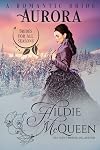
Aurora, a Romantic Bride by Hildie McQueen
Brides for all Seasons series #2. Historical romance. Can be read as a stand-alone but the bride from the first story does come to visit briefly.
Aurora Middleton is being forced to marry a man she doesn’t like and is afraid of. She decides to follow her friend Wilhelmina out west to Montana hoping for a fresh start. Traveling in the winter to Montana might not have been be the best idea when a storm forces Aurora to shelter with the local doctor. show more
Evan Jones left his high society privilege back east. He’s enjoying life as a small town doctor in Laurel, Montana. Knowing the women just arriving had no idea of how a snow storm can impact travel, nor how different life can be, he offers them a room to shelter in. He’s surprised and impressed by how well Aurora is able to adapt.
Aurora is impressively adaptable to a very different lifestyle from her privileged life in the East to the more rugged small town. She’s also great with friendships and treating people as important regardless of who or what they do. Evan didn’t have a chance. 🤣 show less
Brides for all Seasons series #2. Historical romance. Can be read as a stand-alone but the bride from the first story does come to visit briefly.
Aurora Middleton is being forced to marry a man she doesn’t like and is afraid of. She decides to follow her friend Wilhelmina out west to Montana hoping for a fresh start. Traveling in the winter to Montana might not have been be the best idea when a storm forces Aurora to shelter with the local doctor. show more
Evan Jones left his high society privilege back east. He’s enjoying life as a small town doctor in Laurel, Montana. Knowing the women just arriving had no idea of how a snow storm can impact travel, nor how different life can be, he offers them a room to shelter in. He’s surprised and impressed by how well Aurora is able to adapt.
Aurora is impressively adaptable to a very different lifestyle from her privileged life in the East to the more rugged small town. She’s also great with friendships and treating people as important regardless of who or what they do. Evan didn’t have a chance. 🤣 show less
I finished Rose Wilder Lane's semi-autobiographical novel "Diverging Roads" this morning. The first half felt very familiar because it was basically Roger Lea MacBride's "Bachelor Girl", just with some of the names changed. Helen (Rose) leaves her poor country farm girl life behind and travels out West to become a telegraph operator. Her sweetheart from back home, Paul, doesn't like the new crowd she's hanging out with, and in an act of defiance she marries the dashing Gilbert Kennedy show more (Gillette Lane). The second half of the book was new to me and quite interesting, about how Helen, after being deserted by Gilbert, went on to become a real estate salesperson and later a journalist. I need to actually read a biography about Rose (I read "Ghost in the Little House" about 20 years ago and don't remember much) to see how much of it was actually based on her own life. She really did lead an interesting and unconventional life for a woman at the time. show less
Lists
Awards

You May Also Like


Associated Authors
Statistics
- Works
- 39
- Also by
- 9
- Members
- 2,658
- Popularity
- #9,652
- Rating
- 3.9
- Reviews
- 40
- ISBNs
- 82
- Languages
- 1
- Favorited
- 6

