
Brian Payton
Author of The Wind Is Not a River
About the Author
Brian Payton has written for The New York Times, Los Angeles Times, Chicago Tribune, Boston Globe, and The Globe and Mail. He is the author of the novel Hail Mary Corner and the non-fiction narrative Shadow of the Bear. Travels in Vanishing Wilderness. Payton lives with his wife in Vancouver. Visit show more his website, www.brianpayton.com. show less
Works by Brian Payton
Tagged
Common Knowledge
- Canonical name
- Payton, Brian
- Other names
- Payton, Brian, 1966-
- Birthdate
- 1966
- Gender
- male
- Nationality
- USA (birth)
Canada (naturalized) - Birthplace
- California, USA
- Places of residence
- Vancouver, British Columbia, Canada
- Associated Place (for map)
- Vancouver, British Columbia, Canada
Members
Reviews
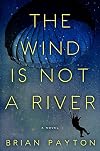
What a fascinating storyline!!! A gripping tale of survival against the elements, evading an invading army, and a woman’s determination to find her husband and bring him home are winners for this book. I was enthralled by every page.
The author chose a fascinating area of WWII to explore; I don’t think I’ve seen another historical fiction detailing the Japanese invasion of American soil in Alaska and the media blackout the government put on it in the press. His research on the minutia show more of life on the Alaskan military front for the men who served and the women who entertained and the intense struggle for survival in the tundra kept me severely engaged.
I also really enjoyed the writer’s use of imagery and symbolism, not something I usually notice. I don’t know if it was intended by the author or not, but his use of these symbols made me sit up and take notice. They added a depth to the harsh survival war story that wouldn’t be there otherwise. The whole dog thing… Wow… The way he uses that whole sequence to illustrate the dire straits that John’s humanity is in and what a human is willing to do/sacrifice to survive still makes my hair stand on end.
The only that that ruined this whole experience was that freakin’ ending! I mean really?!?! I don’t want to give any spoilers but be prepared for your jaw to drop and a surge of anger to arise. I was pissed!!! After all that struggle and experience? Really?! *gggrrr*
So while the ending pissed me off and left a sour aftertaste in my mouth, the overall book was a nerve-wracking and engrossing experience. You’ll live every struggle John goes through to survive and that Helen experiences to bring her husband home safe. The author’s research into this part of WWII history will keep any lover of historical fiction spellbound, as well. Recommended, just brace yourself for that ending. show less
The author chose a fascinating area of WWII to explore; I don’t think I’ve seen another historical fiction detailing the Japanese invasion of American soil in Alaska and the media blackout the government put on it in the press. His research on the minutia show more of life on the Alaskan military front for the men who served and the women who entertained and the intense struggle for survival in the tundra kept me severely engaged.
I also really enjoyed the writer’s use of imagery and symbolism, not something I usually notice. I don’t know if it was intended by the author or not, but his use of these symbols made me sit up and take notice. They added a depth to the harsh survival war story that wouldn’t be there otherwise. The whole dog thing… Wow… The way he uses that whole sequence to illustrate the dire straits that John’s humanity is in and what a human is willing to do/sacrifice to survive still makes my hair stand on end.
The only that that ruined this whole experience was that freakin’ ending! I mean really?!?! I don’t want to give any spoilers but be prepared for your jaw to drop and a surge of anger to arise. I was pissed!!! After all that struggle and experience? Really?! *gggrrr*
So while the ending pissed me off and left a sour aftertaste in my mouth, the overall book was a nerve-wracking and engrossing experience. You’ll live every struggle John goes through to survive and that Helen experiences to bring her husband home safe. The author’s research into this part of WWII history will keep any lover of historical fiction spellbound, as well. Recommended, just brace yourself for that ending. show less

Brian Payton's novel, THE WIND IS NOT A RIVER, is set in Seattle and Alaska's Aleutian Islands during WWII. I've been fascinated by that remote island chain ever since my first hitch in the US Army back in the early sixties when I 'almost' was assigned to Shemya. (Instead I went to northern Turkey.) But that 'close call' was enough to arouse my curiosity about that remote and frigid island and its far flung neighbors of Adak, Attu, Kiska, and others that stretch hundreds of miles across the show more Bering Strait towards Japan and Russia.
So the setting and era alone were enough to pique my curiosity. What I was not prepared for was the stunningly beautiful writing and the heartbreaking and riveting love story that forms the core of the novel. I finished reading Payton's novel last night and cannot stop thinking about John and Helen Easley and their incredible story, one of separation and survival, all in gorgeous writing that one rarely finds in today's fiction.
The love story is blended seamlessly with the factual and historical, and that part of the novel will surprise many readers who knew little or nothing about the war with the Japanese that played out in the Aleutians. Because journalist John Easley's part of the story is one of freezing privation, starvation and survival on the barren shores of Attu, one of two islands (the other was Kiska) invaded and occupied by the Japanese in the spring of 1943. The other half of the story, Helen's, is equally mesmerizing, as she joins a USO troupe of entertainers to travel north in search of her missing husband. You could say this is one hell of a good yarn, and it is, but it is raised to a much higher level by the quality of Payton's writing.
I can't begin to convey the intensity of the story or the beauty of the writing, so I'm gonna cop out and tell you to read the "Advance Praise" on the book's back cover - from authors Ron Rash, Julia Glass, David Vann and Wayne Grady. And, once you've read those words of praise, I will add, "Yeah, what they said - all of 'em."
"Greathearted, beautiful, riveting, gripping, heart-rending, lyrical, elegiac, triumphant, heartbreaking, stirring, etc." All those words, yes! Like Prego sauce, "it's all in there." Read this book! It is just such a beautiful damn book. I give it my highest Booklover recommendation.
P.S. If you're as interested in the Aleutians as I am, then let me recommend one more terrific book, Charles Bradley's ALEUTIAN ECHOES, a memoir of his own time there during WWII, decorated with photos, drawings and water colors. A visually beautiful book. show less
So the setting and era alone were enough to pique my curiosity. What I was not prepared for was the stunningly beautiful writing and the heartbreaking and riveting love story that forms the core of the novel. I finished reading Payton's novel last night and cannot stop thinking about John and Helen Easley and their incredible story, one of separation and survival, all in gorgeous writing that one rarely finds in today's fiction.
The love story is blended seamlessly with the factual and historical, and that part of the novel will surprise many readers who knew little or nothing about the war with the Japanese that played out in the Aleutians. Because journalist John Easley's part of the story is one of freezing privation, starvation and survival on the barren shores of Attu, one of two islands (the other was Kiska) invaded and occupied by the Japanese in the spring of 1943. The other half of the story, Helen's, is equally mesmerizing, as she joins a USO troupe of entertainers to travel north in search of her missing husband. You could say this is one hell of a good yarn, and it is, but it is raised to a much higher level by the quality of Payton's writing.
I can't begin to convey the intensity of the story or the beauty of the writing, so I'm gonna cop out and tell you to read the "Advance Praise" on the book's back cover - from authors Ron Rash, Julia Glass, David Vann and Wayne Grady. And, once you've read those words of praise, I will add, "Yeah, what they said - all of 'em."
"Greathearted, beautiful, riveting, gripping, heart-rending, lyrical, elegiac, triumphant, heartbreaking, stirring, etc." All those words, yes! Like Prego sauce, "it's all in there." Read this book! It is just such a beautiful damn book. I give it my highest Booklover recommendation.
P.S. If you're as interested in the Aleutians as I am, then let me recommend one more terrific book, Charles Bradley's ALEUTIAN ECHOES, a memoir of his own time there during WWII, decorated with photos, drawings and water colors. A visually beautiful book. show less
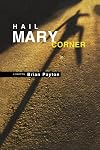
While reading Brian Payton's 2001 novel, HAIL MARY CORNER, I wondered if, like me, he had studied John Knowles' classic coming-of-age novel, A SEPARATE PEACE. Because the books are similar, and yet they are not. The Knowles book was set during WWII at a private boys' school in New England. Payton's is set in the early 80s at a Catholic seminary on Vancouver Island. Yet both are equally poignant in their treatment of struggles with emerging sexuality and the guilt and confusion that often show more accompany that period of adolescence. And this matter is perhaps even more confusing when it is being dealt with in a repressive all-male environment closely watched by the priests and brothers who are in charge at St John the Divine Abbey and Seminary. Payton's book is much more representative of its time, with specific references to the music and culture of the early 80s, as well as other music (the Beatles). And whereas A SEPARATE PEACE was mostly about just Gene and Finny and their unspoken love-hate relationship, Payton's story concerns a small group of best friends at St John's, although Bill and Jon are the central figures, with the same kind of competitive relationship and confusing welter of feelings.
Payton's book gives a wonderfully realistic and intriguing look at the cliques and everyday life of a Catholic seminary. And I can say this with some confidence because I spent my 9th grade year at such a school. Granted, my own experience was in the late 50s, but I quickly found that things had not changed all that much. Although narrator/protagonist Bill seemed to have much easier access to the neighboring town - and the local girls - than I and my fellows had in 1958. In fact our seminary was completely enclosed by a high fence and a screening row of trees and shrubs through which we could only occasionally glimpse members of the opposite sex on our evening walks around the perimeter of the grounds. But I remember the overbearing dominance of upperclassmen that Payton describes, and other things too, like the importance of sports and the silence in the refectory during meals while an upperclassman read from an "approved text." Payton mentions an outdated book of etiquette being read. I remember hearing the entire text of Jim Bishop's THE DAY LINCOLN WAS SHOT, a fascinating book.
There is comedy here - Payton shows a wonderfully sly sense of humor - and there is certainly tragedy. But no spoilers from me. Brian Payton's first novel is simply a beautifully written and wonderful read. I hated to see it end. But of course it did, and its closing line once again brought to mind the Knowles book -
"Now when I reach into that top drawer of my mind, that place where I keep my most cherished regrets, I find an empty space. It is the room I save for peace."
HAIL MARY CORNER is, in many ways, A SEPARATE PEACE for the 21st Century, and even more. This is a funny, poignant, beautiful book. I will recommend it highly. Well done, Mr. Payton. show less
Payton's book gives a wonderfully realistic and intriguing look at the cliques and everyday life of a Catholic seminary. And I can say this with some confidence because I spent my 9th grade year at such a school. Granted, my own experience was in the late 50s, but I quickly found that things had not changed all that much. Although narrator/protagonist Bill seemed to have much easier access to the neighboring town - and the local girls - than I and my fellows had in 1958. In fact our seminary was completely enclosed by a high fence and a screening row of trees and shrubs through which we could only occasionally glimpse members of the opposite sex on our evening walks around the perimeter of the grounds. But I remember the overbearing dominance of upperclassmen that Payton describes, and other things too, like the importance of sports and the silence in the refectory during meals while an upperclassman read from an "approved text." Payton mentions an outdated book of etiquette being read. I remember hearing the entire text of Jim Bishop's THE DAY LINCOLN WAS SHOT, a fascinating book.
There is comedy here - Payton shows a wonderfully sly sense of humor - and there is certainly tragedy. But no spoilers from me. Brian Payton's first novel is simply a beautifully written and wonderful read. I hated to see it end. But of course it did, and its closing line once again brought to mind the Knowles book -
"Now when I reach into that top drawer of my mind, that place where I keep my most cherished regrets, I find an empty space. It is the room I save for peace."
HAIL MARY CORNER is, in many ways, A SEPARATE PEACE for the 21st Century, and even more. This is a funny, poignant, beautiful book. I will recommend it highly. Well done, Mr. Payton. show less
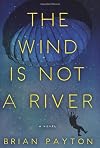
THE WIND IS NOT A RIVER is a perfect combination of fact and fiction. While presenting actual “events [that] are forgotten footnotes in the history of the Second World War,” Brian Payton tells a story of two people who might have been caught up in them.
In this excellent, unputdownable novel, John Easley is a journalist who was in the Territory of Alaska when the Japanese bombed a naval base and an army base on islands there. Although the U.S. government orders all press corps out of show more Alaska, ensuring that civilians are mostly unaware that the war has come to the U.S., John feels they have a right to know and it is his duty to sneak his way back in. On his third try, he gets in and then accompanies an aircrew running sorties over the Japanese-occupied village of Attu. The plane crashes. What a mix of fact and fiction!
THE WIND IS NOT A RIVER continues to mix fact with fiction as it tells, in alternating chapters, the stories of John’s survival while he evades enemy detection and of his wife Helen’s determination to find him.
This book truly grabbed me. Wherever I went, whatever I was doing, THE WIND IS NOT A RIVER was with me until I finished reading it. I not only enjoyed John’s and Helen’s stories; I also learned of this attack on the U.S. that the government mostly succeeded in keeping quiet.
This novel gets my highest rating. I didn’t want it to end so read the Acknowledgments and the Author’s Note to put it off. show less
In this excellent, unputdownable novel, John Easley is a journalist who was in the Territory of Alaska when the Japanese bombed a naval base and an army base on islands there. Although the U.S. government orders all press corps out of show more Alaska, ensuring that civilians are mostly unaware that the war has come to the U.S., John feels they have a right to know and it is his duty to sneak his way back in. On his third try, he gets in and then accompanies an aircrew running sorties over the Japanese-occupied village of Attu. The plane crashes. What a mix of fact and fiction!
THE WIND IS NOT A RIVER continues to mix fact with fiction as it tells, in alternating chapters, the stories of John’s survival while he evades enemy detection and of his wife Helen’s determination to find him.
This book truly grabbed me. Wherever I went, whatever I was doing, THE WIND IS NOT A RIVER was with me until I finished reading it. I not only enjoyed John’s and Helen’s stories; I also learned of this attack on the U.S. that the government mostly succeeded in keeping quiet.
This novel gets my highest rating. I didn’t want it to end so read the Acknowledgments and the Author’s Note to put it off. show less
Awards


You May Also Like


Statistics
- Works
- 6
- Members
- 459
- Popularity
- #53,509
- Rating
- 3.8
- Reviews
- 35
- ISBNs
- 39
- Languages
- 2