
Jim Kinnear
Author of KV-1 & 2 Heavy Tanks 1939-45 (New Vanguard)
About the Author
Series
Works by Jim Kinnear
T-72 Main Battle Tank 7 copies
Soviet Aero-Sleighs of World War Two in Red Army, Finnish Army & German Wehrmacht Service (2010) 4 copies
Tankograd No. 2008 Soviet Special: : Russian Army on Parade - The Return of Russia's Red Square Military Parades 2008-09 (2009) 2 copies
Red Machines 4: SU-122 2 copies
Tagged
Common Knowledge
There is no Common Knowledge data for this author yet. You can help.
Members
Reviews
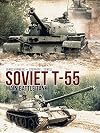
On the whole I like this monograph on the T-55 a bit better than the authors' work on the T-54. To a large degree this is due to their examination of the career of program manager Leonid Kartsev, a man who was a firm believer in the concept that "the best is enemy of good enough;" even if this made him no friends with the higher authorities of the Soviet defense establishment. Besides providing this context you have the now well-established package of excellent visual documentation of all show more the iterations and variants of this paradigmatic machine. If you have the previous books dealing with the T-10 & the T-54 you will also want this work. show less
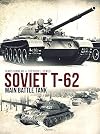
With this iteration in the authors' ongoing coverage of post-1945 Soviet tanks, we essentially have the continued struggle of Leonid Kartsev, leader of the Nizhny Tagil design bureau, to remind higher officialdom that the best was enemy of good enough. So, while the T-62 was only ever meant to be a stop-gap its forgiving automotive characteristics and reliability meant that it had a much longer viability than even Kartsev might have predicted. Besides that, one also gets good coverage of of show more the IT-1 missile tank, which turns out to have actually entered limited service use. As I've said before, if the armored vehicles of the the Red Army are of interest to you, you really should be reading these books. show less
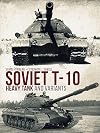
It's really quite simple; if you're interested in Soviet heavy tanks of the Cold War you need this book. Apart from the political and operational debates relating to the whole concept of the heavy tank in the Soviet Union and a physical examination of this machine, what was most interesting to me were the variants of this machine; particularly how this chassis was the basis of those lumbering ballistic-missile launchers that were the center pieces of the Soviet military parades of the cold war.
This book is by a pair of veteran armor guys who have done plenty of work in the armor enthusiast/modeler community. The have one Osprey title in the bag already with their work on the T-54/55. They have logically followed that book with one on the T-54/55's first offspring, the T-62 Main Battle Tank.
This is a fairly short book at 373 pages, ushering the reader quickly along because of the large number of illustrations. The layout of the book is familiar to anyone who has read a few armor show more histories. There is an introduction. Then Chapter One, 'Revolutionary' Versus 'Evolutionary' - Morozov Versus Kartsev, dives into the opposing tank design philosophies of the two main armor design bureaus in the 1950's. This chapter provides the underpinning of the significant design elements of the T-62.
Chapter Two, The Development of the T-62, goes into the armor prototyping process for a new tank in the postwar Soviet Union. There are a number of vehicles given Obiekt numbers that validate the different design elements that will make up the future T-62 tank along with those of more advanced designs for the futuristic T-64 main battle tank. Chapter Three, Description of the T-62 Main Battle Tank and Its Variants, gets into the literal nuts and bolts of the tank and related vehicles such as the IT-1 guided missile tank destroyer.
Chapter Four, Derivative Vehicles and Foreign Copies, is a short chapter as the T-62 was seen in the Red Army as a transitional tank bridging the hugely successful T-54/55 series and the technologically advanced T-64 series. Even the Chinese, who copy any military technology they deem useful, reverse-engineered a captured T-62 only to find it was not worth establishing a production line for it. Leave it to the North Koreans to actually make the largest number of non-Soviet T-62s.
Chapter Five, Service and Combat Use of the T-62, completes the main text of the book. The T-62 has seen a considerable amount of combat, its first blooding being in Egyptian, Syrian, and Iraqi hands against Israel during the Yom Kippur War of October 1973. The T-62's ground-breaking 115mm smooth bore cannon firing armor-piercing, fin-stabilized, discarding sabot rounds earned much respect among Israeli tankers; the real difference between Arab and Israeli armored forces being crew quality. Subsequent Soviet combat usage in Afghanistan and in post-Soviet Russian conflicts showed the T-62 to be well-respected for its ruggedness, simplicity, and significant firepower.
The authors also provide a number of appendices: One is a timeline of T-62 development; Two is a list of T-62s preserved around the world; Three is a table showing production numbers for the T-62 and its variants; Four is a list of the various Obiekt numbers associated with T-62 development and contemporary vehicles; Five is a list of Soviet client countries and non-client nations that received T-62 tanks; Six is a useful cutaway drawing of the tank; Seven is a brief discussion of Soviet armored vehicle communications equipment; Eight is a set of Soviet ballistic sets and tables for the tank's weapons; and Nine is an explanation and illustration of the Soviet OPVT underwater tank driving system.
This book is a fine successor to the authors' T-54/55 volume, filled with knowledgeable text and plenty of illustrations. There are a number of color photo sets in this book so readers can readily see the differences between the various Models of the tank. A nice touch is the provision of Red Army manual illustrations for the vehicle--I do wonder why the Soviets stayed with drawings for their vehicle manuals for so long rather than photographs. A little bonus, probably provided by Mr. Sewell, are the photos of the tank used by the U.S. Army for its English language version of the tank manual. This was a great read for me. show less
This is a fairly short book at 373 pages, ushering the reader quickly along because of the large number of illustrations. The layout of the book is familiar to anyone who has read a few armor show more histories. There is an introduction. Then Chapter One, 'Revolutionary' Versus 'Evolutionary' - Morozov Versus Kartsev, dives into the opposing tank design philosophies of the two main armor design bureaus in the 1950's. This chapter provides the underpinning of the significant design elements of the T-62.
Chapter Two, The Development of the T-62, goes into the armor prototyping process for a new tank in the postwar Soviet Union. There are a number of vehicles given Obiekt numbers that validate the different design elements that will make up the future T-62 tank along with those of more advanced designs for the futuristic T-64 main battle tank. Chapter Three, Description of the T-62 Main Battle Tank and Its Variants, gets into the literal nuts and bolts of the tank and related vehicles such as the IT-1 guided missile tank destroyer.
Chapter Four, Derivative Vehicles and Foreign Copies, is a short chapter as the T-62 was seen in the Red Army as a transitional tank bridging the hugely successful T-54/55 series and the technologically advanced T-64 series. Even the Chinese, who copy any military technology they deem useful, reverse-engineered a captured T-62 only to find it was not worth establishing a production line for it. Leave it to the North Koreans to actually make the largest number of non-Soviet T-62s.
Chapter Five, Service and Combat Use of the T-62, completes the main text of the book. The T-62 has seen a considerable amount of combat, its first blooding being in Egyptian, Syrian, and Iraqi hands against Israel during the Yom Kippur War of October 1973. The T-62's ground-breaking 115mm smooth bore cannon firing armor-piercing, fin-stabilized, discarding sabot rounds earned much respect among Israeli tankers; the real difference between Arab and Israeli armored forces being crew quality. Subsequent Soviet combat usage in Afghanistan and in post-Soviet Russian conflicts showed the T-62 to be well-respected for its ruggedness, simplicity, and significant firepower.
The authors also provide a number of appendices: One is a timeline of T-62 development; Two is a list of T-62s preserved around the world; Three is a table showing production numbers for the T-62 and its variants; Four is a list of the various Obiekt numbers associated with T-62 development and contemporary vehicles; Five is a list of Soviet client countries and non-client nations that received T-62 tanks; Six is a useful cutaway drawing of the tank; Seven is a brief discussion of Soviet armored vehicle communications equipment; Eight is a set of Soviet ballistic sets and tables for the tank's weapons; and Nine is an explanation and illustration of the Soviet OPVT underwater tank driving system.
This book is a fine successor to the authors' T-54/55 volume, filled with knowledgeable text and plenty of illustrations. There are a number of color photo sets in this book so readers can readily see the differences between the various Models of the tank. A nice touch is the provision of Red Army manual illustrations for the vehicle--I do wonder why the Soviets stayed with drawings for their vehicle manuals for so long rather than photographs. A little bonus, probably provided by Mr. Sewell, are the photos of the tank used by the U.S. Army for its English language version of the tank manual. This was a great read for me. show less
You May Also Like


Associated Authors
Statistics
- Works
- 19
- Members
- 258
- Popularity
- #88,949
- Rating
- 4.1
- Reviews
- 10
- ISBNs
- 24
- Languages
- 3