
Pedro Lemebel (1952–2015)
Author of My Tender Matador: A Novel
About the Author
Image credit: Pedro Lemebel en 2011.
Series
Works by Pedro Lemebel
Associated Works
Tagged
Common Knowledge
- Birthdate
- 1952
- Date of death
- 2015-01-23
- Gender
- male
- Occupations
- Theaterkünstler
Schriftsteller - Awards and honors
- Anna-Seghers-Preis (2006)
- Nationality
- Chile
- Birthplace
- Santiago de Chile, Chile
- Place of death
- Santiago de Chile, Chile
- Map Location
- Chile
Members
Reviews
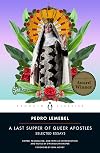
Maybe the most radical thing about Pedro Lemebel's essays is that he embraces ugly, tawdry, violent imagery and he does it with ugly, tawdry, violent language, and the result is riveting and gutting and perfect. Lemebel is there to blow shit up, and to force you to see humanity in places you probably never look.
I came to Lemebel when I read that Roberto Bolano revered him and considered him Chile's best writer. I had been planning to read My Tender Matador, a novel which is the only other show more thing Lemebel wrote that I can see has been translated into English, but when this became available on Kindle and audio I decided to start with the essays. I am glad I did, and I am now really excited to read My Tender Matador.
The essays here have a propulsive energy. The writing is a mashup of prose and poetry, filled with tragedy but often laugh-out-loud funny, muscular and sometimes shocking. But nothing here is shocking in a showy way. Some people write with the intention of shocking, Lemebel tells shocking truths using language you would never have identified as perfect for the task, but which in fact is perfect for the task. The essays cover the US-backed assassination of the duly elected Salvador Allende and the US backed installation of the murderous Pinochet. Lemebel tells us about the violent repression, the Disappeared and their mothers and wives who never stopped searching for them/their remains, and he tells us about acts of resistance, subtle and not, direct and not. He also tells us about living among what we would now call transfeminine prostitutes (Lemebel uses the words "travesti' and "loca" which translate roughly to "tranny") in minute detail and tells us about the ravages of AIDS in Santiago's Gay community. There are no punches pulled in any of the stories. People are tortured and killed by the soldiers, thousands and thousands of them, their bodies slashed, eyes removed with kitchen implements. In the stories about the travesti mouths and anuses invaded for love, for commerce, and sometimes to humiliate and harm. There is a lot of consensual sex in the book, a lot of descriptions of assholes, puckered and gaping, full and empty, unused and abused. And Lemebel is in the middle of all of this. It is sort of a gonzo journalism fever dream, imagine if Hunter Thompson cared about anyone but himself and was a poor, revolutionary feminine-presenting Gay man in a country ruled by a despot. For me, the most impactful section was where he focused on AIDS. Rather than reporting on widespread horrors, Lemebel invited us in to meet these people killed by the disease, to meet their friends and lovers, and to see the impact on them, and I at least mourned with them.
I have never read anything like these essays and I want more. I am hooked. I read and listened to these, and they really lend themselves to audio. The narration by Idra Novey is excellent. I did appreciate being able to look at the prose on the page as well, but If I had to choose just one I think I would opt for the audio. show less
I came to Lemebel when I read that Roberto Bolano revered him and considered him Chile's best writer. I had been planning to read My Tender Matador, a novel which is the only other show more thing Lemebel wrote that I can see has been translated into English, but when this became available on Kindle and audio I decided to start with the essays. I am glad I did, and I am now really excited to read My Tender Matador.
The essays here have a propulsive energy. The writing is a mashup of prose and poetry, filled with tragedy but often laugh-out-loud funny, muscular and sometimes shocking. But nothing here is shocking in a showy way. Some people write with the intention of shocking, Lemebel tells shocking truths using language you would never have identified as perfect for the task, but which in fact is perfect for the task. The essays cover the US-backed assassination of the duly elected Salvador Allende and the US backed installation of the murderous Pinochet. Lemebel tells us about the violent repression, the Disappeared and their mothers and wives who never stopped searching for them/their remains, and he tells us about acts of resistance, subtle and not, direct and not. He also tells us about living among what we would now call transfeminine prostitutes (Lemebel uses the words "travesti' and "loca" which translate roughly to "tranny") in minute detail and tells us about the ravages of AIDS in Santiago's Gay community. There are no punches pulled in any of the stories. People are tortured and killed by the soldiers, thousands and thousands of them, their bodies slashed, eyes removed with kitchen implements. In the stories about the travesti mouths and anuses invaded for love, for commerce, and sometimes to humiliate and harm. There is a lot of consensual sex in the book, a lot of descriptions of assholes, puckered and gaping, full and empty, unused and abused. And Lemebel is in the middle of all of this. It is sort of a gonzo journalism fever dream, imagine if Hunter Thompson cared about anyone but himself and was a poor, revolutionary feminine-presenting Gay man in a country ruled by a despot. For me, the most impactful section was where he focused on AIDS. Rather than reporting on widespread horrors, Lemebel invited us in to meet these people killed by the disease, to meet their friends and lovers, and to see the impact on them, and I at least mourned with them.
I have never read anything like these essays and I want more. I am hooked. I read and listened to these, and they really lend themselves to audio. The narration by Idra Novey is excellent. I did appreciate being able to look at the prose on the page as well, but If I had to choose just one I think I would opt for the audio. show less
A Last Supper of Queer Apostles gathers together a collection of Pedro Lemebel's essays (crónicas). Lemebel (1952-2015) is/was a brilliant writer whose work focused on the marginal communities of Chile: gay men, the poor, sex workers, and transsexuals. His work is angry, inventive, playful, keenly observing. Reading his work is rather like watching someone juggling fire, with the same uneasy potential for beauty or disaster.
Lemebel's essays are packed with material that one needs to sit show more with—they demand a period of "sinking in" from readers. A last Supper of Queer Apostles is the first collection of his essays translated into English: they demanded a great deal of and were done justice by translator and editor Gwendolyn Harper.
For anyone who understands that the boundaries of their world go far beyond the borders of their country and that gender is not the binary many would insist it *must* be, A Last Supper of Queer Apostles offers a feast of ideas.
I received a free electronic review copy of this title from the publisher via NetGalley; the opinions are my own. show less
Lemebel's essays are packed with material that one needs to sit show more with—they demand a period of "sinking in" from readers. A last Supper of Queer Apostles is the first collection of his essays translated into English: they demanded a great deal of and were done justice by translator and editor Gwendolyn Harper.
For anyone who understands that the boundaries of their world go far beyond the borders of their country and that gender is not the binary many would insist it *must* be, A Last Supper of Queer Apostles offers a feast of ideas.
I received a free electronic review copy of this title from the publisher via NetGalley; the opinions are my own. show less
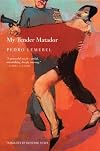
This novel was a stunning history set in Pinochet's Chile. The main character is queen of her own apartment in Santiago (but to everyone else, a gentleman, a maricon, a pathetic figure). Starstruck by a handsome, educated revolutionary, she permits the Marxists to store boxes of unknown goods in her world. Over time, she develops a close connection with the handsome revolutionary, who proves to be a kind and good person, who appreciates the kindness of the queen. They get drunk, certain show more events happen, no one mistakes it for true love. Eventually, the revolutionaries launch their attack on Pinochet and nearly kill him, but in the aftermath all must flee.
There is so much dignity and innocence in the main character, it made me weep. The author never condescends. This is a wonderful, restrained treatment, imagining both drag queens and Pinochet himself with equal facility. Few are spared. show less
There is so much dignity and innocence in the main character, it made me weep. The author never condescends. This is a wonderful, restrained treatment, imagining both drag queens and Pinochet himself with equal facility. Few are spared. show less
This is a book of love of delusion, of projection, of ideals without fruition. Romantic songs and soft fabrics line the pages, flowery words and fancy hats lead to a delicate unrequited love.
The Queen is a masterpiece. She, and her precious, precocious femininity, fill the pages with the frivolous thoughts, whilst running parallel is an aching sense of reality. She believes in the fantasy and she sees the veracity and both exist woven together, like one of her beautiful embroidered show more tablecloths.
I am finding myself drawn more and more to the floral language, and I love the rhythm of the sections of the book focused on Santiago life from the Queen’s point of view. Her beloved Carlos is a shadow of a character, mostly a pretty projection from within the Queen’s mind, but she is so aware of the idolising nature of the infatuation that this doesn’t seem to matter. Falling in love with a fantasy is still falling in love, and when the love is shattered, it hurts no less.
“How do you look at something you will never see again? How do you forget something you never had?”
This is the second book I’ve now read where the protagonist is transgendered, the first being ‘[b:The Ministry of Utmost Happiness|32388712|The Ministry of Utmost Happiness|Arundhati Roy|https://i.gr-assets.com/images/S/compressed.photo.goodreads.com/books/1520327592l/32388712._SY75_.jpg|53001637]The Ministry of Utmost Happiness’ by Arundhati Roy. This is progress I believe in my aim of reading a more varied portrayal of gender.
Moving on from the Queen, in consideration of the General Pinochet character, I read Roberto Bolaño’s By Night in Chile before reading Peter Lemebel’s My Tender Matador, and both of these books included a fictionalised Pinochet. In My Tender Matador, I felt that Pinochet, and even more so his wife, were caricatures. I felt an opportunity was lost here to explore how someone with such lacking appreciation of human rights could develop. To me, the children’s birthday party story just felt farfetched and out of place. I also couldn’t understand how a character with such an authoritarian hand could put up with his wife’s wittering as he did.
But maybe Pinochet’s character is a mystery? The Wikipedia page says barely anything of his childhood and on reflecting on his character just seems to talk about how he had a large library, but a library devoid of fiction.
In September of 1986 there was an assassination attempt as he was making his way back to Santiago from one of his country homes. My Tender Matador is a fictionalised account of this. Newspaper reports tell me that five, not seven, bodyguards were killed, and that Pinochet’s ten-year-old grandson was also in the car with him at the moment of the attack despite being omitted in the novel. If I had written the book I would have kept the child there, it’s emotionally more complex to be on the protagonist’s side when the protagonists are shooting at a child, and I would have dropped much of the character of Pinochet’s wife, for she was tedious to read. show less
The Queen is a masterpiece. She, and her precious, precocious femininity, fill the pages with the frivolous thoughts, whilst running parallel is an aching sense of reality. She believes in the fantasy and she sees the veracity and both exist woven together, like one of her beautiful embroidered show more tablecloths.
I am finding myself drawn more and more to the floral language, and I love the rhythm of the sections of the book focused on Santiago life from the Queen’s point of view. Her beloved Carlos is a shadow of a character, mostly a pretty projection from within the Queen’s mind, but she is so aware of the idolising nature of the infatuation that this doesn’t seem to matter. Falling in love with a fantasy is still falling in love, and when the love is shattered, it hurts no less.
“How do you look at something you will never see again? How do you forget something you never had?”
This is the second book I’ve now read where the protagonist is transgendered, the first being ‘[b:The Ministry of Utmost Happiness|32388712|The Ministry of Utmost Happiness|Arundhati Roy|https://i.gr-assets.com/images/S/compressed.photo.goodreads.com/books/1520327592l/32388712._SY75_.jpg|53001637]The Ministry of Utmost Happiness’ by Arundhati Roy. This is progress I believe in my aim of reading a more varied portrayal of gender.
Moving on from the Queen, in consideration of the General Pinochet character, I read Roberto Bolaño’s By Night in Chile before reading Peter Lemebel’s My Tender Matador, and both of these books included a fictionalised Pinochet. In My Tender Matador, I felt that Pinochet, and even more so his wife, were caricatures. I felt an opportunity was lost here to explore how someone with such lacking appreciation of human rights could develop. To me, the children’s birthday party story just felt farfetched and out of place. I also couldn’t understand how a character with such an authoritarian hand could put up with his wife’s wittering as he did.
But maybe Pinochet’s character is a mystery? The Wikipedia page says barely anything of his childhood and on reflecting on his character just seems to talk about how he had a large library, but a library devoid of fiction.
In September of 1986 there was an assassination attempt as he was making his way back to Santiago from one of his country homes. My Tender Matador is a fictionalised account of this. Newspaper reports tell me that five, not seven, bodyguards were killed, and that Pinochet’s ten-year-old grandson was also in the car with him at the moment of the attack despite being omitted in the novel. If I had written the book I would have kept the child there, it’s emotionally more complex to be on the protagonist’s side when the protagonists are shooting at a child, and I would have dropped much of the character of Pinochet’s wife, for she was tedious to read. show less
Lists
Awards


You May Also Like


Associated Authors
Statistics
- Works
- 18
- Also by
- 2
- Members
- 642
- Popularity
- #39,292
- Rating
- 4.2
- Reviews
- 17
- ISBNs
- 70
- Languages
- 7
- Favorited
- 2