
Roger McGough
Author of Penguin Modern Poets 10: The Mersey Sound: Adrian Henri, Roger McGough, Brian Patten
About the Author
Image credit: Frances Lincoln Publishers
Works by Roger McGough
Penguin Modern Poets 10: The Mersey Sound: Adrian Henri, Roger McGough, Brian Patten (1967) — Poet — 408 copies, 7 reviews
The Very Hungry Caterpillar and Other Stories [1993 film] (1993) — Director; Narrator — 75 copies, 2 reviews
Allsorts; The Sentinel; 1 copy
80: Poems by Roger McGough 1 copy
Associated Works
Answering Back: Living Poets Reply to the Poetry of the Past (2007) — Contributor — 119 copies, 1 review
The Sophisticated Cat: A Gathering of Stories, Poems, and Miscellaneous Writings About Cats (1992) — Contributor — 112 copies, 1 review
The Pleasure of Reading: 43 Writers on the Discovery of Reading and the Books That Inspired Them (2015) — Contributor — 104 copies, 2 reviews
The New Testament Epistles: Early Christian Wisdom (The Classic Bible Series) (1997) — Foreword — 28 copies
Tagged
Common Knowledge
- Birthdate
- 1937-11-09
- Gender
- male
- Education
- University of Hull
- Occupations
- poet
- Organizations
- Poetry Society
BBC Radio 4 - Awards and honors
- Order of the British Empire (Officer | Commander)
Action for Children's Arts (J. M. Barrie Award|2009) - Short biography
- Rose to fame with other Liverpool poets (Brian Pattern & Aidan Henri) in the 1960's & 70's. Notably wrote the lyrics to 1968 No. 1 single 'Lily the Pink' and lots of the dialogue to The Beatles film 'Yellow Submarine'. He publishes poetry for children and adults.
- Nationality
- UK
- Birthplace
- Litherland, Liverpool, England, UK
- Places of residence
- Liverpool, Merseyside, England, UK
- Associated Place (for map)
- England, UK
Members
Reviews

This was originally No.10 in the Penguin Modern Poets series, a very useful formula of the 60s and 70s where you got broad selections from three interesting contemporary poets in a 120-page book for the standard Penguin cover price of 2/6 (less than half the price of a typical single-poet collection from a specialist publisher like Faber). This was the only book in the series to have a title and an explicit theme, and it was the only one to become a cult classic and sell half-a-million show more copies...
Liverpool was, of course, where it was all happening in the 1960s. Or, at least, thanks to the Beatles it was a place where outsiders were paying attention to things that might otherwise have passed unnoticed in the big wide world. One of these things that suddenly started to seem important was that in the trendily run-down neighbourhood of Liverpool 8 there were a number of basement clubs where young people sat around drinking frothy foreign coffee and listening to homegrown poets reading (and even - alarmingly - improvising) their works, for all the world as though they were in New York or San Francisco.
The three young men (sorry: youngmen) who rose to fame as "the Liverpool Poets" (there were others, of course) were all from working-class, Catholic, Liverpool families, and they brought a particular Scouse flavour to their work, the instinct to make fun of themselves and everybody else, to fill their poems with earthy, everyday references, and at all costs to stay away from bombast and pomposity.
Adrian Henri was a surrealist painter and art-teacher, and his particular contribution to the group seems to have been his connection both with the visual arts and with the American Beats (it was he who arranged Allen Ginsberg's Papal Visit to Liverpool in 1965). He also brought Warhol-style art Happenings to Liverpool.
Roger McGough started out as a teacher as well, but he was also a musician, performing with Mike McGear (Paul McCartney's brother) and John Gorman in the group The Scaffold, who were responsible for some of the most persistent earworms of the sixties, notably "Lily the Pink". McGough later became a very familiar voice on BBC poetry programmes and a senior figure of the poetry "establishment" in the UK.
Brian Patten is now known especially for his writing for children, but in 1967 he was barely out of his teens himself. He had left school at 15 to become a reporter on the Bootle Times, and he was the editor of the little magazine in which McGough's and Henri's poetry first appeared in print.
Re-reading the poems after many years, my first reaction was that they had survived extraordinarily well. There are some little period bits of silliness that have gone a bit stale, like compounding words for noreason, but they are trivial, really. And there are some poems that would probably have worked better if they'd been cut by 30%, but what use is being young if you're not allowed to rant a bit? The main thing is that most of it is still funny and unexpected and shocking, just as they meant it to be. And it is full of lines like "She approaches breakfast as she would a lover", or "with littlefinger in the air / she ravishes her third eclair", or "I can hear the noise of the ice-floes breaking up on the bathroom floor", or even "I wanted your soft verges / but you gave me the hard shoulder".
Obviously some of the subject-matter has shifted a bit in the way we read it - bus-conductors and Woodbines and Mary Quant are no longer part of the register of everyday life. The politics, as far as it goes, looks a bit crude: war is a bad thing, nuclear war is worse, and most of the evils of the world are caused by an undifferentiated group of oldmen-in-power, who range from First World War generals to Kennedy, MacMillan and Wilson. Patten is the only one who talks about racism at all, satirising Enoch Powell's attempts to exploit the racism of voters in "I'm dreaming of a white Smethwick", a poem that is clearly heartfelt but just as clearly written to meet one specific set of events.
On sexism, they don't do any better than most of their male contemporaries. Women seem to appear in the poems only if they can be considered young and pretty enough to be potential sex-partners. I had to remember Muriel Spark's wry comment about the men who are poets and the women who type the poems and sleep with the poets. Henri's many lascivious references to schoolgirls, gymslips, navy-blue knickers, etc., are obviously meant to be read as provocative self-mockery, but there are an awful lot of them. The other two aren't quite as bad, and Patten in particular sometimes seems to be almost mature in the way he writes about women (cf. "Somewhere between Heaven and Woolworths").
So still worth a read for its own sake, quite apart from its importance as a cultural document. At least for British poets, this is the book that reassured them that it was allowable to write poetry if you hadn't been to university, that poetry and rock music do go together, that poems can have as many "rude words" in them as you like, and that subjects like bus-conductors and Woodbines and the East Lancs Road may even be a better use of the poet's time than writing about daffodils and Grantchester. Which was very liberating, but has also demonstrated that not everyone is as good at writing about the ordinary as these guys were... show less
Liverpool was, of course, where it was all happening in the 1960s. Or, at least, thanks to the Beatles it was a place where outsiders were paying attention to things that might otherwise have passed unnoticed in the big wide world. One of these things that suddenly started to seem important was that in the trendily run-down neighbourhood of Liverpool 8 there were a number of basement clubs where young people sat around drinking frothy foreign coffee and listening to homegrown poets reading (and even - alarmingly - improvising) their works, for all the world as though they were in New York or San Francisco.
The three young men (sorry: youngmen) who rose to fame as "the Liverpool Poets" (there were others, of course) were all from working-class, Catholic, Liverpool families, and they brought a particular Scouse flavour to their work, the instinct to make fun of themselves and everybody else, to fill their poems with earthy, everyday references, and at all costs to stay away from bombast and pomposity.
Adrian Henri was a surrealist painter and art-teacher, and his particular contribution to the group seems to have been his connection both with the visual arts and with the American Beats (it was he who arranged Allen Ginsberg's Papal Visit to Liverpool in 1965). He also brought Warhol-style art Happenings to Liverpool.
Roger McGough started out as a teacher as well, but he was also a musician, performing with Mike McGear (Paul McCartney's brother) and John Gorman in the group The Scaffold, who were responsible for some of the most persistent earworms of the sixties, notably "Lily the Pink". McGough later became a very familiar voice on BBC poetry programmes and a senior figure of the poetry "establishment" in the UK.
Brian Patten is now known especially for his writing for children, but in 1967 he was barely out of his teens himself. He had left school at 15 to become a reporter on the Bootle Times, and he was the editor of the little magazine in which McGough's and Henri's poetry first appeared in print.
Re-reading the poems after many years, my first reaction was that they had survived extraordinarily well. There are some little period bits of silliness that have gone a bit stale, like compounding words for noreason, but they are trivial, really. And there are some poems that would probably have worked better if they'd been cut by 30%, but what use is being young if you're not allowed to rant a bit? The main thing is that most of it is still funny and unexpected and shocking, just as they meant it to be. And it is full of lines like "She approaches breakfast as she would a lover", or "with littlefinger in the air / she ravishes her third eclair", or "I can hear the noise of the ice-floes breaking up on the bathroom floor", or even "I wanted your soft verges / but you gave me the hard shoulder".
Obviously some of the subject-matter has shifted a bit in the way we read it - bus-conductors and Woodbines and Mary Quant are no longer part of the register of everyday life. The politics, as far as it goes, looks a bit crude: war is a bad thing, nuclear war is worse, and most of the evils of the world are caused by an undifferentiated group of oldmen-in-power, who range from First World War generals to Kennedy, MacMillan and Wilson. Patten is the only one who talks about racism at all, satirising Enoch Powell's attempts to exploit the racism of voters in "I'm dreaming of a white Smethwick", a poem that is clearly heartfelt but just as clearly written to meet one specific set of events.
On sexism, they don't do any better than most of their male contemporaries. Women seem to appear in the poems only if they can be considered young and pretty enough to be potential sex-partners. I had to remember Muriel Spark's wry comment about the men who are poets and the women who type the poems and sleep with the poets. Henri's many lascivious references to schoolgirls, gymslips, navy-blue knickers, etc., are obviously meant to be read as provocative self-mockery, but there are an awful lot of them. The other two aren't quite as bad, and Patten in particular sometimes seems to be almost mature in the way he writes about women (cf. "Somewhere between Heaven and Woolworths").
So still worth a read for its own sake, quite apart from its importance as a cultural document. At least for British poets, this is the book that reassured them that it was allowable to write poetry if you hadn't been to university, that poetry and rock music do go together, that poems can have as many "rude words" in them as you like, and that subjects like bus-conductors and Woodbines and the East Lancs Road may even be a better use of the poet's time than writing about daffodils and Grantchester. Which was very liberating, but has also demonstrated that not everyone is as good at writing about the ordinary as these guys were... show less
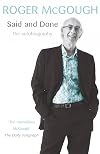
This is a real poet's biography: it doesn't start with Mr & Mrs McGough presenting to the world their new son, Roger. It doesn't progress through school, early jobs and on to fame. It provides vignettes of the life of Roger McGough, esquire and, by so doing, gives a so much clearer picture of the person that is Roger McGough.
Who can say, how much of the modesty is self deprecatory? Roger McGough certainly doesn't blow his own trumpet in this book but, he doesn't need so to do - his oeuvre show more stands for itself. His strength, as a poet, is that the works look simple; a brief amusing anecdote; forgotten as quickly as the smile fades except, it isn't. Like any good poet, Roger McGough touches the cornerstone of what it means to be human.
I am a sixty-five year old copy cat poet; hoping to develop my own style, but knowing that it will never be as good as his. It was a privilege to spend time with a genius. show less
Who can say, how much of the modesty is self deprecatory? Roger McGough certainly doesn't blow his own trumpet in this book but, he doesn't need so to do - his oeuvre show more stands for itself. His strength, as a poet, is that the works look simple; a brief amusing anecdote; forgotten as quickly as the smile fades except, it isn't. Like any good poet, Roger McGough touches the cornerstone of what it means to be human.
I am a sixty-five year old copy cat poet; hoping to develop my own style, but knowing that it will never be as good as his. It was a privilege to spend time with a genius. show less

I first stumbled across this as a poetry-phobic teenager and was knocked out by it. I had no idea people wrote poems about chip shops, comic book heroes, motorways, petrol-pump attendants, bus conductors, casual sex, supermarkets and nuclear Armageddon. If this was poetry where had my teachers been hiding the stuff all these years?
The Liverpool poets - Adrian Henri, Roger McGough and Brian Patten - occupied the space between the library and the street. They introduced new vocabulary and show more subject matter to poetry and collapsed the false distinction between the serious and the entertaining. They wrote poems of everyday life transfigured by the surreal and rendered magical and hallucinatory. The Mersey Sound was first published in 1967 and is infused with the optimistic spirit of the ‘60s counterbalanced by a characteristically sardonic Scouse humour. It immediately sold in large quantities, the initial print run of 20,000 selling out within three months, and is now one of the bestselling poetry anthologies of all-time. It brought new audiences to poetry and led to a revival in public readings which continues to this day.
Although they shared common ground each of the poets had his own distinctive voice within it. Adrian Henri was also a painter and his poetry has a strong visual aspect and sense of place. Liverpool is a frequent setting, albeit a Liverpool reimagined in his own image and that of his heroes: Père Ubu walks down Lime Street and Proust dips madeleine butties in his tea in the Kardomah cafe. His endlessly allusive poems wander freely over the cultural landscape, oblivious to distinctions between elite and popular art, and expressing a sensibility that is not so much populist as culturally omnivorous: John Milton, French symbolists, Charles Mingus, the TV Times, Handel, Wilson Pickett, cut-ups and collage, pop art and imagism, T. S. Eliot and talking blues - they’re all grist to Henri’s poetic mill. There is a generous and expansive spirit to his poetry, along with an unguarded intimacy. Chunks of autobiography nestle among the cultural references and experience and art become reflections of each other. His work exemplifies the joyously boundary-breaking cultural moment these poets came out of. At his best, he is my favourite of the three.
The brilliant Stevie Smith admired Brian Patten’s work, and gave readings with him, but regarded Roger McGough as a mere ‘rhymester’. A curious mistake given that her own wonderful poems were often dismissed in much the same terms. McGough’s poetry is undeniably eager to please, full of wit and wordplay, and he is the embodiment of poet as entertainer, but the glittering surface conceals a sober core. His subject matter is almost unremittingly bleak: terminal illness, war, senility, loneliness, sudden death, and the end of the world. He has a rare ability to write poems on political and social themes without sounding remotely preachy. In many ways McGough has always been a tragedian masquerading as court jester.
Brian Patten was the youngest of the three. Rather astonishingly, he was just twenty-one when this was published, which might account for a certain unevenness. His best poems, however, are outstanding and quite unlike anything by the other two: lyrical, elegiac and mysterious creations whose possible meanings reverberate in the mind.
Adrian Henri sadly died in 2000 and Brian Patten seems to have gone quiet in recent years. Roger McGough is still very much in evidence, though, and has recently published his collected poems. Many people, like myself, discover this book in adolescence, and I have a suspicion there are those who think the Liverpool poets are something you should eventually leave behind, along with other teenage obsessions, as you move onto the ‘proper’ grown-up stuff. I must admit I never have left them behind. Dipping into this anthology recently I found many of the poems as playfully inventive, funny, original and moving as I ever did. This is poetry which touched the people other poets couldn’t reach. show less
The Liverpool poets - Adrian Henri, Roger McGough and Brian Patten - occupied the space between the library and the street. They introduced new vocabulary and show more subject matter to poetry and collapsed the false distinction between the serious and the entertaining. They wrote poems of everyday life transfigured by the surreal and rendered magical and hallucinatory. The Mersey Sound was first published in 1967 and is infused with the optimistic spirit of the ‘60s counterbalanced by a characteristically sardonic Scouse humour. It immediately sold in large quantities, the initial print run of 20,000 selling out within three months, and is now one of the bestselling poetry anthologies of all-time. It brought new audiences to poetry and led to a revival in public readings which continues to this day.
Although they shared common ground each of the poets had his own distinctive voice within it. Adrian Henri was also a painter and his poetry has a strong visual aspect and sense of place. Liverpool is a frequent setting, albeit a Liverpool reimagined in his own image and that of his heroes: Père Ubu walks down Lime Street and Proust dips madeleine butties in his tea in the Kardomah cafe. His endlessly allusive poems wander freely over the cultural landscape, oblivious to distinctions between elite and popular art, and expressing a sensibility that is not so much populist as culturally omnivorous: John Milton, French symbolists, Charles Mingus, the TV Times, Handel, Wilson Pickett, cut-ups and collage, pop art and imagism, T. S. Eliot and talking blues - they’re all grist to Henri’s poetic mill. There is a generous and expansive spirit to his poetry, along with an unguarded intimacy. Chunks of autobiography nestle among the cultural references and experience and art become reflections of each other. His work exemplifies the joyously boundary-breaking cultural moment these poets came out of. At his best, he is my favourite of the three.
The brilliant Stevie Smith admired Brian Patten’s work, and gave readings with him, but regarded Roger McGough as a mere ‘rhymester’. A curious mistake given that her own wonderful poems were often dismissed in much the same terms. McGough’s poetry is undeniably eager to please, full of wit and wordplay, and he is the embodiment of poet as entertainer, but the glittering surface conceals a sober core. His subject matter is almost unremittingly bleak: terminal illness, war, senility, loneliness, sudden death, and the end of the world. He has a rare ability to write poems on political and social themes without sounding remotely preachy. In many ways McGough has always been a tragedian masquerading as court jester.
Brian Patten was the youngest of the three. Rather astonishingly, he was just twenty-one when this was published, which might account for a certain unevenness. His best poems, however, are outstanding and quite unlike anything by the other two: lyrical, elegiac and mysterious creations whose possible meanings reverberate in the mind.
Adrian Henri sadly died in 2000 and Brian Patten seems to have gone quiet in recent years. Roger McGough is still very much in evidence, though, and has recently published his collected poems. Many people, like myself, discover this book in adolescence, and I have a suspicion there are those who think the Liverpool poets are something you should eventually leave behind, along with other teenage obsessions, as you move onto the ‘proper’ grown-up stuff. I must admit I never have left them behind. Dipping into this anthology recently I found many of the poems as playfully inventive, funny, original and moving as I ever did. This is poetry which touched the people other poets couldn’t reach. show less
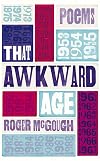
TO ROGER McGOUGH
Larkin without the needless profanity,
Betjeman without the staid urbanity.
You talk to my age, you speak of my class
Irreverent and wise, but no, never crass.
Opinionated perhaps but no forced creed,
Wry wordsmithian wizardry indeed.
Larkin without the needless profanity,
Betjeman without the staid urbanity.
You talk to my age, you speak of my class
Irreverent and wise, but no, never crass.
Opinionated perhaps but no forced creed,
Wry wordsmithian wizardry indeed.
Lists
Awards


You May Also Like


Associated Authors
Statistics
- Works
- 96
- Also by
- 20
- Members
- 2,569
- Popularity
- #9,998
- Rating
- 4.3
- Reviews
- 39
- ISBNs
- 210
- Languages
- 3
- Favorited
- 6