
Sheldon Pollock
Author of The Language of the Gods in the World of Men: Sanskrit, Culture, and Power in Premodern India
About the Author
Sheldon Pollock is the Arvind Raghunathan Professor of South Asian Studies at Columbia University. His publications include The Language of the Gods in the World of Men: Sanskrit, Culture, and Power in Premodern India (2006) and World Philology (2015). He is founding general editor of the Murty show more Classical library of India, and fellow of the American Academy of Arts and Sciences. show less
Works by Sheldon Pollock
The Language of the Gods in the World of Men: Sanskrit, Culture, and Power in Premodern India (2006) 114 copies, 1 review
Forms of Knowledge in Early Modern Asia: Explorations in the Intellectual History of India and Tibet, 1500–1800 (2011) 31 copies
Epic and Argument in Sanskrit Literary History: Essays in Honour of Robert P. Goldman (2010) 2 copies
Aspects of Versification in Sanskrit Lyric Poetry (American Oriental Series : Volume 61) (1977) 1 copy
Crisis in the Classics 1 copy
Associated Works
The Longman Anthology of World Literature, Volume B: The Medieval Era (2004) — Contributor — 68 copies
The Rāmāyana of Vālmīki: An Epic of Ancient India, Volume II: Ayodhyākānda (1986) — Translator, some editions; Translator, some editions — 66 copies
The Rāmāyana of Vālmīki: An Epic of Ancient India, Volume III: Aranyakānda (1991) — Translator, some editions; Translator, some editions — 56 copies
"Bouquet of Rasa" & "River of Rasa" (Clay Sanskrit Library) (2009) — Translator, some editions — 15 copies
Tagged
Common Knowledge
- Canonical name
- Pollock, Sheldon
- Gender
- male
- Education
- Harvard University (AB|Classics|1971)
Harvard University (AM|Sanskrit and Indian Studies|1973)
Harvard University (PhD|Sanskrit and Indian Studies|1975) - Occupations
- professor
- Organizations
- Columbia University (William B. Ransford Professor of Sanskrit and South Asian Studies)
- Nationality
- USA
- Associated Place (for map)
- USA
Members
Reviews
The language of the gods in the world of men : Sanskrit, culture, and power in pre-modern India by Sheldon Pollock
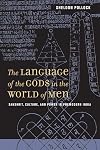
This highly academic work will be appealing only to those who are interested in pre-modern India, Sanskrit, the Sanskrit culture, and influence of Sanskrit on the many 'local' cultures of India and South Asia. The scope of the subject is endless. The book does not read like a novel, but easy enough for the involved reader. The language power of this University Professor of Sanskrit and Indic Studies is amazing.
The research and genius that is put into this work is mind-boggling, especially show more coming from a 'foreigner'. This author is no foreigner to India or South Asia. He has studied the subject in detail more than most Asians.
Each chapter has the scope of being expanded to another book. The author acknowledges the unlimited scope of the issues raised.
The issues discussed are too numerous to mention and highly analytical in nature. Of the many discussions, the processes the author has chosen to tackle the definition of vernaculars and 'vernacularization' are very interesting. The reader may find them pleasing and intermittently amusing. The attempt and effort are painstaking, and the product (the many chapters and the whole book) is phenomenal. The author may have been more influenced by the Kannada culture than any other, because of his association with scholars from the Karnataka.
Many Indians may not welcome the many brave and candid statements such as Mahabharata is political, to name just one.
The endeavour has paid off and the result is brilliant. show less
The research and genius that is put into this work is mind-boggling, especially show more coming from a 'foreigner'. This author is no foreigner to India or South Asia. He has studied the subject in detail more than most Asians.
Each chapter has the scope of being expanded to another book. The author acknowledges the unlimited scope of the issues raised.
The issues discussed are too numerous to mention and highly analytical in nature. Of the many discussions, the processes the author has chosen to tackle the definition of vernaculars and 'vernacularization' are very interesting. The reader may find them pleasing and intermittently amusing. The attempt and effort are painstaking, and the product (the many chapters and the whole book) is phenomenal. The author may have been more influenced by the Kannada culture than any other, because of his association with scholars from the Karnataka.
Many Indians may not welcome the many brave and candid statements such as Mahabharata is political, to name just one.
The endeavour has paid off and the result is brilliant. show less
Lists
Awards


You May Also Like


Associated Authors
Statistics
- Works
- 11
- Also by
- 5
- Members
- 260
- Popularity
- #88,385
- Rating
- 4.4
- Reviews
- 1
- ISBNs
- 25
- Languages
- 1