
Rigoberto Gonzalez
Author of Butterfly Boy: Memories of a Chicano Mariposa (Writing in Latinidad: Autobiographical Voices of U.S. Latinos/as)
About the Author
Rigoberto Gonzalez is professor of English at Rutgers-Newark, the State University of New Jersey. He is the author of four books of poetry, most recently Unpeopled Eden, which won the Lambda Literary Award and the Lenore Marshall Prize from the Academy of American Poets. Additionally, he has show more published children's books, fiction, and nonfiction, including Butterfly Boy: Memories of a Chicano Mariposa, which received the American Book Award from the Before Columbus Foundation. Among many honors, he has been awarded fellowships from the Guggenheim Foundation and the NEA, the Poetry Society of America's Shelley Memorial Award, and the Bill Whitehead Award for Lifetime Achievement from the Publishing Triangle. In 2017, Gonzlez was selected as the inaugural Stan Rubin Distinguished Writer-in-Residence at the Rainier Writing Workshop and as the Reid Writer at Fordham University for the 2017-2018 academic year. show less
Series
Works by Rigoberto Gonzalez
Butterfly Boy: Memories of a Chicano Mariposa (Writing in Latinidad: Autobiographical Voices of U.S. Latinos/as) (2006) 127 copies, 1 review
So Often the Pitcher Goes to Water Until It Breaks: POEMS (National Poetry Series) (1999) 26 copies, 1 review
What Drowns the Flowers in Your Mouth: A Memoir of Brotherhood (Living Out: Gay and Lesbian Autobiog) (2018) 12 copies
Associated Works
Nepantla: An Anthology Dedicated to Queer Poets of Color (2018) — Contributor — 125 copies, 2 reviews
Everything I Have Is Blue: Short Fiction by Working-Class Men About More-or-Less Gay Life (2005) — Contributor — 94 copies, 1 review
The Poets' Grimm: 20th Century Poems from Grimm Fairy Tales (2003) — Contributor — 70 copies, 1 review
Buzz Words: Poems About Insects (Everyman's Library Pocket Poets Series) (2021) — Contributor — 56 copies
Family Trouble: Memoirists on the Hazards and Rewards of Revealing Family (2013) — Contributor — 21 copies
Whos Yer Daddy?: Gay Writers Celebrate Their Mentors and Forerunners (2012) — Contributor — 20 copies
Nepantla Familias: An Anthology of Mexican American Literature on Families in between Worlds (2021) — Contributor — 4 copies
Tagged
Common Knowledge
- Birthdate
- 1970-07-18
- Gender
- male
- Occupations
- writer
poet
associate professor - Nationality
- USA
- Birthplace
- Bakersfield, California, USA
- Associated Place (for map)
- California, USA
Members
Reviews
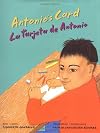
Antonio loves Leslie, his mother's partner, but is embarrassed when the kids make fun of how tall she is and how she looks like a clown in her paint-spattered overalls. When she meets him after school he hurries her off the school grounds so they can go elsewhere to read under a tree. For Mother's Day, the kids all make cards but when the teacher announces they will be displayed, Antonio fears more teasing. Then he sees the painting Leslie has made for his mother, of the three of them show more reading under a tree. He realizes Leslie is a part of the family and that is nothing to be embarrassed about. show less
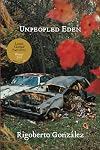
Rigoberto Gonzalez writes for the missing, the dead, the mourning, the lost and about unspeakable loss. He give s voice to the voiceless, wives without husbands, sons without fathers. The poetry is beautiful in many places. Modern Central American interweaves with the mythical Aztec realm of th dead. Language warps to fit the damage and destruction. Whole villages are ghost towns filled with memory.
So much poetry today is topicless solipsism. Unpeopled Eden studies murder, the drug trade, show more and the destructive effects of emigration to North American in oblique but vivid ways. Gonzalez's collection forces us to see hard realities without ever becoming polemical. show less
So much poetry today is topicless solipsism. Unpeopled Eden studies murder, the drug trade, show more and the destructive effects of emigration to North American in oblique but vivid ways. Gonzalez's collection forces us to see hard realities without ever becoming polemical. show less
Butterfly Boy: Memories of a Chicano Mariposa (Writing in Latinidad: Autobiographical Voices of U.S. Latinos/as) by Rigoberto González
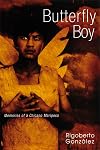
I picked this up on a whim at work and am surprised by how good it is. The memoir is beautifully written and appropriately raw, and my heart goes out to the author. It reminded me of the need for queer stories of color and made me miss my Mexican extended family. I just want to give the author a big hug. Just overall—good.
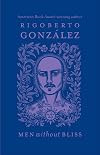
The subjects of the stories of Men Without Bliss are postponing satisfaction for a better year.
Half of them are gay and half are straight, but there are almost no committed relationships of equals here. Most work jobs which lack meaning, or at least different jobs than they once saw themselves doing for a living. Homosexual characters are accepted by some families, but are the object of shame in others. Yet other families pretend they’ve never noticed, and say nothing.
Stymied Chicano show more characters in their twenties or thirties act out of obligation to parents who are aging, failing, distant, deluded or dying. The young men aren’t even liberated when overbearing parents pass on, as illustrated in “Malicious Moons”: “...your mother--dead four years and still you carry her coffin on your shoulders.” The bonds between adult siblings aren’t gone but they wither under strain. One of the most beguiling stories, “Good Boys,” features brothers named after The Three Wise Men, whose behavior has coworkers re-labeling them as Three Stooges instead. Gaspar is a cruel-hearted looker, Balthazar tries to buck his status as a confirmed mama’s boy and the happy-go-lucky Melchor is almost as good at diffusing trouble with humor as he is at burglarizing the mansions around Caliente Valley. More than half of the stories are set in this fictional area, which seems to be near the southern end of California’s Central Valley.
“Cactus Flower” projects a very different aura. It is a sort of gothic meditation of a farm laborer who lives with a lovely ghost for company in the desert. González draws on a reserve of fantastic lyricism describing how the ghost became one: “She said she was going to leave him, she said she was going to let their world collapse. So he didn’t let her leave, not entirely, taking her neck in his hands and widening her mouth until she burst into the air like a puff of dandelion seeds, an explosion of stars in the sky, an outbreak of marigolds. Such beautiful flowers.”
A couple stories show less emotional investment, but there is no questioning the care for craft exhibited throughout this collection. One which is clearly a third-person story takes up affected second person language (e.g.: then you did this, after which you did that). The style doesn’t fly; it elicits a contrarian response from those who may wish to point out that they do not perform the protagonists’ actions themselves.
González serves on the Board of Directors for the National Book Critics Circle and is a contributing editor to Poets and Writers. His novel, Crossing Vines won the ForeWord Magazine Book of the Year Award for Fiction in 2003. Men Without Bliss is thirteen angles on dreams deferred, on desire that goes unserviced, on potential of undetermined outcomes. This kind of writing connects the particular with the universal, it holds an undeniable draw.
by Todd Mercer
Copyright ForeWord Magazine, volume 12, no. 1 show less
Half of them are gay and half are straight, but there are almost no committed relationships of equals here. Most work jobs which lack meaning, or at least different jobs than they once saw themselves doing for a living. Homosexual characters are accepted by some families, but are the object of shame in others. Yet other families pretend they’ve never noticed, and say nothing.
Stymied Chicano show more characters in their twenties or thirties act out of obligation to parents who are aging, failing, distant, deluded or dying. The young men aren’t even liberated when overbearing parents pass on, as illustrated in “Malicious Moons”: “...your mother--dead four years and still you carry her coffin on your shoulders.” The bonds between adult siblings aren’t gone but they wither under strain. One of the most beguiling stories, “Good Boys,” features brothers named after The Three Wise Men, whose behavior has coworkers re-labeling them as Three Stooges instead. Gaspar is a cruel-hearted looker, Balthazar tries to buck his status as a confirmed mama’s boy and the happy-go-lucky Melchor is almost as good at diffusing trouble with humor as he is at burglarizing the mansions around Caliente Valley. More than half of the stories are set in this fictional area, which seems to be near the southern end of California’s Central Valley.
“Cactus Flower” projects a very different aura. It is a sort of gothic meditation of a farm laborer who lives with a lovely ghost for company in the desert. González draws on a reserve of fantastic lyricism describing how the ghost became one: “She said she was going to leave him, she said she was going to let their world collapse. So he didn’t let her leave, not entirely, taking her neck in his hands and widening her mouth until she burst into the air like a puff of dandelion seeds, an explosion of stars in the sky, an outbreak of marigolds. Such beautiful flowers.”
A couple stories show less emotional investment, but there is no questioning the care for craft exhibited throughout this collection. One which is clearly a third-person story takes up affected second person language (e.g.: then you did this, after which you did that). The style doesn’t fly; it elicits a contrarian response from those who may wish to point out that they do not perform the protagonists’ actions themselves.
González serves on the Board of Directors for the National Book Critics Circle and is a contributing editor to Poets and Writers. His novel, Crossing Vines won the ForeWord Magazine Book of the Year Award for Fiction in 2003. Men Without Bliss is thirteen angles on dreams deferred, on desire that goes unserviced, on potential of undetermined outcomes. This kind of writing connects the particular with the universal, it holds an undeniable draw.
by Todd Mercer
Copyright ForeWord Magazine, volume 12, no. 1 show less
Lists
Awards


You May Also Like


Associated Authors
Statistics
- Works
- 24
- Also by
- 15
- Members
- 598
- Popularity
- #42,015
- Rating
- 3.8
- Reviews
- 17
- ISBNs
- 44
- Favorited
- 1