
Paul Levinson
Author of The Silk Code
About the Author
Paul Levinson, a former rock musician, lives in White Plains, New York.
Image credit: photo by Emon Hassan
Series
Works by Paul Levinson
The Soft Edge: A Natural History and Future of the Information Revolution (1997) 88 copies, 1 review
Cellphone: The Story of the World's Most Mobile Medium and How It Has Transformed Everything! (2004) 29 copies
In Pursuit of Truth: Essays on the Philosophy of Karl Popper on the Occasion of His 80th Birthday (1982) 9 copies
The Mendelian Lamp Case {novelette} 6 copies
The Copyright Notice Case 3 copies
Ian Isaac And John 2 copies
Fake News: Understanding Media and Misinformation in the Digital Age (Information Policy) (2020) 1 copy
Advantage Bellarmine 1 copy
The Way Of Flesh 1 copy
Smart Weapon 1 copy
A Medal for Harry 1 copy
Little Differences 1 copy
Late Lessons 1 copy
Associated Works
Nebula Awards 32: SFWA's Choices for the Best Science Fiction and Fantasy of the Year (1998) — Contributor — 98 copies, 1 review
Boarding the Enterprise: Transporters, Tribbles, and the Vulcan Death Grip in Gene Roddenberry's Star Trek (2006) — Contributor — 91 copies, 5 reviews
King Kong Is Back!: An Unauthorized Look at One Humongous Ape! (Smart Pop series) (2005) — Contributor — 19 copies
Tagged
Common Knowledge
- Legal name
- Levinson, Paul
- Birthdate
- 1947
- Gender
- male
- Education
- New York University (BA, PhD)
The New School for Social Research (MA) - Occupations
- author
professor
media commentator - Organizations
- Fordham University
Science Fiction and Fantasy Writers of America
American Society of Composers, Authors and Publishers (ASCAP)
Broadcast Music Incorporated (BMI)
Media Ecology Association
Mystery Writers of America - Awards and honors
- Quotes in 1st Amendment Calendar, 2005, 2007, Freedom Forum
Neil Postman Award (Outstanding Public Intellectual Media Ecology Assoc, 2005)
"Teacher of the Year" Award, Graduate Student Assoc, Fordham Univ, 2003-2004 - Nationality
- USA
- Associated Place (for map)
- USA
Members
Discussions
The Plot to Save Socrates in Historical Fiction (December 2012)
Reviews
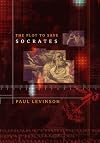
Paul Levinson's time-travel novel The Plot to Save Socrates is that tragic thing: a great concept let down by a middling execution. Time-travelling is always a crowd-pleaser, even if it's a genre that always teeters between the hokey and the convoluted, and Levinson's novel promises, on the face of it, to be a high-brow thriller revolving around the rescue of Socrates, one of the great minds of history, from his unjust death-sentence, when he was condemned to swallow poisonous hemlock for show more daring to speak against the orthodoxies of the Athenian democracy.
Unfortunately, despite some promise in the opening chapters – not least some successful mimicry of Plato's Socratic dialogues, where Socrates and a mysterious visitor debate the paradoxes of time-travel – the storytelling itself misfires. Characterisation is weak throughout: none of the main players have much in the way of motivation, for all that they leap to their feet to take their part, and those that become the villains of the piece have motives that remain completely inscrutable – in fact, the main villain and orchestrator is all but forgotten by the end. Sierra Waters, the closest we have to a protagonist, could have as her characterisation a post-it note that just says "sexy". The explanation for the time-travel basically amounts to "magical chairs" (pg. 231), and Levinson proves in multiple scenes that he can't write action to save his life. By the end, the novel has failed to avoid that common time-travel trap of "heads chasing tails" (pg. 265) and it degenerates into a hectic, harum-scarum mess, with the only resolutions proving underwhelming.
Some of which would be OK if the novel's promising ideas had been tackled. But we lose the thread of the plot to save Socrates – partly because of the characterisation and storytelling mentioned above, but also because it's never clear why the effort's being made on the elderly philosopher's behalf in the first place. Civilisation "has never fully recovered from the death of Socrates", Levinson writes on page 135, which is stretching it a bit, and besides which is an argument never fully explored in the book itself. Socrates' challenge in the novel – that "it will make no difference, to the present or the future of the world, if I die here or escape with you" (pg. 49) – is given a mundane plot-resolution answer rather than a thematic one that addresses the concepts of messing with history and saving a Great Man for posterity. Questions of fate, paradox and philosophy are raised by Levinson's scenario but never addressed, with the can being kicked down the street until there's no more street. The result is a promising high-concept thriller that is disappointingly unsuccessful, with its events "happen[ing] in a way that makes no impact, in which case we have wasted our time" (pg. 168). show less
Unfortunately, despite some promise in the opening chapters – not least some successful mimicry of Plato's Socratic dialogues, where Socrates and a mysterious visitor debate the paradoxes of time-travel – the storytelling itself misfires. Characterisation is weak throughout: none of the main players have much in the way of motivation, for all that they leap to their feet to take their part, and those that become the villains of the piece have motives that remain completely inscrutable – in fact, the main villain and orchestrator is all but forgotten by the end. Sierra Waters, the closest we have to a protagonist, could have as her characterisation a post-it note that just says "sexy". The explanation for the time-travel basically amounts to "magical chairs" (pg. 231), and Levinson proves in multiple scenes that he can't write action to save his life. By the end, the novel has failed to avoid that common time-travel trap of "heads chasing tails" (pg. 265) and it degenerates into a hectic, harum-scarum mess, with the only resolutions proving underwhelming.
Some of which would be OK if the novel's promising ideas had been tackled. But we lose the thread of the plot to save Socrates – partly because of the characterisation and storytelling mentioned above, but also because it's never clear why the effort's being made on the elderly philosopher's behalf in the first place. Civilisation "has never fully recovered from the death of Socrates", Levinson writes on page 135, which is stretching it a bit, and besides which is an argument never fully explored in the book itself. Socrates' challenge in the novel – that "it will make no difference, to the present or the future of the world, if I die here or escape with you" (pg. 49) – is given a mundane plot-resolution answer rather than a thematic one that addresses the concepts of messing with history and saving a Great Man for posterity. Questions of fate, paradox and philosophy are raised by Levinson's scenario but never addressed, with the can being kicked down the street until there's no more street. The result is a promising high-concept thriller that is disappointingly unsuccessful, with its events "happen[ing] in a way that makes no impact, in which case we have wasted our time" (pg. 168). show less
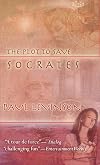
What historian would not like a time machine, especially if it could bring a guy like Socrates back to help with your work—not to mention prevent the unjust death of one of the world’s most famous philosophers? Paul Levinson’s The Plot to Save Socrates gives Sierra Waters, his graduate student heroine, the chance to do just that. But she may need the help of a few unsavory types, most notably Alcibiades, the Greek general who led troops on both sides of the Peloponnesian War.
I enjoyed show more all the time travel conundrums, but I wish Levinson did more with the historical politics. show less
I enjoyed show more all the time travel conundrums, but I wish Levinson did more with the historical politics. show less
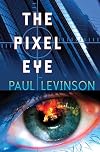
This is the latest adventure of Phil D'Amato, NYPD forensic psychiatrist in a very near future New York. Although The Consciousness Plague was somewhat influenced by 9/11, this is the first truly post-9/11 D'Amato tale. His immediate boss, Jack Dugan, is now Deputy Mayor for Public Safety, New York's own Homeland Security czar, and Phil is still reporting to him.
Any mystery series whose protagonist is not a detective gradually experiences an increasingly hazy connection between that person's show more theoretical job and what they actually do, and as The Pixel Eye opens, Phil, at Dugan's request, is investigating city park workers' reports of missing squirrels. The fear is of course that the missing squirrels may signal the start of a new epidemic, whether natural or the result of a biological attack. The squirrels aren't dying, though; they're just temporarily missing, and as Phil investigates missing squirrels, stolen hamsters, and other omnipresent rodents, he finds something even more alarming. A visit to a rodent research facility, where scientist Jill Cormier is studying the auditory abilities of hamsters, leads to an accidental encounter with former NY policeman Frank Catania, now a special agent in the new Homeland Security Department, and that leads Phil down increasingly strange and potentially paranoid paths. where neither he nor the reader know who are the good guys and who are the bad guys, or even which players are working together and which are rivals or opponents. Hamsters as listening devices, conflicting stories on whether or not squirrels are being used for video recording, research labs that burn down immediately after Phil visits them, creepily sophisticated hologram-enhanced A.I.s, and some terrifying speculation about what might be down with miniaturized bombs and the rats and mice we shall have always with us, make for a tense and exciting story, with Phil never knowing who he can trust and who he can't. And in the end, he doesn't know whether he's stepped up another level in the forces of good, or embraced the forces of darkness.
A very satisfying addition to the series. show less
Any mystery series whose protagonist is not a detective gradually experiences an increasingly hazy connection between that person's show more theoretical job and what they actually do, and as The Pixel Eye opens, Phil, at Dugan's request, is investigating city park workers' reports of missing squirrels. The fear is of course that the missing squirrels may signal the start of a new epidemic, whether natural or the result of a biological attack. The squirrels aren't dying, though; they're just temporarily missing, and as Phil investigates missing squirrels, stolen hamsters, and other omnipresent rodents, he finds something even more alarming. A visit to a rodent research facility, where scientist Jill Cormier is studying the auditory abilities of hamsters, leads to an accidental encounter with former NY policeman Frank Catania, now a special agent in the new Homeland Security Department, and that leads Phil down increasingly strange and potentially paranoid paths. where neither he nor the reader know who are the good guys and who are the bad guys, or even which players are working together and which are rivals or opponents. Hamsters as listening devices, conflicting stories on whether or not squirrels are being used for video recording, research labs that burn down immediately after Phil visits them, creepily sophisticated hologram-enhanced A.I.s, and some terrifying speculation about what might be down with miniaturized bombs and the rats and mice we shall have always with us, make for a tense and exciting story, with Phil never knowing who he can trust and who he can't. And in the end, he doesn't know whether he's stepped up another level in the forces of good, or embraced the forces of darkness.
A very satisfying addition to the series. show less
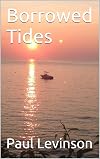
I don’t know what to make of Paul Levinson’s Borrowed Tides. Levinson can do hard science, but some of the elements of this book are so farfetched that I think I must be missing something. We have our first crewed voyage to Alpha Centauri. Fine. Of course, there is not enough fuel for the return trip unless they can catch a gravitational slingshot (here called a boomerang) that one crewmember believes in because it is part of Native American mythology. The ship’s captain is qualified show more only because he has a Ph.D. in the philosophy of science. Sure. When they arrive, they find a habitable planet that does strange things to the mind—rendering one of the crew mute for unexplained reasons. The planet also morphs through its geological evolution much too rapidly. As Jack Lumet, an anthropologist specializing in Iroquois folklore, opines, “Nothing about this trip was easy to explain.”
I wonder if Levinson was smoking something intriguing while reading Isaac Asimov’s The Currents of Space. show less
I wonder if Levinson was smoking something intriguing while reading Isaac Asimov’s The Currents of Space. show less
Awards


You May Also Like


Associated Authors
Statistics
- Works
- 40
- Also by
- 20
- Members
- 957
- Popularity
- #26,916
- Rating
- 3.5
- Reviews
- 25
- ISBNs
- 70
- Languages
- 1
- Favorited
- 1

