

Françoise Mallet-Joris (1930–2016)
Author of The Illusionist
About the Author
Disambiguation Notice:
Françoise Mallet-Joris is the pen-name of Françoise Lilar.
Image credit: Marguerite YOURCENAR et Françoise MALLET-JORIS
Works by Françoise Mallet-Joris
Associated Works
Tagged
Common Knowledge
- Canonical name
- Mallet-Joris, Françoise
- Legal name
- Lilar, Francoise-Eugenie-Julienne (born)
- Birthdate
- 1930-07-06
- Date of death
- 2016-08-13
- Gender
- female
- Education
- Sorbonne
- Occupations
- novelist
historical novelist
short story writer
biographer - Organizations
- Académie Goncourt (1971)
Académie royale de langue et de littérature françaises de Belgique - Awards and honors
- Prince Pierre de Monaco (1965)
Prix Femina 1958 - Relationships
- Lilar, Suzanne (mother)
- Short biography
- Françoise Mallet-Joris is the nom de plume of Françoise Lilar, born in Antwerp, Belgium. Her parents were the writer Suzanne Lilar and her husband Albert Lilar, who served as Belgian Minister of Justice and Minister of State. Art historian Marie Fredericq-Lilar was her paternal aunt. Françoise began writing at a young age and published her first work, Poème du dimanche (Sunday Poem), at age 16. She attended the Sorbonne in Paris and while there published her 1951 novel Le rempart des Béguines (translated in English as The Illusionist, also as Into the Labyrinth and The Loving and the Daring), under the pseudonym Françoise Mallet. She later added the hyphenated Joris to her surname to make it sound more Belgian. The Illusionist was adapted as a film with her screenplay in 1972. Other novels include La chambre rouge (1955, also adapted into a film), L'Empire céleste (1958) and Allegra (1976). She also wrote short stories collected in Cordélia (1956). She has written novelized biographies, Les Personnages (The Favorite, 1960), and The Uncompromising Heart: A Life of Marie Mancini, Louis XIV's First Love (1964); as well as a biography of Jeanne Guyon (1978), the 17th-century French mystic. She written autobiographical works about her philosophy of life and writing in Lettre à moi-même (A Letter to Myself, 1963) and La Maison de papier (The Paper House, 1970). She has written lyrics for singer Marie-Paule Belle, and the libretto for an unpublished opera, Caryl Chessman, with music by José Berghmans. She has been married to Robert Amadou, Alain Joxe, and Jacques Delfau, and has four children. She served as a member of the Prix Femina jury from 1969 to 1971. That year, she was unanimously elected to the Académie Goncourt. Since 1993, she has been a member of the Académie royale de langue et de littérature françaises of Belgium.
- Nationality
- Belgium
- Birthplace
- Antwerp, Belgium
- Places of residence
- Paris, France
Brussels, Belgium - Place of death
- Bry-sur-Marne, Île-de-France, Val-de-Marne, France
- Disambiguation notice
- Françoise Mallet-Joris is the pen-name of Françoise Lilar.
- Associated Place (for map)
- Belgium
Members
Reviews
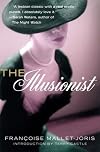
There's nothing especially remarkable about this book except for two things: that the narrator, Helene, is genuinely likeable and that it (uncomfortably and unfortunately) is easier than you would think to really like someone who is aloof and only likes you on her own terms (if she likes you at all.)
If I hadn't personally known what it's like to be attracted to emotionally distant people who are (when you get down to the nitty gritty of it) not worth one second of your suffering over them I show more might have been more irritated by The Illusionist.
Tamara, the older woman our narrator is hopelessly (and I do mean hopelessly) fascinated and possibly in love with, is a few shades shy of psychotic. She has never quite gotten over her affair with a woman named Emily so she takes out most everything that makes her miserable on other people, especially Helene.
Like anyone else who understands that indifference, not hate, is the complete opposite of love, Helene appreciates it more when Tamara treats her badly. Rather than think the older woman just doesn't care, Helene decides she is hurtful so she can "reduce her to despair." Malice is far preferable to nothing.
Tamara is so unpredictable that Helene never knows which version of her she is going to encounter each day: "I wondered if she would have the closed look of her bad days, or the charming look of melancholy which sometimes clouded her eyes, or a smile that I had never seen, but which would be my revenge if I could glimpse it for a moment, that shameless smile of a woman..."
Later on, an understanding and surprisingly sympathetic outsider advises Helene: "Listen, there are people who are in love, miserable and worthy of pity...say what you will, there's nothing very loving and gentle about her."
Sometimes you need an outsider (or maybe a book that speaks to you) to remind you that not everyone is worth falling in love with, no matter how oddly appealing she may be. Easier to listen to than follow, but this kind of advice (so starkly laid out here and with Tamara as such a good example of what not to like) can stand out when you distance yourself a bit from it all. show less
If I hadn't personally known what it's like to be attracted to emotionally distant people who are (when you get down to the nitty gritty of it) not worth one second of your suffering over them I show more might have been more irritated by The Illusionist.
Tamara, the older woman our narrator is hopelessly (and I do mean hopelessly) fascinated and possibly in love with, is a few shades shy of psychotic. She has never quite gotten over her affair with a woman named Emily so she takes out most everything that makes her miserable on other people, especially Helene.
Like anyone else who understands that indifference, not hate, is the complete opposite of love, Helene appreciates it more when Tamara treats her badly. Rather than think the older woman just doesn't care, Helene decides she is hurtful so she can "reduce her to despair." Malice is far preferable to nothing.
Tamara is so unpredictable that Helene never knows which version of her she is going to encounter each day: "I wondered if she would have the closed look of her bad days, or the charming look of melancholy which sometimes clouded her eyes, or a smile that I had never seen, but which would be my revenge if I could glimpse it for a moment, that shameless smile of a woman..."
Later on, an understanding and surprisingly sympathetic outsider advises Helene: "Listen, there are people who are in love, miserable and worthy of pity...say what you will, there's nothing very loving and gentle about her."
Sometimes you need an outsider (or maybe a book that speaks to you) to remind you that not everyone is worth falling in love with, no matter how oddly appealing she may be. Easier to listen to than follow, but this kind of advice (so starkly laid out here and with Tamara as such a good example of what not to like) can stand out when you distance yourself a bit from it all. show less

Mallet-Joris' The Red Room immediately followed and served as sequel to her first novel, The Illusionist. Of the sequel, Barbara Grier flatly wrote, "...The Red Room is often cited as pertinent [to The Illusionist]. It is not, but can be considered supplemental material, since it concerns the later years of the primary protagonist..."
Sadly, that's about all there is to be said about this book. "Sadly" because The Illusionist is an extraordinary work that deserved a finer revisitation. In The show more Illusionist we follow 16 year old Helene as she is seduced by her father's sadistic lover, Tamara. It's an erotic and masterful story of seduction and manipulation that gives Les Liaisons Dangereuses a run for its money.
The Red Room, for all that it follows its magnificent predecessor, is supposed to be a portrait of the now 18 year old Helene, who through sexual corruption has supposedly become a hardened monster herself. We see her as a cross between the beautiful Dorian Gray and a harrowing Hieronymus Bosch painting. The main action involves Helene's seduction of a visiting artist, Jean. Is she pursuing the affair to punish Tamara? Is she manipulating Jean in order to wage some sort of vengeance against him? Is she just plain bored? It's impossible to tell. For every line of The Illusionist that was sharp and incisive, The Red Room appears contradictory and tedious. Helene may be lying to herself or manipulating everyone that comes across her path, but I'll be damned if this book could ever at any point make me care enough to try and figure it out. show less
Sadly, that's about all there is to be said about this book. "Sadly" because The Illusionist is an extraordinary work that deserved a finer revisitation. In The show more Illusionist we follow 16 year old Helene as she is seduced by her father's sadistic lover, Tamara. It's an erotic and masterful story of seduction and manipulation that gives Les Liaisons Dangereuses a run for its money.
The Red Room, for all that it follows its magnificent predecessor, is supposed to be a portrait of the now 18 year old Helene, who through sexual corruption has supposedly become a hardened monster herself. We see her as a cross between the beautiful Dorian Gray and a harrowing Hieronymus Bosch painting. The main action involves Helene's seduction of a visiting artist, Jean. Is she pursuing the affair to punish Tamara? Is she manipulating Jean in order to wage some sort of vengeance against him? Is she just plain bored? It's impossible to tell. For every line of The Illusionist that was sharp and incisive, The Red Room appears contradictory and tedious. Helene may be lying to herself or manipulating everyone that comes across her path, but I'll be damned if this book could ever at any point make me care enough to try and figure it out. show less

Divina
Françoise Mallet-Joris
Publicado: 1991 | 250 páginas
Intriga
Jeanne es una despreocupada profesora de instituto. Con sus treinta y cinco años y ochenta y cinco kilos de peso, vive tranquila, independiente y segura de sí misma en el piso treinta y uno de un moderno edificio de París, ajena por completo a su obesidad. Ajena, hasta que un desgraciado día unos gamberros destrozan e inutilizan todos los ascensores del inmueble. Jeanne se descubre de pronto completamente aislada en su show more propia casa durante todo un fin de semana. La solícita comprensión de sus compañeros de trabajo, la exagerada amabilidad de sus amigos y de sus vecinos, la hacen sentir como una inválida indefensa incapaz de subsistir por sí misma. Inesperadamente, descubre que su autosuficiencia era tan sólo una máscara protectora. La conciencia de su vulnerabilidad la forzará a tomar una determinación: iniciar un severo régimen.Progresivamente, a medida que sus kilos desaparecen, comprueba cómo su vida y su mundo personal se desmoronan al inísono. Se agria su relación con sus alumnos, sus compañeros murmuran, se revela la escondida envidia de sus amigas, se deteriora su relación con su madre. Imparable, su régimen irá mucho más allá de un simple y anecdótico cambio físico y la arrastrará a lo largo de una profunda e irreversible búsqueda y renovación interior, plagada de descubrimientos y renuncias, hasta un desenlace final tan turbulento como inesperado. show less
Françoise Mallet-Joris
Publicado: 1991 | 250 páginas
Intriga
Jeanne es una despreocupada profesora de instituto. Con sus treinta y cinco años y ochenta y cinco kilos de peso, vive tranquila, independiente y segura de sí misma en el piso treinta y uno de un moderno edificio de París, ajena por completo a su obesidad. Ajena, hasta que un desgraciado día unos gamberros destrozan e inutilizan todos los ascensores del inmueble. Jeanne se descubre de pronto completamente aislada en su show more propia casa durante todo un fin de semana. La solícita comprensión de sus compañeros de trabajo, la exagerada amabilidad de sus amigos y de sus vecinos, la hacen sentir como una inválida indefensa incapaz de subsistir por sí misma. Inesperadamente, descubre que su autosuficiencia era tan sólo una máscara protectora. La conciencia de su vulnerabilidad la forzará a tomar una determinación: iniciar un severo régimen.Progresivamente, a medida que sus kilos desaparecen, comprueba cómo su vida y su mundo personal se desmoronan al inísono. Se agria su relación con sus alumnos, sus compañeros murmuran, se revela la escondida envidia de sus amigas, se deteriora su relación con su madre. Imparable, su régimen irá mucho más allá de un simple y anecdótico cambio físico y la arrastrará a lo largo de una profunda e irreversible búsqueda y renovación interior, plagada de descubrimientos y renuncias, hasta un desenlace final tan turbulento como inesperado. show less
Lists
Awards


You May Also Like


Associated Authors
Statistics
- Works
- 36
- Also by
- 1
- Members
- 627
- Popularity
- #40,190
- Rating
- 3.2
- Reviews
- 12
- ISBNs
- 110
- Languages
- 7
- Favorited
- 1


